Share
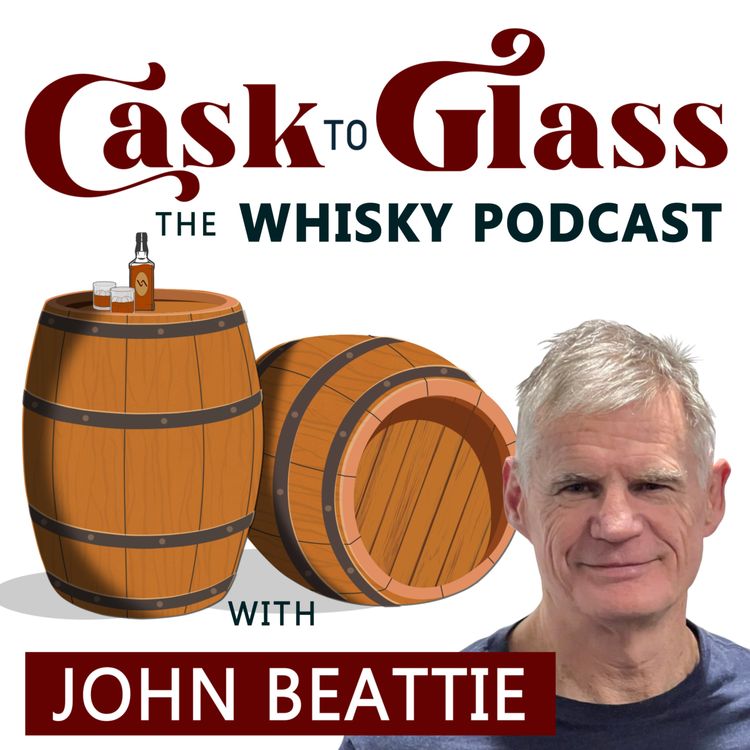
Cask to Glass
Inside the Cooperage with Ray Prosser from Oakwood Cooperage
"If you take away the cooper, you take away the cooperage, you take away the barrels, then you don't get whisky," says Ray Prosser, Sales & Operations Manager at Oakwood Cooperage, the largest independent cooperage in the UK. Not just because Scotch Whisky must by law be matured in oak casks for a minimum of three years, but because, Ray says, 70% of whisky's flavour comes from the wood.
Ray's been a cooper for 36 years.
“I always had a fascination with wood, even from my days at school,” he tells John Beattie. “It was one of those things. I used to go to my old auntie’s down in Partick, and the neighbour used to come in and help her with the groceries and stuff like that. And they came in one Sunday and said, would I be interested in being an apprentice cooper.
“I didn’t know what a cooper was at the time. Obviously these were the days before internet… So I found out more about it, and I haven’t looked back.”
In this episode he takes John inside the cooperage, where the "unsung heroes" of the whisky industry apply passion, skill and tradition to rejuvenate, repair and restore the casks that give whisky its exceptional flavour, whether they're "your sherry casks, your wine casks, your Bourbons, or your virgin oak".
Join John as Ray reveals:
➡️the 60-to-100-year lifespan of a barrel;
➡️how casks are decharred, recharred and rejuvenated to start all over again;
➡️tips on how to identify what type of barrel a whisky was matured in, even if the label doesn't say;
➡️how coopers will resize casks to get a more wood to spirit ratio to speed up maturation;
➡️and provides a step-by-step walkthrough of barrel repair, hoop driving, and testing.
Slàinte!
-------
Socials: @C2GWhisky | @JohnRossBeattie
Creator & producer: David Holmes
Art work & design: Jess Robertson
Music: Water of Life (Never Going Home)
Vocals: Andrea Cunningham
Guitars: John Beattie
Bass: Alasdair Vann
Drums: Alan Hamilton
Bagpipes: Calum McColl
Accordion: Gary Innes
Music & Lyrics: Andrea Cunningham & John Beattie
Recorded & mixed by Murray Collier at La Chunky Studios, Glasgow, Scotland
More episodes
View all episodes

77. The Tax Trap: Mark Kent on the "Unfair" Duty on Scotch Whisky
30:24||Ep. 77Is Scotch Whisky "unfairly" taxed in the UK compared to other drinks?Yes, says Mark Kent, CEO of the Scotch Whisky Association. "72% of the cost of an average bottle of Scotch goes on tax of one form or another," he says.And it's sometimes cheaper to buy whisky shipped to other countries than to buy it in Scotland because the UK has the fourth highest level of excise duty on spirits in Europe, and the highest in the G7 group of nations."Scotch falls under spirits," he says, "and 70% of all spirits made in the UK are made in Scotland." Consequently excise duty on Scotch per litre of alcohol per unit is three times that on beer or cider. "It's simply unfair on consumers, producers and the supply chain," he concludes."Would the French do that with Champagne or with other national drinks?" he asks.And it’s counter-productive.”The curves are clear that the more you tax, especially premium products, the less you get back,” he says. “And every time we’ve seen a freeze or a cut, we’ve had a couple of cuts over time, that’s led to more revenue to the Treasury.”However, it's not all gloom and doom, Mark says, despite "the job losses, the pauses in investment and the day-to-day difficulties of distillers.""We've got the potential to get back to that long-term curve that we saw before COVID," he says.The India free trade agreement has brought down the import tariffs into India, the largest whisky market in the world, from 150% to 75%. US tariffs on whisky have been removed. And tariffs in China have been reduced from 10% to 5%."But," he warns, "it's not plain sailing by any means. The state of the industry is still very delicate. There's a lot of domestic headwinds.""As we speak," Mark concludes, "You're seeing job losses, you're seeing pauses in investment, you're seeing day-to-day difficulties of distillers which are then reflected in the wider supply chain. [But] if we get that Government support in the here and now, to support us, to fan the embers of what could be a recovery and a return to long-term growth, then I think the potential will be fulfilled and Scotch will be back."🎧Tune in as John and Mark discuss:➡️the fragile state of the Scotch Whisky industry➡️how the UK tax & excise system makes it cheaper to buy Scotch Whisky in other countries rather than in Scotland➡️how evidence suggests that when tax on whisky is reduced, the Treasury makes more money➡️how Scotch is part of the UK's soft power abroad➡️how global markets are opening up to Scotch WhiskySlàinte!-------Socials: @C2GWhisky | @JohnRossBeattieCreator & producer: David HolmesArt work & design: Jess RobertsonMusic: Water of Life (Never Going Home)Vocals: Andrea CunninghamGuitars: John BeattieBass: Alasdair VannDrums: Alan HamiltonBagpipes: Calum McCollAccordion: Gary InnesMusic & Lyrics: Andrea Cunningham & John BeattieRecorded & mixed by Murray Collier at La Chunky Studios, Glasgow, Scotland75. Sun, Scotch & Coconut Water: Andre de Almeida on Cracking the Brazilian Whisky Market
36:07||Ep. 75How do you take your whisky? On a Brazilian beach, with coconut water obviously. Or better still coconut water ice. In 2025 Brazil was the joint-fifth largest market for Scotch whisky by volume - 54 million bottles. But with a population of some 200 million people, Brazil's still an untapped market. So how do you crack it?In this episode of Cask to Glass, we sit down with industry veteran Andre de Almeida (Founder of Inside the Cask and former Export Director for Loch Lomond Group). Born in Brazil and now based in Scotland, Andre offers a rare insider look at one of the world's most dynamic and challenging spirits markets.We dive deep into:➡️The unique drinking culture of Brazil - from beachside standard blends to premium single malts.➡️The role duty free stores on Brazil's many border crossings play in getting whisky to consumers.➡️Common mistakes international brands make when entering South America.➡️The story behind the official Brazilian tartan.➡️How a Brazilian born Scot taught Brazil how to play football.➡️The exciting rise of domestic Brazilian single malts like Union and Lamas.Whether you're in the drinks industry looking to expand into Latin America or simply a whisky enthusiast curious about global drinking cultures, this conversation is packed with actionable insights and fascinating stories.#whisky #scotchwhisky #podcast #interview #WhiskyPodcast #madetobemeasuredSlàinte!-------Socials: @C2GWhisky | @JohnRossBeattie Creator & producer: David HolmesArt work & design: Jess Robertson Music: Water of Life (Never Going Home)Vocals: Andrea CunninghamGuitars: John BeattieBass: Alasdair VannDrums: Alan HamiltonBagpipes: Calum McCollAccordion: Gary InnesMusic & Lyrics: Andrea Cunningham & John BeattieRecorded & mixed by Murray Collier at La Chunky Studios, Glasgow, Scotland74. On the Nose: Richard Paterson on 60 Years in the Whisky Industry
34:02||Ep. 74Legendary master blender Richard Paterson OBE began his career in whisky on 5 September 1966. Sixty years on, he's still passionate about Scotland's national drink and the world's favourite spirit. In this episode he reflects on a life in whisky and demonstrates the best way to drink whisky.He reveals how his earliest childhood memory of whisky was when his father, who ran the family bottling & blending company, would kiss him good night: "I could the feel bristles on his chin. But I also could smell the whisky on his breath.""Then when we were eight years old," he continues, "[my father] said to my twin brother and I: 'Right come up to Glasgow, I want to show you my world.' It was an experience you never forget."His father's world was a dark, damp warehouse."We could see the silhouettes of the cask and the noise of the city subdued. And then suddenly more than anything, it was a smell of maderised wine and whisky," he recalls."My father said: 'Hey, boys, I want you to nose this whisky.' And he handed me a glass, and I said: 'I don't know what you mean.' And he said, 'What?' And that's when he hit me in the back of the head, and I said: 'What did you do that for?'"His father then proceeded to show Richard and his brother how hold the glass properly, how to swirl it around and how to sniff it: "Is it heavy as your grumpy grandfather? Is it as light as your mother? Is it as sweet as your chocolate bar? Or is it as dry as the dust on the floor?""So when he used these descriptors, I could tell something about it and I could see it was heavy. I didn't drink it, but I could see there were aromas going on. And that really was the first introduction to Scotch whisky."Despite those early beginnings, Richard admits: "When I started in 1966 with A Gillis, I discovered actually I knew nothing. I was ignorant. I was stupid. And if I want to be the big managing director or CEO or what have you, I'd really have to work."That's when he began educating himself in whisky, wine, Cognac, cigars, rum, "you name it". He admits it took years of study, travel and relentless practice to sharpen his nose and to become "The Nose".As well as taking extensive courses and diplomas, Richard learned by visiting warehouses, examining casks and comparing how different woods, ages and maturation styles transformed the spirit.In this candid, personal and at times humorous interview Richard reveals:➡️the story of his insured nose;➡️the rare Dalmore whiskies that made him stop and say: "Wow!"➡️his thoughts on the current Scotch whisky market;➡️and his belief that the industry will come through its present challengesThis is a conversation about passion, patience and dedicated practice in the pursuit of excellence.#whisky #scotchwhisky #podcast #interview #richardpaterson #richardpatersonwhisky #WhiskyPodcast #madetobemeasuredSlàinte!-------Socials: @C2GWhisky | @JohnRossBeattie Creator & producer: David HolmesArt work & design: Jess Robertson Music: Water of Life (Never Going Home)Vocals: Andrea CunninghamGuitars: John BeattieBass: Alasdair VannDrums: Alan HamiltonBagpipes: Calum McCollAccordion: Gary InnesMusic & Lyrics: Andrea Cunningham & John BeattieRecorded & mixed by Murray Collier at La Chunky Studios, Glasgow, Scotland73. GlenWyvis on the Brink: Why this community distillery could go bust without immediate investment
33:39||Ep. 73Can a community-owned distillery survive the current whisky market? GlenWyvis Distillery, founded in 2015 with 4,000 community investors, began production in 2018. Now it needs £300,000 by October & £6 million in the long-run to keep going. In a candid interview two of its directors explain why. If you want to help contact them at info@glenwyvis.com.We first spoke to GlenWyvis Distillery in April 2025 (Episode 13).But now the distillery is on the brink. As we've explored in several episodes over the last few months, the whisky industry is in a downturn because of the cost of living crisis, increased energy costs caused of global conflicts, international trade uncertainties and falling consumer confidence.In fact, in Episode 71 just two weeks ago, Fred Laing from Douglas Laing & Co. said he'd never experienced a downturn this bad in the 58 years he's been in the industry.And then there's the unique way whisky distilleries operate: You have to build a distillery, which takes huge capital outlay. You begin production which also costs money. And then you have to put what you produce aside in a cask for at least three years, which costs money.Ideally you put it aside for ten years, because as David Graham - former Chairman of GlenWyvis - puts it: "You need to have 10-year-old spirit in today's marketplace for people to pay you any real attention. Now, I know there's no age statement whiskies on the market. And I know there are a lot of comparatively young and rare bottlings on the market. But in theory, if you've got 10-year-old spirit, you count. If you haven't, you're not there yet."So 10 years at £400,000 a year, there's £4 million that you just need to put the liquid in the casks. And that's before you build a warehouse to put them in, or rent a warehouse to put them in, and that's before you meet the duty."And in today's market, Colin Dickie GlenWyvis's finance director, chips in, there's "a race to the bottom in terms of the price point"."We just can't get tot a price point that you might get in your local supermarket. So it's very difficult for us in terms of being competitive."Join John as he chats candidly to Colin and David about the crisis facing one of Scotland's newest whisky distilleries.Slàinte!-------Socials: @C2GWhisky | @JohnRossBeattie Creator & producer: David HolmesArt work & design: Jess Robertson Music: Water of Life (Never Going Home)Vocals: Andrea CunninghamGuitars: John BeattieBass: Alasdair VannDrums: Alan HamiltonBagpipes: Calum McCollAccordion: Gary InnesMusic & Lyrics: Andrea Cunningham & John BeattieRecorded & mixed by Murray Collier at La Chunky Studios, Glasgow, Scotland72. The Sleeping Giant: Tomatin's Jamie Muir reveals Scotch Whisky's best kept secrets
29:20||Ep. 72“I really enjoy my whisky,” Jamie Muir says.He ought to.Raised on Jura, schooled on Islay and now Distillery Manager at Tomatin Distillery near Inverness, you’d say something had gone horribly wrong if he didn’t enjoy his whisky.Drill deeper and he admits: “I think a lot of what I enjoy about whisky is situational. Drinking it in a warehouse, yep, there’s something incredibly special about that. Drinking it with someone who really enjoys it, I get probably more gratification from that now as well.“Again in the middle of the winter here at Tomatin, when it’s snowing, you’ve got the fire on, nothing nicer than just sitting there with your feet up with a dram.”But ultimately, Jamie says, “It’s the company I’m with at the time that enamours me to want to have a drink.”“My memories of whisky,” he continues, “are, you know, being out flyfishing with my dad, my brothers, out on the hill. At the end of the day, you open a bottle. Whatever it was. Predominantly it would have been Jura. But more often, Famous Grouse, Whyte and MacKay. You would crack open the cap, punch it up, throw it away, and you would pass the bottle around.“I probably didn’t enjoy the whisky itself, but I enjoyed being part of the camaraderie of it. You were every bit as important - whether you’re a young boy or not, or a young lad or not - you still got that bottle passed to you. And it felt like a bit of a rite of way.”Fast forward 20 or 30 years, and Jamie now has access to a lot of whisky.Tomatin Distillery was established in 1897 and primarily produced whisky that went into blends. By the 1980s, Tomatin was the biggest distillery in the world - “for a very small period of time,” Jamie’s quick to concede - producing 12 million litres a year.Today, Jamie adds, “We’re probably a five, six million litre distillery. We don’t hit that capacity.”“I guess what attracted me to Tomatin in the first place was the size of it, the scale of it. It’s a, I don’t like using the word, a sleeping giant. But it is a big site from the past. And you see a lot of the history of it still here.”And a lot of that history has left a legacy maturing in casks, in the warehouses on site.“We have a lot of old stock. And that is a byproduct of a lot of bulk production back in the eighties. Our oldest cask right now is about to turn sixty years old next year… But what’s more impressive is the depth of the forty, fifty year olds.”And that brings Jamie to 1977. “1977 is the dream year for a lot of people in this distillery,” he says. And he includes himself. It’s the best whisky, he says, he’s ever tasted: “The tropical notes are incredible for the edge of it. It's so vibrant, it's so unique. The depth of it's fantastic. The balance to it's incredible.”“Yep,” he concludes, “the Tomatin 1977's pretty, pretty special to me. And every time I try it, it's usually a Warehouse Six. In the most beautiful surrounding, it's usually cold.“There's just something amazing about it. Every time I smell it, I know exactly what I'm smelling. I know that smell distinctly well. And it just brings me back every time to the same you know, that first time I smelled it.”And the price tag? “Probably near ten grand,” he says off the top of his head.Join John as he chats to Jamie about his inevitable career path, his love of whisky and his new Tomatin home, and discover how:➡️Tomatin’s wood management keeps its old stock fresh;➡️the core Tomatin line of 10- 12- & 18-year-old whiskies are complimented by its Cù Bòcan “experimental” range;➡️Tomatin partners with its Japanese owners;➡️“over-aging” could become more common.Slàinte!-------Socials: @C2GWhisky | @JohnRossBeattie Creator & producer: David HolmesArt work & design: Jess Robertson Music: Water of Life (Never Going Home)Vocals: Andrea CunninghamGuitars: John BeattieBass: Alasdair VannDrums: Alan HamiltonBagpipes: Calum McCollAccordion: Gary InnesMusic & Lyrics: Andrea Cunningham & John BeattieRecorded & mixed by Murray Collier at La Chunky Studios, Glasgow, Scotland71. Indpendent Spirits: Fred & Cara Laing from Douglas Laing & Co.
35:40||Ep. 71Go behind the scenes of Douglas Laing & Co. with Fred and Cara Laing as they share 75 years of whisky history, blending secrets, and a few drams along the way. As third and second-generation leads of one of Scotland's most respected independent bottlers and blenders, they bring a wealth of history, humour, and heart to the table.“Fred’s practically kicking me under the table,” complains Cara Laing, the Managing Director of Douglas Laing & Company, the family-owned independent bottlers and blenders based in Glasgow.Cara’s the third generation of her family to work for the company founded by her grandfather Fred Douglas Laing in 1948.You could say whisky’s in her blood.“I live and breathe and love Scotch whisky and I cannot imagine working in anything else,” she says.Cara and her dad Fred are sitting side by side in their Sample Room, which Fred likens to a “1930s New York speakeasy”. But Cara’s just made the mistake of admitting that some "professional people” have dubbed Douglas Laing “entrepreneurial chancers”.“In a good way,” she tries to placate Fred.Established in the aftermath of the Second World War when Fred Sr, or FDL, purchased the King of Scots whisky brand and a few casks of blended whisky for a peppercorn fee, Douglas Laing has had to be “agile” and “quick to respond and react” to changing fortunes in the whisky market.Like now.“It’s really tough just now,” Cara admits. “There’s been a huge reset after Covid. We saw a lot of false high; essentially people at home, drinking at home, investing in whisky. It meant some of the bigger companies felt that would continue, flooded the markets around the world with Scotch whisky.“Consumer, confidence, understandably, against the global backdrop, has taken a huge hit. So people aren’t buying whisky at the same level they were. They’ve traded down.”“Fair to say,” says Fred, “I’ve been through a few recessions since I joined the whisky industry in 1968. And I’ve never felt one as bad as this.“We used to have a compensating market. If the Far East was down, Europe was up, or South America was percolating nicely, particularly through markets like Brazil and Venezuela.“There are currently no compensating markets.“We’ve just got to strive and work; blood, sweat and tears.“It’s not so bad if you’ve always got a back up of a glass in your hand, but it’s a tough show out there, undoubtedly.”That’s where Douglas Laing’s entrepreneurial spirit and agility come in.They’ve just launched a new RTD or ready to drink cocktail onto the Japanese market: Big Peat Crazy Smoky highball in a can.“That’s something we previously wouldn’t have really played with,” Cara admits. “It’s been a real baby for Fred.”Douglas Laing’s new RTD sits alongside the company’s traditional bottlings; its traditional cask strength, Old Particular and Xtra Old Particular single cask bottlings; its regional malts like Big Peat from Islay, Scallywag from Speyside and Timorous Beastie from the Highlands region.Join John as he chats to Cara and Fred about:➡️The heritage and origins of Douglas Laing & Co, from its post-WWII beginnings to global reach➡️The art of blending and the secrets behind Douglas Laing’ iconic regional malts➡️The future of Scotch: navigating market challenges and the rise of RTDs in Japan➡️How to start your own whisky journey if you haven’t already➡️And a love for Scotland#Whisky #ScotchWhisky #DouglasLaing #CaskToGlass #BigPeat #Speyside #HighlandMalt #WhiskyPodcast #IndependentBottlerSlàinte!-------Socials: @C2GWhisky | @JohnRossBeattie Creator & producer: David HolmesArt work & design: Jess Robertson Music: Water of Life (Never Going Home)Vocals: Andrea CunninghamGuitars: John BeattieBass: Alasdair VannDrums: Alan HamiltonBagpipes: Calum McCollAccordion: Gary InnesMusic & Lyrics: Andrea Cunningham & John BeattieRecorded & mixed by Murray Collier at La Chunky Studios, Glasgow, Scotland70. Making Whisky Fun: Dawn Davies on the "Smoky Cokey" & Other Geeky Secrets
30:34||Ep. 70Whisky should be fun, declares Dawn Davies, outgoing commercial buying director for global whisky retailer The Whisky Exchange.She wants to shatter many of the myths around whisky. Like you can't mix Lagavulin with Coca-Cola. She calls it the "smoky cokey". And "it's absolutely delicious," she says.Then there's the "geeky" stuff."I'm a fermentation geek through and through," she admits, because different yeasts create different flavours. Before that there's the grain: barley, corn or rye... etc. Each gives a different flavour.Then there's the type of still that's used to create the new spirit.And finally the oak."I could talk about oak for at least an hour and a half, minimum," Dawn gushes. "You get so much flavour from the oak. And it's not just about the wood giving the flavour, or what was in the wood before. It's also the interaction of oxygen on the alcohols, which gives you all these incredible characters and wood changes so much."Knowing about the geeky, technical side of whisky production, Dawn insists, can help you understand what whiskies you might like.So settle in for an unconventional take on what makes whisky great from a true whisky aficionado who "thinks about booze all the time".Join John and Dawn as they discuss:➡️Dawn's journey from wine lover to whisky expert.➡️The unsung heroes of flavour: Yeast and Fermentation.➡️How different still shapes and oak types define your dram.➡️The rise of global whisky and what to watch next.➡️Breaking the rules: Whisky cocktails, ice, and pairing with food.➡️How to bring the next generation of drinkers into the category.Whether you're a seasoned whisky drinker or just starting your journey, this conversation is packed with insights to help you understand and enjoy whisky even more.Slàinte!-------Socials: @C2GWhisky | @JohnRossBeattie Creator & producer: David HolmesArt work & design: Jess Robertson Music: Water of Life (Never Going Home)Vocals: Andrea CunninghamGuitars: John BeattieBass: Alasdair VannDrums: Alan HamiltonBagpipes: Calum McCollAccordion: Gary InnesMusic & Lyrics: Andrea Cunningham & John BeattieRecorded & mixed by Murray Collier at La Chunky Studios, Glasgow, Scotland69. DrinkAbility: Nicola McRedmond & the State of the Whisky Job Market
32:18||Ep. 69Ever wondered what it actually takes to break into the whisky industry?John sits down with recruitment specialist Nicola McRedmond, founder of DrinkAbility, to discover the hidden roadmap for your career. From mastering the art of networking to the specific roles in high demand right now, this is your blueprint for landing your dream job in spirits.In this conversation with Nicola, we dive deep into the current state of the whisky job market. From the shifting roles of brand ambassadors to the "incestuous" nature of industry hiring, Nicola shares expert advice on how to stand out and build a career in the world of spirits.Whether you're looking to break into the industry or want to understand the business case for diversity and inclusion in whisky industry, this episode offers a candid look at the people behind the bottles.Slàinte!-------Socials: @C2GWhisky | @JohnRossBeattie Creator & producer: David HolmesArt work & design: Jess Robertson Music: Water of Life (Never Going Home)Vocals: Andrea CunninghamGuitars: John BeattieBass: Alasdair VannDrums: Alan HamiltonBagpipes: Calum McCollAccordion: Gary InnesMusic & Lyrics: Andrea Cunningham & John BeattieRecorded & mixed by Murray Collier at La Chunky Studios, Glasgow, Scotland