CanConversations
All Episodes
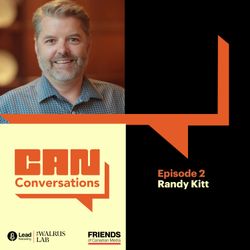
2. Are news deserts the new normal?
32:28||Season 1, Ep. 2What happens when local news goes dark?Canadian journalism isn’t merely news, it’s democratic infrastructure. Amid a world of big tech monopolies and misinformation, Canadian journalism is constantly fighting to ensure people are informed by trusted and verified sources. But this democratic infrastructure is actively breaking down. From advertising revenue loss to mass newsroom layoffs and closures, the Canadian media sphere is facing crises that are leaving behind countless news deserts.In this episode of CanConversations, host Raj Shoan sits down with Randy Kitt, Director of Media at Unifor, to discuss the value of local news and the threats that stare it down every day. They discuss exactly how these threats impact local news, how legislation has both protected and eroded Canadian journalism, and the possibility of a sustainable news ecosystem for the future.3 REASONS TO LISTEN TO THIS EPISODELearn about the disappearance of local journalism in Canada and the structural problems that have eroded the industry. Understand precisely how important local journalism is and how its absence will negatively impact Canadians.Find out how journalism can become a sustainable ecosystem in the future and how it can be supported.RESOURCESFriends of Canadian MediaUniforUnifor’s Fact Check HereRTDNA and ethical journalismThe Online News ActThe Online Streaming ActPublic Policy Forum’s “The Shattered Mirror”CRTC and media regulationsGUEST BIORandy Kitt is the Director of Media at Unifor, Canada’s largest private sector trade union and largest media union, where he works to direct media policy and protect the rights of journalists and media workers. He is a graduate of Toronto Metropolitan University’s Radio and Television Arts program and has worked for organizations such as CTV, TSN, Discovery Channel, and Bell Media. Kitt has over two decades of experience in video production, news editing, show openings, features, documentaries, commercials and promotions.CLARIFICATIONS[25:41] Raj and Randy used some imprecise language around the advertising tax deductibility changes. It was really about removing the deduction for foreign advertising rather than introducing a new deduction for Canadian ones. Nevertheless, the resulting benefit of the policy is the same; support for Canadian media entities in the face of American competition.[26:15] Raj mentions the Income Tax Act was “expanded” to Google and Meta. It was not an intentional expansion. Actually, this section of the Income Tax Act was never updated to reflect the new internet era with online platforms. So because it doesn't specifically preclude it, advertising on a foreign online platform/website by default makes it tax deductible. More info: Close the Loophole! The Deductibility of Foreign Internet Advertising[26:42] Raj expresses that we should “stop making Google and Meta eligible for a tax deduction that they weren't ever intended to receive.” To clarify, Google and Meta are not receiving tax deductions, rather it is Canadian businesses that are receiving the tax deductions for advertising on Google and Meta.Thanks for listening to CanConversations, a podcast from Friends of Canadian Media in collaboration with The Walrus Lab.Everything we do at Friends of Canada Media is supported by people who believe in strong journalism, public broadcasting, and stories that reflect who we are as Canadians. And we do it without government funding, political ties, or corporate support. If that matters to you too, you can support us at friends.ca.If you enjoyed this episode, leave a review and share with a friend! Thank you for listening.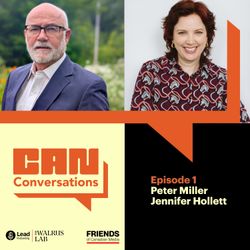
1. Who gets to tell Canada's story?
35:36||Season 1, Ep. 1Who will shape Canada's media future? And is our democracy and sovereignty at risk?Welcome to CanConversations, a new podcast from Friends of Canadian Media and The Walrus Lab, hosted by FOCM Executive Director Raj Shoan.In our first episode, we discuss the state of Canadian media, its history, and its future. Joined by communications lawyer, Peter Miller and Executive Director of The Walrus, Jennifer Hollett, we explore how Canada has historically protected its broadcasting systems and ownership.In the last two decades, with the rise of the Internet and American companies dominating media, Canadians have less control over the content they see and where it comes from.With the decline of local news, the difficulty of enforcing traditional regulation on the Internet, and the threats Canada faces from Donald Trump, it's time for a renewed conversation about Canadian independence and cultural sovereignty.About Jennifer HollettJennifer Hollett is the Executive Director of The Walrus, the former head of news and government for Twitter in Canada, and a former MuchMusic VJ.She won a Canadian Online Publishing Award for her work hosting CBC’s G20 Street Level blog during the G20 Summit in Toronto, and was recognized by Amnesty International Canada with a 2009 Media Award for her CBC radio reporting from Israel and Palestine. She has appeared frequently as a commentator on CTV, CBC, and Newstalk 1010.About Peter MillerPeter Miller is a communications and broadcast lawyer with over 30 years of experience in media and telecommunications, public policy, planning, and development. He serves as an advisor to Friends of Canadian Media.ResourcesCRTC and media regulationsThe Online News ActLocal Independent Television Stations (LITS) Group's effort to challenge The Online News ActProtecting Canada’s cultural sovereigntyFriends of Canadian MediaThe Walrus LabThree reasons you should listen to this episode1. Learn about threats to the Canadian media ecosystem and why it's more important than ever to support Canadian media.2. Discover the history of Canadian broadcasting systems, including simultaneous substitution and advertising tax deductibility, and how these regulations are not applied to US internet companies, such as Netflix, Meta, and Google.3. Hear about how much media policy matters, and how it plays a role in everyday life, even if you don't realize itEpisode highlights1:10 Why Canadian Media matters to democracyPeter and Jennifer highlight how, in the last decade, the importance of a healthy media ecosystem has become connected to the issue of Canadian democracy. They detail the significance of Canadians having complete sovereignty over our media and the often invisible policy needed to ensure that is the case. 14:36 What can be done to protect Canadian mediaPeter shares the history of Canadian broadcasting standards, including simultaneous substitution and advertising tax deductibility, which encouraged Canadian businesses to advertise on Canadian broadcasters. He highlights how, in the last two decades, these measures have been challenged by the internet, and rights protections, like those of the broadcasting system, do not exist in the internet space.22:27 Donald Trump and threats to Canadian mediaThe guests discuss how the U.S. threatens Canadian media and how Canadians are banding together to support our media sovereignty, including public broadcasting, print media, and digital media.Thanks for listening to CanConversations, a podcast from Friends of Canadian Media in collaboration with The Walrus Lab.Everything we do at Friends of Canada Media is supported by people who believe in strong journalism, public broadcasting, and stories that reflect who we are as Canadians.And we do it without government funding, political ties, or corporate support. If that matters to you too, you can support us at friends.ca.If you enjoyed this episode, leave a review and share with a friend!Thank you for listening.
Introducing CanConversations
00:39||Season 1, Ep. 0Welcome to CanConversations, the podcast about Canadian media behind the scenes, and how you can be a part of it.Come with us as we pull back the curtain on the fight for Canada's cultural sovereignty. In the inaugural season, we trace how algorithms, American streamers, and shuttered newsrooms are reshaping what Canadians watch, read, and share. We'll explore the challenges faced by local journalists, the battle over online harm, and the future of Canadian storytelling and public broadcasting. There's a conversation to be had about who gets to tell stories in Canada and who profits from them. We invite you to join that conversation.From Friends of Canadian Media, in partnership with The Walrus Lab.
loading...