Share
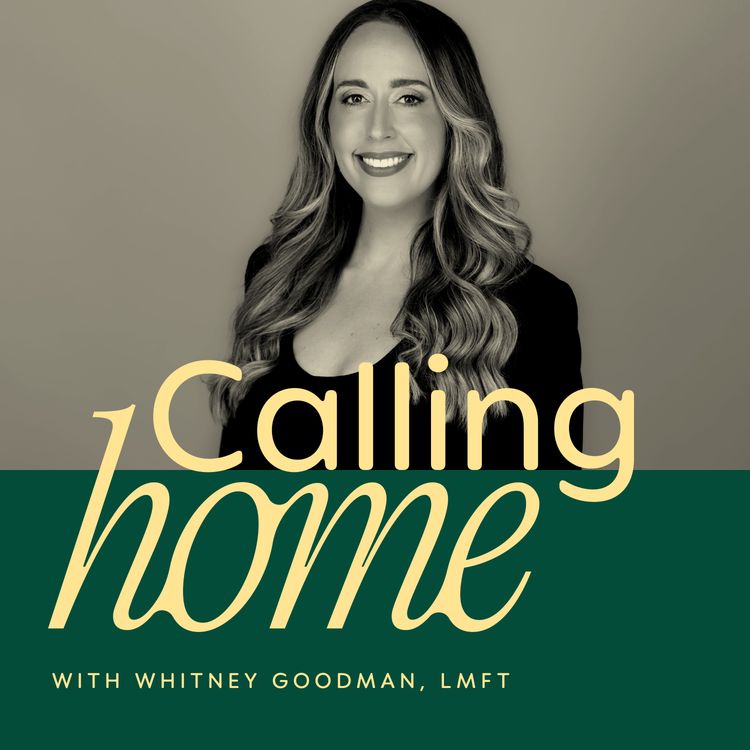
CALLING HOME with Whitney Goodman, LMFT
When Your Family Runs On Blame
Something goes wrong at home. A glass tips over. Someone forgot to change the laundry, unload the dishwasher. The dog escapes. Within seconds there's a full trial underway about whose fault it is. Whitney breaks down what's actually happening in families that run on blame.
In this episode, you'll learn:
- Why blame feels like accountability but actually prevents it
- How the scapegoat and golden child both learn about fault
- The three-part anatomy of real repair
- What to do when you can repair and your family can’t
- How to stop the cycle blame with your own kids
Whitney Goodman is a Licensed Marriage and Family Therapist (LMFT) and the founder of Calling Home, a membership community that helps people navigate complex family dynamics and break harmful cycles.
Have a question for Whitney? Send a voice memo or email to whitney@callinghome.co
Join the Family Cyclebreakers Club: https://callinghome.co
Follow Whitney on Instagram | sitwithwhit
Follow Whitney on YouTube | @whitneygoodmanlmft
Order Whitney's book, Toxic Positivity: https://sitwithwhit.com/toxic-positivity
Sign up for updates on Whitney's new book: https://cmnyyv4kpyt.typeform.com/to/PHMzjy0o
This podcast is for informational purposes only and is not a substitute for professional mental health advice.
More episodes
View all episodes
When No Contact Doesn't Stop the Contact
28:08|Content warning: This episode contains descriptions of emotional abuse, ongoing harassment, and a mention of suicidal ideation.In this Q&A episode, Whitney answers a woman whose parents keep sending guilt-laden texts and showing up uninvited. In the second question, a listener's therapist keeps telling her to decide what she wants from her parents before she feels ready.Whitney Goodman is a Licensed Marriage and Family Therapist (LMFT) and the founder of Calling Home, a membership community that helps people navigate complex family dynamics and break harmful cycles.Have a question for Whitney? Send a voice memo or email to whitney@callinghome.coJoin the Family Cyclebreakers Club: https://callinghome.coFollow Whitney on Instagram | sitwithwhitFollow Whitney on YouTube | @whitneygoodmanlmftOrder Whitney's book, Toxic Positivity: https://sitwithwhit.com/toxic-positivitySign up for updates on Whitney's new book: https://cmnyyv4kpyt.typeform.com/to/PHMzjy0oThis podcast is for informational purposes only and is not a substitute for professional mental health advice.Abuse and Estrangement in Christian Fundamentalism with Stephanie Warren
01:00:26|Content warning: This episode contains descriptions of child abuse and corporal punishment. Stephanie Warren was taught that her parents beating her was proof of their love, because in the fundamentalist Christian world she grew up in, that was what love was allowed to look like. She and Whitney talk through how her parents rationalized the abuse, why she eventually went no contact, and what it took to build a life and an education she was never supposed to have. Connect with Stephanie Warren: https://thestrongwilledchild.substack.com/ Whitney Goodman is a Licensed Marriage and Family Therapist (LMFT) and the founder of Calling Home, a membership community that helps people navigate complex family dynamics and break harmful cycles.Have a question for Whitney? Send a voice memo or email to whitney@callinghome.coJoin the Family Cyclebreakers Club: https://callinghome.coFollow Whitney on Instagram | sitwithwhitFollow Whitney on YouTube | @whitneygoodmanlmftOrder Whitney's book, Toxic Positivity: https://sitwithwhit.com/toxic-positivitySign up for updates on Whitney's new book: https://cmnyyv4kpyt.typeform.com/to/PHMzjy0oThis podcast is for informational purposes only and is not a substitute for professional mental health advice.I Asked For Space and They Sued Me
25:07|Content warning: This episode contains descriptions of child abuse and domestic violence.In this Q&A episode, answers a question from a woman whose parents responded to her request for space by suing her for access to her children. In the second question, from a man whose mother stayed with an abusive partner and is still with him today. He asks what to make of a parent who chose someone else over her kids.Whitney Goodman is a Licensed Marriage and Family Therapist (LMFT) and the founder of Calling Home, a membership community that helps people navigate complex family dynamics and break harmful cycles.Have a question for Whitney? Send a voice memo or email to whitney@callinghome.coJoin the Family Cyclebreakers Club: https://callinghome.coFollow Whitney on Instagram | sitwithwhitFollow Whitney on YouTube | @whitneygoodmanlmftOrder Whitney's book, Toxic Positivity: https://sitwithwhit.com/toxic-positivitySign up for updates on Whitney's new book: https://cmnyyv4kpyt.typeform.com/to/PHMzjy0oThis podcast is for informational purposes only and is not a substitute for professional mental health advice.Why Can't I Be Me When I'm With You?
41:29|People don't walk into a therapist's office and say they're having a differentiation problem. They say they feel like a different person around their family, or that they have a whole life their parents know nothing about. Whitney walks through what differentiation actually is, and the four very different situations people are in when they can't be themselves around family.In this episode, you'll learn:- What differentiation means in Bowen family systems, and the three ways it commonly goes wrong- The difference between a family that disagrees with you and one that targets who you are- Why going no contact doesn't automatically differentiate you from your familyWhitney Goodman is a Licensed Marriage and Family Therapist (LMFT) and the founder of Calling Home, a membership community that helps people navigate complex family dynamics and break harmful cycles.Have a question for Whitney? Send a voice memo or email to whitney@callinghome.coJoin the Family Cyclebreakers Club: https://callinghome.coFollow Whitney on Instagram | sitwithwhitFollow Whitney on YouTube | @whitneygoodmanlmftOrder Whitney's book, Toxic Positivity: https://sitwithwhit.com/toxic-positivitySign up for updates on Whitney's new book: https://cmnyyv4kpyt.typeform.com/to/PHMzjy0oThis podcast is for informational purposes only and is not a substitute for professional mental health advice.My Estrangement is Giving Me Migraines and Stomachaches
28:22|In this Q&A episode, Whitney answers two questions from listening asking what their responsibility is to people who aren’t going to change. In question one: a stepmom asks how much to intervene with a 19 year old stepson who is getting pulled back into a controlling household. In question two: a woman who seeks advice about parents who give her migraines and stomachaches every time they call.Whitney Goodman is a Licensed Marriage and Family Therapist (LMFT) and the founder of Calling Home, a membership community that helps people navigate complex family dynamics and break harmful cycles.Have a question for Whitney? Send a voice memo or email to whitney@callinghome.coJoin the Family Cyclebreakers Club: https://callinghome.coFollow Whitney on Instagram | sitwithwhitFollow Whitney on YouTube | @whitneygoodmanlmftOrder Whitney's book, Toxic Positivity: https://sitwithwhit.com/toxic-positivitySign up for updates on Whitney's new book: https://cmnyyv4kpyt.typeform.com/to/PHMzjy0oThis podcast is for informational purposes only and is not a substitute for professional mental health advice.The Lindsay Clancy Trial
01:02:29|Content warning: This episode discusses suicide, postpartum psychosis, and the deaths of children, and includes detailed discussion of the Lindsay Clancy case.The Lindsay Clancy trial revealed a family that was educated, involved, genuinely, and yet still could not see how much danger their family member was in. This is not an episode about what the Clancys did wrong. It's about why people conceal what they're going through even from the people closest to them, and what questions actually work when you're worried about someone you love.In this episode, you'll learn:- The research on which question phrasings actually produce honest disclosure, and which shut it down- What HIPAA does and does not prevent you from telling a family member's provider- How to follow up after the first conversation, and what to observe when the answers don't match what you're seeingResources Whitney recommends:988 Suicide and Crisis Lifeline (call or text 988)Postpartum Support International Helpline: 1-800-944-4773Postpartum Support International: https://www.postpartum.netThe Columbia Protocol for families, friends, and neighbors is available free onlineWhitney Goodman is a Licensed Marriage and Family Therapist (LMFT) and the founder of Calling Home, a membership community that helps people navigate complex family dynamics and break harmful cycles.Have a question for Whitney? Send a voice memo or email to whitney@callinghome.coJoin the Family Cyclebreakers Club: https://callinghome.coFollow Whitney on Instagram | sitwithwhitFollow Whitney on YouTube | @whitneygoodmanlmftOrder Whitney's book, Toxic Positivity: https://sitwithwhit.com/toxic-positivitySign up for updates on Whitney's new book: https://cmnyyv4kpyt.typeform.com/to/PHMzjy0oThis podcast is for informational purposes only and is not a substitute for professional mental health advice.When a Parent Pulls Away
29:27|In this Q&A episode, Whitney answers questions about parents who pull back instead of facing accountability. In question one: a father goes silent for a year after his daughter discovers he secretly bought her sister a house. In question two: a mother wants a third family therapy session, after quitting the last two the moment the therapist named something she didn't like. Whitney Goodman is a Licensed Marriage and Family Therapist (LMFT) and the founder of Calling Home, a membership community that helps people navigate complex family dynamics and break harmful cycles. Have a question for Whitney? Send a voice memo or email to whitney@callinghome.co Join the Family Cyclebreakers Club: https://callinghome.coFollow Whitney on Instagram | sitwithwhit Follow Whitney on YouTube | @whitneygoodmanlmft Order Whitney's book, Toxic Positivity: https://sitwithwhit.com/toxic-positivitySign up for updates on Whitney's new book: https://cmnyyv4kpyt.typeform.com/to/PHMzjy0oThis podcast is for informational purposes only and is not a substitute for professional mental health advice.What it’s Like On Both Sides of Estrangment With Kreed Revere
44:37|Content warning: This episode contains descriptions of child abuse and references to sexual abuse.Kreed, host of the Estranged Heart Podcast, shares her perspective as both a formerly estranged adult daughter and a formerly estranged mother, now reconciled with her daughters. Kreed and Whitney cover the common mistakes parents make when first reconnecting with children and what their children actually need from them instead.In this episode, you'll learn:- Why reconciliation is an ongoing process, not a one-time repair- Why "defending, justifying, and explaining" backfires with an estranged child- Why rushing contact after reconciliation often causes a relapse into estrangement- Why "what is within your control" matters more than trying to get the other person to changeConnect with CreedWebsite: https://theestrangedheart.com/podcastWhitney Goodman is a Licensed Marriage and Family Therapist (LMFT) and the founder of Calling Home, a membership community that helps people navigate complex family dynamics and break harmful cycles.Have a question for Whitney? Send a voice memo or email to whitney@callinghome.coJoin the Family Cyclebreakers Club: https://callinghome.coFollow Whitney on Instagram | sitwithwhitFollow Whitney on YouTube | @whitneygoodmanlmftOrder Whitney's book, Toxic Positivity: https://sitwithwhit.com/toxic-positivitySign up for updates on Whitney's new book: https://cmnyyv4kpyt.typeform.com/to/PHMzjy0oThis podcast is for informational purposes only and is not a substitute for professional mental health advice.My Parents Welcomed Their Estrangment
39:43|Content warning: This episode contains descriptions of domestic violence, child abuse, and suicidal ideation.In this Q&A episode, Whitney answers questions about families who respond with denial when being called out. In question one: a parent threatens suicide to shut down an argument. In question two: two parents shield each other instead of the kids.Whitney Goodman is a Licensed Marriage and Family Therapist (LMFT) and the founder of Calling Home, a membership community that helps people navigate complex family dynamics and break harmful cycles.Have a question for Whitney? Send a voice memo or email to whitney@callinghome.coJoin the Family Cyclebreakers Club: https://callinghome.coFollow Whitney on Instagram | sitwithwhitFollow Whitney on YouTube | @whitneygoodmanlmftOrder Whitney's book, Toxic Positivity: https://sitwithwhit.com/toxic-positivitySign up for updates on Whitney's new book: https://cmnyyv4kpyt.typeform.com/to/PHMzjy0oThis podcast is for informational purposes only and is not a substitute for professional mental health advice.