Share
Buddha's Stories: Self-Help, Mental Health and Psychology
Why Your Mind Is Weaker Than You Think
Season 1, Ep. 16
•
This is the famous story of the Buddhist monk Bodhidharma and Chinese Emperor Wu. In this ancient Buddhist story, Bodhidharma teaches a powerful lesson about the mind, thoughts, and inner peace. Discover how our thoughts shape what we call the “mind” and learn how to observe them, find peace, and gain better control over your inner world.
More episodes
View all episodes
34. Mahabharata Episode: Why Pandavas Went To Hell And Kauravas Went To Heaven
08:00||Season 1, Ep. 34Why Pandavas Went To Hell And Kauravas Went To Heaven | After Mahabharata Part 2
33. The Origin Of Transgender In Hinduism
08:53||Season 1, Ep. 33The Hindu God Of Transgenders | Origin Of Transgender In Hinduism It is widely believed in the Southern India that transgender community originated from a small character in the Mahabharata named Iravan, often also referred as Aravan. Aravan was the child of Arjun and Ulupi, the widowed Naga princess. According to the Tamil version of Mahabharata, before the beginning of the Kurukshetra war a sacrificial rite named Kalappali was performed. Aravan sacrificed himself in the war and was granted three boons by Lord Krishna, which ended up with Lord Krishna marrying him. Krishna as Mohini married Aravan, spending the night with him. It is from Aravan’s lineage after his association with Krishna’s female form that the transgenders are said to have been born. And that is why, trans-genders or Kinnars are also called Aravanis in Tamil. That is why in certain parts of Southern India there is 18-day Aravani festival which is mostly held by the trans-gender community. The Aravanis (Trans-genders) are married to Aravan as his bride and when the sacrifice of Aravan is enacted, the Aravanis become the widow of Aravan and mourn his death by breaking their bangles, beating their chest and discarding their bridal jewelry.
32. Mahabharata Episode: Krishna Explains Kaliyuga to the Pandavas
08:34||Season 1, Ep. 32Krishna Explains Kaliyuga To Pandavas As per Shrimad Bhagavad on the ninth day of the Mahabharata war between the Pandavas and the Kauravas, the third yuga which is the Dwapar Yuga had ended and the last yuga which is the Kali yuga had begun. However, because of the power of lord Krishna, Kali could not spread throughout the earth and was restricted to the battlefields and war grounds. Although the full effect of Kali yuga, started after the demise of Shri Krishna, Krishna knew very well what would Kali Yuga bring along. As per the Uddhava Gita and Shrimad Bhagavatam, Once the four Pandavas Arjuna, Bheema, Nakul and Sahadeva asked Krishna, What is Kali Yuga? ". Krishna smiled and said "Let me demonstrate to you, the situation of Kaliyuga." He took a bow and four arrows and shot them in four directions and ordered the four Pandavas to go and bring them back. Each of the four Pandavas went in the four different directions to search for the arrows.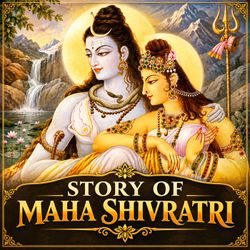
31. Maha Shivratri Episode: The Night Shiva Married Parvati
07:46||Season 1, Ep. 31Maha Shivratri is a Hindu festival, celebrated annually in honour of Lord Shiva, the God of destruction. Shivratri is celebrated in every month of the luni-solar calendar, in accordance with the Hindu calendar but once a year, in late winter Maha Shivratri is celebrated to commemorate the oncoming summer. Maha Shivratri, literally translates as ‘the great night of Shiva’ and according to legend, it is on this night that Lord Shiva performs his heavenly dance or ‘tandav’ representing creation, preservation and destruction. As per many, it is also the day when Shiva and Parvati got married, thus the union of Prakriti and Purusha for the well-being of the world.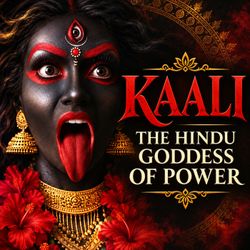
30. Goddess Kali Episode: The Most Powerful Hindu God
05:27||Season 1, Ep. 30No character in the history of all religions is as fierce as the Hindu goddess Kali. In the 20th century, with the rise of women rights, feminists came to view Kali as the as embodiment of feminine power. However, the image of Kali that exists in the West is rather different from the way most Indians see her. Although Kali is associated with blood, death and destruction, she is also seen as a Mother figure, and often referred to as Maa Kali meaning Mother Kali. Kali associates with her many different forms and stories. Maha Kali, Bhadra Kali, Dakshina Kali, Chandika are some of her many forms.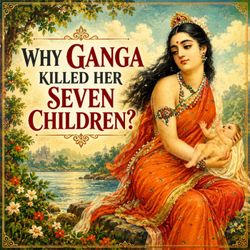
29. Mahabharata: Ganga Drowns Her Seven Sons, the Vasus' Curse
05:35||Season 1, Ep. 29Why did Goddess Ganga drown her seven children in the Mahabharata?King Shantanu once fell in love with Goddess Ganga, who agreed to marry him on one condition: he must never question her actions. After their marriage, Ganga gave birth to seven sons, but each time, she drowned the newborn in the river. Heartbroken, Shantanu remained silent until the birth of their eighth child.The reason lay in a curse from their previous birth. The seven children were the eight Vasus, divine beings who had been cursed by Sage Vashistha to be born as humans. Ganga had promised to free them from the curse by drowning them immediately after birth.However, the eighth Vasu was destined to live a long human life. When Shantanu finally stopped Ganga from drowning the eighth child, she revealed the truth and left with the baby.She named him Devavrata, who later became the legendary warrior Bhishma Pitamah, one of the greatest figures in the Mahabharata.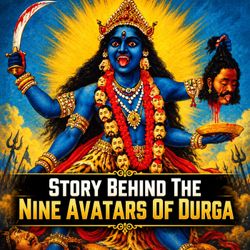
28. Story Behind The Nine Avatars Of Goddess Durga
10:44||Season 1, Ep. 28Navaratri celebrates the victory of good over evil through the nine divine forms of Goddess Durga, collectively known as Navadurga. Each form represents a unique power and is worshipped on a different day.The nine forms are Shailaputri, the daughter of the mountains; Brahmacharini, the symbol of devotion and penance; Chandraghanta, the fierce warrior; Kushmanda, the creator of the universe; Skandamata, the mother of Lord Kartikeya; Katyayani, the powerful destroyer of evil; Kaalratri, the destroyer of darkness; Mahagauri, the symbol of purity and peace; and Siddhidatri, the goddess who grants divine blessings and spiritual powers.Together, these nine forms represent the strength, courage, compassion, and divine energy of Goddess Durga, reminding us that good always triumphs over evil.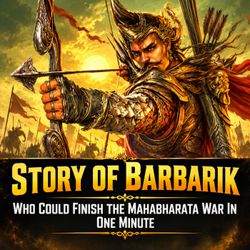
27. Barbarik - The Warrior Who Could End Mahabharat
06:12||Season 1, Ep. 27The story of Barbarik, found in regional Mahabharata traditions, tells of a mighty warrior who possessed three divine arrows blessed by Lord Shiva. The grandson of Bhima and son of Ghatotkacha, Barbarik believed he could end the entire Kurukshetra War in just one minute.Each arrow had extraordinary power: one could mark targets for destruction, another could mark those to be protected, and the third could complete the task with perfect precision.Lord Krishna, disguised as a Brahmin, tested Barbarik's strength and was astonished by his abilities. Recognizing him as an exceptionally brave warrior, Krishna asked Barbarik to sacrifice his head before the battle. True to his promise, Barbarik willingly offered his head to Krishna, making his sacrifice a legendary tale of devotion and courage.
26. Lord Indra’s Untold Scandals
06:04||Season 1, Ep. 26Indra, the king of the Devas and ruler of Swargaloka, is the god of rain, thunderstorms, and lightning. Known for his power as well as his mischievous nature, Indra became the subject of a notorious legend. According to versions found in the Ramayana and the Padma Purana, he was cursed after an encounter with Ahalya, bearing a thousand marks of shame upon his body.