Share
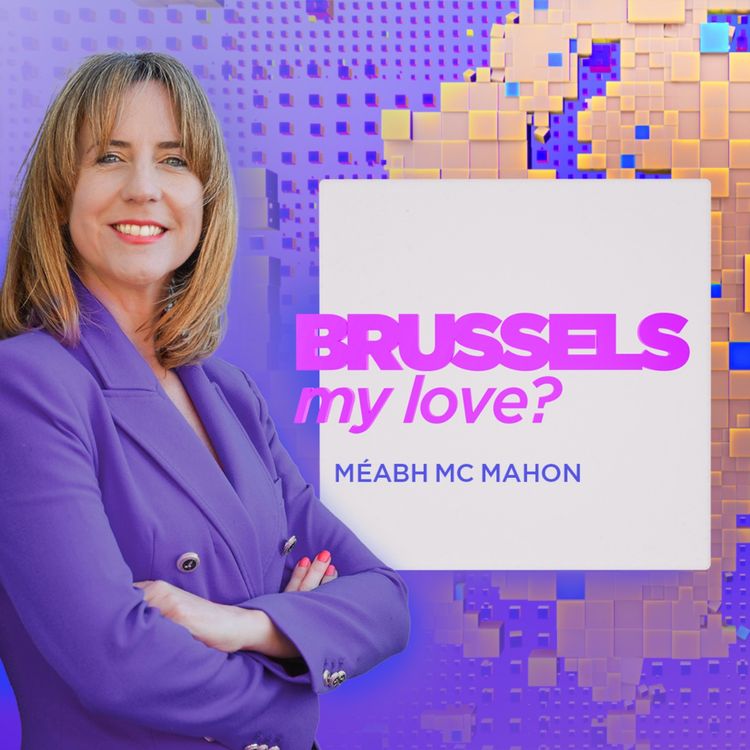
Brussels, My Love?
How the EU is juggling geopolitical turmoil: From politics to Eurovision
On the eve of Europe Day, Brussels, My Love? explores Europe’s place in the international stage with Tomi Huhtanen, executive director of the Wilfried Martens Centre for European Studies, and Shona Murray, Euronews’ senior correspondent. What is the state of the transatlantic alliance? And, are these geopolitical issues dividing or uniting the bloc?
And, we look at the 70th edition of the Eurovision Song Contest, taking place next week in Vienna, with Dean Vuletic, historian and author of the book Postwar Europe and the Eurovision Song Contest.
Brussels, My Love? is Euronews' weekly podcast hosted by Méabh Mc Mahon, giving you all the context you need to make sense of the European Union (EU).
From plans to transition from an economic trading bloc to a military powerhouse to bans on tofu sausages, you’ll discover how EU laws are debated and created, along with sharp analysis from some of Brussels’ brightest minds.
Do you want to get in touch? Email us at brusselsmylove@euronews.com
More episodes
View all episodes
36. The US party that split Brussels
18:14||Season 1, Ep. 36To mark the 250th anniversary of US independence, the US Embassy in Brussels threw a huge party at Parc du Cinquantenaire, in the heart of Brussels' European Quarter. From American candy to lobster rolls, the event attracted almost 10,000 people. On this episode of Brussels, My Love?, we delve into the politics behind the celebration and explore the state of the US-Iran talks aimed at ending the conflict in the Middle East. We are joined by Ian Lesser of the German Marshall Fund of the United States, Lina Aburous of Forward Global, and Leo Cendrowicz, Brussels-based journalist and editor for Euronews and The Brussels Times.35. From Nicosia to Dublin: Cyprus passes baton to Ireland
16:56||Season 1, Ep. 35On 1 July 2026, Cyprus will hand over the presidency of the Council of the EU to Ireland. From the long-term EU budget to the crisis in the Middle East and the bloc’s defence, what have been the highlights of Cyprus’s presidency of the Council of the EU? And what priorities will Ireland set? To answer these and more questions, Brussels, My Love? sits down with Irene Kostaki, EU correspondent for the Cyprus News Agency, Cynthia Ní Mhurchú, Irish MEP for Renew Europe, and Micheal O Conchuir, secretary general for the European Alliance Group at the Committee of the Regions.34. Ten years on, Brexit ghosts still linger
19:37||Season 1, Ep. 34Ten years after Britain voted to leave the EU, the political and economic consequences of Brexit remain a subject of debate. On this episode of Brussels, My Love?, we mark the anniversary with an exclusive interview with the co-hosts of The Europeans podcast, alongside analysis and debate from our panel: corporate lobbyist Connor Allen and Euronews correspondent Shona Murray.33. Is politics taking the focus off the pitch at this year's World Cup?
16:32||Season 1, Ep. 33As the EU's Migration and Asylum Pact comes into force, debate is already shifting to new proposals aimed at increasing migrant returns. Meanwhile, the FIFA World Cup has kicked off amid growing controversy over travel bans, immigration enforcement and the role of politics in sport. In this episode of Brussels, my love? Méabh Mc Mahon is joined by Virginie Jacob, Petros Fassoulas and Adnan Leal to discuss what the migration pact means for Europe and whether politics is overshadowing the World Cup games.32. The economic battle between Brussels and Beijing
20:38||Season 1, Ep. 32As tensions between Brussels and Beijing escalate, the EU is stepping up efforts to tackle Chinese overcapacity and pursue a strategy of "de-risking" its economic relationship with China. But what does de-risking actually mean? Could it lead to higher prices for consumers? And how close are the EU and China to a full-blown trade war? This week, Méabh Mc Mahon is joined by EU-Asia relations expert Stefania Benaglia, PPF Group's Chief External Affairs Officer Jan Růžička, and Euronews political correspondent Jorge Liboreiro to unpack the growing trade dispute. From industrial policy and economic security to Europe's competitiveness and global ambitions, the panel explores what is at stake for businesses, policymakers, and citizens across Europe.31. An unusual heatwave with a sinister twist
16:05||Season 1, Ep. 31From blistering heatwaves sweeping Europe to rising security tensions along the Baltic border, this week’s episode dives into the stories keeping officials in Brussels awake at night. We unpack the climate warnings behind Western Europe’s record-breaking temperatures, the growing pressure on Europe’s food systems, and the intensifying hybrid threats facing NATO’s eastern flank. Our panel includes Ionela Maria Ciolan, research officer at the Wilfried Martens Centre for European Studies, Angela Skujins, Euronews defence correspondent and Jeremy Wilks, Euronews science correspondent.30. Wait… Are we talking about Brexit again?
23:44||Season 1, Ep. 30Nearly a decade after the referendum, Britain is arguing about Brexit all over again. Was it a historic mistake, a necessary act of sovereignty, or something the country still hasn’t fully understood? Host Méabh Mc Mahon unpacks why the debate has returned and what is the view from Brussels with guests Dharmendra Kanani, Natalie Sarkic-Todd and Euronews' politics correspondent Stefan Grobe.29. Hungary after Viktor Orbán: How 16 years vanished in 30 days
19:03||Season 1, Ep. 29After 16 years of Viktor Orbán’s rule, Hungary suddenly feels like a different country. The billboards are gone, the propaganda machine has fallen silent, and new Prime Minister Péter Magyar is promising sweeping change. This week on Euronews’ weekly podcast Brussels, My Love?, we explore Hungary’s political reset — and what it means for the EU. Host Méabh Mc Mahon is joined by Sándor Zsiros, Euronews’ Hungarian correspondent, Teresa Küchler, Swedish EU affairs expert and correspondent for Svenska Dagbladet, with a bonus appearance from Euronews' political correspondent Luca Bertuzzi for updates on the latest tweaks to the EU AI Act.