Share

Brazier
Why Labour Hates Self-Made Men Like Jim Ratcliffe
•
This week, Colin examines Britain’s increasingly fraught relationship with wealth through the story of Jim Ratcliffe, asking why the self-made billionaire has become a lightning rod in the debate over success, inequality and mass immigration.
From the industrialists who built Britain to today’s entrepreneurs and high earners, Colin traces the ideological roots of the animosity towards wealth creation and asks what happens when those with the means to leave decide that Britain is no longer worth the price of staying.
More episodes
View all episodes

Why Don’t We Dress Up Any More?
25:16|Britain was once a country where dressing smartly, respecting authority and observing tradition were taken as read. Today, ties are disappearing, informality reigns supreme and even our oldest institutions balk at their own customs. But is this relentless retreat from tradition coming at the expense of something more important?From the classroom to the police force, Parliament and the Church, Colin Brazier examines what Britain has lost in its relentless drive to modernise. Drawing on the examples of Britain’s strictest headteacher, Katharine Birbalsingh, and Greater Manchester Police chief Stephen Watson, Colin argues that tradition is about far more than appearances.
Was Their Sacrifice Worth It?
23:44|For Colin Brazier, Remembrance Sunday feels like a funeral for the Britain his grandfather fought for. He contrasts the Bradford he grew up in with the city he sees today and asks how much of the country our fallen heroes would still recognise.From the politicisation of the poppy to Tucker Carlson’s suggestion that Britain should have stayed out of the Second World War, Colin examines what happens when a country loses touch with its wartime past. We still wear the poppy. But how many of us understand why?
The Slavery Scam That Could Bankrupt Britain
24:09|King Charles is currently on a tour of the Caribbean, against a backdrop of calls from Commonwealth nations to force the British taxpayer to transfer trillions in "reparations" for the transatlantic slave trade. Colin Brazier confronts the growing campaign to make the British taxpayer transfer trillions. From the Commonwealth and United Nations to Labour backbenchers such as Dawn Butler, who has openly called for reparations, Colin questions why Britain’s role in abolishing slavery is so often overlooked while other nations escape similar scrutiny. With King Charles facing pressure to formally apologise and address demands for reparations, Colin examines the movement’s growing influence on British institutions and warns that race-based compensation could take a very sinister turn.
Why the Media is Trying to Stop Reform
25:38|Colin Brazier draws on his decades in broadcast journalism and firsthand experience inside Reform UK's headquarters to scrutinise ITV’s "explosive" undercover investigation. From hidden cameras and leading questions to selective editing, Colin asks whether investigative journalism has crossed the line into political activism – and whether the mainstream media can still be trusted to report impartially.
The Dangerous Lie That Prison Doesn’t Work
24:53|This week, Colin tells the extraordinary story of his late grandfather to examine the dire state of Britain’s criminal justice system. As thousands of prisoners are released early amid chronic overcrowding, he explores how life behind bars has changed over the past three decades, from the proliferation of drugs and violence to the growing threat of Islamist radicalisation.But the crisis, Colin argues, runs much deeper than a shortage of prison cells. Tracing the shift from the ‘prison works’ consensus of the 1990s to today’s emphasis on rehabilitation and shorter sentences, he examines the widening gulf between public opinion and the political establishment. Have we lost sight of the fundamental purpose of punishment? And, as criminals walk free after serving a fraction of their sentences, whose side is the law really on?
France Is Burning - Is This the End of the Fifth Republic?
26:12|This week, Colin looks beyond the headlines surrounding France’s latest wave of riots to examine what is really driving the unrest - and why the turmoil across the Channel should alarm Britain. Drawing on his experiences reporting from France and the legacy of the 1968 uprising, he explores the deepening tensions surrounding immigration, integration and national identity.With Marine Le Pen potentially on course for the French presidency, Colin warns that the violence on France’s streets may be a dress rehearsal for a much bigger political confrontation. Could Britain face similar upheaval if Nigel Farage comes to power? And what can the French experience teach us about the challenges that may lie ahead?
This Will Change Britain Forever
25:50|This week, Colin cuts through the noise surrounding Andy Burnham's Labour conference speech to expose what his government is really up to on immigration.From the Afghan resettlement scheme to the interminable small boats crisis, Colin questions both the decisions and indecisions reshaping Britain - and argues that the consequences of the looming “Burnham wave” will be felt for decades.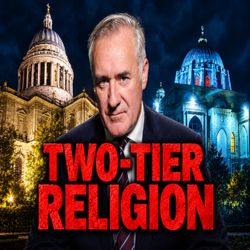
Why We Mock Christianity but Fear Islam
23:59|This week, Colin returns from Arcadia in Greece - where Christian identity remains bound up with centuries of resistance to Muslim rule - to find St Paul's Cathedral has signed a nightclub residency, and asks why Christianity in modern Britain is fair game while Islam is untouchable. From Coronation Street hiding an altar cross to a Yorkshire teacher still in hiding for showing pupils an image of Muhammad, the double standard is everywhere.It isn't really about protecting Christianity from criticism, Colin argues, but what the asymmetry reveals: a Church of England more interested in helter-skelters and slavery reparations than its own survival, and a Britain too disoriented to notice millions of Muslims worldwide quietly converting to Christianity, often at grave personal risk. A society unwilling to defend its own religious heritage on equal terms leaves a vacuum for more assertive faiths to fill.