Share
Brazier
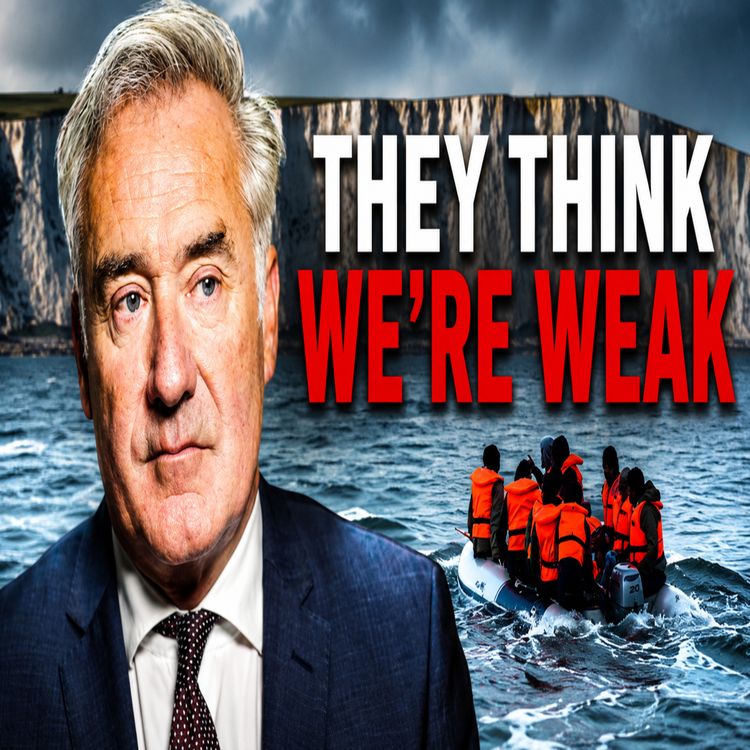
What Illegal Migrants Really Think of Britain
•
This week, Colin argues that illegal migration holds up an uncomfortable mirror to modern Britain. What if, instead of asking why migrants come here, we asked what they think of the country they encounter? Through a thought experiment, he imagines what an honest survey of illegal migrants would reveal about Britain’s culture, values and place in the world.
Drawing on Britain's colonial past and the rise of multiculturalism, Colin argues we have lost the restless curiosity that once saw us rule the seas. At its heart is a simple question: is Britain shaping those who arrive on our shores, or are they reshaping Britain?
More episodes
View all episodes

The Lie We Told Ourselves About 9/11
25:40|This week, Colin reflects on the lessons the West still hasn't learned 25 years since 9/11 - chief among them is an unwillingness to reckon honestly with Islamism, the ideology capable of driving educated, comfortable men to commit the unthinkable. Drawing on decades reporting from Karachi to Iraq to Britain, he argues the mainstream media has consistently dodged naming religious ideology as the true driver of jihadist violence, reaching instead for excuses that ultimately provide cover to the West's mortal enemy.
Why Britain's Problems Are Bigger Than You Think
25:04|This week Colin argues Britain isn’t just broken, but “bats**t”. He points to a summer of surreal own-goals, including a farming minister who felt faint at raw meat, the Greens wanting to strip police of their tasers and shut all prisons, and national alerts about barbecue safety - all amid record Channel crossings.That lunacy, he says, found its most farcical expression in a Home Office booklet for new migrants explaining rape and that men and women are “equal”. Colin asks why a daily drumbeat of sexual assaults, so shocking in their depravity, barely makes front-page news anymore. Confronting these hard questions, he reaches a startling conclusion about how we got here.
Why They Believed Arday but Not Ray
25:36|This week, Colin tells a tale of two teachers, separated by 40 years but bound by one unavoidable question: why do those in power reward the story they want to believe over the truth?Jason Arday, the youngest Black professor ever appointed by Cambridge, staked his reputation on a Homeric struggle against adversity. That story has since unravelled in the most devastating fashion. Contrast this with Ray Honeyford, a white Bradford headmaster who had a hardscrabble childhood. He wrote one honest article criticising multiculturalism in 1985 and was hounded out of his job.Colin explores why one man was lionised for saying what people wanted to hear, while the other was destroyed for telling the truth.
The Silent Crisis That Could End Britain
23:10|This week, Colin admits he is a “monomaniac”, revealing that his singular obsession is demography. He argues that falling birth rates in Britain are no longer an abstract concern but an existential threat. So why fewer children? Colin rejects articles of faith such as unaffordable housing and costly childcare, pointing instead to shifting values and culture. In the second half, he explores potential solutions - from state incentives for parenthood to emulating Israel’s model. Throughout his monologue, Colin keeps returning to the uncomfortable question: if the British do not reverse course, who will replace us?
This Is the Inconvenient Truth About Terrorism
23:28|This week, Colin examines a string of terror attacks across Europe, from Nice a decade ago to last weekend’s atrocity in Berlin. He argues that the language used in the coverage of these atrocities is deliberately softened out of political correctness - when the reality is that Islamist and right-wing terrorism are not equivalent threats, as shown by starkly different casualty figures and MI5 caseloads.From the Home Office’s shadowy Research, Information and Communications Unit to the way grieving families’ statements are used to shut down legitimate debate, Colin traces how Britain’s institutions are more concerned with managing public emotion than confronting uncomfortable truths.
The Reason Our MPs Got So Bad
22:06|This week, Colin reflects on the life and legacy of Ann Widdecombe to ask a larger question: why has the standard of Britain’s MPs collapsed? He argues that today’s political class is a pale imitation of that which came before it. From Labour’s “loveless” landslide in 2024 to the rise of grievance politics, Colin argues that Parliament is increasingly filled with unserious politicians who lack the life experience the job demands. He examines how we got here and where we are heading unless there is a radical reset.
Is The Odyssey Backlash Justified?
22:56|This week, Colin asks where the line should be drawn between artistic licence and historical truth. Using Christopher Nolan's The Odyssey as a starting point, he argues that while fictional characters can be reimagined, altering the race of real historical figures risks distorting the past. From Cleopatra to the Battle of Hastings, he examines why some nations fiercely defend their historical record while others, such as Britain, often seem reluctant to do the same.Underlying the debate is the question of motive: why creative industries are increasingly prioritising progressive ideology over historical accuracy and believable storytelling, which ultimately erodes public trust in the stories a nation tells about itself.
Is Civil War Really Coming to Britain?
24:08|This week, Colin ponders a scenario once considered unthinkable in Britain: civil war. Drawing on the work of King's College London Professor Dr David Betz, alongside polling, recent unrest and his own reporting, he examines how a subject once dismissed as the preserve of cranks is steadily entering mainstream debate as the social fabric begins to unravel. Looking to countries including Japan, Lebanon and Northern Ireland, Colin explores how social cohesion is the glue that binds a nation together - and what can happen when it begins to break down. In doing so, he asks whether Britain still has the resilience to hold itself together, or whether it's no longer immune to the impulse of insurrection.