Share
BRAINLAND
SEASON 2 FINALE: Surfing Brainland
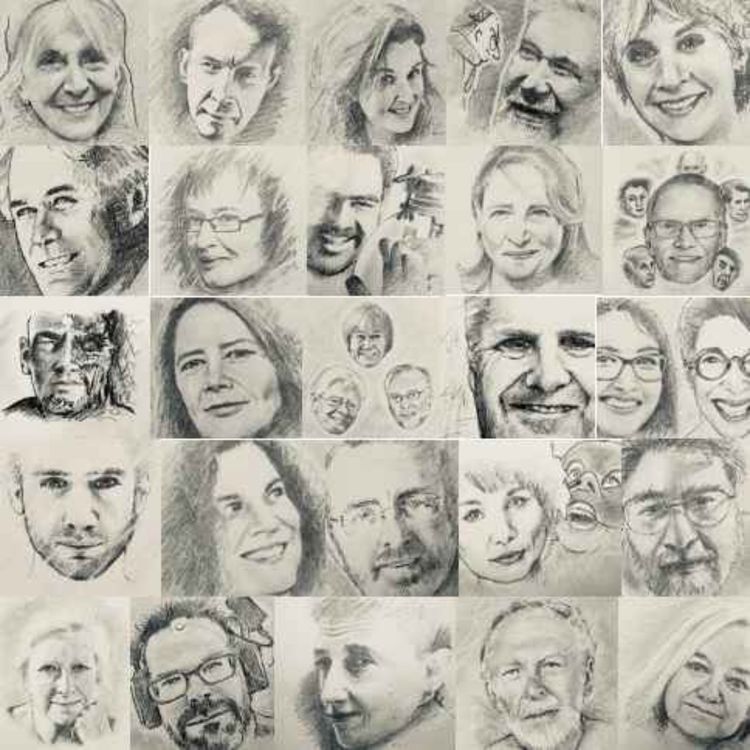
The final episode of season 2 is a compilation of 10 male and 10 female voices from season two, chosen more or less at random, about 90 seconds from each episode sampled at or around 20 minutes in. Thanks to all guests for a fascinating season and see you in season 3.
The key to the episodes and timings is below:
1.10. Kimberly Campanello.(26) DANTE, DOPAMINE AND ME: Neuro-poetic and other explorations into language.
2.36. Mark Solms. (29) '...PERCHANCE TO DREAM: On the neuroscience of sleep and dreaming...
4.12. Raquel Medina. (2) I FEEL I AM NOT IN MY PERFECT MIND: Alzheimer's and cognitive decline in movies.
5.45. Antony Penrose. (31) DREAM WARRIORS: Exploring the world of the surrealists...
7.40. Eileen Joyce and Sheldon Benjamin (10) NEUROPSYCHIATRY: Second Coming or Unholy Alliance?
9.15. Erika Dyck (13) EXPANDING MINDSCAPES: A psychedelic world tour.
10.40. Owen Flanagan (8) WHAT IS IT LIKE TO BE AN ADDICT? A philosopher tells it like it is.
12.33. Fiona Sampson. (39) FRANKENSTEIN DISASSEMBLED: The remarkable life of Mary Shelley.
13.43. Nick Lane. (3) EVOLUTIONARY BIOCHEMISTRY: New perspectives on the chemistry of you.
15.20. Joanna Kempner (11) PSYCHEDELIC OUTLAWS
16.16. Jon Stock (35) WILLIAM SARGANT AND HIS 'SLEEP ROOM': Shrinks, spooks and medical hubris.
17.56 Julia Vassilieva (38) DISCOVERING EISENSTEIN: Part 2 - Neuroscientific collaborations.
19.24. Jonathan Dove (21) OH FOR THE WINGS OF A DOVE: From choirboy to Operatic Maestro.
20.57. Tricia Durdey. (7) UPSIDE DOWN IN A HOOP: Processing change through writing, dance and circus skills
22.25. Eugen Wassiliwitzky (9) POETRY AND THE NEUROAESTHETICS OF SURVIVAL.
23.33. Pia Tikka. (19) NEUROCINEMATIC EXPLORATIONS: Cinema creators in the act of creation.
25.20 Frank Burke (30) DREAMWORKS: Fellini's dream obsession, from graphic diaries to movies.
26.26. Emily MacGregor (18) WHILE THE MUSIC LASTS: Life, loss and musicology.
28.28. Austin Lim (32) HORROR ON THE BRAIN: The neuroscience behind sci fi and horror.
Host: Ken Barrett, visual artist, writer and retired neuropsychiatrist: http://www.kenbarrettstudio.co.uk
Opening music: Prelude to the opera Brainland, composed by Stephen Brown.
Brainland the opera website: www.brainlandtheopera.co.uk
Portrait sketches by KB
More episodes
View all episodes
24. THE PROTO-PSYCHOLOGY OF MICHEL DE MONTAIGNE
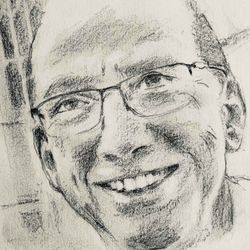
52:05||Season 3, Ep. 24In this essay, sorry, podcast, Neil Kenny, specialist in French literature and society in the 16th and 17th centuries opens us the period in which Montaigne composed his 'essais', first published in 1580, before talking about the man himself, including his education (he only spoke Latin for the first six years of his life - an educational experiment of his dad). Neil had suggested a number of chapters that might coincide with the notion of proto-psychology and Ken was especially excited by 'On practising' which includes a detailed account of a head injury and it's aftermath experienced shortly before his withdrawal from the world. After opening up that one to talk about his chapter 'On imagination' with surprising insights into mind-body interactions. After a number of examples we talk about cannibals, the instability of conclusions (I may not be the same person tomorrow) and the cognitive means by which the mind's workings may best be traced. To conclude this episode Neil reads a favourite passage from his chapter 'On repentance'. Great conversation about an extraordinary writer.Participants:Neil Kenny is professor of French at the University of Oxford and a research fellow of All Souls College https://www.asc.ox.ac.uk/people/professor-neil-kennyKen Barrett is an artist, writer and former neuropsychiatrist http://www.kenbarrettstudio.co.uk/More on Michel de Montaigne: https://en.wikipedia.org/wiki/Michel_de_MontaigneHis Essays: https://en.wikipedia.org/wiki/Essays_(Montaigne)'How to read Montaigne ' by Terence Cave is a great introduction: https://granta.com/products/how-to-read-montaigne/: Musical extract: Prelude from Act 1 of Brainland, composed by Stephen Brown.Brainland the opera website: www.brainlandtheopera.co.ukInstagram: #brainlandpodcast #brainlandcollectiveSketch by KB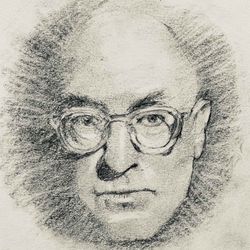
23. WIREHEADS: An unatural history of technology and the brain.
44:25||Season 3, Ep. 23In this episode cultural historian Mike Jay shares some of the stories in his new book 'Wireheads'. Our conversation ranges from an eighteenth century Bedlam patient to Elon Musk's 'Neuralink' along the way taking in Havana syndrome and direct energy weapons, the shifting notion of delusion, hoped for effects of electricity on child intelligence, and a variety of doctors who, over the years, have thought it a good idea to put wires into the brain, often with infamous results. We discuss how societal currents, such as increasing violence in the US in the late 60s and early '70s, drove research and theorising at that point, especially the work of Mark and Ervin on violence. Along the way we hear about neurodildos and God helmets. In short, ideal subjects for 'Brainland' - really interesting chat and an engaging book.Participants:Mike Jay is a writer and cultural historian. https://mikejay.net/Ken Barrett is an artist, writer and former neuropsychiatrist http://www.kenbarrettstudio.co.uk/Mike's book 'Wireheads': https://mikejay.net/books/wireheads/The earlier related 'Brainland' episodesWilliam Grey Walter: https://shows.acast.com/brainland/episodes/grey-walterNeuromancer: https://shows.acast.com/brainland/episodes/neuromancerBrain implants: https://shows.acast.com/brainland/episodes/brave-new-worlds-introducing-the-neural-interfaceBrainhacking: https://shows.acast.com/brainland/episodes/brainhackingMusical extract: Prelude from Act 1 of Brainland, composed by Stephen Brown.Brainland the opera website: www.brainlandtheopera.co.ukInstagram: #brainlandpodcast #brainlandcollectiveSketch by KB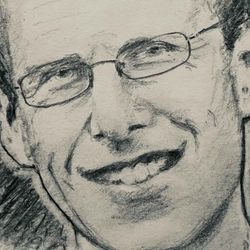
22. PATTERN SEEKING: Autism, evolution and us.
52:33||Season 3, Ep. 22In his book 'The Pattern Seekers' Sir Simon proposes that what has made us successful as a species is our ability to see patterns, 'systemise' and create 'if, then, and' sequences that have enabled us to invent and experiment also and how this ability relates to autism. Our conversation travels from a 40 thousand year old tuned bone flute to creating 'neuro-affirmative' environments in schools and work. Along the way we discuss why Eindhoven has double the rates of childhood autism than other equivalent Dutch cities, what was gleaned from 20 thousand Danish samples of amniotic fluid, why autistic people are the opposite of sociopaths, why some parents of autistic kids dislike the term 'neurodiversity' and much more. A great conversation and the last of a quartet on the autism themes this season (see the links below).ParticipantsSir Simon Baron Cohen is professor of developmental psychopathology, and the director of the Autism Research Centre, University of Cambridge https://www.autismresearchcentre.com/people/simon-baron-cohen/Ken Barrett is an artist, writer and former neuropsychiatrist http://www.kenbarrettstudio.co.uk/Simon's book 'The Pattern Seekers': https://www.penguin.co.uk/books/289738/the-pattern-seekers-by-baron-cohen-simon/9780141982397The other autism themed conversations this season:Dame Uta Frith: https://shows.acast.com/brainland/episodes/hans-asperger-and-the-autistic-spectrum-reflecting-on-past-pAlice Jolly (whose terrific novel 'The Matchbox Girl' has since won the Walter Scott prize for historical fiction): https://shows.acast.com/brainland/episodes/recreating-hans-aspergers-world-the-matchbox-irlRajesh Kana on the autistic brain: https://shows.acast.com/brainland/episodes/exploring-the-autistic-brainMusical extract: Prelude from Act 1 of Brainland, composed by Stephen Brown.Brainland the opera website: www.brainlandtheopera.co.ukInstagram: #brainlandcollectiveSketch by KB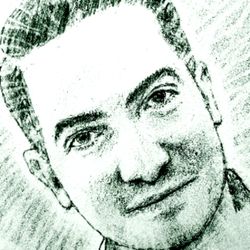
21. NEUROMANCER: Cyberpunk at 40.
53:59||Season 3, Ep. 21It is 42 years since the publication of William Gibson's game changing science fiction novel 'Neuromancer' and in 2027 Apple TV's much heralded 10 part adaptation of the novel is being released. In this episode academic Curtis Runstedler references the novel's antecedents, including Burgess's 'A Clockwork Orange' and Ballard's 'The Atrocity Exhibition', but especially Ridley Scott's 1982 film 'Blade Runner' and authors it deliberately sought distance from, especially Asimov and Heinlein. After outlining the plot and main characters we discuss the hyper-capitalist world in which it is set, the major role of AI characters 'Wintermute' and 'Neuromancer' and the strong female character Molly in the novel. Feminist, transhumanist and other philosophical takes on the novel get a run-out in our discussion of visionary aspects of Gibson's writing and the wider punk and cyberpunk ethos, and parallels to the world of contemporary billionaires and their pre-occupations. We conclude with a discussion of more recent fiction the genre has bred, including the 'solar punk' stories of Becky Chambers and 'Murderbot' series. Terrific conversation about a culturally important novel.Participants:Curtis Runstedler is a post-doctoral fellow in the Department of English Literatures and Cultures at University of Stuttgart, Germany. https://curtisrunstedler.ca/ Ken Barrett is an artist, writer and former neuropsychiatrist http://www.kenbarrettstudio.co.uk/Curtis's 'Seat Stuck movie' podcast: https://open.spotify.com/show/1y0MURjC3Y2ETVuQiJ7uD4The novel 'Neuromancer': https://en.wikipedia.org/wiki/NeuromancerApple TV's teaser and trailer: https://www.youtube.com/watch?v=OvNCSw_gXXI. https://www.youtube.com/watch?v=-x0cY5LiBZAJohnny Mnemonic: https://en.wikipedia.org/wiki/Johnny_Mnemonic_(film)Robert Longo's black and white version: https://www.youtube.com/watch?v=0O0F3vISjqsJG Ballard's novel 'The Atrocity Exhibition ': https://www.jgballard.ca/criticism/atrocity_exhibition_perry-wilkie.htmlBecky Chambers 'solar-punk' novel 'Psalm for the Wild-Built': https://en.wikipedia.org/wiki/A_Psalm_for_the_Wild-BuiltMusical extract: Prelude from Act 1 of Brainland, composed by Stephen Brown.Brainland the opera website: www.brainlandtheopera.co.ukInstagram: #brainlandcollectiveSketch by KB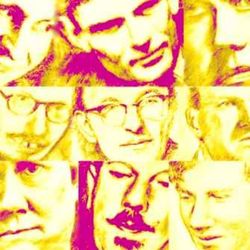
20. THE RATIO CLUB: UK cybernetics powerhouse.
01:31:12||Season 3, Ep. 20In this special 100th episode of Brainland sometime co-host Andy Platman and Ken talk with Phil Husbands about the 'Ratio Club', a dining club of medics, mathematicians, engineers and physiologists that met regularly between 1949 and 1955 to talk cybernetics. Phil's definitive history of the group is in its final edit. The most well known member was, at the time, Grey Walter, who we talked about in an earlier episode (https://shows.acast.com/brainland/episodes/grey-walter). After introducing 'Ratio' and its members (and why that name), Phil talks about the different disciplines of members (medic/psychiatrists, physiologists, mathematician/statisticians, engineers and other scientists), their 'no professors' rule and we discuss several in some detail (Shipton, Gold, Ashby, Turing, Good, McKay and Barlow) playing brief extracts from Phil's interviews with two (Shipton and Barlow). We also talk about psychologist Kenneth Craik whose conversations with Walter and Bates influenced their decision to meet with like-minded individuals in '49, some of the topics the club discussed and why meeting ceased in 1955. Along the way there are some great stories about these diverse characters. In an 'after-hours' section Phil asks Ken and Andy about Ratio, their musical take on the Ratio club story, currently a set of songs, broadly in folk genres, created with musical collaborators (Josh Platman, Ben Moss and Tina Cox) and the plan to build a radio play around them. Extracts from some songs are included during the main conversation with full versions in the after hours section. In short, a classic 'Brainland' melange. For the full list of club members, and to read more about the club, see Phil and Owen Holland's original paper: https://www.researchgate.net/publication/265258561_The_Ratio_Club_A_Hub_of_British_Cybernetics/link/5406f00c0cf2c48563b28164/download?_tp=eyJjb250ZXh0Ijp7ImZpcnN0UGFnZSI6InB1YmxpY2F0aW9uIiwicGFnZSI6InB1YmxpY2F0aW9uIn19Participants:Phil Husbands, Emeritus Professor of Artificial Intelligence at the University of Sussex ( https://profiles.sussex.ac.uk/p1334-phil-husbands/about)Andy Platman, writer, dramatist and former GP.Ken Barrett, artist, writer, podcaster and former neuropsychiatrist. http://www.kenbarrettstudio.co.uk/Voice extracts with the permission of Phil Husbands.Music: Opening theme composed and played by Ben Moss (https://www.benmossfolk.co.uk/), the intro to his song 'Turing', music, vocals and instrumentals by Ben, lyrics by Ken.Other songs extracts :'Gold' and 'Good' music, vocals and instrumentals by Josh Platman (https://www.joshplatman.com/about), lyric by Andy.'Shippy', sung by Tina Cox, lyric by Ken, traditional Shropshire folk tune.'Ashby', music composed and played by by Josh Platman, words and vocals by Andy.'Bates', improvised drumming by Bob Barrett, voice and words and sound design by Ken.Riso print by KB, based on sketched portraits of nine members of the Ratio Club.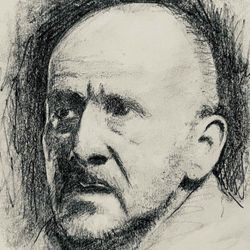
19. WHAT HAS GREEK TRAGEDY EVER DONE FOR US?
01:18:35||Season 3, Ep. 19Did anyone write about human psychology long before there was such a term? Yes and this season we are going to discuss five of them, beginning with three Greek tragedians. 32 of their plays have survived, written almost two and a half thousand years ago and a small sample of a thousand or so performed in the 'golden age' of Greek democracy. After talking though their historical and social context, and a brief diversion into Christopher Nolan's 'Odyssey', Simon dismantles Nietzsche's influential take on Greek tragedy, favouring a more nuanced and strange take, referencing especially Euripides, whose plays mostly feature strong women (despite the fact that they were performed by men most likely to men in their thousands, part of spring festivals that featured masked performers and music). We talk Plato, who banned them from his ideal Republic, and Aristotle who reckoned he knew exactly what they were good for, but whose notion of 'catharsis' has been widely misunderstood and repurposed. After comparing Andy Burnham to Phillip of Macedonia, the sophists get a significant look in, including their influence on drama and the way they play with deception and truth. French actress Isabel Huppert makes an entrance, then Euripides translator Anne Carson and there's much more. In short, another terrific wide ranging conversation and to close, Simon reads from the opening and closing paragraphs of his book. In short, a must listen.Participants:Simon Critchley is Hans Jonas Professor of Philosophy at the New School for Social Research in New York City .https://simon-critchley.com/Ken Barrett is an artist, writer and former neuropsychiatrist http://www.kenbarrettstudio.co.uk/Simon's book 'Tragedy, the Greeks and us: https://www.amazon.com/Tragedy-Greeks-Us-Simon-Critchley/dp/0525564640/ref=sr_1_1?crid=2IV6ZVSSA9WC9&dib=eyJ2IjoiMSJ9.QaqozU95ZRxDtLG5dEGBB7HA8fU4H4-FmnYggilEEO3pq2jgE-wqPXKVZXgnGQNGti9BL6V4mxOAmdjHSu1N0OM-RhtMqV5BNvVWkCyzrvtvVb_eMFwQgTGv5mQrgzEgQUaQXWLQ2V6vpgGwY7r0qUdqSMuGCwpK78bb-8xmSDARl3MunkeRR4Tl-VGdG4jgVkxJ3Vqmt55I9vsq_6UcbQ4FN4d03GlH4Il7NBIJMD8.d6ocuMesHoi8TIRhVyJY1ovRrvlCL9hNtbnz6Kb-6TQ&dib_tag=se&keywords=tragedy%2C+the+greeks+and+us&qid=1721389262&sprefix=tragedy%2C+the+greeks+and+us%2Caps%2C156&sr=8-1Musical extract: Prelude from Act 1 of Brainland, composed by Stephen Brown.Brainland the opera website: www.brainlandtheopera.co.ukInstagram: #brainlandcollectiveSketch by KB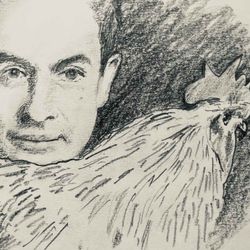
18. HUMANISH: The many faces of anthropomorphism
33:13||Season 3, Ep. 18In this conversation, animal behaviourist Justin Gregg talk through the many facets of our species' tendency to attribute human qualities to animals and things, as well as the opposite, to deny human qualities to classes of fellow humans. Our conversation ranges over enthusiasm for dolphin midwives, cuddly sharks and alligators and the difference between dogs and wolves. We talk about the possible effects of giving storms female names, 'companion cubes', using animals in marketing and why cartoon animal violence feels OK. Our desire to put intentions and humanish causation on the universe may explain aspects of religion a tendency even more obvious in animistic religions (Japan is the most anthropomorphising country). We also talk about the effect of not anthropomorphising, dehumanising, other humans, facilitating war and genocide. After a brief chat about Covid ghosts and a trip down the 'uncanny valley', Justin concludes by reading the closing paragraphs of his book. A terrific conversation based on a very readable and illuminating book.Participants:Justin Gregg is professor of biology at St. Francis Xavier University in Nova Scotia, Canada. https://www.justingregg.com/Ken Barrett is an artist, writer and former neuropsychiatrist http://www.kenbarrettstudio.co.uk/Justin's books: https://www.justingregg.com/booksMusical extract: Prelude from Act 1 of Brainland, composed by Stephen Brown.Brainland the opera website: www.brainlandtheopera.co.ukInstagram: #brainlandcollectiveSketch by KB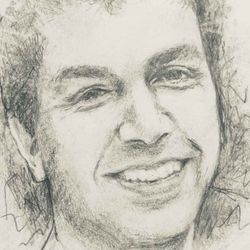
17. EXPLORING THE AUTISTIC BRAIN
48:49||Season 3, Ep. 17In another wide ranging conversation, Prof Rajesh Kana, author of the recent book 'The Neuroscience of Autism' walks us through this potentially complex subject. After definitions we talk about overlaps with other conditions, especially ADHD, and how this is worked with in brain imaging studies. We talk about competing causal hypotheses the varied use of the MRI brain scanner to image structures, pathways, chemical concentrations and local energy use. The examination that perhaps has the most potential is pathways, relating to what has recently been labelled 'the connectome' - the more complex the behaviour or demand (and effective social interaction is demanding) the more areas of the brain effectively engaged, and so efficient connection, nerve pathways, are key. This has been applied in investigation of 'theory of mind'. Other areas discussed include gender difference in diagnosis, the importance of glial cells and animal models of autism and whether or not the concept of autism will survive into the future. Great introduction to an area of brain research still in its early stagesParticipants:Rajesh Rana is Distinguished Professor of Psychology and the Associate Dean for Graduate and Continuing Education at the University of Alabama at Birmingham https://scholars.uab.edu/2730-rajesh-kanaKen Barrett is an artist, writer and former neuropsychiatrist http://www.kenbarrettstudio.co.uk/Rajesh's book 'The neuroscience of autism' https://shop.elsevier.com/books/the-neuroscience-of-autism/kana/978-0-12-816393-1?format=print&utm_source=google_ads&utm_medium=paid_search&utm_campaign=ukpmax&gclsrc=aw.ds&gad_source=1&gad_campaignid=21073979696Opening and closing theme- extract from the Prelude from Act 1 of Brainland, composed by Stephen Brown.Brainland the opera website: www.brainlandtheopera.co.ukInstagram: #brainlandcollectiveSketch by KB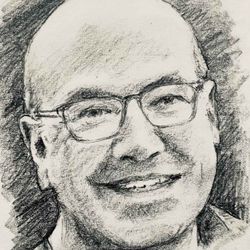
16. SPEAK! On the neuroscience of language...
43:54||Season 3, Ep. 16In this conversation Jonathan Peelle, language researcher and author of the a recent book on the subject, ranges over many aspects of the brain origins of language. We begin by discussing nineteenth century luminaries Broca and Wernicke and the effect of the First World War on simplistic notions of localisation, revived in modified form by Penfield and Geschwind in the '50s and '60s. We talk about the various stages of understanding and using language, including non-verbal aspects of communication and non verbal language use (sign language). After discussing the various brain investigation tools used in language research, illustrated by one of Jonathan's own studies, we talk about the often unsung contribution on the cerebellum to communication (a structure that actually has four times as many neurons as the rest of the brain). We go on to talk about the effect of background noise on our ability to recall what is said and recent discoveries about the way brain electrical oscillation impacts linguistic functions. Great conversation with a real expert in the field.Participants:Jonathan Peelle is a Professor, Institute for Cognitive and Brain Health, Department of Communication Sciences and Disorders, and Department of Psychology, Northeastern University, Boston, USA. http://jonathanpeelle.net/https://cos.northeastern.edu/people/jonathan-peelle-2/Ken Barrett is an artist, writer and former neuropsychiatrist http://www.kenbarrettstudio.co.uk/Jonathan's book 'The Neuroscience of Language': https://www.cambridge.org/highereducation/books/the-neuroscience-of-language/CC8ADEC4DCE8BB398F71BFFA1E56D124#overviewMore on Broca: https://en.wikipedia.org/wiki/Paul_BrocaWernicke: https://en.wikipedia.org/wiki/Carl_WernickeNorman Geschwind: https://en.wikipedia.org/wiki/Norman_GeschwindWilder Penfield: https://en.wikipedia.org/wiki/Wilder_PenfieldMusical extract: Prelude from Act 1 of Brainland, composed by Stephen Brown.Brainland the opera website: www.brainlandtheopera.co.ukInstagram: #brainlandcollectiveSketch by KB