Share
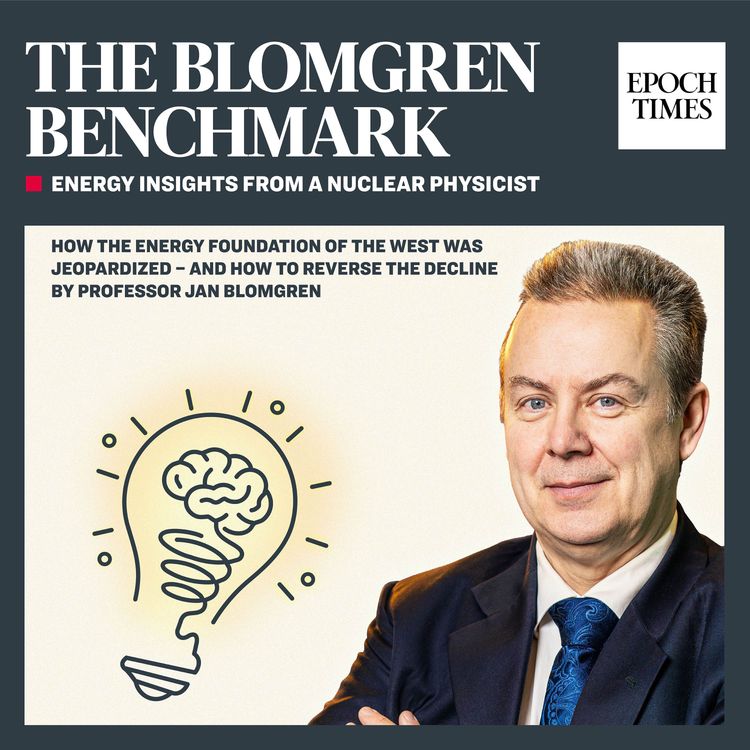
BLOMGREN BENCHMARK
A nuclear professor debunks fusion myths
Season 1, Ep. 3
•
Fusion has long been called the energy of the future. But how close are we really?
Jan Blomgren examines fusion’s enormous promise – and the problems that still need to be solved.
How can we produce enough tritium to keep the reaction going? What happens when high-energy neutrons damage the materials inside the reactor? And why could turning fusion into a reliable power plant be much harder than the headlines suggest?
And perhaps most importantly: could fusion have another valuable role – as a powerful source of neutrons?
For feedback or comments about the program, email us at podden@epochtimes.se – and don’t forget to specify which podcast and episode you’re referring to.
More episodes
View all episodes
6. Jan Blomgren: SMRs – Power Plants of the Future?
30:23||Season 1, Ep. 6Did America really fly a nuclear reactor? Why not use aircraft carrier reactors on land? Could a nuclear reactor fit inside a shipping container? Jan Blomgren explains why smaller reactors could offer advantages in safety and construction – but also why they may struggle to compete economically with larger plants. Who will take the first step in the future of nuclear power?For feedback or comments on the program, email us at podden@epochtimes.se – and don't forget to specify which podcast and episode it concerns.5. Jan Blomgren: Fusion’s toughest challenge - the fuel
33:16||Season 1, Ep. 5Jan Blomgren examines fusion’s biggest potential problem: tritium. The fuel is rare, expensive and difficult to produce in the quantities needed for commercial fusion. At the same time, billions are being invested in the technology. Is fusion the energy of the future — or are we building a dream on an impossible calculation?For feedback or comments about the program, email us at podden@epochtimes.se – and don’t forget to specify which podcast and episode you’re referring to.4. Jan Blomgren: Europe Is Spending Billions on the Wrong Things
26:01||Season 1, Ep. 4Professor Jan Blomgren joins us to talk about Europe’s Green Deal and why he believes the comparison with the Apollo project doesn’t hold up. Why was the US able to set a clear goal and let engineers figure out how to achieve it – while European politicians are increasingly choosing the technologies themselves? And what happens when billions are poured into projects that may never have been worth funding in the first place? We talk about the Green Deal, hydrogen, innovation, the US, AI and Europe’s chances of competing in the future. Enjoy!For feedback or comments about the program, email us at podden@epochtimes.se – and don’t forget to specify which podcast and episode you’re referring to.2. Energy built civilization – now AI needs massive energy
16:03||Season 1, Ep. 2What happens when AI requires more electricity than today's power grid can deliver?Jan Blomgren explains why energy is one of civilization's most important building blocks—and why the AI revolution may now force a new perspective on nuclear power, electricity production, and Europe's energy policy.For feedback or comments on the program, email us at podden@epochtimes.se – and don't forget to specify which podcast and episode it concerns.1. Why are wind and solar power challenging – beyond uneven production? – Jan Blomgren
20:33||Season 1, Ep. 1NEW PODCAST!What happens to an electricity system when large, heavy power plants are replaced by wind and solar?It’s a question that rarely features in the political debate. But according to nuclear physicist Jan Blomgren, it is crucial to understanding the energy systems of the future.In the first episode of Blomgren Benchmark, Jan examines what is actually happening behind the power outlet. Why is it important for the grid to maintain exactly 50 cycles per second? What does it mean for a nuclear power plant to have more than a thousand tonnes of rotating mass directly connected to the grid? And what happens when that kind of stability is replaced by weather-dependent generation?Blomgren also discusses the major blackout that hit Spain and Portugal in 2025, and explores how instability in an electricity system can develop into a chain reaction, with protective systems shutting down one after another.At the same time, the question arises whether batteries can solve the problem. Can enormous battery farms store enough energy to power an entire country when the wind dies down and the sun isn’t shining?Blomgren’s answer is clear: batteries can be extremely useful in the right context, but they cannot simply replace the stability and energy capacity required to support an entire electricity system.An episode about the physics behind electricity – and what happens when ideological ambitions meet the technical limitations of reality.For feedback or comments about the program, email us at podden@epochtimes.se – and don’t forget to specify which podcast and episode you’re referring to.