Share

Best of the Spectator
The Edition: Under CTRL, the Epping migrant protests & why is ‘romantasy’ so popular?
First: the new era of censorship
A year ago, John Power notes, the UK was consumed by race riots precipitated by online rumours about the perpetrator of the Southport atrocity. This summer, there have been protests, but ‘something is different’. With the introduction of the Online Safety Act, ‘the government is exerting far greater control over what can and can’t be viewed online’. While the act ‘promises to protect minors from harmful material’, he argues that it is ‘the most sweeping attempt by any liberal democracy to bring the online world under the control of the state’.
Implemented and defended by the current Labour government, it is actually the result of legislation passed by the Conservatives in 2023 – which Labour did not support at the time, arguing it didn’t go far enough. So how much of a danger is the Act to free speech in Britain?
John joined the podcast to discuss further alongside former Conservative minister Steve Baker, MP from 2010-24, and who was one of the biggest critics of the bill within the Conservative Party at the time.
Next: should we be worried about protests against migrants?
This week, outside a hotel in Epping, groups amassed to protest against the migrants housed there, with counter-protestors appearing in turn. Tommy Robinson might not have appeared in the end, but the Spectator’s Max Jeffrey did, concluding that the protests were ultimately ‘anticlimactic’.
Nevertheless, the protests have sparked debate about the motivations of those speaking out against the migrants – are there legitimate concerns voiced by locals, or are the protests being manipulated by figures on the political fringes? And what do the protests tell us about community tensions in the UK? Max joined the podcast to discuss alongside the editor of Spiked Tom Slater.
And finally: why are ‘romantasy’ novels so popular?
Lara Brown writes in the magazine this week about the phenomenon of the genre ‘romantasy’, which mixes romance with fantasy. While ‘chick-lit’ is nothing new, Lara argues that this is ‘literature taken to its lowest form’, emblematic of the terminally online young people who consume it. Nevertheless, it is incredibly popular and is credited by publishers as boosting the British fiction industry to over £1 billion. To unpack the genre's popularity, Lara joined the podcast, alongside Sarah Maxwell, the founder of London’s first romance-only bookshop Saucy Books, based in Notting Hill.
Hosted by William Moore and Lara Prendergast.
Produced by Patrick Gibbons and Megan McElroy.
More episodes
View all episodes

Americano: why did the CIA director fly to Moscow?
17:15|Gus Carter is joined by Owen Matthews, the Spectator's Russia writer, to discuss John Ratcliffe's unannounced trip to Moscow, where the CIA director met Russia's foreign intelligence chief but not Putin.Owen runs through the possible reasons: Iran, a suspected Russian provocation against NATO, and the stalled peace process. They also discuss the sabotage campaign across Europe and the sanctions bill that could hurt Russia more than anything Trump has tried.Learn how to earn yield on gold, paid in gold, at Monetary-Metals.com/AmericanoProduced by Henry Lloyd.
Spectator Out Loud: Simon Sebag Montefiore, Vanessa Feltz, Sophia Money-Coutts & Angus Colwell
22:36|On this week’s Spectator Out Loud: Simon Sebag Montefiore explains how his ancestor dealt with antisemitism; Vanessa Feltz says she is coming for Piers Morgan; Sophia Money-Coutts argues we should cut the price of stamps to save the Christmas card; and finally, Angus Colwell takes on the Cornish culinary mafia. Produced and presented by Patrick Gibbons.
Holy Smoke: are you having a 'nun girl summer'?
20:09|Why are young women suddenly fascinated by nuns? From ‘nun girl summer’ on TikTok to a wider ‘quiet revival’ of Christianity among Generation Z, the religious life appears to be enjoying an unexpected cultural moment. But is the attraction genuinely spiritual – or are young women simply drawn to the aesthetics, certainty and tranquillity of convent life?This week on Holy Smoke, Damian Thompson is joined by the Spectator's US assistant editor Margaret Mitchell and the Daily Mail’s Mimi Yates to discuss the unlikely appeal of nuns to Gen Z. They explore the joy and ‘slow living’ of convent life, the exhaustion of the attention economy and whether retreating into an all-female religious community offers an escape from modern dating and the 'manosphere'. Are young people merely borrowing the Catholic aesthetic or is there something deeper behind this trend?Produced by Patrick Gibbons.
Coffee House Shots: why I quit government | Al Carns
14:47|Former veterans minister Al Carns joins James Heale to discuss the government’s handling of Northern Ireland legacy cases – and why the issue helped drive him to resign.Writing in The Spectator this week, Al attacks the ‘two-track approach’ to legacy cases, which he says could cost taxpayers billions, and warns against allowing the history of the Troubles to be ‘rewritten through the courts’. He argues that Labour failed to listen properly to veterans before changing the law and sets out what more should be done to protect those who served in Northern Ireland.What was it like fighting the issue from inside government? Did Keir Starmer understand the strength of feeling – and will Andy Burnham take a different approach?Produced by Oscar Edmondson.
The Edition: how the blob broke teaching | with Francis Foster
41:02|Lara Prendergast is joined by The Spectator’s economics editor Michael Simmons, author and critic Philip Hensher, and comedian and co-host if the Triggernometry podcast Frances Foster.This week: are good teachers under siege? The panel discuss Michael Gove’s cover story on the education establishment, from collapsing classroom discipline to the ‘pathetically low ambition’ of those training Britain’s teachers. Also: have accusations of bullying become a weapon against demanding ministers? Michael Simmons comes to the defence of his former teacher, Scotland’s Deputy First Minister Jenny Gilruth, while Philip asks whether the real problem is that civil servants are simply too difficult to sack.Plus: Harry and Meghan are back in Britain. Has the public’s fascination with the Sussexes ever really gone away – and do they deserve a chance at redemption?Produced by Henry Lloyd, Patrick Gibbons and Oscar Edmondson.
Reality Check: the ADHD debate we’re not allowed to have
14:56|The backlash to Channel 4’s The Great ADHD Myth has reignited a fierce debate over how we diagnose ADHD – and whether that debate itself is becoming impossible to have.Michael Simmons looks at the extraordinary rise in diagnoses, the gap between recorded cases and underlying prevalence, and asks whether we are increasingly medicalising normal variations in behaviour.Is Britain finally recognising a vast amount of unmet need – or has diagnosis begun to serve a social as well as a medical function?This episode is brought to you by Artemis Fund Managers, for more information on our fund range please click here https://www.artemisfunds.com/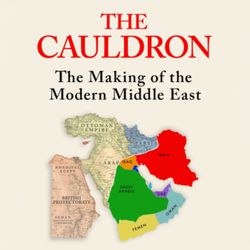
The Book Club: Simon Sebag Montefiore – The Cauldron
39:22|My guest on this week’s Book Club podcast is Simon Sebag Montefiore, the author of a number of fantastic books, including The Cauldron, which released this week. Simon and I talk about the making of the modern middle east, and how we forget some of the most fundamental groups who shaped this part of the world into the region that we know of today.
Americano: Just how bad are polls for the Republicans?
28:26|Freddy Gray is joined by James Johnson, co-founder of JL Partners, on why the midterms are looking increasingly grim for the Republicans. Trump's approval is trending down, the war is dragging on it, and James expects differential turnout to hand the Democrats the House, possibly with more than 230 seats.Freddy and James discuss why a Senate map that should have been safe for Republicans is now a toss-up, which six states will decide it, why prediction markets are not the answer, and why Michigan and its DSA-aligned candidate may be the one seat that saves Trump's majority.Learn how to earn yield on gold, paid in gold, at Monetary-Metals.com/AmericanoProduced by Henry Lloyd
Spectator Out Loud: Madeline Grant, Harry Mount, Freddie Heffer & Toby Young
19:40|On this week’s Spectator Out Loud: Madeline Grant argues that the debate about the direction of James Bond mirrors Britain’s decline; Harry Mount makes the case for scrapping dinner parties; Freddie Heffer provides his notes on mulberries; and finally, Toby Young says that friendly fire hurts the most, as he reflects on the fallout from the Jason Arday scandal. Produced and presented by Patrick Gibbons.