Share
Best of the Spectator
The Edition: Royal treatment, neurodiverse history & is everyone on Ozempic?
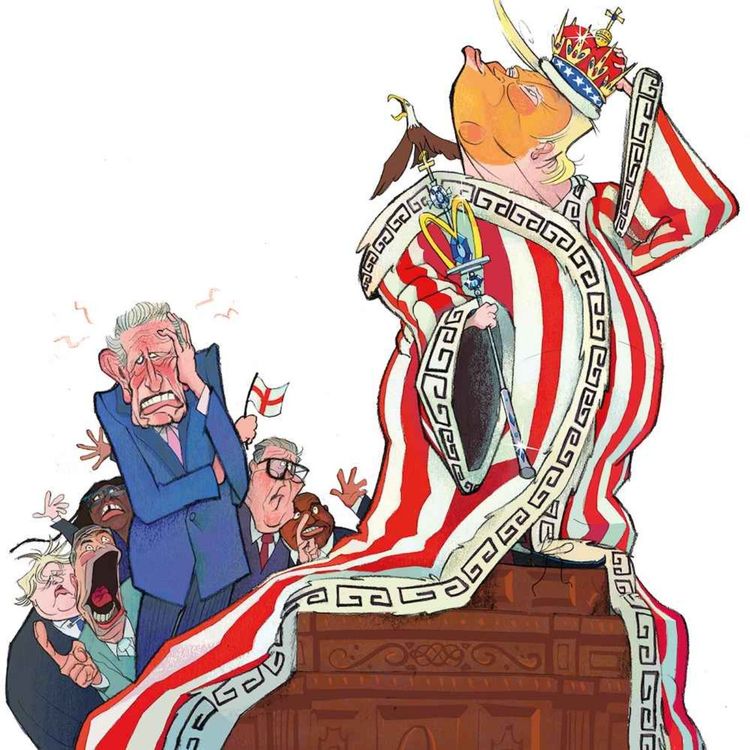
First: a look ahead to President Trump’s state visit next week
Transatlantic tensions are growing as the row over Peter Mandelson’s role provides an ominous overture to Donald Trump’s state visit next week. Political editor Tim Shipman has the inside scoop on how No. 10 is preparing. Keir Starmer’s aides are braced for turbulence. ‘The one thing about Trump which is entirely predictable is his unpredictability,’ one ventures. And government figures fear he may go off message on broadcast – he is scheduled to be interviewed by GB News.
It is rare for leaders to receive a second visit, especially those in their second term. But, as Tim says, ‘Britishness is fashionable in Washington’ and no-one likes ‘royal treatment’ more than Trump. So, can Starmer take advantage of the President’s ‘love of the deal’? Tim joins the podcast to discuss.
Next: why are historical figures being labelled neurodiverse?
A new biography of Margaret Thatcher has provoked much discussion by claiming that Britain’s former Prime Minister was autistic. The proof for such a claim rests on the Iron Lady’s (supposed) lack of a sense of humour, a lack of feeling embarrassed and a tendency to see the world in black and white.
But is there a danger in reappraising historical and political figures, particularly when it comes to personal traits? Historians – and frequent Spectator contributors – Robert Tombs and John Keiger joined the podcast to give their verdict.
And finally: is everyone on Ozempic?
One of the Spectator’s writers, under the pseudonym Henrietta Harding, headed out on what she terms ‘Ozempic safari’ – spotting the ‘Mounjaro Mummies’ as they drop off their children at school. ‘We know what to look for’, she says, ‘sunken faces, slightly wasted arms and, of course, envy-inducing weight loss’.
But the school gates aren’t the only place Ozempic seems to have taken hold. Westminster is awash with politicians who have suspiciously slimmer fitting suits – but why? Associate editor Toby Young and deputy political editor James Heale join the podcast to make sense of the trend for trim.
Plus: As President Xi re-emerges, Francis Pike asks who’s really in charge in China?
Hosted by William Moore and Lara Prendergast.
Produced by Patrick Gibbons and Oscar Edmondson.
More episodes
View all episodes

Spectator Out Loud: Douglas Murray, Flora Watkins & Nicholas Farrell
21:50|On this week’s Spectator Out Loud: Douglas Murray details his encounter with Labour leadership hopeful Wes Streeting; Flora Watkins explains why the Open Garden scheme is the antidote to the Chelsea Flower Show; and Nicholas Farrell says local nudists are running wild in Ravenna. Produced and presented by Patrick Gibbons.
Americano: what Thomas Massie's lost means for the future of the Right
33:32|Congressman Thomas Massie, one of the most vocal Republican critics of Donald Trump lost his fight for re-election in Kentucky to a Trump-backed challenger. Freddy Gray is joined by Spectator contributors Daniel McCarthy and Christopher Caldwell to discuss where Thomas Massie went wrong, how corruption centred around the campaign, whether or not Trump's success is a reflection of the upcoming midterms and the way Europe reacts to Trump more broadly.
Coffee House Shots: is Kemi a winner? | with Lee Cain
31:23|The Labour leadership contest may be rumbling on in the background, but today Coffee House turns to the Conservatives – and whether Kemi Badenoch can really revive a party still reeling from electoral collapse.Her allies argue that Badenoch is beginning to cut through: from her conference speech to her response to Rachel Reeves’s Budget, and her decision to sack Robert Jenrick. Her personal ratings have improved, even as the Tory brand remains deeply damaged. But is that enough? Can Badenoch turn the Conservatives into a serious vehicle for change? Is the Tory brand beyond repair? And could the party eventually find itself forced into some kind of deal with Reform?Tim Shipman is joined by Noa Hoffman and Boris Johnson's former director of communications Lee Cain to discuss Kemi’s dilemma – and whether the Conservative party is dead, or merely resting.Produced by Oscar Edmondson.
The Edition: Why Labour’s fate will be decided in the Strait of Hormuz
35:51|For this week’s Edition, Lara Prendergast is joined by The Spectator's John Power, feminist campaigner Julie Bindel and former adviser to Boris Johnson – and co-host of the In The Room podcast, Cleo Watson.They explore the idea that the Strait of Hormuz, not Makerfield, will determine the fate of the current Labour government. Starmer may be facing a challenge to his authority from mayoral shapeshifter Andy Burnham, but neither the PM or the wannabe MP will be rewarded if grocery and energy prices continue to soar. How much can be done to insulate Britain from future pain? And do they trust Labour to do so?Also this week: is Wes Streeting a better option than Burnham? Julie reveals her own run-ins with the now-backbench MP but concedes that Wes may be 'the least bad option’.Plus: what can we learn from female political trailblazers of the past? Are there any merits to lists of the greatest books? And, following the release of series two of Rivals, Cleo reveals she was once asked to put together a list of the best orgasm scenes from Jilly Cooper’s novels...Produced by Patrick Gibbons.
The Book Club: Alexander the Great's accidental empire
52:29|My guest on this week’s Book Club podcast is Edmund Richardson, author of a new biography of Alexander the Great called Alexander: God, King, Man. Edmund tells me why there is still a fresh story to tell about this most storied of historical figures, why his empire collapsed as soon as it came into being yet nevertheless changed history – and how Alexander conquered the world by mistake.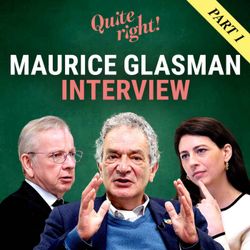
Quite right!: Maurice Glasman's manifesto for 'proper' Labour | Part one
30:22|Maurice Glasman, Labour peer and founder of Blue Labour, has spent years warning that Labour has lost touch with the people it was created to represent. In the first of a two-part conversation on Quite right!, he joins Michael and Maddie to explain why he thinks Keir Starmer’s project was never really Labour at all – and why the party’s working-class traditions have been replaced by progressive liberalism.They discuss Labour’s roots in community, sovereignty and the dignity of work; how Brexit exposed the divide between Labour and liberalism; and whether Starmer’s response to Southport marked a turning point. Maurice also sets out what a genuinely Labour government might have done differently on immigration, welfare, industrial strategy, defence and AI – and why Reform’s rise should not come as a surprise.Produced by Oscar Edmondson.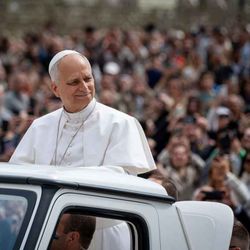
Holy Smoke: Pope Leo one year on – a promising start?
37:39|One year on from when Pope Leo became head of the Catholic church and he remains a bit of an enigma. Is he a Conservative or Liberal? What did we learn from his clash with Donald Trump? Damian Thompson is joined by editor of The Pillar Ed Condon and two Spectator favourites – Freddy Gray and Mary Wakefield.
Americano: what have Britons got against America?
38:17|British favourability dropped sharply sometime around 2016 and then further declined in 2024. Trump is clearly the main driver of negative feelings, although not the only one. There was much antipathy in 2020, which may have been related to the election but seems more likely due to the chaotic scenes that followed George Floyd’s death. To discuss this, Freddy Gray is joined by Ed West, who has written about this for his Substack The Wrong Side of History.
The Book Club: How Oligarchs Dominate Our Democracies
57:37|My guest on this week’s Book Club podcast is Jeffrey Winters, whose new book The Blind Spot: How Oligarchs Dominate Our Democracies makes the case that democracy as it functions now isn’t, as many of us imagine, the only thing keeping the robber barons in check – it is, in fact, the very system that has enabled them to thrive. He tells me how the wealth gap in the US is now many multiples of that in ancient Rome, how extreme wealth translates into political power, and how reforming campaign finance laws is only a tiny part of the solution we need.