Share
Best of the Spectator
The Edition: Reform’s camp following, masculine rage & why do people make up languages?
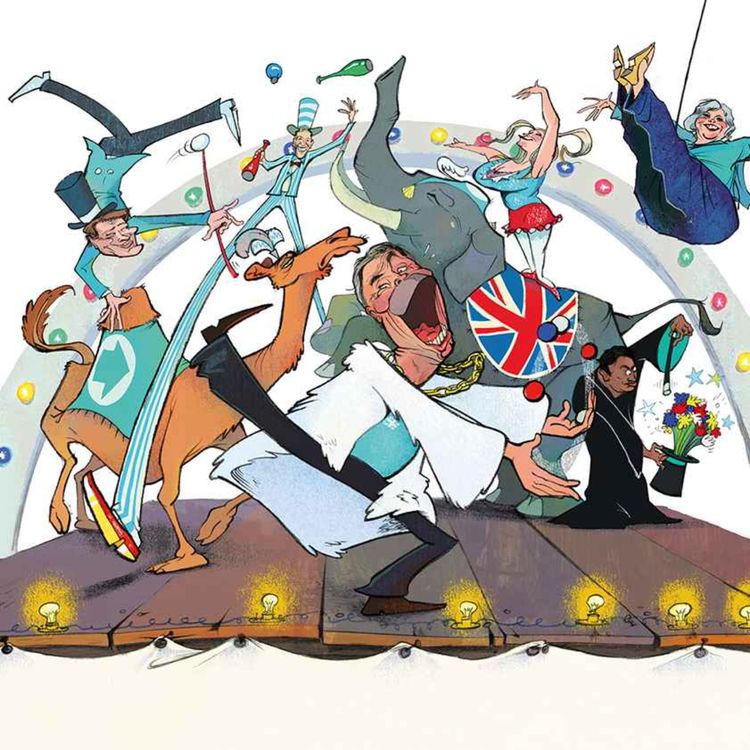
First: Reform is naff – and that’s why people like it
Gareth Roberts warns this week that ‘the Overton window is shifting’ but in a very unexpected way. Nigel Farage is ahead in the polls – not only because his party is ‘bracingly right-wing’, but ‘because Reform is camp’. Farage offers what Britain wants: ‘a cheeky, up-yours, never-mind-the-knockers revolt against our agonisingly earnest political masters’.
‘From Farage on down,’ Roberts argues, ‘there is a glorious kind of naffness’ to Reform: daytime-TV aesthetics, ‘bargain-basement’ celebrities and big-breasted local councillors. ‘The progressive activists thought they could win the culture war simply by saying they had won it’, but ‘the John Bulls and Greasy Joans are stirring again’. Roberts loves how ‘the current excitement over flag-raising’ is the ‘conniptions’ it gives to ‘the FBPE crowd’. Of course, for Farage, planning for government ‘really cannot be a pantomime affair’. But ‘in these grim times’ we ‘need the romping Reform’. Gareth joins the podcast to make his case for Carry On Reform.
Next: the ‘she’ consumed by masculine rage
Lionel Shriver reacts to the latest school shooting in America. The perpetrator was widely reported in the media with the pronouns ‘she/her’ which, Lionel argues, is not just an issue around politeness. This glosses over the fact that the shooter was biologically male, adding to the majority of cases of school shootings that are conducting by men. By pandering to this incoherence of the reality of the situation, it doesn’t help society to uncover the reasons behind the issue.
Lionel joined the podcast alongside the Spectator’s US editor Freddy Gray. Freddy points out how this shooting is just one example of how younger people can be transfixed by the very darkest sides of the internet.
And finally: why people make up languages
Constructed language expert Dr Bettina Beinhoff and author and historian Peter Parker join the podcast to talk about ‘made-up’ languages. Why do humans construct languages outside of their every-day speech? Most people will have heard of Klingon or Elvish, used in books and film, but what about Polari – the subversive language used by groups of LGBT people decades ago – or the Potato language – which writer Melanie Ferbreach says her parents used to hide their conversations from her. Listeners may be impressed to hear Lara's own attempt at 'eggy-peggy'...
Plus: with a special introduction from our political editor, Tim Shipman interviews shadow justice secretary Robert Jenrick – is he trying to outflank Farage?
Hosted by William Moore and Lara Prendergast.
Produced by Patrick Gibbons and Natasha Feroze.
More episodes
View all episodes
Hannah Richell: An Ocean and a Day
33:26|In this week’s Book Club podcast, Sam Leith is joined by bestselling novelist Hannah Richell to discuss her new memoir, An Ocean and a Day.When Hannah’s husband died in a surfing accident, her life in Australia was shattered. Suddenly, she was a single mother to two young children, navigating a grief she could never have imagined. Her memoir traces that journey from the moment of the accident, but, more uniquely, looks beyond those first years of loss – to what grief looks like with the benefit of time, distance and reflection.Sam and Hannah discuss the shame and embarrassment that can accompany grief, the physical effects of loss, how her experience has shaped her fiction, and what makes memoirs so powerful - to both writer and reader.
Quite right!: Danny Kruger interview | LIVE at Reform Conference
39:27|Michael Gove is joined by Reform UK MP Danny Kruger to discuss the party’s plans for government and why he believes Britain is in a ‘revolutionary moment’.Kruger sets out how Reform would overhaul Whitehall, including replacing the Cabinet Secretary, reforming the civil service and taking a ‘torch’ to parts of the quango state. He also argues for major changes to the way judges are appointed and says Parliament must ultimately remain sovereign over the courts.They also discuss immigration, welfare and the NHS, as Kruger explains why Reform wants to accelerate deportations, cut benefit entitlements for those who could work and introduce more private-sector discipline into public services.And turning to the future of the right, Kruger argues that the Conservative party can no longer win, says Britain risks ‘falling apart’ without radical change, and predicts that one day conservatives will be united under the leadership of Nigel Farage.
Coffee House Shots: Malcolm Rifkind on Farage, Kemi and Burnham's gift to the Tories
29:52|ir Malcolm Rifkind joins Tim Shipman and James Heale to discuss the future of the conservatism and tells The Spectator why Kemi Badenoch is the person to bring the Conservative Party back from the brink.He explains why he thinks Reform is already losing momentum, why Nigel Farage is ‘not fit to govern’, and why Andy Burnham could actually help the Conservatives at the next election.He also reflects on Britain’s relationship with Israel and the United States, criticises Labour’s approach to sanctions on Israel, and gives his verdict on Donald Trump second term.Produced by Oscar Edmondson and Abigail Brierley.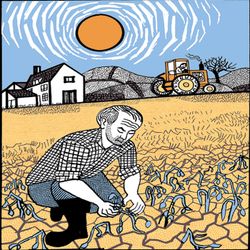
Spectator Out Loud: Noa Hoffman, Robert Hardman, Patrick Galbraith, & Matthew Reisz
33:11|On this week’s Spectator Out Loud: Noa Hoffman explains why Keir Starmer’s empty seat could become a Green Party battleground; Robert Hardman tells us how the death of Norway’s King Harald could reshape the royal family; Patrick Galbraith says it has been a disastrous year for British farming; and Matthew Reisz explores the unique relationship between artist Paula Rego and her model, Anthony Rudolf.Produced and presented by Abigail Brierley.
Quite right!: Francis Fukuyama interview
53:05|Michael Gove is joined by political scientist Francis Fukuyama to discuss liberalism, populism and the future of democracy in an increasingly unstable world.Francis reflects on The End of History and why its argument was so often misunderstood, before turning to the transformation of the American right under Donald Trump. Why have traditional conservative ideas lost their hold – and what explains the rise of populism across the West?They also discuss Brexit, which Francis argues Britain should reconsider, the importance of patriotism and national identity, and why liberals have too often neglected both.And looking to the future, Francis warns about the impact of artificial intelligence on work and democracy, explains why universal basic income will not solve the problem, and offers one piece of advice to young people: don’t learn how to code.Produced by Oscar Edmondson.
The Edition: has Reform UK lost its magic? | with Quentin Letts
34:01|Lara Prendergast is joined by The Spectator’s political editor Tim Shipman, columnist and journalist Melanie McDonagh, and the Daily Mail’s parliamentary sketchwriter Quentin Letts.This week: has Reform UK lost its magic? Ahead of the party’s conference, Tim reveals its plans for the first 100 days of a Reform government – and asks whether Nigel Farage can persuade voters that his party is ready to govern after a turbulent summer.Also: what is happening in Middlesbrough? The panel discuss rising gang violence, the decline of visible policing and a generation of young men who appear increasingly indifferent to the law. Is social breakdown to blame – or has Britain simply lost its respect for authority?Plus: what can Britain learn from Norway’s royals? Produced by Henry Lloyd and Oscar Edmondson.
The Book Club: James Marriott
41:26|In this week’s Book Club podcast, Sam Leith is joined by The Times columnist James Marriott, whose new book is The New Dark Ages: The End of Reading and the Dawn of a Post-literate Society.Are we witnessing the end of the reading age? James explains why literacy has shaped not just our culture but the way we think – and why its decline could have profound consequences for politics, democracy and public life. They discuss how television, TikTok and short-form video have transformed our attention spans, whether AI will further erode the status of writing, and why the readers of the future may become a new cognitive elite.
Quite right!: Why the Tories are preparing for an early election
47:17|Kemi Badenoch has kicked off the new political term with a major reshuffle of her top team. Michael and Maddie ask what the changes tell us about the direction of the Conservative party, whether Andrew Griffith can sharpen its economic offer – and whether Badenoch is already preparing for an early election.Meanwhile, Andy Burnham returns to the Commons after a relatively comfortable summer. Has the Prime Minister been governing on ‘easy mode’ so far, and is his brand of politics simply the ‘cheesy side of Blairism’ without the substance?Also: ahead of Reform’s party conference, is Nigel Farage building a credible government-in-waiting – or is the party still fighting a battle for its soul?Produced by Henry Lloyd and Oscar Edmondson.
Americano: why did the CIA director fly to Moscow?
17:15|Gus Carter is joined by Owen Matthews, the Spectator's Russia writer, to discuss John Ratcliffe's unannounced trip to Moscow, where the CIA director met Russia's foreign intelligence chief but not Putin.Owen runs through the possible reasons: Iran, a suspected Russian provocation against NATO, and the stalled peace process. They also discuss the sabotage campaign across Europe and the sanctions bill that could hurt Russia more than anything Trump has tried.Learn how to earn yield on gold, paid in gold, at Monetary-Metals.com/AmericanoProduced by Henry Lloyd.