Share

Best of the Spectator
The Edition: Elizabeth Day on the 'beautiful & ironic symmetry' of Reform vs Restore
For this week’s Edition, Lara Prendergast is joined by the Spectator's political editor Tim Shipman, the writer Guy Stagg and the author and host of How to Fail Elizabeth Day.
This week, the guests discuss whether Nigel Farage’s Reform UK can see off the threat from Rupert Lowe’s Restore Britain. Restore Britain’s success may be modest and, so far, very online but that doesn’t mean they won’t hinder Farage’s effort to reach Number 10. If polls from the Makerfield by-election are anything to be believed, Restore could have a real impact. The battle for the tight is also having an impact across the political spectrum too – should Labour move further to the right to appeal to Reform and Restore's disgruntled voters, or should they simply ignore them? For Elizabeth Day, there is an ‘ironic and beautiful symmetry’ to the Reform versus Restore dynamic, which almost makes her nostalgic for the 'Tory boy' politics of post-Thatcher era.
Also this week: from Makerfield to Mandelson, the government has been busy this week responding to the latest tranche of messages released on Monday. Yet – were some missing? Tim discusses the missing messages of Starmer loyalist Darren Jones MP which he exclusively revealed in this week’s Spectator. How damaging is this for Labour? And how should we treat WhatsApp messages legally?
Plus, they discuss: the travel experiences that have shaped their lives, from Orthodox churches perched on Istanbul rooftops to the ‘most bombed hotel’ in Belfast; if collecting books is an acceptable form of hoarding; whether they would take frog poison; and finally, with the news that Nigel Farage may have been banned from Desert Island Discs, they reveal some of the items they would take with them.
Elizabeth Day’s latest book One of Us is out now and available in all good bookshops.
Produced by Patrick Gibbons.
More episodes
View all episodes

Reality Check: the AI apocalypse is just good marketing
17:20|Some whistleblowers from the AI industry claim there is a more than 10% chance that artificial intelligence could wipe out humanity within a few years. A group of mostly Labour MPs has written to Andy Burnham calling for action on existential AI risk, while conceding there is little the British government can do about it alone.Michael Simmons speaks to John Power about the incentives behind the warnings, whether AI can realistically be regulated and why more mundane harms, from AI-written complaints flooding bodies such as IPSO to hackers using chatbots, may deserve more attention. Are the doom-mongers sounding a genuine alarm – or selling the most powerful product ever built?This episode is brought to you by Artemis Fund Managers, for more information on our fund range please click here https://www.artemisfunds.com/Produced by Henry Lloyd
Spectator Out Loud: Tim Shipman, Charles Steel, Alex Diggins & Rachel Johnson
36:31|On this week’s Spectator Out Loud: Tim Shipman delves into the impact Ed Miliband’s Israeli sanctions have had on UK security; Charles Steel explores the men on the spectrum who rule the world; Alex Diggins talks about the importance of physical maps; and Rachel Johnson admits there’s an art to buying birthday presents. Produced and presented by Abigail Brierley.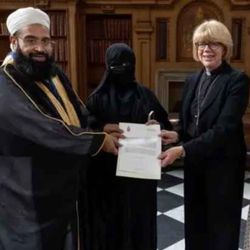
Holy Smoke: Pakistani Christians fear backlash over Lambeth Palace award
22:23|Pakistani Christians could face renewed persecution following the Archbishop of Canterbury’s decision to withdraw an honour to a leading Muslim cleric, Monsignor Michael Nazir-Ali warns in this episode of Holy Smoke.The former Bishop of Rochester speaks to Damian Thompson following the news that Lambeth Palace has had to withdraw an award to Hafiz Ashrafi after previous comments by the Imam came to light. Following the ‘Reconciliation and Interfaith Cooperation' award being presented, it came to light that Ashrafi had praised Osama bin Laden in 2007, saying he would give the mastermind of the 9/11 attacks the title Saifullah – or 'Sword of God’ – for ’serving Muslims by waging jihad against infidels’. The question remains ‘why there was not due diligence’ Msgr Nazir-Ali tells Damian, saying Pakistani Christian leaders fear a backlash. The ‘reactionary action on the part of extremists’ should have been thought about before making the announcement, Nazir-Ali said, as he criticised Lambeth Palace. Msgr Nazir-Ali, now a priest of the Catholic Ordinariate and who was born in Pakistan, is a world renowned authority on Islam's relations with Christianity. He talks to Damian about the debacle over the award, and warns against the increasing secularisation and desecration of British churches.Produced by Patrick Gibbons.
Americano: Steve Bannon on the AI extinction threat
23:14|is episode of Americano, Freddy Gray speaks with Steve Bannon – former White House chief strategist for Donald Trump - about the ideological convergence between national populists and progressive Leftists as they confront the existential risks of unbridled AI, the suppression of internal whistleblower warnings by Silicon Valley elites, and the urgent necessity of cutting off Chinese access to Western microchips and capital.
The Edition: Peter Hitchens & Toby Young on whether we should fear the manosphere
39:19|For this week’s Edition, William Moore is joined by the Spectator’s associate editor and director of the Free Speech Union Toby Young, journalist and author Esther Walker, and Mail on Sunday columnist Peter Hitchens.This week: the men on the spectrum who rule the world. Charles Steel writes in the magazine about the wealthy, obsessive and often unconventional figures who increasingly shape politics and technology – from Elon Musk to the crypto billionaire Ben Delo. Is autism a useful way of understanding these men or has society become too obsessed with diagnosing people? Toby argues that traits such as hyper-focus and an indifference to what others think can be an advantage in competitive professions, while Peter dismisses our enthusiasm for putting people on ‘spectrums’ altogether. And, as tech leaders issue increasingly apocalyptic warnings about artificial intelligence, should we take them seriously or be suspicious of calls for greater regulation?Also: should parents really be worried about the ‘manosphere’? Esther argues that the moral panic surrounding online influencers such as Andrew Tate is already out of date. Teenage boys, she says, are perfectly capable of recognising when misogyny is being used as a business model – and many are more interested in mocking influencers than following them. But with ‘looksmaxxing’, bodybuilding and increasingly extreme attempts at self-improvement taking off online, are boys becoming more like the teenage girls of previous generations?Plus: Peter reveals why he has fallen out of love with America – and in love with Canada, while Toby marks 35 years since the launch of the Modern Review.Produced by Patrick Gibbons.
Quite right!: Rory Stewart interview | Part two
25:06|In the second part of his conversation with Michael Gove, Rory Stewart defends the most taboo position in British politics: that private schools are worth protecting. He further argues that the only excuse for privilege is living up to its obligations, and that a wealth tax would destroy the idea of public service.Rory tells Michael what Nigel Farage and Reform UK get wrong about tax, why he disagrees with Peter Thiel on what the wealthy should do with their money, and why Rishi Sunak staying in parliament matters more than anyone noticed.They also discuss how to get Britain growing, why he is a big fan of building more data centres, and how Rory came to be at peace with 450 new houses being built at the end of his own driveway.Plus: What he really disagrees with Alastair Campbell about, the writers he cannot stand, and his plans for the future.You can pre-order Rory's book Middleland now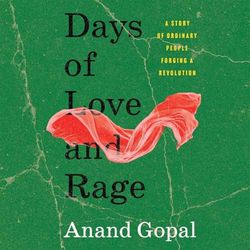
The Book Club: Anand Gopal – Days of Love and Rage
30:46|In this week's Book Club podcast, Sam Leith is joined by The New Yorker writer Anand Gopal, whose new book, long-listed for the Baillie Gifford Prize, is Days of Love and Rage: A Story of Revolution.What does freedom mean once the dictator has gone? Anand explains why he spent eight years reporting on Manbij, a city of 150,000 that pushed out the Assad regime and set about building a democracy from scratch – and how the argument over what came next split the revolution in two. They discuss the bubblegum seller who became a protest leader, the police chief who quietly stopped shooting at the crowds, how six outsiders talked their way into control of the city, and why the manuscript was handed in three days before Assad fell.Produced by Henry Lloyd
Quite right!: Rory Stewart interview | Part one
28:46|Michael Gove is joined by Rory Stewart, for a conversation he admits would ‘revolt’ his podcasting partner Alastair Campbell.Rory sets out the migration policy he would impose: every boat he would return to France, how he would cut the number of legal arrivals, and completely rework Britain’s broken asylum system.Rory argues that the grooming gangs debate is being conducted in bad faith, that migrant communities in Britain tend to assimilate rather than isolate, and that the culture warriors have picked a fight that distracts from Britain’s bigger problems. Part Two, in which he makes a case for the future of private education and explains how Britain can achieve growth, will be released on Thursday 17th September.You can pre-order Rory's book Middleland now
Spectator Out Loud: Tali Fraser, John Power, Sophia Money-Coutts & Angus Colwell
29:03|On this week’s Spectator Out Loud: Tali Fraser delves into why Labour’s socioeconomic duty is attacking the middle classes; John Power tells us how clipping is changing politics, Sophia Money-Coutts muses over which car would best suit her dog; and Angus Colwell spills the beans on Soho’s newest Turkish restaurant. Produced and presented by Abigail Brierley.