Share

Best of the Spectator
Quite right!: Blair's ID card dystopia & the 'hell' of conference season
Listeners on the Best of Spectator playlist can enjoy a section of the latest episode of Quite right! but for the full thing please seek out the Quite right! channel. Just search ‘Quite right!’ wherever you are listening now.
This week, Michael and Maddie lift the lid on the strange rituals of party conference season and why the ‘goldfish bowl’ reality of a week in Birmingham (or Manchester, or Liverpool) often leaves politicians with ‘PTSD’.
They then turn to the government’s revived enthusiasm for digital ID cards. Is this a sensible fix for illegal immigration – or, as Michael puts it, ‘snake oil rubbed onto an already weak idea’? And why does Tony Blair always seem to be the ghost whispering ‘ID cards’ into Westminster’s ear?
Next, Keir Starmer’s recognition of a Palestinian state: a principled step, or a political stunt designed to placate his backbenchers? Michael and Madeline dissect the backlash, the ‘terrorist chic’ of pop-concert activism, and what this move really says about Labour’s priorities.
Finally, they reflect on the extraordinary words of Erika Kirk, who publicly forgave her husband’s alleged murderer. What does Christian forgiveness look like in an age that prizes vengeance and why do so many secular commentators miss its radicalism?
Produced by Oscar Edmondson, Oscar Bicket and Matt Miszczak.
More episodes
View all episodes
The Edition: Are Britain's universities selling worthless degrees?
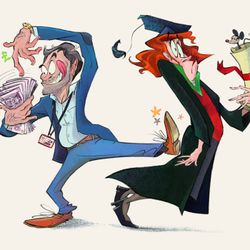
55:11|For this week’s Edition, William Moore is joined by the Spectator’s economics editor Michael Simmons, writer-at-large Max Jeffery and the historian Alice Loxton.This week: are Britain’s universities becoming degree factories? William Finlator explains the extraordinary growth of franchised universities – institutions which can make huge profits while offering courses with poor academic outcomes and, in some cases, little of the traditional university experience at all. Michael asks what universities are actually for, while Alice warns that low-quality degrees risk devaluing the reputation of British higher education. Is a bad degree worse than no degree?Also: how did Bangladesh’s violent politics end up on the streets of east London? Max explains how Britain has become a major arena for the country’s political factions, following the fall of Sheikh Hasina, with rival groups clashing on the streets while exiled politicians lobby British MPs. Is Britain equipped to deal with foreign political conflicts spilling over into diaspora communities?Plus: Alice discusses her new book A History of Britain in 21 Paintings, with images of St Luke, abolitionist imagery and the art of L.S. Lowry. What can art tell us about Britain that conventional history cannot?And finally: can Grand Theft Auto teach the Bank of England a thing or two? Michael explains how the virtual economies of video games repeatedly encounter real-world problems – and why former Greek finance minister Yanis Varoufakis once became an economist for a video-game company.Produced by Patrick Gibbons.
Book Club: Jilly Cooper – literary magpie or plagiarist?
39:13|When does literary borrowing become outright theft? This week, the literary world has been rocked by allegations that one of Britain's best-loved novelists, Jilly Cooper, plagiarised passages in her 1978 novel Prudence.Sam Leith is joined by Kate Maltby, the journalist behind the Observer investigation, and novelist Philip Hensher, a passionate defender of Cooper. They discuss the distinction between plagiarism and literary influence, whether fiction should be held to the same standards as non-fiction, and whether our affection for a national treasure has clouded our judgement.Should the revelations change how we read Jilly Cooper? And, as AI makes it easier to uncover plagiarism, could there be more literary scandals to come?Produced by Abigail Brierley & Henry Lloyd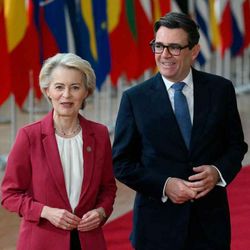
Quite right!: Burnham, Brexit and brain rot
47:13|Andy Burnham is seeking closer ties with Brussels, despite warnings from David Cameron and Theresa May. Michael Gove and Lara Brown ask whether the reset is a distraction or the first step towards rejoining. They also look at what it would mean for the bacon sandwich, and at the EU's demand that its students pay home tuition fees.Also: Downing Street has opened its doors to TikTok stars and reality TV contestants. Is the influencer interview a clever way to reach voters, or are the public starting to feel patronised?Produced by Henry Lloyd
Spectator Out Loud: Noa Hoffman, Arabella Byrne, Rory Sutherland & Tali Fraser
23:35|On this week’s Spectator Out Loud: Noa Hoffman tells us why Rosebank will be Burnham’s biggest challenge yet; Arabella Byrne looks at the growing number of families with multiple nannies; Rory Sutherland argues we’re in a ‘cost of trying’ crisis; and Tali Fraser explains why the UK’s funeral market is under threat from Chinese coffins. Produced and presented by Abigail Brierley.
Spectator TV: Bill Browder – 'If it's not war with Ukraine, it'll be war with us'
30:09|Is Vladimir Putin bringing his war to Britain? And could Russia be heading towards a breaking point in Ukraine? Kremlin critic and human rights campaigner Bill Browder joins Lisa Haseldine to warn that Russia could escalate its attacks on the West until there is a 'mass casualty confrontation'. He discusses Donald Trump's relationship with Putin, the prospects for peace in Ukraine and why the Russian president may be running out of options. Plus: Browder reveals what it's like to live under threat from the Kremlin, and how his 17-year-old son became a target of Russian sanctions. Produced by Abigail Brierley and Henry Lloyd
Reality Check: Can Alan Milburn get Britain’s young back to work?
14:57|Alan Milburn wants to scrap Pip for under-25s and replace the Universal Credit health element with a new youth allowance. He says the plan could get 440,000 young people into work within a decade and eventually save £3.6 billion a year. With 981,000 young people not in education, employment or training, nobody disputes the scale of the problem. They disagree about its cause.Milburn insists this is not a generation lacking resilience. Yet his own report finds that benefit claims have outpaced any rise in ill health, and it warns of overdiagnosis of ADHD and autism. Michael Simmons puts that contradiction to Milburn directly. He also asks whether the National Insurance and minimum wage rises are pricing young people out of the jobs they need most.Can welfare reform get a generation back to work – or is the deeper problem a loss of resilience that no policy can fix?This episode is brought to you by Raymond James. Combining deep insights into who you are with our financial expertise, that’s the power of personal. Investment involves risk. raymondjames.uk.com
Americano: Russell Brand & #MeToo – with David Aaronovitch
28:15|In this episode of Americano, Freddy Gray welcomes journalist and author David Aaronovitch into the studio for a candid, wide-ranging, and frequently fiery debate as the two clash over whether the media frenzy surrounding Brand is driven by genuine moral reckoning or political hypocrisy, while also locking horns over the legacy and excesses of the MeToo era.
The Edition: the return of Brexit, Bond and… Boris? | with Jon Sopel
36:44|Lara Prendergast is joined by The Spectator's political editor Tim Shipman, broadcaster Jon Sopel and Noble Rot founder Dan Keeling to discuss Andy Burnham's plans to get closer to the EU, Nigel Farage's renewed Brexit campaign and whether Boris Johnson could be tempted back onto the battle bus.Plus, why are so many young men turning to influencing instead of traditional careers? Is Robert Pattinson the right choice for the next James Bond? And Dan shares his tips for finding a great bottle of wine without breaking the bank.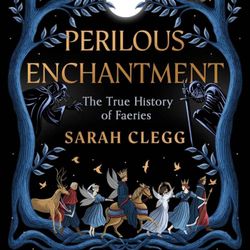
Book Club: Sarah Clegg – Perilous Enchantment
39:27|Forget the glitter, wings and magic wands – fairies were once far darker, more dangerous and considerably more seductive creatures.In this episode of Book Club, Sam Leith is joined by historian and author Sarah Clegg to discuss her new book, Perilous Enchantment: The True History of Fairies. From baby-snatching demons and Shakespeare’s sprites to Tinker Bell and the modern romantasy boom, Sarah traces how our understanding of fairies has evolved over the centuries. How did these powerful, often terrifying beings become the innocent creatures of children’s stories? And why are they now enjoying a distinctly sexier revival in popular fiction? Produced by Abigail Brierley.