Share

Best of the Spectator
Coffee House Shots: should Britain recognise Palestine?
The government is expected to press ahead with recognition of Palestinian statehood, before a formal declaration at the United Nations. Prime Minister Keir Starmer set out plans earlier this year to recognise Palestine – but what does this actually mean? And what does the move actually achieve; is it driven by principle, by politics – or by pressure from within his own party?
Michael Stephens of RUSI and Gabriel Pogrund of the Sunday Times join James Heale to assess the significance of this shift. They discuss the backlash from countries like the US, the unease within Labour ranks and the growing tension between domestic politics and Britain’s standing with allies in the Middle East. France, Australia and Canada, close allies of Britain, announced their own plans to recognise Palestine, yet the US has condemned any move. What does Starmer’s recognition of Palestine mean for the UK’s relationship with the US? And is Starmer at risk of being outflanked – both at home and abroad?
Produced by Oscar Edmondson and Patrick Gibbons.
More episodes
View all episodes

Quite right!: Francis Fukuyama interview
53:05|Michael Gove is joined by political scientist Francis Fukuyama to discuss liberalism, populism and the future of democracy in an increasingly unstable world.Francis reflects on The End of History and why its argument was so often misunderstood, before turning to the transformation of the American right under Donald Trump. Why have traditional conservative ideas lost their hold – and what explains the rise of populism across the West?They also discuss Brexit, which Francis argues Britain should reconsider, the importance of patriotism and national identity, and why liberals have too often neglected both.And looking to the future, Francis warns about the impact of artificial intelligence on work and democracy, explains why universal basic income will not solve the problem, and offers one piece of advice to young people: don’t learn how to code.Produced by Oscar Edmondson.
The Edition: has Reform UK lost its magic? | with Quentin Letts
34:01|Lara Prendergast is joined by The Spectator’s political editor Tim Shipman, columnist and journalist Melanie McDonagh, and the Daily Mail’s parliamentary sketchwriter Quentin Letts.This week: has Reform UK lost its magic? Ahead of the party’s conference, Tim reveals its plans for the first 100 days of a Reform government – and asks whether Nigel Farage can persuade voters that his party is ready to govern after a turbulent summer.Also: what is happening in Middlesbrough? The panel discuss rising gang violence, the decline of visible policing and a generation of young men who appear increasingly indifferent to the law. Is social breakdown to blame – or has Britain simply lost its respect for authority?Plus: what can Britain learn from Norway’s royals? Produced by Henry Lloyd and Oscar Edmondson.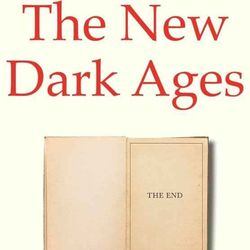
The Book Club: James Marriott
41:26|In this week’s Book Club podcast, Sam Leith is joined by The Times columnist James Marriott, whose new book is The New Dark Ages: The End of Reading and the Dawn of a Post-literate Society.Are we witnessing the end of the reading age? James explains why literacy has shaped not just our culture but the way we think – and why its decline could have profound consequences for politics, democracy and public life. They discuss how television, TikTok and short-form video have transformed our attention spans, whether AI will further erode the status of writing, and why the readers of the future may become a new cognitive elite.
Quite right!: Why the Tories are preparing for an early election
47:17|Kemi Badenoch has kicked off the new political term with a major reshuffle of her top team. Michael and Maddie ask what the changes tell us about the direction of the Conservative party, whether Andrew Griffith can sharpen its economic offer – and whether Badenoch is already preparing for an early election.Meanwhile, Andy Burnham returns to the Commons after a relatively comfortable summer. Has the Prime Minister been governing on ‘easy mode’ so far, and is his brand of politics simply the ‘cheesy side of Blairism’ without the substance?Also: ahead of Reform’s party conference, is Nigel Farage building a credible government-in-waiting – or is the party still fighting a battle for its soul?Produced by Henry Lloyd and Oscar Edmondson.
Americano: why did the CIA director fly to Moscow?
17:15|Gus Carter is joined by Owen Matthews, the Spectator's Russia writer, to discuss John Ratcliffe's unannounced trip to Moscow, where the CIA director met Russia's foreign intelligence chief but not Putin.Owen runs through the possible reasons: Iran, a suspected Russian provocation against NATO, and the stalled peace process. They also discuss the sabotage campaign across Europe and the sanctions bill that could hurt Russia more than anything Trump has tried.Learn how to earn yield on gold, paid in gold, at Monetary-Metals.com/AmericanoProduced by Henry Lloyd.
Spectator Out Loud: Simon Sebag Montefiore, Vanessa Feltz, Sophia Money-Coutts & Angus Colwell
22:36|On this week’s Spectator Out Loud: Simon Sebag Montefiore explains how his ancestor dealt with antisemitism; Vanessa Feltz says she is coming for Piers Morgan; Sophia Money-Coutts argues we should cut the price of stamps to save the Christmas card; and finally, Angus Colwell takes on the Cornish culinary mafia. Produced and presented by Patrick Gibbons.
Holy Smoke: are you having a 'nun girl summer'?
20:09|Why are young women suddenly fascinated by nuns? From ‘nun girl summer’ on TikTok to a wider ‘quiet revival’ of Christianity among Generation Z, the religious life appears to be enjoying an unexpected cultural moment. But is the attraction genuinely spiritual – or are young women simply drawn to the aesthetics, certainty and tranquillity of convent life?This week on Holy Smoke, Damian Thompson is joined by the Spectator's US assistant editor Margaret Mitchell and the Daily Mail’s Mimi Yates to discuss the unlikely appeal of nuns to Gen Z. They explore the joy and ‘slow living’ of convent life, the exhaustion of the attention economy and whether retreating into an all-female religious community offers an escape from modern dating and the 'manosphere'. Are young people merely borrowing the Catholic aesthetic or is there something deeper behind this trend?Produced by Patrick Gibbons.
Coffee House Shots: why I quit government | Al Carns
14:47|Former veterans minister Al Carns joins James Heale to discuss the government’s handling of Northern Ireland legacy cases – and why the issue helped drive him to resign.Writing in The Spectator this week, Al attacks the ‘two-track approach’ to legacy cases, which he says could cost taxpayers billions, and warns against allowing the history of the Troubles to be ‘rewritten through the courts’. He argues that Labour failed to listen properly to veterans before changing the law and sets out what more should be done to protect those who served in Northern Ireland.What was it like fighting the issue from inside government? Did Keir Starmer understand the strength of feeling – and will Andy Burnham take a different approach?Produced by Oscar Edmondson.
The Edition: how the blob broke teaching | with Francis Foster
41:02|Lara Prendergast is joined by The Spectator’s economics editor Michael Simmons, author and critic Philip Hensher, and comedian and co-host if the Triggernometry podcast Frances Foster.This week: are good teachers under siege? The panel discuss Michael Gove’s cover story on the education establishment, from collapsing classroom discipline to the ‘pathetically low ambition’ of those training Britain’s teachers. Also: have accusations of bullying become a weapon against demanding ministers? Michael Simmons comes to the defence of his former teacher, Scotland’s Deputy First Minister Jenny Gilruth, while Philip asks whether the real problem is that civil servants are simply too difficult to sack.Plus: Harry and Meghan are back in Britain. Has the public’s fascination with the Sussexes ever really gone away – and do they deserve a chance at redemption?Produced by Henry Lloyd, Patrick Gibbons and Oscar Edmondson.