Share
Best of the Spectator
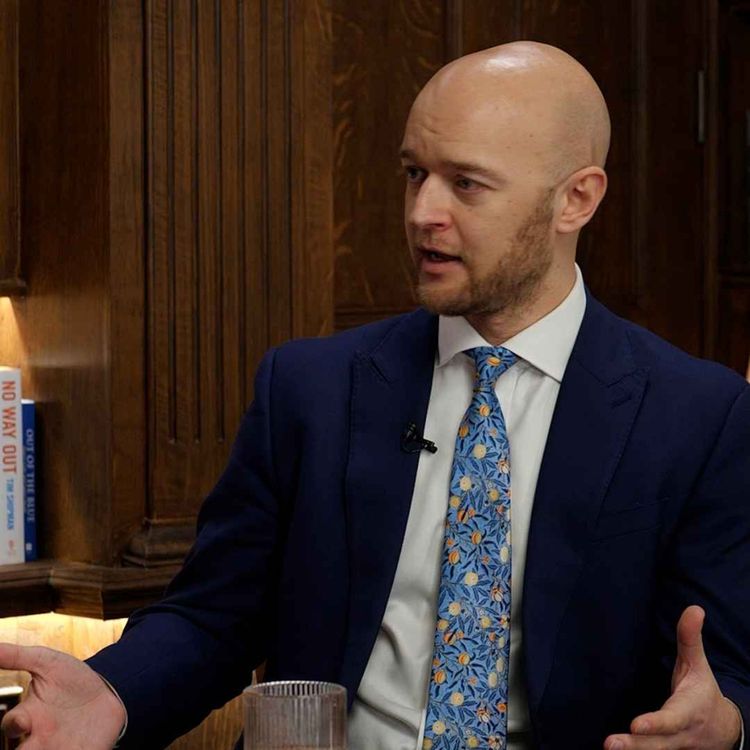
Coffee House Shots: Jonathan Hinder on Starmer, Mandelson & a 'bad' local elections
On this special edition of Coffee House Shots, Tim Shipman is joined by Jonathan Hinder – a rising star of the back benches and a blue Labour acolyte – for a candid discussion about the state of the Labour party and the security of its leader.
They discuss the Peter Mandelson scandal and the impact it has had on backbench support for the Prime Minister, as well as the implications it may have regarding decision-making at the top of government. Are Labour MPs considering moving against Keir Starmer? Should he fight the next election?
This is set within the context of local elections, which Jonathan forecasts will be ‘bad’ for the Labour party – ‘it’s not a great time to be a Labour MP’, he says. Is there a route back for the Labour party? And could Shabana Mahmood’s tougher line on immigration be the saving grace?
Produced by Megan McElroy.
More episodes
View all episodes
Holy Smoke: Was America meant to be a Christian nation?
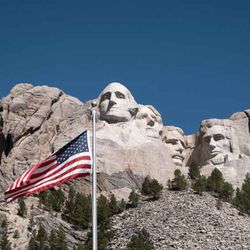
27:10|It might be 250 years since the Declaration of Independence but the document continues to prove controversial, with political groups arguing over the intention behind the document – just watch any Supreme Court case. To mark the 4th of July, Professor Gregg Frazer joins Damian Thompson to talk about the intention of the founding fathers in terms of religion – did they really want America to become a Christian nation?With President Trump courting evangelical Christian voters, rising religious tensions amongst religious minorities and some sections of society advocating for ‘Christian nationalism’, is America’s free market in religious ideas being tested to its limit?Produced by Patrick Gibbons.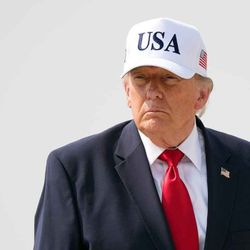
Coffee House Shots: Anthony Scaramucci on Trump, Corruption & America at 250
34:58|As Americans mark the 250th anniversary of the 1776 Declaration of Independence, Anthony Scaramucci joins the Spectator to provide his assessment of the health of the nation. As we approach the halfway point of the second Trump presidency, what's his impact been on America's reputation? Will the Democrats' attempts to emulate Trump help or hinder them? And why are American conservatives so obsessed with Britain – or rather, Britain's supposed decline?Declaring Trump 'an ageing queen' under whom 'the spirit of hypocrisy lives on' in America, the former White House communications director joins Freddy Gray and Tim Shipman for this special Coffee House Shots / Americano crossover to mark the 4th of July.Produced by Patrick Gibbons and Natasha Feroze.
The Edition: Labour's 'total failure' on defence – and why Boris shouldn't come back
30:18|For this week’s Edition, Lara Prendergast is joined by the Spectator’s deputy editor Freddy Gray, assistant content editor John Power and former Leader of the House of Commons Penny Mordaunt.This week: Labour’s lame duck period drags on, with Keir Starmer searching for a legacy before he leaves office. This week he has announced more money for Defence, though with several caveats, the biggest of which is unfunded billions left for the (presumably) incoming Burnham administration to fix. Penny Mordaunt, a former Conservative Defence Secretary, explains why Starmer has been a ‘total failure’ on Defence, saying Labour have failed to take Defence seriously and need to explain to the country that tough choices lie ahead. She argues Sir Keir is worse than Corbyn, who at least had a principled position on Defence. Her warning is stark: forget NATO targets of 3,4 or 5% of GDP – war would mean 50%, and the next few decades could be 'the worst humanity have ever lived through’. Also: the ‘dark money’ secretly funding net zero campaigns. John Power explains the links between Ed Miliband, China and pro net zero campaign groups in the UK, arguing that while political interest groups are not inherently bad, transparency should work both ways. Many left-leaning groups seem to operate under the belief they can be opaque as long as – to them – the end justifies the means. Penny provides her own verdict on Miliband, tipped to be the next Chancellor, saying she has 'never known him to make a correct decision’. Plus: as Starmer starts packing up at Number 10, could another former Conservative Prime Minister be plotting his return to office?Produced by Patrick Gibbons.
The Book Club: A History of the United States in 15 Speeches
42:28|My guest in this week's Book Club podcast is the former Obama speechwriter Ben Rhodes, talking about his new book All We Say: A History of the United States in 15 Speeches. Ben tells me why a debate between two visions of what makes the US special has been playing out since the nation's conception, what Frederick Douglass has to say to the America of the 21st century, and why Ben Franklin didn't think the constitution was sacred.
Coffee House Shots: Summer Party Secrets
17:05|As the nation holds its breath to see if England will be progressing in the World Cup, the bottles of Pol Roger are on ice for the post-match after party: the Spectator's summer party, taking place this evening. Opening the doors of the Spectator to listeners of Coffee House Shots, James Heale, Freddy Gray, Noa Hoffman and Tim Shipman talk about their favourite memories, how to survive events like this – and which politicians handle their drink best. Plus, with Starmer on the way out, will Labour politicians be partying – or plotting?Produced by Patrick Gibbons.
Quite right!: Burnham thinks devolution can fix Britain – is he right?
41:23|This week: Burnham’s strategy – or lack of one – a ‘number ten of the North’ and why immigration is the real test.What is so wrong with the South: Andy Burnham thinks devolution is the answer to Broken Britain, but does his diagnosis amount to an actionable plan for government? And does his focus on the North come at the expense of some of Britain’s most deprived areas? Michael knows the machinery of levelling up better than anyone and Madeline was in the room as Burnham made his big pitch – they give their verdict. Plus: Shabana Mahmood’s immigration muddle. After a row with junior minister Mike Tapp, the Home Office has announced plans for new safe and legal routes for asylum seekers, modelled on the Homes for Ukraine scheme. But is indefinite leave to remain the real test for Labour’s new approach?Produced by Oscar Edmondson.
Americano: Why is America’s radical left winning?
18:32|After success in the New York democratic primaries for far-left candidates, President Trump says 'the game is on. Enjoy Watching.' Freddy Gray speaks to Spectator columnist, Roger Kimball, about how Trump plans to deal with the radical left, the lawlessness of New York under Mamdani, and how artificial intelligence is changing politics. Learn how to earn yield on gold, paid in gold, at Monetary-Metals.com/Americano
Spectator Out Loud: Richard Madeley, Michael Simmons, Gus Carter & Arabella Byrne
23:58|On this week’s Spectator Out Loud: Richard Madeley wonders if anyone in the media still drinks; Michael Simmons asks if the UK is ready for Andy Burnham’s first Budget; Gus Carter explains the Spectator’s role in the birth of America; and finally, Arabella Byrne provides her notes on coconut water. Produced and presented by Patrick Gibbons.
Americano: has America really lost to Iran?
54:26|Vice President JD Vance is returning from the Swiss Alps having concluded the opening phase of the Iran talks with a view to achieving a peace deal. Are critics right to claim that the whole war has been a humiliation for America? Freddy Gray speaks to Stanford Professor Victor Davis Hanson about MAGA foreign policy, the midterms, why oil is so important to the American voter & the right wing realignment in Latin America.Learn how to earn yield on gold, paid in gold, at Monetary-Metals.com/Americano