Share
Behind the Scenes
Story 6: From eight figures to ashes: through a 99.6% wipeout
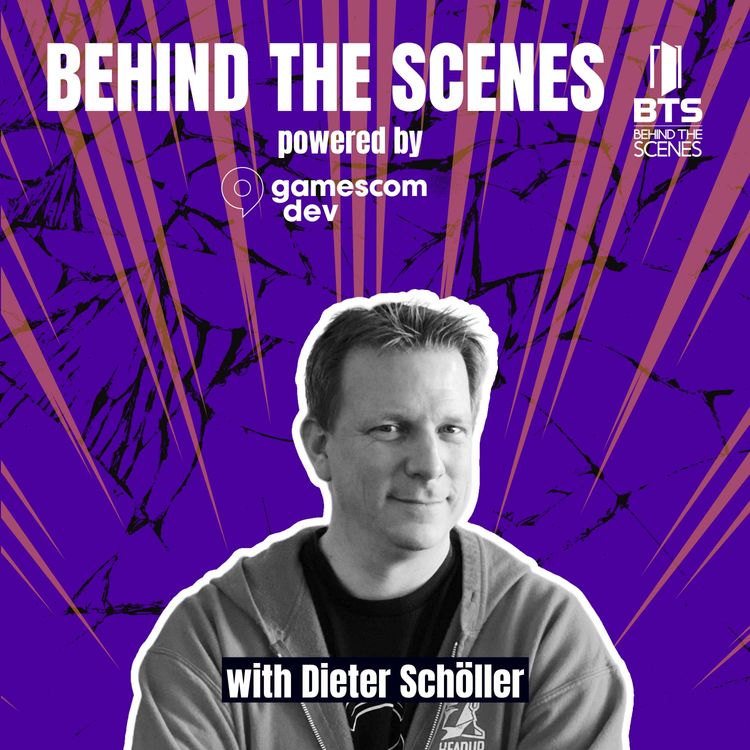
What happens when an eight‑figure paper dream collapses—and becomes your chance to take back control? For Dieter Schöller, founder of Headup Games, it meant a near‑total stock wipeout, a buyback of his studio for EUR 500,000, and rebuilding on his own terms.
In this episode of “behind the scenes,” Dieter traces his arc from law student and Wolfenstein modder to indie publisher just as digital distribution upended boxed retail. Early flops forced a pivot to a flexible, “no‑BS” licensing model—then an unexpected hit, Bridge Constructor, shot to #1 in 91 countries and spawned mash‑ups with Portal and The Walking Dead. COVID’s boom brought an acquisition by Thunderful—and then the bust. Faced with sell, shut, or buy back, Dieter chose the hard path: protect most jobs, split publishing and development, and keep empathy and no crunch at the core.
You will learn:
- How Headup’s licensing‑first pivot saved the company after early failures.
- How Bridge Constructor became a global premium hit and landed the Portal license.
- Why a COVID‑era “dream exit” turned into a near‑wipeout—and what that revealed.
- What it takes to buy back your studio and rebuild with clear focus.
- Why mid‑sized indie groups may be the healthiest path between giants and micro‑studios.
Subscribe for the full, uncut and ad-free episodes!
Patreon: https://www.patreon.com/cw/behind_the_scenes_show
Steady: https://steady.page/behindthescenes
More episodes
View all episodes
12. Story 8: Three days from bankruptcy - the story of King Art
26:12||Season 1, Ep. 12What happens when your breakout hit collides with a publisher’s sudden bankruptcy—and your runway shrinks to three weeks? For Jan Theysen of KING Art Games, the HMH collapse turned a million‑euro royalty forecast into frozen projects and an urgent scramble to avoid layoffs—until Gameforge’s Klaas Kersting stepped in with a fast, no‑nonsense browser game deal that bridged the gap and saved the studio.In this episode, Jan traces the whiplash arc from Leipzig triumph to legal limbo: the hard lessons of rights recovery for The Book of Unwritten Tales, the “never one partner” rule that reshaped KING Art’s strategy, and why trailer‑driven development and Kickstarter discipline later became compounding advantages. He opens the black box on negotiating amid insolvency, building a deterministic RTS netcode from dusty papers, and how Iron Harvest’s long tail set the stage for Dawn of War 4.You will learn:How to secure IP and ship an add‑on when your publisher goes underHow a single decisive ally (Klaas Kersting) can de‑risk a studio at the edgeHow diversifying across three projects, partners, genres, and platforms hedges failureHow trailer‑driven development sharpens focus and pitch clarity under pressureWhy resilient pipelines turned a crisis into momentum—culminating in landing a top RTS franchise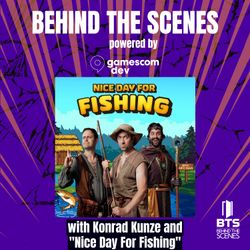
11. Story 7: How a six-month filler exploded into a four-year hit with Team17 and VLDL
49:15||Season 1, Ep. 11What happens when a six‑month filler refuses to stay small—and becomes your studio’s defining bet? For Konrad Kunze of FusionPlay, it began with a gap on the calendar, a “let’s mash RPG and fishing” experiment, and a cold DM to Viva La Dirt League that turned into a full creative partnership—then a publisher deal with Team17.In this episode, Konrad traces the unlikely arc from a stopgap prototype to Nice Day for Fishing: the one decision that tipped a side project into a four‑year production, the brand non‑negotiables that kept VLDL’s humor and character DNA honest, and the approval pipeline that protected momentum across creators, devs, and publisher. He opens the black box on the riskiest week of development, the feature they almost cut that became the game’s heart, and the trade‑offs required to scale without losing the spark.You will learn:How a cold outreach to VLDL evolved into a working model for creator‑developer collaborationHow Team17’s milestones, QA, and positioning sharpened the final product without dulling its voiceHow community expectations from VLDL’s audience shaped quests, tone, and onboardingHow to design approval workflows that keep authenticity high and iteration fastWhy betting on a “tiny” idea—at the right moment—can reset a studio’s trajector
10. Interview 3: Viola Tensil – an unplanned career in constant motion / Nicht geplant – Vios Karriere als Dauerquereinsteigerin
01:07:15||Season 1, Ep. 10Please note: This interview episode was recorded in German.The entire conversation was recorded in German, preserving the original tone, humor, and depth of a discussion that thrives on nuance, personality, and shared history.In this episode, the host talks with Viola “Vio” Tensil about a career that never followed a straight path. The guiding hookline says it all: “Not planned – a career as a perpetual career switcher.” Together, they explore how Vio’s early life—growing up between Germany and Indonesia—shaped her openness, curiosity, and early connection to video games at a time when gaming was far from mainstream.The conversation traces her entry into media and her role at GIGA Games, where she became the first female on-camera “Netzreporterin.” Vio reflects on the raw, experimental energy of early 2000s gaming television, the authenticity of live formats, and the stark contrast between public visibility and the financial realities behind the scenes.From there, the episode follows her transition from journalism and moderation into the German games industry’s event and conference landscape. What began as stage moderation gradually evolved into show concepting, directing, and creative leadership—often by stepping into roles she hadn’t planned for, but grew into through trust, curiosity, and adaptability.Vio speaks openly about leaving games journalism behind, choosing freelancing over fixed roles, and embracing a “skill-tree” mindset: constantly reallocating strengths as interests and opportunities shift. The episode closes with a look ahead, touching on youth media protection, cultural responsibility, and why staying flexible remains her most important professional principle.A candid, reflective conversation about careers, curiosity, and learning to feel at home in constant change.--------------------------------------In dieser Folge spricht Host Andreas mit Viola „Vio“ Tensil über ihre Karriere, die nie geradlinig verlaufen ist. Die leitende Hookline bringt es auf den Punkt: „Nicht geplant – Karriere als Dauerquereinsteigerin.“ Gemeinsam beleuchten sie, wie Vios frühes Aufwachsen zwischen Deutschland und Indonesien ihre Offenheit, Neugier und den frühen Zugang zu Videospielen geprägt hat – zu einer Zeit, in der Gaming in Deutschland noch alles andere als selbstverständlich war.Das Gespräch zeichnet ihren Einstieg in die Medienwelt nach und ihre Zeit bei GIGA Games, wo sie als erste weibliche „Netzreporterin“ vor der Kamera stand. Vio reflektiert die rohe, experimentelle Energie des Gaming-Fernsehens der frühen 2000er, die Authentizität der Live-Formate und den starken Kontrast zwischen öffentlicher Sichtbarkeit und den finanziellen Realitäten hinter den Kulissen.Von dort aus folgt die Episode ihrem Wechsel vom Journalismus und der Moderation in die Veranstaltungs- und Konferenzlandschaft der deutschen Games-Branche. Aus Bühnenmoderationen entwickelten sich zunehmend Aufgaben in Showkonzeption, Regie und kreativer Leitung – oft ungeplant, aber getragen von Vertrauen, Neugier und der Bereitschaft, Verantwortung zu übernehmen.Vio spricht offen über ihren Abschied vom Spielejournalismus, die bewusste Entscheidung für das Freelancertum und ein „Skilltree“-Denken: Fähigkeiten immer wieder neu gewichten, je nach Interessen und Chancen. Zum Abschluss richtet sich der Blick nach vorn – auf Jugendmedienschutz, gesellschaftliche Verantwortung und die Frage, warum Beweglichkeit für sie das wichtigste berufliche Prinzip bleibt.Ein offenes, reflektiertes Gespräch über Karrierewege, Neugier und das Gefühl, sich im Wandel zuhause zu fühlen.
8. Story 5: No Fire Button? No Game!
31:38||Season 1, Ep. 8What happens when George Lucas picks up your prototype, mashes the red button, and asks, “Why isn’t the fire button working?” For Lucasfilm Games veteran David Fox, that moment turned Rescue on Fractalus! from a principled, nonviolent rescue sim into a tense, unforgettable classic—complete with one of gaming’s earliest jump scares.In this episode of "behindthescenes," David takes us back to the early 1980s: the scrappy birth of Lucasfilm Games inside the computer division, a research-first culture under Peter Langston, and the brute-force ingenuity it took to make fractal landscapes fly on an Atari 800. Inspired by ILM’s Genesis effect—and constrained by the fact that Lucasfilm couldn’t actually make Star Wars games—Fox and team channeled the spirit of the galaxy far, far away through cockpit design, pacing, and sound.We dive into the studio visit that changed everything. Lucas’s two notes—“we need a fire button” and “add tension”—sparked the iconic twist: sometimes the “pilot” sprinting toward your ship is an alien that leaps onto your windshield and pounds through unless you raise shields in time. Hidden until level 8, kept out of marketing, and barely hinted at in the manual, the scare landed precisely because secrecy was still possible in a pre‑Internet world.Fox also shares the culture and craft behind the scenes: why the dream of one‑click cross‑compiles on a VAX fell apart, how prototyping on minicomputers still paid off, and the obsessive, hand‑tuned optimization needed to hit 6–8 fps over fractal terrain. Plus the human touches—posing twice for the box art, wedding ring visible for empathy—and the winding release path through Atari, Epyx, and multiple platforms, with the Atari 800 remaining the definitive version.This is a compact masterclass in design under constraint: sharpening intention, privileging play over philosophy, and letting a single mechanic reframe your entire loop.In this episode, you will learn:How George Lucas’s “fire button” and “add tension” notes reshaped Rescue on Fractalus! and birthed an early, legendary jump scareWhy Lucasfilm Games couldn’t ship Star Wars titles—and how Rescue still captured the feel through cockpit POV, pacing, and soundThe fractal pipeline: from ILM’s Genesis effect to rendering terrain on Atari hardware via ruthless, hand‑rolled optimizationsThe secrecy playbook: level gating and zero marketing spoilers—and why that surprise would be nearly impossible todayThe research-first roots of Lucasfilm Games, Atari’s $1M kickstart, and what survived of the VAX prototyping dreamThe release odyssey (Atari 5200, Epyx disks, C64/Apple II/PC) and why the Atari 800 version still feels bestPractical design lessons: constraints as catalysts, play over principle, and tension as the glue that elevates every systemIf you care about how sharp constraints, fearless iteration, and one perfectly timed creative note can turn a good idea into a classic, this conversation is for you.
7. Special: Live from the German Developer Award 2025 in Cologne
01:17:09||Season 1, Ep. 7Special Episode: Live from the German Developer Award 2025 in ColognePlease note: This special episode is recorded in German.Gordon and Andreas attended the German Developer Award 2025 in Cologne and take you straight to the heart of one of the most important events in the German games industry.In this special episode, you’re there from the very beginning:when the show kicks off, when the atmosphere of the venue unfolds, when the catering is explored (very important!) — and most importantly, when the two hosts dive into the crowd after the ceremony to talk directly with the award winners.Featured interviews include:Anna, whose team FemDevsMeetup received the Jury Special AwardZwi from Toukana Interactive, winners of Best StudioPaintbucket Games with The Darkest Files, awarded Best Game Beyond Entertainment and Best Game DesignDavid from Neoludic Games, whose debut title Tiny Bookshop was a major success, winning Best German Game, Best Indie Game, and Best GraphicsMarie from Happy Broccoli Games, awarded Best Audio DesignIn addition, Gordon and Andreas managed to grab host Lynne Glaner for a short Behind the Scenes conversation, while Benedikt from Ubisoft shared insights into the upcoming German Developer Award Foundation.All in all, it was an entertaining evening filled with familiar faces and a lively award show that left nothing to be desired. In the final segment, Gordon and Andreas reflect on the night once more — the day after the event.----------------------------------------Special Episode: Live vom Deutschen Entwicklerpreis 2025 in KölnGordon und Andreas waren für euch live bei der Verleihung des Deutschen Entwicklerpreises 2025 in Köln dabei und berichten direkt von der Show und ihren Gewinnerinnen und Gewinnern.Im Podcast seid ihr von Anfang an mit dabei:wenn die Show startet, wenn über Atmosphäre, Publikum und natürlich das Catering gesprochen wird (sehr wichtig!) – und vor allem dann, wenn sich die beiden Hosts nach der Preisverleihung ins Getümmel stürzen und die Ausgezeichneten direkt vor Ort interviewen.Mit dabei sind unter anderem:Anna, die mit ihrem Team FemDevsMeetup den Sonderpreis der Jury gewonnen hatZwi von Toukana Interactive, ausgezeichnet als Bestes StudioPaintbucket Games mit The Darkest Files, Gewinner in den Kategorien Bestes Game Beyond Entertainment und Bestes GamedesignDavid von Neoludic Games, die mit ihrem Erstling Tiny Bookshop gleich mehrfach überzeugen konnten und die Preise für Bestes Deutsches Spiel, Bestes Indie Game und Beste Grafik gewonnen habenMarie von Happy Broccoli Games, ausgezeichnet für das Beste AudiodesignAußerdem konnten Gordon und Andreas noch Moderatorin Lynne Glaner für ein kurzes Behind the Scenes-Gespräch gewinnen, und Benedikt von Ubisoft verriet spannende Neuigkeiten zur kommenden Stiftung des Deutschen Entwicklerpreises.Alles in allem war es ein kurzweiliger Abend mit vielen bekannten Gesichtern und einer launigen Award-Show, die keine Wünsche offenließ. Im Fazit lassen Gordon und Andreas am Tag danach den Abend noch einmal Revue passieren.
6. Story 4: You dont play with swastikas!
41:52||Season 1, Ep. 6What happens when a mid‑career crisis, the frustration of “another game about orcs and zombies,” and worries about the world collide? For Jörg Friedrich, it meant walking away from business as usual, starting something small and personal—and ultimately helping change Germany’s rules on Nazi symbols in games.In this episode of “behindthescenes,” we sit down with Jörg Friedrich—co‑founder of Paintbucket Games, former AAA designer (Spec Ops: The Line), and creative lead behind “Through the Darkest of Times,” a game about civilian resistance in Nazi Germany.What began as a two‑person side project became an indie success and a political flashpoint. We trace the journey: late‑night development; a lean, mostly text‑driven design that mirrors the grim reality that most resistance cells failed; and a simple but sharp Twitter strategy—daily 1933 events—that drew historians, journalists, and players. A stark, hand‑drawn art style made the project instantly recognizable.Then the fight that made headlines: Could games depict swastikas under the same “social adequacy” rules as film and literature? Jörg explains how the German games association used the project as a case study, how the USK weighed the build, and why the game became one of the first in Germany to get an age rating while still showing Nazi symbols.We also cover the fallout: wall‑to‑wall media attention at Gamescom, long lines to try “the game with the swastikas,” and a backlash that ranged from union press releases to the ministerial sound bite “You don’t play with swastikas.” Jörg shares the personal stakes—teaching gigs put at risk—and how behind‑the‑scenes advocacy ultimately shifted the narrative toward games as serious historical storytelling and civic education.This is a candid look at making “games with impact”: refusing fake symbols, embracing uncomfortable truths, and designing for tension, loss, and survival over power fantasies.In this episode, you will learn:How a meaning crisis led two AAA veterans to found Paintbucket Games and pursue “games with impact.”Why Through the Darkest of Times centers the rise of fascism, everyday persecution, and the slow erosion of freedom.How a daily 1933 Twitter feed and distinctive art style built the audience before launch.How a tiny project secured a publishing deal (THQ Nordic / HandyGames) without a traditional pitch.What changed inside the USK to apply the social‑adequacy clause to games—and why this case mattered.How the media storm and political backlash unfolded, and how allies helped reframe the debate.Why the team refused to invent “fake” symbols—and what that says about historical honesty in games.Why the game is designed so you often “don’t win,” echoing the fate of real resistance groups.If you want to understand how far games can go as a cultural medium—and what it costs to push those boundaries—this episode is for you.
5. Interview 2 SPECIAL: The story of Bisalina Speedruns — how vision overcame resistance and reshaped the scene
01:05:59||Season 1, Ep. 5Please note: This interview is conducted in German.Andreas talks with Lucina Hum, founder of Bisalina Speedruns.What happens when a niche you love refuses to grow—so you decide to grow it yourself?For Lucina Hum, speedrunner of more than a decade and organizer of Bisalina Speedruns, the answer lies somewhere between passion, frustration, and unwavering vision.In this episode of Behind the Scenes, Andreas talks to Lucina about her unconventional path: how you shake up a scene that instinctively distrusts change. The hookline:“Against resistance, for the vision – why Lucina forged her own path despite criticism and reshaped speedrunning along the way.”This isn’t a takedown of the community. It’s an honest look at a subculture that often limits itself, and at a founder who decided she wasn’t willing to stay small. Lucina reflects on her early fascination with JustinTV, Mario 64 runs, and Metroid Prime—and why she eventually stopped wanting to recreate “retro for retro’s sake.”Her answer: events that open speedrunning up—to creators, press, politics, and people who’ve never touched a GameCube controller. Events that fuse entertainment and esports, integrate charity, and offer a format that simply didn’t exist before.We dive into:Community resistance:• Purists who dismiss her approach as “not real speedrunning.”• Gatekeeping that suffocates innovation.• The bigger question: Who does a community actually belong to?Building Bisalina Speedruns:• From a €2,000 shoestring budget in 2023 to a hybrid TV-ready event.• 40+ creators collaborating on a 10-hour live production.• A prize competition with nearly 2,000 submissions and a €5,000 finale.• 150 invited guests from media, esports, politics, and the creator space.Her creative philosophy:• Explain instead of mystify.• Make rules accessible rather than sacred.• Build something newcomers understand without betraying veterans.Lucina’s dream formats:• Interactive segments instead of silent showcases.• Entertainment mixed with education (quizzes, zoom-in challenges).• Speedrunning as a gateway for creators rather than a closed shop.• Events where coaching, networking, and competition coexist.The episode sheds light on how speedrunning evolved, why “it’s always been like this” is never a valid argument for the future, and why innovation often requires ignoring the loudest critics.Not because it’s easy, but because no one else is pursuing her vision.Surprisingly, the ending is hopeful: More reach, more understanding, more formats, more courage—plus a major announcement at the upcoming event.You will learn:• Why speedrunning is 33 years old yet only now breaking into the mainstream• How niche cultures grow when they stop creating only for themselves• The pitfalls of a scene wary of change• Why hybrid events open doors pure community shows never could• How to turn a hobby into a TV-ready event—solo, but with vision
4. Story 3: The Plan Was Perfect. The Players Were Better.
22:23||Season 1, Ep. 4What happens when your perfect plan collides with millions of passionate players? For Stephen Flowers, Senior Writer on the smash-hit Helldivers 2, the answer was to throw the plan out the window and embrace the chaos.In this episode of "Behind the Scenes," recorded live at devcom 2025, we sit down with Stephen Flowers for an unflinchingly honest look at one of the most explosive and successful game launches in recent memory. This isn't just a story about managing success; it’s the story of a meticulously crafted 90-day narrative that was dismantled by players in less than a week, forcing the development team into a frantic, live-wire act of reactive storytelling.We dive deep into the pivotal moments of that journey, from the emergency scramble that turned 8 planned major orders into 27, to the single most genius solution of their crisis—a story that involves turning a game-breaking server issue into an in-universe "firmware glitch" for the enemy faction.This episode is a powerful look at the reality of modern live-service games, the immense pressure of a player-driven world, and the invaluable lessons learned when your community's passion becomes the most powerful and unpredictable force in your game.In this episode, you will learn:Why the initial 3-month content plan for Helldivers 2 was completely overwhelmed by players within the first few days.The incredible story of the "firmware glitch" and how the team learned to weaponize bugs and technical issues as part of the narrative.How the writers and Game Masters collaborate in real-time to react to player behavior and keep the Galactic War engaging.The creative process behind balancing a persistent story with the need for player agency in a world that can never truly be "won."Why, even after monumental success, the development team never feels truly "safe" from the chaos of a live game.9. Nov. 2025 18:47