Share
Becoming Your Best | The Principles of Highly Successful Leaders
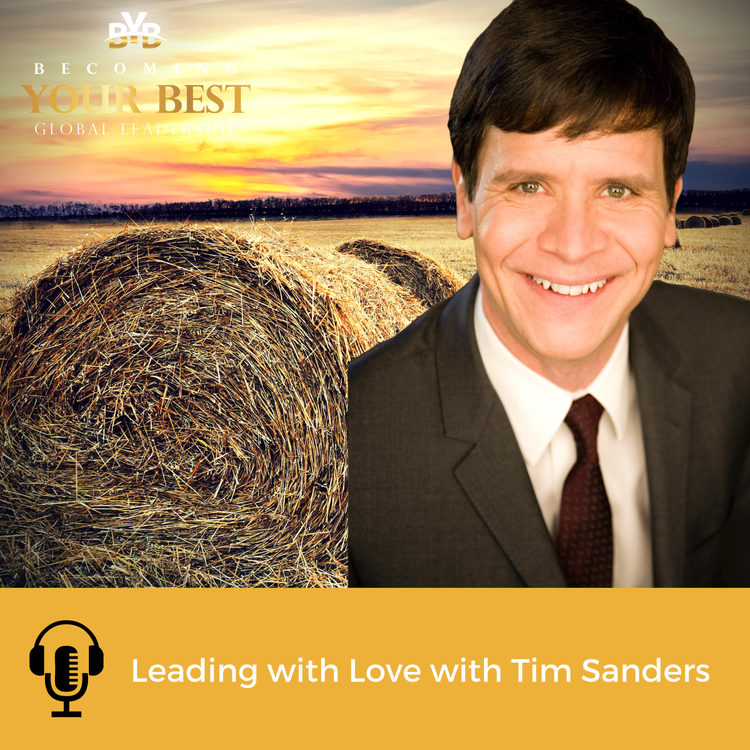
Leading with Love - Interview with Tim Sanders
Welcome to all of our Becoming Your Best podcast listeners wherever you might be in the world today. This is your host Steve Shallenberger. And we have a tremendously interesting guest today. Our guest is a successful business leader and has influenced many many people for good. Welcome to our show today, Tim Sanders.
Tim: Hey great to be with you Steve.
Steve: I've been looking forward to this.
Tim: Me too.
Steve: Well, good. All right. Now, before we get started, I'd like to tell you a little about Tim's background. He spent his early career on the cutting edge of innovation and change. He was an early stage member of Mark Cuban's Broadcast.com, which had the largest opening day IPO in history. After Yahoo acquired the company, Tim was tapped to lead their Value Lab, and by 2001 he rose to a Chief Solutions Officer. And today he's one of the top-rated speakers on the lecture circuit.
Tim is also the author of four books including The New York Times best seller "Love is the Killer App," which is an awesome book, "How to Win Business and Influence Friends," I really enjoyed reading that. Tim's book has been featured in Fast Company, USA Today, The New York Times, Boston Globe, and so on. He is a master storyteller who offers his listeners actionable takeaways that produce results right away. So I have been looking forward to having Tim here in our interview today. And to get going, Tim, can you tell our listeners maybe a little about your background, your story? What was it like growing up? And maybe some experiences that helped you see that you could be successful?
Tim: Thank you. I grew up in Clovis, New Mexico. It's a farming community just east of the West Texas border. I'm sorry, just west of the...West Texas border. And I was raised by my grandmother. I was a special education student from second to fifth grade, which really, you know, taught me a lot of things. It taught me how to bounce back. That's for sure. Taught me how to fit in when people didn't understand who I was. But most importantly, my childhood taught me that anything is possible if I'm willing to put the preparation work in and seize the opportunity.
In my adult life I had a period of time, say 15 years or so, where I was gainfully employed and successful to some degree but just not laser-focused on what mattered. You might say I was in a mediocrity trap. In 1997, I went to work for Mark Cuban about a year after I had gotten out of that trap and had a real paradigm shift about what it was gonna take for me to be successful for my family. When I worked for Mark Cuban you can imagine 1997, the dawn of the internet explosion. It was such a breathtaking opportunity Steve. But I remember those times mostly as being a student of the game. Something I learned from him. And I was a voracious book reader. I was a mentor to anybody I did business with. And by 2001 after he'd sold the company to Yahoo, I became Yahoo's Chief Solutions Officer right after the dot-com crash of 2000. So my team and I went out to rebuild hundreds of millions of dollars of lost business because all of those companies, like eToys, our big advertisers, had gone caput. And through those experiences, I built up a perspective that if we commit ourselves to lifelong learning, and we lead with love in our hearts for other people and expect nothing in return other than that they improve and pay it forward, you can accomplish anything in this world we live in.
Steve: Wow, what a rich background and then to be able to take that background and, like, Clovis, New Mexico? You mean you can be successful if you were born in Clovis, New Mexico?
Tim: I'll tell you something. Let me tell you something about Clovis, New Mexico. Little town, 30,000 people. I was on the debate team in high school, Steve. And we wanted to be nationally ranked. Now, it was a real kind of a pork chop circuit, right. There was the Las Cruces tournament, the El Paso tournament, the Odessa tournament. We had to get in our cars and drive over two hours to Lubbock, Texas, to go to a decent library to research for our debate. And we had to compete with, you know, Houston's Bellaire and Dallas' St. Marks and all these great folks in New Mexico, and all the big schools from Albuquerque and Santa Fe. But I'll tell you something, my senior year, we won state championship, and we went to the national tournament, and we didn't have nearly the resources of anybody we competed with. But man, I gotta tell you, and I thank my coach for this, we had heart.
Steve: Wow! Well, I'll tell you I can attest that people from the salt of the earth communities like this can have a big difference in the world.
Tim: Yeah. And I think too Steve, is that there's something in our values raised in that environment that makes us really good connectors. And I also think it makes us hungrier to find some way to get back that edge. And to look for those invisible resources that are out there, like knowledge that can really give us a leg up. And it makes us wanna give back too when we become successful, you know, there's a natural, very deep set generosity. And I gotta tell you, I come from it very honestly. I mean, the patriarch of our family is my great-grandfather the late great Tommy King. And he was one of the founders of Clovis when it organized into a city back around it, you know, after the Great Depression. And he was a successful farmer. And one of the things he did before the Dust Bowl era, right before it, was he engaged with some agricultural technologist and became the first farmer in that part of the country to use a circular farming techniques, which when the Dust Bowl hit, helped his farms survive if not thrive while others withered away.
And in our family, one of the most poignant stories about Tommy was how much he gave back to other farmers who were in crisis. The ones that bullheaded, they wouldn't try circular farming knowing that the science said there was something coming in a drought. He was happy to give them microloans. He never collected on them. He would just tell people, "When this happens in the future, you pay it forward." And I believe that his philosophy really represented, you know, small town America.
Steve: Oh, that's a great story. And then to actually go from being a special ed student to being successful, that's got to give hope to special ed students anywhere because, you know, they're behind a gun. And so, is there hope? I mean, like, can we make it?
Tim: It's tough. I mean, you know, more background here. So my grandmother raised me because my mother abandoned me when I was in four. And it manifest into tremendous depression when I was a little kid. And it exhibited itself in discipline issues. And during those days, Steve, they really didn't have much to do with a kid, you know, when you're seven. So, all they really can do is put you in special education. And that experience was really challenging because it's not just that you're taken out of school, that you're ostracized. And when you go to church you're treated differently because, you know, you go to the other school. And I picked up the nickname Shortbus, and I really didn't shake that nickname till junior high. But I think the thing that I got out of the whole situation is when they put me back into the general population in the sixth grade. I had to deal with bullies for the first time. You know, when you're different you're gonna deal with bullies. For parents, this is a great challenge when a child is singled out into a program like special ed or frankly like gifted for that matter. And I'll tell you, I think my point of view about how I dealt with that traumatic sixth and seventh-grade year had to do with how I felt about love. I'll give you a classic story. So, in the seventh grade, the day that you wear your nice clothes and your nice white shirt for the picture, you know, for the yearbook?
Steve: Yup.
Tim: I went in and this bully who went to church with us demanded my lunch money and I hesitated. So he punched me right in the nose and I bled all over my shirt. Not gory but I bled on my shirt. It ruined me for the picture that day. When Billy, my grandmother, came to pick me up, I thought she was gonna just, you know, have it out with that boy's mom, or at least give him a good talking to. So when Billy and I are sitting in the vice principal's office and we're alone for a second, she turns to me and she looks at me and she says, "You know the problem here is that you don't love those boys enough." I remember looking at her and I point at my shirt and I said, "What do you mean? He's mean. He's a mean boy." And she said, "In our family, you don't love people because of who they are. You love people because of who we are." And she goes, "That's gonna go a long way with you fitting in at the school." And so she said I should invite him over after church. Because she believed that people were inherently good and when they were mean, or when they were bad, there was something about the story that you don't know. And so he came over after church and stole some of my stuff and still kind of picked on me but he didn't punch me in the nose. And then I guess he felt the duty to invite me over to his house a few weeks later on the other side of the tracks where he lived. And when I visited his home that Sunday afternoon, I realized why he was a bully. His father, a drunk, swore at him coming in through the front door. His older brother whipped him with what, like a horse bridle, in front of me.
Later, and I realized that this guy had been going through a lot more than I was. And that he was manifesting it. He was a big guy. He was manifesting it by picking on the only thing that he could get away with picking on, that's a little guy called Shortbus. And once I had that breakthrough, Steve, it really changed the way I thought about people. I truly began to understand that if we give someone our love and we care about them, whether it's on a personal level like this or on a professional level like say someone that I manage, you'd be surprised how many of their problems go away. And how you can convert a bully into a blocker. And I gotta say, that guy and I became good friends. And a little bit more than four years later, he put up posters for me when I successfully ran for senior class president and won. And I realized that for the rest of my life, I'm gonna go out into the market and love people because of who I am, and it's very easy to find things about them that are incredibly easy to love. And that I'm assuming when people don't give back, when they don't do the right thing, when they're mean spirited. I'm assuming that there's something about their story or struggle that I have no knowledge of. And it's made me a much deeper listener and a much more curious person in a good way.
Steve: Well, that's a fantastic experience and thank you for sharing it. How grateful are we for the people in our backgrounds that help us grow and develop and overcome maybe some of the deficiencies that we might have that we may or even may not be aware of, that help us start becoming what we're capable of becoming. So that's really an inspirational story. And then love is so powerful and we may talk about it more after our interview but after...well, I was going through my college career I sold books back East. And one of the great books that I read was "The Greatest Salesman in the World", "About the Scrolls," and "I Will Greet This Day With Love In My Heart," and "How Will I Greet Those That Treat Me Poorly Love." And, oh, my goodness, you just fill this tremendous power that comes from it. So I'm so glad you shared that.
Tim: Well, thank you. And I will tell you, there's real science or at least there is real psychological research behind this. And if you think about it, this is a manifestation of Maslow's hierarchy, right? Abraham Maslow studied something he called B-love, that is being love. That is a detached form of caring about another person, like I care about another person whether or not you care about me. I care about that person solely because I wanna help that person grow. I don't care about that person because I need a new friend.
D-love, Maslow brought about this, a deficiency based love, says, "I need to be loved." So everything I do from being friendly to making, you know, advances, whatever you do to try to go out and help people, you're doing it to solve one of your problems. So, next we'll talk about the idea that when we feel fulfilled in terms of how much we think we're cared about, and that the way we think about love and other people, again, whether it's personal or professional, when we do that, we are making the leap to becoming like self-actualized, if you will. And that it's the most powerful way to think about loving other people because there's no anxiety in those relationships because you're not expecting anything in return. And that's what makes them so beautiful. And I found in my business life, that as a leader, as a manager, as a colleague, this works even more. Because, you know, we need people to encourage us at work. We need people to care about us as customers. And I believe too many people are just traders, transactionalists, and don't bring that Maslovian, you know, B-love to work every day.
Steve: Okay. All right. Well, that's a powerful point of view and force in our work lives. Now talking about how to be successful in what we do in business, in our work, and in life generally, it does take work and effort and doing certain things that make a difference. So you shared earlier, that as we visited, that you had made a discovery in your mid-30s that led to ten promotions and helped you achieve a strong financial position and financial security. Can you talk a little about that? What was that?
Tim: So this is like 1996, 1997. I had been coming back into my studentship, and I had gone from just need to know in terms of learning to being a voracious reader of books. And not just on stuff that mattered to my current job but anything that was adjacent to it. Anything that I thought was interesting to know in the future. I was at a point Steve, where I would read a book a week. I would burn through these books. I'm not talking novels either I'm talking about complex books in some situations. And what happened was I began to talk about different things with clients. So when I go to work for Cuban, I had this mentality kind of fed by Leo Buscaglia as love on one hand and Steven Covey on the other. I had this mentality that I'm gonna go out and I'm gonna promote other people's success during a time of great change. Because you know the internet was disrupting everything. So I worked a lot with the retailers.
So I would go out and work with Neiman Marcus or Victoria's Secret or whomever. And I took it upon myself to learn everything I could about their business future and their business challenges, and then share that with them. And that's where I had the big aha. That if my business practice was to aggregate my intangibles, my knowledge, my network of relationships, my ability to care about people. If I build those up so I can give them away, and systematically help other people make the leap without expecting anything in return, that faith would repay me with endless referrals, a powerful brand, and a magnetic value proposition inside my company. Because I make decisions with Mark, I start to adopt the style. I was a sales person of service out in the community. We accomplished a lot of great things. He sells the company two years later to Yahoo if you remember back in those days. When I transfer out to the West Coast at Yahoo, I've really refined the system of building relationships by sharing my knowledge, and my network, and my compassion in every interaction. And it was like the doors swung wide open. Because now it's 2000, now it's right after the dot-com crash. This idea about helping people finds success during times of great change and expecting nothing in return. Boy, it worked crazy good in Silicon Valley and that's when I begin to train the young Yahoos on this philosophy and this set of values. And that's where I begin to write down the steps I was taking to really document you know how I read books and how I chose books, and why I read books instead of articles, and what I talked about when I was networking. And that's where "Love is The Killer App" came from a few years later. And since then, you know 15 years, I've been traveling around the world meeting people, comparing notes and really building upon that philosophy.
Steve: Oh, that's great. And as we've talked about with our listeners the twelve principles of highly successful leaders, these are the things that are present across the board for high achievers. Also they were able to sustain, really, success over a long period of time, both personally and professionally. And one of those was applying the power of knowledge. In other words, gaining knowledge in the first place, and one of the primary ways is being a reader. And so this is a great reminder to every one of us listening here today of the power of reading good books on a regular basis because they're just totally stimulating, aren't they? They just fire...
Tim: They are.
Steve: ...your mind.
Tim: And what I like about books is that books require you to take a deep dive into usually a narrow subject. And you don't just learn a couple of data points and one story, you learn a construct. It's got a thesis, and it's got supporting anecdotes, and it usually has research and it's really meaty. And you can deeply understand the topic so you can give it away, right? So the twist here Steve, is read good books but have a mix. And what I say about this is every third book you read, read for someone else's benefit. I call it prescriptive reading. Think about what...
Steve: What's an example of that?
Tim: Yeah. Think about information challenges that the people have and go study on their behalf because talk about expanding your resume.
Steve: Right. It gives you a whole different perspective to maybe a different discipline.
Tim: Absolutely. That's made a big difference for me. And that was another part of my turnaround in the late 1990s that really shifted me away from the idea that, you know, I read books to help myself. No, I read books to help the world, and sometimes it helped me too. And that philosophy will keep you from being too laser-focused on what's in front of you and not focused enough on what's coming in the future.
Steve: Okay, great. That's a powerful influence on our success. And you told this wonderful experience that you had personally, this story about the bully and your grandmother saying, "Listen, we need to love him."
Tim: That's right.
Steve: See things from a different perspective. So you must have learned, Tim, somewhere along the line that love can be applied across the board, in business and as an entrepreneur. What have you found? Have you been able to make the jump of using that in your personal life to a professional life, and what's the experience?
Tim: Yeah. I've made it my professional strategy, you know, for the last 20 years or so. I mean, when I say love in a professional sense, Steve, I mean, that I have a set of emotions about you. I care and I am now committed to promote your success by sharing my intangibles with you, my knowledge, my network, my compassion. I want you to think about, for those of you listening, I want you to think about the mentor in your life who's made the most difference to you. There's maybe one. There's maybe two. Maybe some of you might have three, but there's maybe one, right? And I want you to really think about how that person felt about you. And I want you to think about how open that person was to loving someone like you, not as a family but just as a person maybe at work or just a person maybe they did business with. I'm talking about unleashing the capacity to do this every day. I developed strong emotional aspect for almost every single person I do business with, and I don't make them earn it, Steve. It happens quick. Maybe I start out by liking him and I look for things that other people don't look for. I wanna hear their story so I can admire their values and understand their point of view. I find things that are familiar about them. I experience their passion so I can really understand what makes them a unique person. I think our capacity to care about people that work quickly and then maintain that over time. I think that is oxygen for leadership.
Steve: Absolutely. That's so powerful. I mentioned the research that we've done for 40 years and these principles that are present, you're doing them?
Tim: Well, you know, we're thinking alike buddy.
Steve: We are thinking alike. I mean, one of those was living the golden rule, really exceptional leaders. I mean, you can have leaders that are good in different contexts but when you put these together, and exceptional leaders also one that really cares about people. And this is manifest in how they treat others, how they learn about others so that they can bring the best out within others. And this is what starts creating excellence, so great going on this.
Tim: Thank you. Thank you so much, man.
Steve: And by the way, Tim's book "Love is The Killer App." He talks about these three things, knowledge, networking, and compassion. Would you mind touching on the compassion part a little bit? And I'd like to go back to the networking because you said one thing that is important, and that is how a mentor maybe ought to perceive others with this love, learning what their story is? How do you bring out the best? And you'll find mentors that have done this the same way for you. So, how can you be a good mentor? That's one question. And then we'll hit this other one before we're done.
Tim: Absolutely. So, the best way to be a mentor is to remember that the mentor is usually a benefactor, a teacher of sorts. And their job is to give the hero a gift that will enable the hero to make it to the next stage of her journey. When you think about Homer's Odyssey, with the character mentor, when you think about the archetype of mentorship stories in very modern culture, like, say, Star Wars, with, you know, Yoda, or with Karate Kid in Miyagi, that's what it's all about. It's about finding that person that has heroic qualities. That's going somewhere a little too fast. You've got a gift for them, maybe it's your personal experience. You've been where they've been. You have knowledge that they need and you give it to them. You expect nothing in return but that they apply that knowledge and learn and improve. All the mentors, they gain enthusiasm from the student learning. And when they need to, they go beyond just sharing information and perhaps make vital connections to create alliances, to help that hero deal with upcoming adversity. As a mentor I just want you to think a little bit like Yoda. And I want you to not really think so much like a person who's like a fire hose of information, a person who's gonna "Take somebody under their wing." I think you need to think about your role very transitionally. But most importantly, you need to expect nothing in return other than that they hero seizes the opportunity, right? I think that is what changes the game.
And by the way, you know, I know you talk a lot about how to be successful over a long period of time. My philosophy that we give without expectation, this is not lip service, Steve. I literally expect them to pay it forward but I don't expect them to pay it back. And I'm telling you that is liberating, because when I meet leaders who were generous for years and years and years and then they "Burned out." This is why they got burned out. Because just enough people didn't pay them back or give them credit or whatever their reciprocity was supposed to be and they were disappointed. And I call it ego economics. And it sets in on a lot of people in their career. Super generous in their 30s, a little bit jaded in their 40s, super protected in their 50s. I'm 55 years old, I've never been more generous because I'm not disappointed in people. And I think that's what comes with being detached about what you get back.
Steve: Oh, great. You know that's great. I think even the savior of mankind, Jesus Christ, if you...regardless of what you believe, as it was described when he healed the lepers, and he had one return and thanked him. Nine did not. And if your expectation is that people are gonna thank you, you're probably gonna be somewhat disappointed.
Tim: Absolutely. You will.
Steve: If that's your expectation.
Tim: And it's interesting. So, you know, I love that story and I appreciate that example. I think that, for us, the secret to a long-term career is a very flexible perspective. And I think that if we're willing to go against the grain that there's a quid pro quo. I think we really open up our opportunities in life. You just continue to be great until the day we die.
Steve: Wonderful. What a refreshing wonderful perspective. I had a friend, Tim, that I had lunch with last week. He is a facilitator for a very successful training company. He has been, really most of his career 30 years, he's gone all over the world. And one of the things he talked about was precisely this, is that his observation is one of the keys for companies to get ahead today to be able to be a best in class, be the best in their industry, is to have active healthy coaching program within the company where people are able to coach each other. And I think it's really these type of qualities you're talking that would help that be successful.
Tim: Absolutely. And for leaders, whether it's a small business or an enterprise, you can create a culture of coaching. So even if there's not a funded program per se, it can be the habit inside that organization. So Tom Ward was brought into Barton protective in Atlanta to turn that company around several years ago and he created that culture. He had something called Vision Quest. These values cards everybody carried with them. It was a huge part of the cadence that he had in that company. And the third value was love. "Do you care about me as a person?" He hired based on it. He rewarded based on it. He promoted or did not promote based on it. It made a big deal to how people behaved, because culture at work, culture at work is a conversation that's led by leaders about how we do things here. And that's like software that runs a company, right?
So, when you as a leader go to work and say, "We coach other people because of who we are as a company," then the habit sets in. And it's very attractive, Steve, to today's millennial, to have a reputation for a company where we bring each other up as opposed to where we internally compete. So I just want everybody listening to know this is within your power. And you don't need a big checkbook, but you do need to have consistent cadence because you need to manage that conversation about how we do things here successfully.
Steve: Yeah, absolutely. Well, I am, like, speechless that we are out of time. I can't believe it.
Tim: It goes that quick, man. It goes that quick.
Steve: It has been fast today. Now, any...what's one last bit of advice, or any tips you would like to give our listeners before we wrap it up today. It's been fun Tim.
Tim: Hey, it's been fun buddy. So I'll tell you a place where you can get some stuff about me, but before that, I'll just give you one of my...it's kind of my new little piece of advice I like to give people. And I can't say that I came up with it but I can tell you I'm championing this idea. If you want to be a happier person in, life in traffic and in work, the next time somebody irritates you, does something that is seemingly rude to you, I want you to assume that that person is operating under the best intentions. I want you to assume that you don't know the whole story. Because more often than not, Steve, people are operating under the best intentions. It's just that their needs clash with our needs. And we spend a lot of our time judging those people instead of inquiring about the rest of the story. So like I said, next time somebody cuts you off in traffic, you might wanna consider that she's trying to get somebody to the hospital before you honk your horn and shake your fist. And this goes double for you as business owners and leaders.
Steve: Oh, that's great advice. I hope I can get this right. This comes from an article I read yesterday and it really left a deep impression on me. It was given by the leader of a worldwide organization, a humanitarian service organization. And the fellow talked about 50 years ago, he had a mentor. And the mentor said, "Every time you meet somebody, if you'll say to yourself this person is dealing with a serious challenge," he said, "You're gonna be right 50% of the time."
Tim: And guess what? Before, when you just reacted and judged that person, you were wrong 50% of the time.
Steve: Exactly. Well, he said, "Man I thought my teacher, my professor was a pessimist," he said, "But I have come to learn what wise advice that was." Because indeed as we look around what's going on in the world, it is often true. And I love your comment that half the time we're wrong. So let's give everybody a lot of slack here, right?
Tim: On that, you know, again, yeah, let's put our self in another person's shoes. And let's find out more. You can learn and grow so much more. You can expand your thrive so much more. And, again, you can just avoid those regrettable mistakes we all make.
Steve: Yup. Well, these are some great things that we can do to make a difference, to lift others, to build others. Tim has done a great job in sharing these. What a tremendous background. And, Tim, if you'll share how our listeners can learn more about what you're doing, and which is tremendous? We'd love to hear about it.
Tim: Absolutely. We've set up a special page for your listeners, Steve. It is timsanders.com/byb. That's timsanders.com/byb. I'll have a huge download excerpt of Love is The Killer App for you to read. I'll also have a way you can connect with me on LinkedIn, and find other resources like videos and other such content on my site.
Steve: Well, that's terrific. Thank you Tim Sanders for being part of this show today. This has been enlightening. It's been wonderful.
Tim: Oh, absolutely. It's been a pleasure Steve. I really enjoyed it.
Steve: Well, you bet. We wish you all the best as you're making a difference in the world as well Tim.
Tim: Thank you.
Steve: And to all of our listeners, never forget, you are creating a ripple that can never be counted for good as we do the right things, good things. And they do make a difference. They lift our own lives and they lift others. And they help us be more successful, happier and have fuller lives. I'm Steve Shellenberger with Becoming Your Best Global Leadership wishing you a great day.
More episodes
View all episodes

447. Episode 447 - How to Regain Your Vision and Get Rid of Body Pain with Meir Schneider
37:06||Ep. 447What if you could improve your vision and overall health with small, simple, consistent exercises you can start doing today? In this episode, we explore Dr. Meir Schneider's unique techniques for vision improvement, pain reduction, and preventing long-term physical issues caused by sedentarism. Dr. Schneider is a visionary healer and author, and the Founder of the School for Self-healing. His groundbreaking discoveries and methods helped thousands of people globally to improve their sight and overall health. Throughout this episode, you'll hear about Dr. Schneider's miraculous eyesight recovery, from being legally blind to "fixing" his vision and developing innovative techniques for natural vision improvement. You'l also learn about Dr. Schneider's simple methods to reduce chronic pain, reduce neck stiffness, and improve posture, how to prevent long-term health issues derived from sedentarism, and much more. Tune in to episode 447 of Becoming Your Best, discover how Dr. Meir Schneider transformed legal blindness into a remarkable vision, and learn simple and life-altering exercises to enhance your overall well-being naturally. In This Episode, You Will Learn: About Dr. Schneider's fascinating life story (4:00) Simple exercises to improve your vision (8:10) What does it mean and why is crucial to "narrow our periphery" (14:00) If you don't slow down and focus on your body, your body will make you slow down to focus on it (19:10) Life-changing advice on how to take care of your back and joints (22:00) Connect with Dr. Meir Schneider: Website Get Dr. Schneider's books Becoming Your Best Resources: Becoming Your Best Website Becoming Your Best University Website Becoming Your Best Library Email: support@becomingyourbest.com Book: Becoming Your Best: The 12 Principles of Highly Successful Leaders Book: Conquer Anxiety: How to Overcome Anxiety and Optimize Your Performance Facebook Group – Conquer Anxiety446. Episode 446 - Free To Perform with Ruth Chiles
30:40||Ep. 446Being spontaneous and flexible, joyful and loving, kind and playful, and above all things, confident are traits people inherently have; it's our natural state, it's home. Yet things we hear or experience change that. To survive, we adapt, change, and transform our essence. Unfortunately, by the time we realize it, we'll probably be far from home.In this episode, the brilliant Ruth Chiles joins us to discuss the importance of addressing deep-seated performance blocks and how to rewire our brain to its natural state of confidence and flow. Ruth has nearly three decades of experience working with leading-edge neuroplasticity and neurogenesis techniques.She is the author of "The Focal Dystonia Cure" and "Free To Perform," where she explains what happens in our brains during the yips, writer's cramps, or any other performance block, and shares tools to deal with them and take our brains back to flow.Throughout this episode, you'll hear about Ruth's experience with performance blocks, from playing music since she was 3 to being unable to play a single note when she was 18. Ruth also explains why performance blocks affect all of us, not only musicians and artists, shares her four-step framework to deal with them, explains how to use brain spotting to get our brains back on track, and much more.Tune in to episode 446 and learn how to pick yourself up and get your brain back to its natural state, back to flow.Some Questions I Ask:Tell us about the new book, "Free To Perform," why you wrote it, and how that would apply to our listeners? (6:50)What are the things that people can do to get back to that state of flow, overcome those challenges, and move forward in their lives? (16:20)In This Episode, You Will Learn:A bit about Ruth and her experiences with performance blocks (2:30)What is Focal Dystonia, and how does it affect us (8:50)We all are performers (12:00)Ruth shares her four-phase framework for overcoming performance blocks (21:10)Connect with Ruth Chiles:WebsiteInstagramYouTubeFacebookBook: Ruth Chiles - Free To PerformBook: Ruth Chiles - The Focal Dystonia CureBecoming Your Best Resources:Becoming Your Best WebsiteBecoming Your Best LibraryEmail: support@becomingyourbest.comBook: Becoming Your Best: The 12 Principles of Highly Successful LeadersBook: Conquer Anxiety: How to Overcome Anxiety and Optimize Your PerformanceFacebook Group – Conquer Anxiety445. Episode 445 - Beyond Normal. The New Science of Enhanced Medicine with Dr. Shai Efrati
35:04||Ep. 445What if we could redefine what it means to be healthy by setting new medical standards? What if medicine could go beyond treating symptoms and treat root causes?In this episode, the brilliant Dr. Shai Efrati enlightens us on a revolutionary concept, enhanced medicine, which goes beyond conventional treatments and focuses on the body's natural healing abilities. Dr. Shai Efrati is a renowned Physician and Professor at Tel Aviv University, specializing in Internal Medicine, Nephrology, Clinical Pharmacology, and Hypertension. He is also a pioneer in hyperbaric medicine and the Author of "Beyond Normal: How the New Science of Enhanced Medicine Elevates Peak Performance and Repairs Brain Injuries."Throughout this episode, you'll learn what enhanced medicine is, why it is so revolutionary, and how it can change how we see medical attention, treatments, and self-care. You'll also hear Dr. Efrati's thoughts on the importance of focusing on root causes, personalized approaches to improve patient care, the multiple benefits of hyperbaric chambers, and much more.Tune in to episode 445 of Becoming Your Best and discover why enhanced medicine can change how we think about health and wellness.Some Questions I Ask:Tell us about your book "Beyond Normal" and why you wrote it (2:10)Let's take someone who has been having headaches for a year and hasn't figured out why. Using your approach, what would you do with that individual? (9:50)In This Episode, You Will Learn:Dr. Efrati explains the hyperoxic-hypoxic paradox and hyperbaric chambers (6:40)Why understanding the core biology of symptoms and interdisciplinary approaches is crucial (15:00)Dr. Eftati's golden definition of what it means aging (27:40)Connect with Dr. Shai Efrati:WebsiteLinkedInYouTubeBook: Dr. Shai Efrati - Beyond Normal: How the New Science of Enhanced Medicine Elevates Peak Performance and Repairs Brain InjuriesBecoming Your Best Resources:Becoming Your Best WebsiteBecoming Your Best University WebsiteBecoming Your Best LibraryEmail: support@becomingyourbest.comBook: Becoming Your Best: The 12 Principles of Highly Successful LeadersBook: Conquer Anxiety: How to Overcome Anxiety and Optimize Your PerformanceFacebook Group – Conquer Anxiety444. Episode 444 - Three Things Innovative Leaders Do with Robyn Bolton
29:20||Ep. 444Is it possible to balance the demands of daily operations with the need for ongoing innovation? In this episode, the extraordinary Robyn Bolton explains why innovation is much more than the buzzword most leaders think it is. Robyn is the Founder and Chief Navigator of MileZero, created to help companies innovate confidently, and a leading expert in corporate innovation strategies who honed her skills working for giants like Procter & Gamble and BCG. Throughout this episode, you'll hear Robyn's thoughts on the importance of innovation in both personal and professional settings. Robyn shares insights on overcoming leadership challenges that stifle innovation, fostering a culture that embraces new ideas, and balancing the demands of daily operations with the need for long-term innovation. Plus, we explore how fear and reward systems impact innovation efforts, what makes companies fail, treat innovation as a business, and much more. Tune in to Episode 444 of Becoming Your Best and discover why innovation is a catalyst for success. Learn Robyn's actionable strategies to foster a culture of creativity, overcome common leadership obstacles, and create new revenue streams through innovation. Some Questions I Ask: What are the things leaders do that kill innovation, and what can they do to overcome those obstacles? (9:40) What advice can you give us to make good judgments and "weather the storms"? (24:40) In This Episode, You Will Learn: A bit about Robyn's background (4:40) What is disruptive innovation (7:00) How can leaders overcome things that destroy innovation (13:10) Three things innovative leaders do (16:30) Connect with Robyn Bolton: Website LinkedIn Becoming Your Best Resources: Becoming Your Best Website Becoming Your Best University Website Becoming Your Best Library Email: support@becomingyourbest.com Book: Becoming Your Best: The 12 Principles of Highly Successful Leaders Book: Conquer Anxiety: How to Overcome Anxiety and Optimize Your Performance Facebook Group – Conquer Anxiety443. Episode 443 - Winning With Etiquette and Consideration of Others with Jamila Musayeva
35:04||Ep. 443What is etiquette's role in maintaining professionalism and respect in business and social interactions?Understanding and being aware of etiquette can significantly enhance personal and professional interactions, especially in multicultural contexts. Mastering direct or indirect communications can be crucial to fostering stronger relationships and successful outcomes.In this episode, Jamila Musayeva teaches us everything we need to know about the impact of etiquette on building successful relationships. Jamila is a Certified Etiquette Consultant, Author, and Content Creator with a profound knowledge of diplomatic protocol and refined behavior. Her YouTube channel has over 1 million subscribers, and she stands as one of the world's most esteemed and accomplished international personal development coaches.Throughout this episode, you'll hear about the differences between direct and indirect communication and the nuances of meeting etiquette across cultures. You'll also gain valuable insights on how to navigate international business interactions, enhance your professionalism, and build stronger, more respectful relationships in both personal and professional environments.Tune in to Episode 443 of Becoming Your Best and discover how mastering etiquette can elevate your personal and professional interactions, navigate cultural nuances, and build respectful and successful relationships.Some Questions I Ask:Tell us about your books and how they can be of help in mastering etiquette (7:00)Can you explain the difference between direct and indirect communication styles, and how these styles can impact business interactions in different cultures? (10:00)In This Episode, You Will Learn:Who is Jamila Musayeva and how she got interested in etiquette (3:20)How cultural differences affect communication styles (1300)About cultural nuances in business communication (17:20)The most common business etiquette mistakes (24:00)How to stick to etiquette and good manners in personal and professional settings (29:40)Connect with Jamila Musayeva:WebsiteYouTubeInstagramTikTokGet Jamila's books!Becoming Your Best Resources:Becoming Your Best WebsiteBecoming Your Best LibraryEmail: support@becomingyourbest.com Book: Becoming Your Best: The 12 Principles of Highly Successful LeadersBook: Conquer Anxiety: How to Overcome Anxiety and Optimize Your PerformanceFacebook Group – Conquer Anxiety442. Episode 442 - The Magic of Empathy with Maria Ross
32:02||Ep. 442Many think being empathic is agreeing with everything others think or finding common ground. Others go even further and label empathy as a weakness.Yet, in reality, listening and considering others' points of view without defensiveness, fear, or ego takes a lot of strength. Empathy is about connection, not conversion.In this episode, the brilliant Maria Ross invites us to challenge and resignify what it means to be an empathetic leader. Maria is a TEDx and Keynote Speaker, Business Expert, Entrepreneur, Podcast Host, and Author who helps leaders across the globe to improve their companies' cultures and make the world a better place while they turn a healthy profit. Throughout this episode, we discuss the significance of empathy in leadership, its role in accelerating a company's growth and impact, and its influence on how quick teams connect and engage. Maria also talks about the five pillars of becoming an empathetic leader, why it is so hard yet crucial to balance empathy with accountability and performance, the role of effective communication in inclusive cultures, and much more. Tune in to Episode 442 of Becoming Your Best and discover how to become a stronger leader by embracing Maria Ross' unique perspective on empathy.Some Questions I Ask:How do you define empathy, and what's the role it plays in the workplace? (6:40)How can you really take a breath and rather than just start talking, be empathic and listen? (15:00)In This Episode, You Will Learn:A bit about Maria's first steps in becoming an empathy expert (4:00)The five pillars of becoming an empathetic leader (10:30)Curiosity is the number one trait of empathetic people (17:00)Empathy is not a weakness; it demands a lot of strength (21:40)Can empathy become a habit? (25:00)Connect with Maria Ross:WebsiteLinkedInInstagramThe Empathy Edge PodcastBook: Maria Ross - The Empathy Dilemma: How Successful Leaders Balance Performance, People, and Personal BoundariesBecoming Your Best Resources:Becoming Your Best WebsiteBecoming Your Best University WebsiteBecoming Your Best LibraryEmail: support@becomingyourbest.com Book: Becoming Your Best: The 12 Principles of Highly Successful LeadersBook: Conquer Anxiety: How to Overcome Anxiety and Optimize Your PerformanceFacebook Group – Conquer Anxiety441. Episode 441 - A Deeper and Lasting Wellness with Dr. Monica Vermani
32:44||Ep. 441Spiraling into the depths of our negative thoughts is easier than we think, especially when things don't work out as we planned. Still, we are the ones with better chances of talking ourselves out of the darkest places our mind can take us: "The biggest and best person we have to learn how to communicate well with is ourselves."In this episode, we uncover the secrets of deeper and lasting wellness guided by the incredible Dr. Monica Vermani. Growing up in a household where the circumstances forced her to become a caregiver, Dr. Vermani feels the medical field chose her and not the other way around. She is a Clinical Psychologist, Founder, TEDx Speaker, Author, and passionate Mental Health and Wellness advocate. In her practice, "Dr. Vermani Balanced Wellbeing," she provides a multi-faceted approach using a variety of treatments and techniques, such as supportive Psychotherapy, Cognitive Behavioral Therapy (CBT), Eye Movement Desensitization Reprocessing (EMDR), Breath, Body, Mind practices, executive coaching, Mindfulness Meditation, Mindfulness-Based Stress Reduction (MBSR) and Mindfulness-Based Cognitive Therapy (MBCT).Throughout our conversation, Dr. Vermani shared several mental health and wellness strategies and explained why CBT and MBSR work and how they can help you reduce stress and improve mental health. You'll also hear about her journey into the medical field, the three distinctive ways problems manifest in our lives, and practical tips to improve our relationship with our inner voice.Dr. Vermani also talks about the importance of sleeping hygiene, why she believes awareness is the first step in every healing journey, the significance of romantic words in relationships, and much more.Tune in to Episode 441 and learn how to talk to the only person who can transform your life from the inside out, yourself.Some Questions I Ask:Please, tell us why you wrote the book, who it's for, and what's in it (6:40)Can you describe how CBT can be helpful for someone who may have trouble going to sleep? (16:00)In This Episode, You Will Learn:Why Dr. Vermani feels the medical field chose her (2:50)The three ways every problem manifests in our lives (10:50)Why prioritizing sleeping hygiene is crucial (18:50)What anger says about us (23:40)Connect with Dr. Monica Vermani:WebsiteLinkedInInstagramYouTubeFacebookArticles and Meditations - Dr. Monica Vermani's podcastBook: Dr. Monica Vermani - A Deeper Wellness: Conquering Stress, Mood, Anxiety and TraumasBecoming Your Best Resources:Becoming Your Best WebsiteBecoming Your Best LibraryFacebook Group – Conquer Anxiety440. Episode 440 - Nina Sossamon-Pogue. Resiliency to Success
33:29||Ep. 440Resilience is more than showing up every day and working through the obstacles; it is adapting and surrendering to whatever is happening to you. To thrive through resilience is to accept that sometimes, the obstacle is the only way.In this episode, Nina Sossamon-Pogue invites us to reframe our definition of resilience. Nina is a Keynote Speaker, Author, Podcast Host, Tech Executive, and former USA Gymnast and Emmy-winning News Anchor. Despite major setbacks as an athlete in her teen years and as a journalist at the beginning of her professional career, Nina always found a way to overcome challenges and bounce back stronger than before. As an influential thought leader who already had her success, she is on a mission to help others achieve theirs.Throughout this episode, you'll hear Nina's thoughts on using mental toughness and self-reflection to overcome setbacks and achieve success. Nina also talks about how she recovered from not making it to the US Olympic team, her career-ending injury, and being released from her job after winning Charleston's Favorite News Anchor for the seventh time in a row.You'll also hear about Nina's THIS framework, her TIPS for becoming resilient, why it is crucial to address Excellence Exhaustion, how relying on our reverse resume can help us increase our confidence, and much more.Tune in to Episode 440 and discover how you can transform a major setback into your biggest win by relying on your mental toughness, self-reflection, and resilience.Some Questions I Ask:You refer to setbacks as plot twists. Could you explain that? (5:20)What is your perspective on high achievers' constant struggle to succeed? (14:40)In This Episode, You Will Learn:Nina and her first major setback as a USA Gymnast (3:40)Setbacks or plot twists? (6:30)Nina shares her THIS framework and her TIPS to increase resiliency (8:20)What can we do with the stress from life's plot twists (18:00)Why we should pay more attention to our reverse resume (20:10)Connect with Nina Sossamon-Pogue:WebsiteLinkedInInstagramTwitterYouTubeFacebookThis Seriously Sucks podcastNina Sossamon-Pogue booksBecoming Your Best Resources:WebsiteBecoming Your Best LibraryBook: Becoming Your Best: The 12 Principles of Highly Successful LeadersFacebook Group – Conquer Anxiety439. Episode 439 - JR Martinez. From the Battlefield to Dance With The Stars
30:32||Ep. 439Overcoming incredibly challenging obstacles is already a massive feat worthy of praise. Yet some people feel defeating the beast is only the beginning of their journey; they feel compelled to share their stories and inspire others. Meet JR Martinez, US Army Veteran turned Best-selling Author, Motivational Speaker, and Dancing With The Stars Winner.In this episode, we learn the true meaning of resilience and optimism from JR Martinez. Only one month after his deployment to Iraq, JR's Humvee got hit by an improvised explosive device, causing him several injuries, burning 30% of his body, and sending him into a long recovery of three years. After over 30 surgeries, JR started the second part of his story and, relying on his inner strength, an acute sense of humor, and incomparable love of life, became an inspiring figure and a beacon of hope and optimism.Throughout this episode, you'll hear about JR's inspiring story, his relentless capacity to adapt and overcome challenges, and the thought process behind the decision to face the toughest struggles as opportunities for growth and self-discovery. JR also talks about his defying upbringing, shares his thoughts on the importance of taking a moment to appreciate how far we've come, and reveals details of his participation in Dancing With The Stars.Tune in to Episode 439, learn more about this exceptional man who travels the world spreading his message of resilience, humor, and optimism, and discover why he sees scars as tattoos with better stories.Some Questions I Ask:Tell us about your background, including any turning points in your life that have had a significant impact on you (4:30)Could you tell us more about your experience in Dancing With The Stars? (21:30)In This Episode, You Will Learn:JR talks about his recovery and why he decided to use his story to inspire others (6:30)How to transform how we see the world through active listening (8:40)JR talks about the mentor who changed his life through empathy and love (10:10)The importance of looking back and praising our progress and achievements (18:20)JR talks about his experiences at Dancing With The Stars (22:30)From scarred, disabled veteran to burn survivor, complete human, and inspiring figure (26:20)Connect with JR Martinez:WebsiteInstagramFacebookTwitterBook: JR Martinez - Full of Heart: My Story of Survival, Strength, and SpiritBecoming Your Best Resources:Becoming Your Best WebsiteBecoming Your Best University WebsiteBecoming Your Best LibraryEmail: support@becomingyourbest.comFacebook Group – Conquer Anxiety