
Latest episode
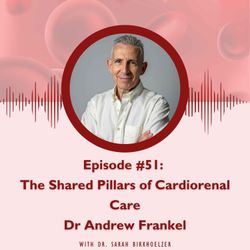
51. Episode #51: The Shared Pillars of Cardiorenal Care
29:20||Season 1, Ep. 51Heart failure, chronic kidney disease (CKD) and metabolic disease are deeply interconnected, yet healthcare systems have traditionally treated them as separate conditions. In this episode of Beatwise, I’m joined by Dr Andrew Frankel, Consultant Nephrologist at Imperial College Healthcare NHS Trust, to explore why cardiorenal metabolic (CRM) medicine is transforming how we care for patients.We discuss the shared biology linking heart, kidney and metabolic disease, why "creatinine fear" continues to prevent optimal treatment, and how therapies such as SGLT2 inhibitors, finerenone and GLP-1 receptor agonists are reshaping outcomes across multiple specialties.We also explore the future of integrated cardiorenal care, including multidisciplinary services, workforce education, patient-centred CRM hubs and what healthcare systems need to do next to improve outcomes while reducing fragmentation of care.Key topics discussed: Why cardiorenal metabolic disease should be viewed as a single disease process rather than separate conditionsThe common pathophysiology linking heart failure, CKD and metabolic diseaseThe problem with "creatinine fear" and premature discontinuation of life-saving therapiesThe four pillars of modern cardiorenal metabolic treatmentPractical prescribing tips for SGLT2 inhibitors, including eGFR thresholds and sick day rulesHyperkalaemia as a barrier to guideline-directed medical therapy and how to overcome itThe role of finerenone and non-steroidal MRAs in cardiorenal careWhy GLP-1 receptor agonists offer benefits far beyond weight lossHow integrated cardiorenal services can improve patient outcomes and reduce healthcare costsThe future of CRM hubs and one-stop multidisciplinary care pathwaysAbout my guest:Dr Andrew Frankel is a Consultant Nephrologist at Imperial College Healthcare NHS Trust and a leading advocate for integrated kidney care, cardiorenal medicine and workforce education. He is also co-host of the educational podcast For Kidneys' Sake, which provides practical updates on chronic kidney disease and cardiorenal metabolic care.EPISODE HIGHLIGHTS:00:00 Welcome and Guest Introduction01:29 Why Cardiorenal Medicine Matters03:14 Creatinine Fear and GFR Misconceptions04:31 The Four Pillars of Cardiorenal Therapy07:53 Practical Use of SGLT2 Inhibitors10:58 Hyperkalaemia as a Barrier to Treatment14:22 Building Integrated Cardiorenal Services19:04 Specialist Roles and Shared Care20:40 GLP-1 Receptor Agonists and New Weight-Loss Therapies23:33 Lifestyle Medicine and CRM Hubs26:28 Closing Reflections28:41 Final Thanks and SubscribeIf you enjoyed this episode, please like, rate, and subscribe to Beatwise The Podcast. Your support helps me reach more listeners and continue providing valuable content.Don't forget to follow me on social media @sarah.theheartdoc for the latest updates, behind-the-scenes content, and more engaging discussions. Stay connected and be part of our growing community!
More episodes
View all episodes

50. Episode #50: Inside the RESOLVE-HCM Trial: A New Approach to Non-Obstructive HCM
19:39||Season 1, Ep. 50In this episode of BeatWise The Podcast, I am joined by Professor Joseph Selvanayagam to explore cardiac metabolism in hypertrophic cardiomyopathy (HCM), the evolving treatment landscape in HCM, and the findings of the RESOLVE-HCM trial investigating perhexiline in non-obstructive disease.We explore the heterogeneity of HCM, including the differences between obstructive and non-obstructive forms of the condition, why symptoms are not always explained by LV outflow tract obstruction alone, and how treatment strategies are beginning to move beyond symptom management toward disease-modifying therapies.We also discuss the role of myocardial energetics and metabolic dysfunction in HCM, how perhexiline works as a CPT1 inhibitor to shift myocardial metabolism toward more oxygen-efficient glucose use, and why this may be particularly relevant in non-obstructive HCM where treatment options remain limited.Professor Selvanayagam takes us inside the design of the randomized, double-blind RESOLVE-HCM trial, including the use of cardiac MRI imaging and maximal LV wall thickness as the primary endpoint over 12 months. We review the trial findings, where several endpoints including diastolic function, NT-proBNP, and quality-of-life measures favored perhexiline, with mental health quality-of-life outcomes reaching statistical significance.We also explore the importance of therapeutic drug monitoring given perhexiline’s narrow therapeutic index, the risks of hepatotoxicity and neurotoxicity, and the future direction of metabolic therapies in cardiomyopathy.Key topics discussed: Obstructive vs non-obstructive HCMWhat drives symptoms in hypertrophic cardiomyopathyThe evolution of HCM therapiesCardiac metabolism and myocardial energeticsHow perhexiline worksThe RESOLVE-HCM trialCardiac MRI endpoints in HCM researchTherapeutic drug monitoring and safetyDisease-modifying therapies in cardiomyopathyEPISODE HIGHLIGHTS:00:00 Welcome to Beatwise00:27 Why metabolism matters01:59 Meet Professor Selvanayagam02:29 HCM types and symptoms04:29 Treatment landscape update05:42 Why RESOLVE-HCM07:20 How perhexiline works08:44 Trial design and imaging12:53 RESOLVE-HCM results14:43 Clinical use and safety17:15 Future trials and wrap up18:54 Final takeawaysIf you enjoyed this episode, please like, rate, and subscribe to Beatwise The Podcast. Your support helps me reach more listeners and continue providing valuable content.Don't forget to follow me on social media @sarah.theheartdoc for the latest updates, behind-the-scenes content, and more engaging discussions. Stay connected and be part of our growing community!
49. Episode #49: Residual Congestion in Heart Failure: Are We Missing It?
24:38||Season 1, Ep. 49In this episode of Beatwise The Podcast, I speak with Dr Archana Ganapathy about a problem we don’t talk about enough in heart failure: congestion that we can’t properly see.Many patients leave hospital still fluid overloaded at a tissue level - despite looking “better” clinically. And that gap is part of why readmissions and outcomes remain poor. We discuss why current tools - from clinical exam to imaging and biomarkers - often fall short, and why understanding where fluid sits in the body matters just as much as how much is there.We then explore bioimpedance: what it is, how it works at the bedside, and why it may offer a more objective way to guide treatment. Dr Ganapathy also shares early insights from the BioHF trial, including what happens when fluid management is guided by measurement rather than estimation.For further context, Dr Ganapathy’s recent review on congestion assessment in decompensated heart failure is linked here: Advances in Congestion Assessment in Decompensated Heart FailureKey issues addressed: Why “hidden” congestion is so common in heart failureThe limitations of weight, BNP, imaging and clinical examWhy fluid distribution mattersHow bioimpedance works in practiceEarly findings from the BioHF trialIf you care for patients with heart failure - or live with it - this is worth understanding.EPISODE HIGHLIGHTS:00:00 Hidden congestion problem02:00 Why assessment falls short05:05 Fluid location matters07:02 Promise of bioimpedance08:54 How bioimpedance works13:06 BioHF trial design17:16 Early findings & future impact22:29 Recruitment & next steps23:06 Wrap upIf you enjoyed this episode, please like, rate, and subscribe to Beatwise The Podcast. Your support helps me reach more listeners and continue providing valuable content.Don't forget to follow me on social media @sarah.theheartdoc for the latest updates, behind-the-scenes content, and more engaging discussions. Stay connected and be part of our growing community!Thank you to Maltron International Limited for sponsoring this episode.
48. Episode #48: Why Coding Heart Failure Matters: From Clinic to the NHS
38:53||Season 1, Ep. 48In this episode of Beatwise The Podcast, I speak with Helen Kilminster - Senior Pharmacist ACP and Deputy PCN Clinical Director - about a part of heart failure care that is often overlooked: coding. We explore a part of heart failure care that is often overlooked: coding. Not as an administrative task - but as something that directly shapes patient outcomes. Because if heart failure isn’t coded accurately, it often isn’t fully visible. Patients are missed, risk isn’t under-recognised, and opportunities for earlier intervention are lost.We discuss how coding underpins everything from diagnosis to commissioning - and why small inconsistencies in how heart failure is recorded can have system-wide consequences. Helen shares how practices are identifying missed patients through NT-proBNP testing and case-finding, how coding supports risk stratification alongside comorbidities, and why clearer communication between cardiology and primary care is essential.We also explore the challenges of inconsistent terminology, and the importance of correctly coding NICE-defined heart failure subtypes - HFrEF, mildly reduced EF, and HFpEF - to ensure patients receive appropriate care.Key issues addressed:Why heart failure coding directly affects diagnosis and outcomesHow GP coding systems work in practiceThe problem of inconsistent terminology across care settingsWhy NICE heart failure subtypes need to be clearly codedUsing NT-proBNP and case-finding to identify missed patientsHow coding informs funding, commissioning, and service designTools to support better codingThe role of communication between primary and secondary careThis episode is produced in collaboration with the British Society for Heart Failure.EPISODE HIGHLIGHTS:00:00 Why coding matters01:40 How GP coding works04:33 Finding missed heart failure06:20 Sharing codes across care08:27 Contracts and subtypes11:49 Defining heart failure types13:48 Tools for better coding17:35 Funding and commissioning23:54 NHS reform and teams28:59 Patient impact and equity33:23 Practical coding tips37:05 Final takeawaysFURTHER LEARNING:NICE GuidanceOpenPrescribingOpenCodelistsBritish Society for Heart FailureIf you enjoyed this episode, please like, rate, and subscribe to Beatwise The Podcast. Your support helps me reach more listeners and continue providing valuable content.Don't forget to follow me on social media @sarah.theheartdoc for the latest updates, behind-the-scenes content, and more engaging discussions. Stay connected and be part of our growing community!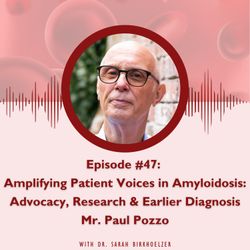
47. Episode #47: Amplifying Patient Voices in Amyloidosis: Advocacy, Research & Earlier Diagnosis
33:42||Season 1, Ep. 47In this episode of Beatwise The Podcast, I speak with Paul Pozzo, a leading patient advocate and former chair of Amyloidosis UK. Paul shares his experience living with wild-type amyloidosis, from the challenges of delayed diagnosis to becoming a powerful voice for patients in research and healthcare advocacy.Diagnosed in 2015 at a time when no disease-modifying drugs were available, Paul was initially treated with standard heart failure therapies before later joining clinical trials that helped stabilize his condition and improve his quality of life.Together, we explore the critical role of patient advocacy in rare diseases, the need for earlier diagnosis, and how research participation is helping transform outcomes for people with amyloidosis.We also discuss the importance of recognising early warning signs, including:unexplained breathlessnesscarpal tunnel syndromeneuropathykidney problemsand the finding of a “thick heart” on cardiac imagingBeyond diagnosis and treatment, the conversation highlights the need for holistic care, including multidisciplinary support, cardiac rehabilitation, and attention to mental wellbeing. Paul also explains how patient organisations like Amyloidosis UK provide vital support through education, community connections, and advocacy, helping patients and families navigate what can often be a complex and isolating diagnosis.This episode is an important reminder that patient voices play a crucial role in shaping research, improving care pathways, and raising awareness of rare cardiac conditions.EPISODE HIGHLIGHTS:00:00 Welcome to Beatwise01:01 Paul’s Diagnosis Story03:32 Living With Limitations06:24 Why Early Diagnosis Matters07:36 Red Flags and Patient Voice09:34 How the Charity Helps11:09 Research and Clinical Trials13:46 Symptoms and Hospital Journey17:05 Reassurance After Diagnosis21:01 Holistic Care and Rehab24:11 Call to Action and Charities30:05 Final Takeaways and ThanksIf you enjoyed this episode, please like, rate, and subscribe to Beatwise The Podcast. Your support helps me reach more listeners and continue providing valuable content.Don't forget to follow me on social media @sarah.theheartdoc for the latest updates, behind-the-scenes content, and more engaging discussions. Stay connected and be part of our growing community!
46. Episode #46: Sexism in Healthcare Exposed: Surviving in Scrubs on Harassment, Power & Real Change
34:04||Season 1, Ep. 46In this episode of Beatwise The Podcast, I, Dr. Sarah Birkhoelzer, explore the uncomfortable but essential topic of sexism, sexual harassment, and sexual assault in healthcare. I am joined by Dr. Becky Cox and Dr. Chelcie Jewitt, founders of Surviving in Scrubs, a movement created to expose and address sexual misconduct within medical training and clinical environments.Together, we discuss the realities many healthcare professionals face behind closed doors - from everyday sexism to serious violations - and why these experiences so often go unreported. The conversation examines the scale of the problem, the systemic and cultural factors that allow it to persist, and the real consequences for staff wellbeing, workforce retention, and patient care. Dr. Cox and Dr. Jewitt also share how Surviving in Scrubs began, what the data tells us, and what meaningful change actually looks like - from safer reporting mechanisms to institutional accountability and allyship.This episode is a call to awareness, responsibility, and action for individuals, organisations, and the healthcare system as a whole.EPISODE HIGHLIGHTS:00:00 Introduction to Beatwise The Podcast00:58 Meeting the founders of Surviving in Scrubs02:38 How Surviving in Scrubs began06:33 The scale of sexism and sexual harassment in healthcare15:32 Impact on healthcare professionals and patient care18:07 Progress so far and future goals24:46 What individuals and institutions can do30:28 Key takeaways and closing reflectionsIf you enjoyed this episode, please like, rate, and subscribe to Beatwise The Podcast. Your support helps me reach more listeners and continue providing valuable content.Don't forget to follow me on social media @sarah.theheartdoc for the latest updates, behind-the-scenes content, and more engaging discussions. Stay connected and be part of our growing community!
45. Episode #45: Understanding Atrial Fibrillation: Diagnosis, Treatment, and Care Options
29:27||Season 1, Ep. 45Atrial fibrillation (AF) is one of the most common heart rhythm conditions, yet it’s often misunderstood and overwhelming for patients when they first hear the diagnosis. In this episode of Beatwise the Podcast, I’m joined by Dr. Maria Steuden, consultant electrophysiologist, to break down what atrial fibrillation really means, how it’s treated, and what patients can expect at each stage of their journey.Together, we explain the different treatment options - from medications to procedures such as cardioversion, catheter ablation, and pace-and-ablate - and discuss how decisions are tailored to each individual. We also cover the crucial role of anticoagulation in stroke prevention, how AF can interact with heart failure, and the importance of lifestyle factors in managing symptoms and long-term risk.This episode is designed to give patients and families clear, evidence-based information, so they feel informed, reassured, and better equipped to take part in decisions about their care.In this episode, we discuss:What atrial fibrillation is and how it affects the heartCommon symptoms and how AF is diagnosedMedication options for rhythm and rate controlWhy anticoagulation is so important for stroke preventionCardioversion, AF ablation, and pace-and-ablate - what these procedures involveThe link between atrial fibrillation and heart failureHow lifestyle and risk factor management can support AF treatmentWhy AF progression and treatment look different for every patientEPISODE HIGHLIGHTS:00:00 – Introduction to atrial fibrillation01:12 – What atrial fibrillation is and how it develops01:45 – Medications used in AF management06:24 – Risk factors and anticoagulation09:36 – Procedural treatment options for AF19:10 – Atrial fibrillation and heart failure22:43 – The patient journey and prevention strategies25:15 – Key takeaways27:45 – Closing thoughts and next stepsIf you enjoyed this episode, please like, rate, and subscribe to Beatwise The Podcast. Your support helps me reach more listeners and continue providing valuable content.Don't forget to follow me on social media @sarah.theheartdoc for the latest updates, behind-the-scenes content, and more engaging discussions. Stay connected and be part of our growing community!