Share
Iran: The Latest
Bird-flu, nukes and asteroids: what 2026 might have in store
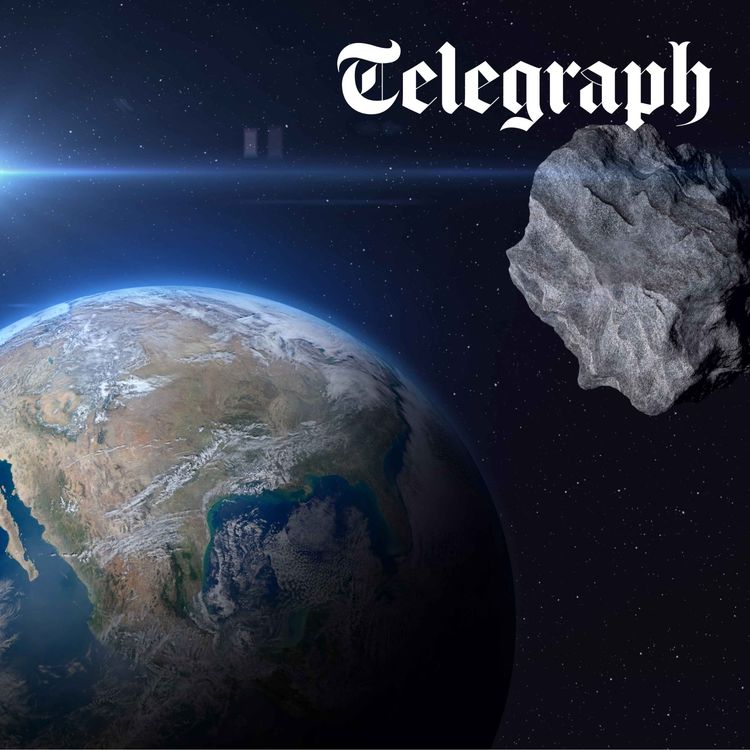
Bird-flu, bombs and asteroids: are we heading for disaster in 2026? What are the biggest threats to global health security in 2026? Is it bird flu? Or the rising threat posed by nuclear weapons? Could we even be hit by an asteroid?
Dr Becky Alexis-Martin, a Lecturer in Peace Studies at the University of Bradford and an expert on nuclear weapons, argues that the threat they pose will continue to rise in the new year.
Paul Nuki, the Telegraph’s Global Health Security Editor, warns that numerous diseases linked to conflict are likely to continue to spread in 2026 – in particular cholera and HIV.
Meanwhile, the possibility of H5N1 bird flu making the jump to humans and causing a pandemic remains a primary threat, as does the continued spread of mpox around the world.
Lord Martin Rees, the former Astronomer Royal and a founder of the Centre for the Study of Existential Risk, assesses the risk of space-based threats.
Producer: Sophie O'Sullivan
Executive Producer: Louisa Wells
Studio Operator: Meghan Searle
► Sign up to our most popular newsletter, From the Editor. Look forward to receiving free-thinking comment and the day's biggest stories, every morning. telegraph.co.uk/fromtheeditor
Contact us with feedback or ideas:
battlelines@telegraph.co.uk
@venetiarainey
More episodes
View all episodes
US obliterates Iranian navy, exclusive Trump chat & voices from inside Tehran
53:13|Battle Lines is now Iran: The Latest! Roland and Venetia are going to be covering the new conflict every day for the weeks to come, bringing you the best of The Telegraph’s reporting from around the world and exclusive interviews with world-class experts in military strategy, diplomacy, and the Middle East.On today’s episode, Venetia and Roland look at America’s devastating attacks on Iran’s official Navy and the possibility of Saudi Arabia joining the war. The Telegraph’s foreign reporter Akhtar Makoii shares his insights from speaking to people inside Iran about how ordinary people are now facing threats from both American bombs and the regime, who are out in force on the streets. Maya Gebeily, Reuters’ bureau chief in Beirut, discusses the state of Hezbollah and the mood on the ground in Lebanon after Israel announced it is invading. Plus, The Telegraph's US Correspondent Connor Stringer talks about his exclusive phone call with Donald Trump in the midst of the Iran war and why the president thinks Keir Starmer is “disappointing”. Read Connor Stringer's exclusive chat with Trump: https://www.telegraph.co.uk/us/news/2026/03/02/exclusive-trump-very-disappointed-in-starmer-over-iran/Read Akhtar Makoii’s interviews with people inside Iran: https://www.telegraph.co.uk/world-news/2026/03/02/iran-war-tehran-live-in-fear-us-bombs-whats-left-regime/Read Akhtar Makoii’s rundown of Khamenei’s possible successors: https://www.telegraph.co.uk/world-news/2026/03/03/the-four-men-who-could-save-or-destroy-iran/Producer: Peter ShevlinExecutive Producer: Louisa Wells► Sign up to our most popular newsletter, From the Editor. Look forward to receiving free-thinking comment and the day's biggest stories, every morning. telegraph.co.uk/fromtheeditorContact us with feedback or ideas:@venetiarainey@RolandOliphant
Iran bombs entire Middle East after Ayatollah Khamenei assassinated by Israel and US
47:33|Iran's leader Ayatollah Khamenei was killed in an Israeli and US strike on Saturday morning, kicking off a major war that has since expanded to the entire Middle East. On day three of the conflict, Venetia and Roland run through the big updates, including the UK’s involvement, the ongoing death toll and how Iran is striking back on key targets in the region. They also talk to former Israeli intelligence official and Iran expert Danny Citrinowicz about how poorly defined the war's goals are and why we aren't seeing any cracks in the regime yet.Plus, The Telegraph’s David Blair on the significance of Khamenei's assassination and Trump's conflicting messaging.Read Iran war, day three: Everything you need to know: https://www.telegraph.co.uk/world-news/2026/03/02/iran-war-day-three-everything-you-need-to-know/Read David Blair on why Trump’s incoherence on Iran maximises the risk of failure: https://www.telegraph.co.uk/news/2026/02/28/trump-is-taking-a-monumental-risk-on-iran/Read Roland Oliphant on the eight-month plot that led to Trump’s attack on Iran: https://www.telegraph.co.uk/world-news/2026/02/28/donald-trump-attack-iran-israel-how-it-came-to-this/Producer: Peter ShevlinExecutive Producer: Louisa Wells► Sign up to our most popular newsletter, From the Editor. Look forward to receiving free-thinking comment and the day's biggest stories, every morning. telegraph.co.uk/fromtheeditorContact us with feedback or ideas:@venetiarainey@RolandOliphant
Trump attacks Iran with 'major combat operations' to oust regime - what next?
46:16|The US and Israel have launched what President Donald Trump has described as "major combat operations" to try to bring about the end of the Iranian regime.In this bonus episode, Roland and Venetia look at what we know so far - from Trump’s speech to strikes across the Middle East - and what might happen next, while Henry Bodkin, The Telegraph’s Jerusalem correspondent, reports from on the ground in Israel amid air raid sirens around the country.Plus, Roland speaks to Jonathan Hackett, a 20-year US Marine Corps veteran and special operations capabilities specialist, as well as the author of Iran's Shadow Weapons: Covert Action, Intelligence Operations and Unconventional Warfare. Their conversation - which was recorded shortly before the attack began - covers how Ayatollah Ali Khamenei was offered an escape route but refused to take it, the state of the IRGC and why regime change in Iran will be so difficult.Producer: Peter ShevlinExecutive Producer: Louisa Wells► Sign up to our most popular newsletter, From the Editor. Look forward to receiving free-thinking comment and the day's biggest stories, every morning. telegraph.co.uk/fromtheeditorContact us with feedback or ideas:@venetiarainey@RolandOliphant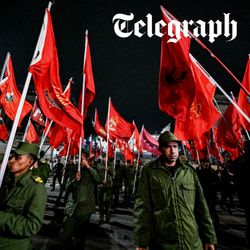
Cuba 'very close' to regime change: John Bolton on Trump, Venezuela and Iran
35:00|For sixty years Washington and Havana have been having a geopolitical tango fuelled by obsession and ideology. The island nation of Cuba has been a socialist splinter in the finger of the Florida coastline, its regime infecting the region. Now, with the toppling of Nicolás Maduro and Venezuelan oil tightly controlled by the US, Cuban President Miguel Díaz-Canel could be next. To get into the finer details of the US’s new found dominance in the Caribbean, Venetia is joined by The Telegraph’s foreign reporter, Lily Shanagher.Plus, former national security advisor John Bolton, voices the need for regime change in Venezuela, Iran and Cuba. Coining the phrase ‘Troika of Tyranny' in 2018, Bolton has had Cuba in his sights for many years as a rogue state. So what should happen next in the region? John Bolton lays bare the truth about Trump’s decision making and the need for swift action.Producer: Peter ShevlinExecutive Producer: Louisa Wells► Sign up to our most popular newsletter, From the Editor. Look forward to receiving free-thinking comment and the day's biggest stories, every morning. telegraph.co.uk/fromtheeditorContact us with feedback or ideas:@venetiarainey@RolandOliphant
Drugs, HIV and gangs: the Pacific island paradise hit by a triple epidemic
37:52|Drugs and gangs have created an explosion in HIV cases in Fiji.This week on Battle Lines: Global Health Security, Arthur Scott-Geddes is joined by Sarah Newey, The Telegraph’s correspondent in Bangkok who recently travelled to Fiji, and Dr Jason Mitchell, the head of the country’s HIV task force.On the archipelago known as the gateway to the Pacific, Chinese triads, Mexican cartels, and Australian biker gangs are all involved in a booming methamphetamine trade.The result is that an island paradise is now home to the fastest-growing HIV epidemic on earth.Read Sarah’s dispatch from Fiji:The island paradise with the world’s fastest growing HIV epidemichttps://www.telegraph.co.uk/global-health/science-and-disease/fiji-island-paradise-with-the-worlds-fastest-growing-HIV-epidemic/Producer: Sophie O'SullivanExecutive Producer: Louisa WellsStudio Operator: Meghan Searle► Sign up to our most popular newsletter, From the Editor. Look forward to receiving free-thinking comment and the day's biggest stories, every morning. telegraph.co.uk/fromtheeditorContact us with feedback or ideas:battlelines@telegraph.co.uk@venetiarainey@ascottgeddes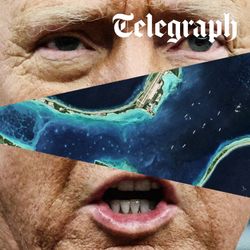
The 'super secret' Chagos island airbase at heart of Trump-Starmer row
32:17|The British Indian Ocean Territory, AKA the Chagos Islands is home to the American super-base of Diego Garcia. Located on the largest island in the archipelago and home to the joint UK/US military base since the 1970s.The Chagos handover to Mauritius has been controversial from the outset and shifting signals from Donald Trump have left the Starmer government open to a political backlash.Has the special relationship turned toxic over these islands? And should the sovereignty transfer be stopped? To discuss, Roland turns to Ben Judah who has worked for the previous foreign secretary and Chief Foreign Affairs Commentator, David Blair. Producer: Peter ShevlinExecutive Producer: Louisa Wells► Sign up to our most popular newsletter, From the Editor. Look forward to receiving free-thinking comment and the day's biggest stories, every morning. telegraph.co.uk/fromtheeditorContact us with feedback or ideas:@venetiarainey@RolandOliphant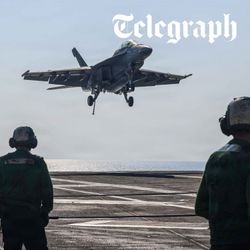
Trump’s Iran plan: 'kick the door in' and hit the regime where it hurts
48:51|The drumbeat of war in the Middle East is getting louder - and once again it’s Iran in America’s crosshairs.A second round of talks over Iran’s alleged nuclear weapons programme ended this week without a deal. In the last few days, dozens of American fighter jets and refuelling tankers have joined the US's two carrier strike groups in the region. This is now the largest American military buildup in the Middle East since the Iraq war in 2003.Venetia chats to Henry Bodkin, The Telegraph's Jerusalem correspondent, and Roland Oliphant, chief foreign affairs analyst about when war might break out and how it could unfold.Plus Roland speaks to Maryam Mazrooei, an Iranian journalist and war photographer who fled the country after being arrested and imprisoned in 2022, about whether American-led regime change would spark a civil war in Iran.Read - Trump sends fighter jet squadron to ‘kick the door down’ in Iran: https://www.telegraph.co.uk/world-news/2026/02/18/us-military-aircraft-heading-towards-iran/Producer: Sophie O'SullivanExecutive Producer: Louisa Wells► Sign up to our most popular newsletter, From the Editor. Look forward to receiving free-thinking comment and the day's biggest stories, every morning. telegraph.co.uk/fromtheeditorContact us with feedback or ideas:@venetiarainey@RolandOliphant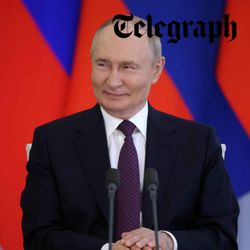
Frog poison, tear gas and Novichok: Inside Russia’s chemical weapons programme
32:27|Two years ago, Russian opposition leader Alexei Navalny died in a Siberian penal colony. There was an outcry and many suspected foul play, but nothing could be proved. That is until last weekend, when five European countries including the UK announced that they had made a startling discovery: Navalny had been killed with a rare frog poison.How was the poison was identified, how were the samples smuggled out of Russia, and why does the evidence point directly to Moscow?Venetia and Arthur speak to former commanding officer of the UK’s Chemical, Biological, Radiological and Nuclear Regiment and Telegraph columnist, Hamish de Bretton-Gordon, and Dr Gemma Bowsher, Senior Research Associate for the Centre for Conflict and Health Research at Kings College London.Producer: Sophie O'SullivanExecutive Producer: Louisa WellsStudio Operator: Meghan Searle► Sign up to our most popular newsletter, From the Editor. Look forward to receiving free-thinking comment and the day's biggest stories, every morning. telegraph.co.uk/fromtheeditorContact us with feedback or ideas:battlelines@telegraph.co.uk@venetiarainey@ascottgeddes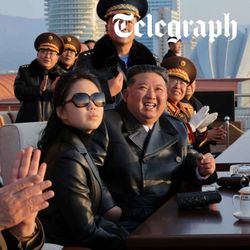
North Korea 'names' 13-year-old nuclear heiress & inside Europe’s race to rearm
31:29|North Korea’s dynasty dictatorship has taken on a new leather clad, second-in-command. Reports from South Korea have suggested that Kim Jong Un’s daughter Kim Ju-ae is now the heir apparent in the totalitarian state. Could she one day be the youngest person to command a nuclear arsenal? Roland chats to The Telegraph’s Lily Shanagher and from the University of Oxford, North Korea watcher, Dr Edward Howell, to unpack what we know from the shadows.Plus, after the Munich Security Conference at the weekend, Europe is facing a new future without Washington’s steadying hand and will have to be less reliant on the Stars and Stripes. But is European defence manufacturing scaling up in line with these new demands? Roland speaks to Philip Lockwood from defence startup Stark to find out just how quickly the ambitions are being realised. Read Lily's article on Kim Ju-ae: https://www.telegraph.co.uk/world-news/2026/02/16/kim-opens-neighbourhood-families-soldiers-killed-ukraine/Pic credit: KCNA via ReutersProducer: Peter ShevlinExecutive Producer: Louisa Wells► Sign up to our most popular newsletter, From the Editor. Look forward to receiving free-thinking comment and the day's biggest stories, every morning. telegraph.co.uk/fromtheeditorContact us with feedback or ideas:@venetiarainey@RolandOliphant