Share
![cover art for dysfunctional family roles – part 1: decoding the dynamics of dysfunction [preview]](https://open-images.acast.com/shows/60e8deaefb090f0013116d69/1735679446378-b2e8272f-396f-4979-a13e-2172ecffa88e.jpeg?height=750)
Back From The Borderline
dysfunctional family roles – part 1: decoding the dynamics of dysfunction [preview]
Every family has its secrets—those untold stories that shape us in ways we don't always see. What hidden roles within your family have shaped you? Are there patterns you're living out without even realizing it?
Welcome to the first episode of a series that dives deep into the forces at work in our families—those powerful, often overlooked dynamics that mold our lives. We’ll be digging into the deep-rooted patterns and roles that drive our behaviors and emotions, the ones that set the stage for how we relate to others and ourselves as we grow. Together, we'll unravel the complex ideas behind family systems theory and Internal Family Systems. I'll give you a fresh lens to view your own life and relationships. As we move through this series, you'll not only spot these dynamics but learn how to change them and finally break the cycle of dysfunction. Don't miss this journey to uncover and rethink the roles that have been quietly directing your life.
RESOURCES: No Bad Parts by Richard Schwartz
TIME STAMPS:
00:00 – 32:02.01: PART 1 (Introduction to the series and dysfunctional family systems, defining and discussing their dynamics, and exploring Family Systems Theory and Internal Family Systems Theory by Richard Schwartz.)
32:02.01 – 01:00:20.90: PART 2 (Exploration of core IFS concepts: Self, Managers, Exiles, Firefighters, and their relevance to family roles; identifying signs of dysfunction like conflict, secrecy, and emotional suppression and over-expression; introduction to the purpose of roles; strategies for recognition and healing.)
Unlock The Full Episode By Becoming a Premium Submarine: Join an exclusive community and unlock hundreds of hours of members-only content: full-length episodes, deep-dive series, guided meditations, and more—all for the cost of a couple of coffees a month. Start exploring at backfromtheborderline.com.
The information contained in this podcast episode is for educational and entertainment purposes only and is not intended as a substitute for treatment or consultation with a licensed mental health professional.
More episodes
View all episodes
The Black Madonna, the Grail and the Survival of the Feminine Tradition (Anne Baring Part 6)
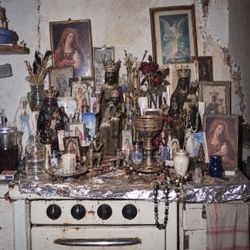
01:18:04|A spiritual teacher dies, her community has to continue without her, and centuries later the written record can no longer tell us exactly how her teachings moved from one generation to the next. What, if anything, survives?This is Part 6 of my multi-part series with Anne Baring, a writer and Jungian analyst who has spent decades studying Divine Wisdom, Christian mysticism and the feminine dimension of divinity. Each conversation can stand on its own, but they build on one another. If you’re new to the series, I recommend starting with Part 1, The Forgotten Feminine Face of God.☽Last week, we focused on Miriam Magdalene and early Christian writings that present her as a woman with spiritual authority of her own. This week, Anne takes us west.In the tradition Anne works with, Miriam travels to Gaul after Yeshua’s death and spends the rest of her life teaching there. After her death, the historical record gets much harder to follow. Centuries pass before medieval France gives us another dense concentration of religious images, stories and devotional practices that Anne believes deserve serious examination. That gap sits at the center of this episode. A book can be confiscated or burned, while people can continue visiting a statue, singing to her, asking her for healing and teaching their children to make the same pilgrimage. How much religious knowledge can survive that way, even when later generations no longer fully understand what earlier generations were preserving? Anne takes us into the Black Madonna tradition, sacred caves and medieval devotion, and later into the Grail stories and the wounded king whose dying country can only recover when someone finally asks about his suffering. We also spend time with the Lady of courtly love and an old attempt to teach men trained for war another relationship with women and power. After Anne and I finished recording, I kept reading Jessie L. Weston’s From Ritual to Romance, which Anne recommends during our conversation. I discovered that I had misunderstood an important piece of the Grail material we had just discussed. I come back after the interview to tell you what I found, why it changed the way I hear the Grail story, and why I’m now wondering how often a culture keeps the image, ritual or story while slowly forgetting how earlier generations understood it. ☿ANNE BARINGWriter, Jungian analyst and author whose work explores Divine Wisdom, Christian mysticism and the recovery of the feminine dimension of divinity. Explore Anne’s work: annebaring.comSTUDY COMPANION✦ Jessie L. Weston, From Ritual to Romance✦ Annine van der Meer, research on the Black Madonna and Mary Magdalene✦ Peter Kingsley, In the Dark Places of Wisdom✦ James George Frazer, The Golden BoughPEOPLE AND TRADITIONS DISCUSSED☿ Black Madonna devotion☿ Parmenides and ancient incubation rites☿ Chrétien de Troyes and the Grail romances☿ Eleanor of Aquitaine, troubadours and courtly love☿ The Knights Templar, Sufism and medieval intellectual exchange☿ The wounded king and the Waste LandSOURCE NOTE: Anne and I move between documented history, medieval legend and esoteric interpretation throughout this conversation. Some of the connections proposed here are speculative. Read the sources, compare competing interpretations and see where your own research takes you.Next in the series: Esclarmonde de Foix, Joan of Arc and the Cathars.☽WANT MORE BFTB? Join the paid membership → https://www.patreon.com/backfromtheborderlineThere are hundreds of private episodes going back to 2021, plus new Premium audio, House of Cards (my ongoing Rider-Waite-Smith tarot study), and an even larger Ultra Premium archive with access to Votive House, my twice-monthly live conversation series. WANT SOMEWHERE TO TAKE WHAT THIS EPISODE BROUGHT UP FOR YOU? Try MOODS → https://www.moods.world/MOODS is my reflective intelligence platform for dream work, tarot, symbolic reflection, and deeper inner inquiry. You can start free for 7 days at moods.world.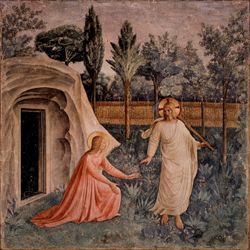
Mary Magdalene, The Beloved Companion (Anne Baring Part 5)
01:16:12|Mary Magdalene has spent nearly two thousand years buried under other people’s interpretations of her. Repentant prostitute. Devoted disciple. Apostle to the apostles. Mystic. Wife of Jesus. Suppressed leader of early Christianity. This episode asks us to actually meet Miriam before deciding who she was.This is Part 5 of my multi-part series with Anne Baring, a writer and Jungian analyst who has spent decades studying the Goddess tradition, Christian mysticism, Divine Wisdom, and the feminine dimension of divinity. If you’re new to the series, I recommend starting with Part 1, The Forgotten Feminine Face of God.☽Our previous conversation explored the Essenes, the Therapeutae, and the religious culture Anne believes surrounded Yeshua. Here, we focus on Mary Magdalene as a spiritually educated woman and an initiate in her own right.We look at early Christian writings in which Mary repeatedly understands teachings that other disciples struggle to grasp, then ask the question at the center of this episode. How much spiritual authority did Mary possess?Her relationship with Yeshua is part of that investigation. We discuss The Gospel of Philip, the Greek word koinōnos, traditions concerning their possible marriage, and the consequences of understanding Mary as Yeshua’s spiritual counterpart.We also discuss The Gospel of the Beloved Companion and Annine van der Meer’s Mary Magdalene Unveiled, which examines proposed connections between the Beloved Companion material and the canonical Gospel of John. These claims are extremely controversial. Anne finds the case persuasive, and so do I. I’ve included key sources below so you can examine the material yourself.Near the end, Anne reads an initiatory teaching attributed to Miriam concerning ascension, direct spiritual knowledge, fear, and power. After the interview, I return for a longer reflection on why I think this teaching deserves serious contemplation.☿ANNE BARING // https://www.annebaring.com/ EARLY CHRISTIAN TEXTS☿ Pistis Sophia ☿ The Gospel of Mary ☿ The Gospel of Philip ☿ The Gospel of Thomas ☿ The Gospel of JohnMARY MAGDALENE RESEARCH✦ Jehanne de Quillan, The Gospel of the Beloved Companion ✦ Annine van der Meer, Mary Magdalene Unveiled ✦ Elaine Pagels, The Gnostic Gospels ✦ Margaret Barker, First Temple theology and traditions of heavenly ascentVISIONARY SOURCE☽ Claire Heartsong, Anna, Grandmother of JesusSOURCE NOTE: Compare translations, read competing interpretations, and see where your own research takes you.New episodes of Back from the Borderline are released every Tuesday. Follow the podcast wherever you listen, and if someone comes to mind while hearing this episode, send it to them.Next in the series: The Black Madonna, the Grail and the Survival of the Feminine Tradition.☽WANT MORE BFTB? Join the paid membership → https://www.patreon.com/backfromtheborderlineThere are hundreds of private episodes going back to 2021, plus new Premium audio, House of Cards (my ongoing Rider-Waite-Smith tarot study), and an even larger Ultra Premium archive with access to Votive House, my twice-monthly live conversation series. Paid audio can also be connected directly to Spotify, so you can keep listening where you already listen.WANT SOMEWHERE TO TAKE WHAT THIS EPISODE BROUGHT UP FOR YOU? Try MOODS → https://www.moods.world/MOODS is my reflective intelligence platform for dream work, tarot, symbolic reflection, and deeper inner inquiry. Bring it a dream, a question, something happening in your life, or an idea from the podcast you want to spend more time with. You can start free for 7 days at moods.world. Paid BFTB members also get MOODS for $15/month instead of $22.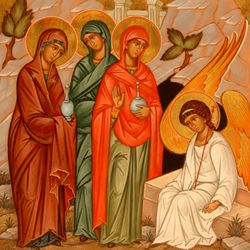
The Essenes and the Women Around Yeshua (Anne Baring Part 4)
01:21:47|What kind of spiritual world could have formed Yeshua before Christianity existed?This is Part 4 of my multi-part series of conversations with Anne Baring, recorded across September and October 2026. While each episode can stand on its own, I recommend beginning with Part 1, The Forgotten Feminine Face of God, and following the series in order.☽Christianity often starts its story when Jesus begins preaching. In this conversation, Anne and I go further back and ask what was already there.Anne takes us into her understanding of the Essenes and Therapeutae, contemplative communities she believes preserved an older Wisdom tradition concerned with healing, direct experience of the divine and disciplined development of consciousness. They called themselves Children of the Light. Anne places Yeshua inside this religious world and describes him as an elder brother and teacher who had gone further in his spiritual development and could show others what a human being was capable of. We talk about what spiritual training was actually for. Anne describes meditation, inner vision and ascension, along with an understanding of healing based on restoring harmony within the person. The heart served as an organ of discernment, while religious knowledge was expected to alter how someone lived rather than remain an idea about God. The women around Yeshua come into focus in the second half of the conversation. Anne describes Mother Mary and Mary Magdalene as advanced initiates and teachers rather than the passive figures many of us inherited through Christian tradition. We talk about women as healers, the spiritual education of children and Anne’s beautiful description of motherhood and caregiving as forms of initiation into love and service. Some of Anne’s reconstruction draws on historical and late-antique texts, while some comes from modern channeled material, especially the work of Stuart Wilson and Joanna Prentis. I spend time in the introduction explaining these sources and why I’m willing to investigate visionary material without treating it as documentary history.The episode ends exactly where the next conversation needs to start. Anne describes Christianity as having lost the inner mystery school she believes was intended to develop alongside its public teaching. Part 5 is devoted entirely to the woman she places near the center of that missing tradition: Mary Magdalene. ☿ANNE BARINGOfficial website: https://www.annebaring.com/ESSENE + WISDOM TEXTS DISCUSSEDThe Essenes: Children of the Light — Stuart Wilson and Joanna PrentisThe Power of the Magdalene — Stuart Wilson and Joanna PrentisThe Essene Gospel of PeacePistis SophiaThe Egyptian Book of the DeadAUTHORS + SCHOLARS TO FOLLOWStuart WilsonJoanna PrentisFlavius JosephusDr. Annine van der MeerMarguerite RigogliosoCarl Jung☽WANT MORE BFTB? Join the paid membership → https://www.patreon.com/backfromtheborderlineThere are hundreds of private episodes going back to 2021, plus new Premium audio, House of Cards (my ongoing Rider-Waite-Smith tarot study), and an even larger Ultra Premium archive with access to Votive House, my twice-monthly live conversation series. Paid audio can also be connected directly to Spotify, so you can keep listening where you already listen.WANT SOMEWHERE TO TAKE WHAT THIS EPISODE BROUGHT UP FOR YOU? Try MOODS → https://www.moods.world/MOODS is my reflective intelligence platform for dream work, tarot, symbolic reflection, and deeper inner inquiry. Bring it a dream, a question, something happening in your life, or an idea from the podcast you want to spend more time with. You can start free for 7 days at moods.world. Paid BFTB members also get MOODS for $15/month instead of $22.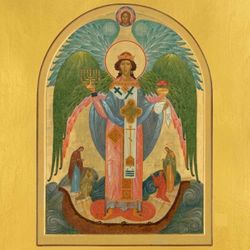
Gnostic Sophia and the Suppressed Christian Mysteries (Anne Baring Part 3)
01:25:07|What if early Christianity contained a path centered on direct knowledge of the divine within us, and that path was pushed outside the Church that survived?This is Part 3 of my multi-part series of conversations with Anne Baring, recorded across September and October 2026. While each episode can stand on its own, I recommend beginning with Part 1, The Forgotten Feminine Face of God, followed by Part 2 on Marija Gimbutas and the civilization of Old Europe.☽In this conversation, Anne and I enter the world of Gnostic Christianity and a Yeshua many of us were never introduced to: a teacher concerned with awakening human beings to the divine light within themselves. That understanding of Jesus sits uneasily beside the Christianity that eventually gained institutional power in Rome.We start with Parmenides, the pre-Socratic philosopher whose surviving poem describes a journey into darkness, guidance from the daughters of the Sun, and knowledge received directly from a goddess. Anne sees him as part of a more ancient visionary tradition that continued into Gnosticism, where gnosis meant direct knowledge of the divine rather than religious belief alone.From there, we get into the Gnostic Yeshua, the discovery of the Nag Hammadi texts, and why a Christianity built around the divine light within the human being came into conflict with the Church that gained power in Rome. Sophia is at the center of the episode. In Pistis Sophia, Divine Wisdom descends from her celestial home, becomes lost, and has to find her way back toward the Light through thirteen metanoias, or changes in consciousness. Anne compares her story with the Christian interpretation of the Fall, especially the guilt and disobedience that became attached to Eve. Sophia gives us another way of understanding what has gone wrong. She has lost touch with where she came from and mistakes a lesser light for the true one. Her task is to wake up, learn to see differently, and remember.We also spend part of the conversation with Carl Jung. Anne trained as a Jungian analyst, and she talks about Jung’s own visionary experiences, Philemon, The Red Book, his fascination with the Gnostics, and the task he believed he had failed to complete before his death: restoring the reality of the soul to Western consciousness. Near the end, Anne reads from Trimorphic Protennoia, where the Divine Feminine speaks in the first person, and The Hymn of the Pearl, a Gnostic poem she has lived with for roughly sixty years. Both return us to the idea running through this entire conversation: that spiritual life begins in remembering what we are and where we came from.☿ANNE BARINGOfficial website: https://www.annebaring.com/BOOKS BY ANNE BARINGDivine Wisdom and the Holy Spirit: The Forgotten Feminine Face of GodThe Myth of the Goddess with Jules CashfordThe Dream of the CosmosMessages From a Transcendent DimensionGNOSTIC TEXTS DISCUSSEDPistis SophiaTrimorphic ProtennoiaThe Sophia of Jesus ChristThe Hymn of the PearlThe Nag Hammadi codicesThe Gospel of ThomasThe Gospel of PhilipCARL JUNGThe Red BookSeven Sermons to the DeadAnswer to JobALSO MENTIONEDParmenidesG.R.S. MeadPeter KingsleyOrpheus and the Orphic traditionHeraclitusPythagorasPlato and AristotleZosimus of PanopolisG.I. GurdjieffFather Richard RohrMarie-Louise von FranzPhilemonTheodosius ITaxila☽CONTINUE THE WORK: Join the BFTB Patreon → https://patreon.com/backfromtheborderlineYou’ll get:☆ Weekly bonus episodes☆ House of Cards (my tarot study group)☆ Archetypal tarot + astrology forecasts☆ Full ad-free archive access (every BFTB episode since 2021)If you want to actually work through it: Use MOODS → https://app.moods.world/ MOODS is a private place to take what’s coming up and see it clearly without performing it or involving anyone else. You can try it free for 7 days to see if it's right for you. If you join my Patreon first, you’ll also unlock discounted access. See you inside.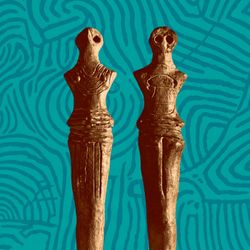
The Lost Civilization of the Goddess (Anne Baring Part 2)
01:05:59|What if the history of Europe contains a civilization most of us were never taught about?This is Part 2 of my multi-part series of conversations with Anne Baring, recorded across September and October 2026. While each episode can stand on its own, I recommend starting with Part 1, The Forgotten Feminine Face of God, which introduces Anne and the larger history we’ll be following together.☽In this conversation, Anne takes me into the work of Lithuanian archaeologist Marija Gimbutas and the world she called Old Europe, a network of Neolithic cultures across southeastern Europe that she spent decades studying through figurines, vessels, settlements, burial sites, goldwork and recurring religious imagery.Anne explains why Gimbutas believed this world was centered on the Great Goddess, how she read birds, snakes, spirals and water as part of a shared sacred language, and why she argued that these societies were matrilineal, broadly egalitarian and unusually free from organized warfare.We also talk about the later movement of steppe peoples into Europe, the fierce opposition Gimbutas faced during her career, and the later ancient DNA research Anne sees as supporting an important part of her migration theory.The conversation also becomes beautifully and unexpectedly personal. Anne speaks about growing up with a mother who received channeled writings, the out-of-body experience Anne had at thirteen, and the dream that brought Jules Cashford to her and eventually led to the ten-year writing of The Myth of the Goddess.Anne also remembers seeing the objects from The Lost World of Old Europe in person at the Ashmolean Museum, including the great painted vessels that left her speechless. We end by asking why this history still matters to her, and what she would say to Marija Gimbutas if she could sit across from her now.☿ANNE BARINGOfficial website: https://www.annebaring.com/BOOKS BY MARIJA GIMBUTASThe Language of the GoddessThe Civilization of the Goddess: The World of Old EuropeALSO MENTIONEDThe Myth of the Goddess by Anne Baring and Jules CashfordMessages From a Transcendent Dimension by Anne BaringJoseph CampbellThe Hermetic Order of the Golden DawnFederico FagginIain McGilchristSEE THE OBJECTSThe Lost World of Old Europe exhibition via New York University’s YouTube channel [click here to view]☽CONTINUE THE WORK: Join the BFTB Patreon → https://patreon.com/backfromtheborderlineYou’ll get:☆ Weekly bonus episodes☆ House of Cards (my tarot study group)☆ Archetypal tarot + astrology forecasts☆ Full ad-free archive access (every BFTB episode since 2021)If you want to actually work through it: Use MOODS → https://app.moods.world/ MOODS is a private place to take what’s coming up and see it clearly without performing it or involving anyone else. You can try it free for 7 days to see if it's right for you. If you join my Patreon first, you’ll also unlock discounted access. See you inside.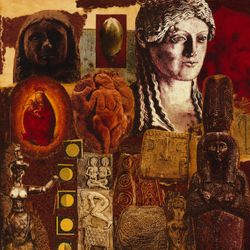
The Forgotten Feminine Face of God (Anne Baring Part 1)
01:29:18|For thousands of years, the Western image of God became increasingly male. Anne Baring has spent much of her life studying what we lost when the feminine disappeared from our understanding of the divine.This is Part 1 of my eight-part series of conversations with Anne Baring, recorded across September 2026. Over the course of the series, we’ll explore the work Anne has spent much of her life devoted to, from the ancient Goddess and the Western wisdom traditions to Mary Magdalene, the Divine Feminine and the sacred marriage. This first conversation introduces Anne and many of the ideas we’ll return to in much greater depth throughout the series.Born in 1931, Anne is an Oxford-educated historian, Jungian analyst and co-author with Jules Cashford of The Myth of the Goddess. We begin with the ancient Great Mother and the work of Marija Gimbutas, before moving into Anne’s account of how Western religion gradually separated spirit from nature. She takes us through Asherah and Sophia, the feminine Holy Spirit, Mary Magdalene and the Christian traditions she believes preserved an older teaching of love and wisdom. We also talk about power, self-deification, the body, and why Anne believes the loss of the feminine divine changed the way Western culture came to treat the Earth and one another. Anne is 95, and this is the first in a series of conversations we’ll be recording together. Future episodes will give us time to stay with subjects we only scratch the surface of here, including Mary Magdalene and the Beloved Companion, the Essenes, the Cathars and the sacred marriage. This first conversation ends with Anne speaking personally about prayer, service and how her understanding of God has changed over the course of her life. Explore Anne Baring’s WorkOfficial website: https://www.annebaring.com/Books by Anne BaringDivine Wisdom and the Holy Spirit: The Forgotten Feminine Face of GodThe Myth of the Goddess: Evolution of an Image by Anne Baring and Jules CashfordThe Dream of the Cosmos: A Quest for the SoulBooks and Writers MentionedMarija Gimbutas: The Civilization of the GoddessMarija Gimbutas: The Language of the GoddessErich Neumann: The Great MotherRiane Eisler: The Chalice and the BladeMargaret BarkerElaine PagelsThe Gospel of the Beloved Companion, translated by Jehanne de QuillanRelated EpisodesMy episode on Gnosticism, Sophia and the Gnostic creation mythMy previous episode on Mary MagdaleneHouse of Cards: In this episode, I mention my ongoing tarot series, House of Cards, during this conversation. We’re studying the cards one by one through mythology, religious history, occult philosophy and the Western wisdom traditions that regularly appear on the podcast. Join the Patreon and listen to House of Cards at patreon.com/backfromtheborderline
How to Tell When a Spiritual Teacher Is Full of Shit
01:58:29|In 2020, I almost paid $4,000 for a shadow work course. One of the first books I was told to read was Carolyn Elliott’s Existential Kink. I read it, tried to understand what I was being sold, and kept getting the same bad taste in my mouth. It’s been six years since then, and I’ve come back with receipts. I understand why it bothered me now.This episode digs into the history behind some of online spirituality’s favorite borrowed ideas, Jungian shadow work, Tantra, sex magic, Thelema, Babalon, occult initiation, manifestation, the Left Hand Path, passive mediumship, and the modern spiritual coaching industry that learned how to package this material into high ticket programs.I look closely at Carolyn Elliott’s work, what Carl Jung actually wrote about the shadow, how Western neo Tantra differs from older tantric traditions, and the ethics of a teacher who can reinterpret your hesitation as resistance, scarcity, fear, or evidence that you need their teaching.We also need to talk about why psychologically intense spiritual work can go badly when authority outruns training, why so much ancient wisdom being sold online has a surprisingly modern family tree, and why people sometimes leave these spaces burned enough to decide that every form of esotericism must be "demonic".If you’ve ever looked at a $3,000 retreat, a spiritual certification, an initiation, or an Instagram teacher promising transformation and thought, what the fuck am I looking at, this episode is for you.For my full exploration of Aleister Crowley, Thelema, and sex magic, you can listen here.If you want to join my card-by-card study of the Tarot through Christian Hermeticism and deep symbolic study, you can start from the beginning on Patreon. Click here or visit patreon.com/backfromtheborderline.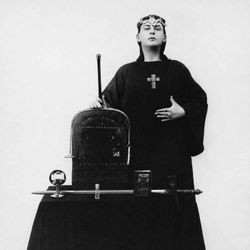
Aleister Crowley’s Thelema: Sex Magick and the Problem With the Prophet
01:53:53|Aleister Crowley had a beautiful idea, and then he built a religion around himself.This episode takes Thelema seriously enough to examine what Crowley was actually teaching. True Will sits at the center of it, alongside The Book of the Law, Aiwass, the Aeon of Horus, sex magick, Babalon, and Crowley’s claim that humanity had entered a new spiritual age. He drew heavily from the Golden Dawn and Hermetic Qabalah, then remixed and recast those traditions through his own revelation and his own ideas about freedom, sexuality, and authority.I’m interested in the point where spiritual freedom starts giving one man an extraordinary amount of interpretive power. Crowley’s treatment of women, the role of the Scarlet Woman, the use of sex as magical technology, and the theology built around Babalon all deserve much more scrutiny than either Satanic Panic or Crowley worship tends to allow.True Will can absolutely be understood as disciplined vocation rather than appetite, and many modern Thelemites read Crowley critically while taking consent and individual freedom seriously. The harder work here (that I attempt to undertake in this episode) is taking a hard look at the actual religion without turning it into either “evil” or “enlightenment”.This is a study of Aleister Crowley’s Thelema from inside the Western mysteries, with plenty of sympathy for the questions Crowley was actually asking and very little patience for the places I think his answers went badly wrong.Next week, we’ll be following Crowley’s massive influence all the way into online spirituality, Existential Kink, modern shadow work, sacred sexuality, and the high-ticket coaching economy.CONTINUE THE WORK: Join the BFTB Patreon → https://patreon.com/backfromtheborderlineYou’ll get:☆ Weekly bonus episodes☆ House of Cards (my tarot study group)☆ Archetypal tarot + astrology forecasts☆ Full ad-free archive access (every BFTB episode since 2021)If you want to actually work through it: Use MOODS → https://app.moods.world/ MOODS is a private place to take what’s coming up and see it clearly without performing it or involving anyone else. You can try it free for 7 days to see if it's right for you. If you join my Patreon first, you’ll also unlock discounted access. See you inside.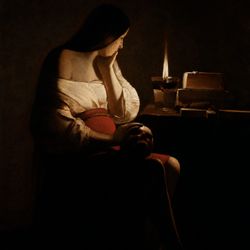
The Braced Body: The Spiritual Cost of Always Being in Control (Part 3)
56:53|I’ve spent a lot of this series thinking about what happens when the body gets so used to effort that it forgets how to stop. By the time I got to this final episode, I found myself somewhere I didn’t expect. I was thinking about grace, and the spiritual cost of living as though everything depends on your ability to stay useful, vigilant, and in control.In Part Three of The Braced Body, we’re taking everything we’ve learned about chronic tension and nervous system bracing into much deeper spiritual territory. I’ll get into the old argument between Augustine and Pelagius about human effort and grace, why Sabbath has something to say about our inability to stop working, and how ideas like kenosis and alchemy can help us think about surrender without turning it into weakness or self-erasure.We’ll also spend some time with Meister Eckhart and the older mystical traditions that understood spiritual life as something we participate in rather than something we manufacture through enough effort.Somewhere underneath all of this is a problem I know very well in myself. You can get very good at understanding/taking care of /improving yourself, and still be living as though receiving anything you didn’t somehow earn is dangerous as hell.I wanted to know what happens when that habit reaches our spiritual lives too, and whether the body might know something about grace that the intellect has been trying to understand for centuries.CONTINUE THE WORK: Join the BFTB Patreon → https://patreon.com/backfromtheborderlineYou’ll get:☆ Weekly bonus episodes☆ House of Cards (my tarot study group)☆ Archetypal tarot + astrology forecasts☆ Full ad-free archive access (every BFTB episode since 2021)If you want to actually work through it: Use MOODS → https://app.moods.world/ MOODS is a private place to take what’s coming up and see it clearly without performing it or involving anyone else. You can try it free for 7 days to see if it's right for you. If you join my Patreon first, you’ll also unlock discounted access. See you inside.