Share
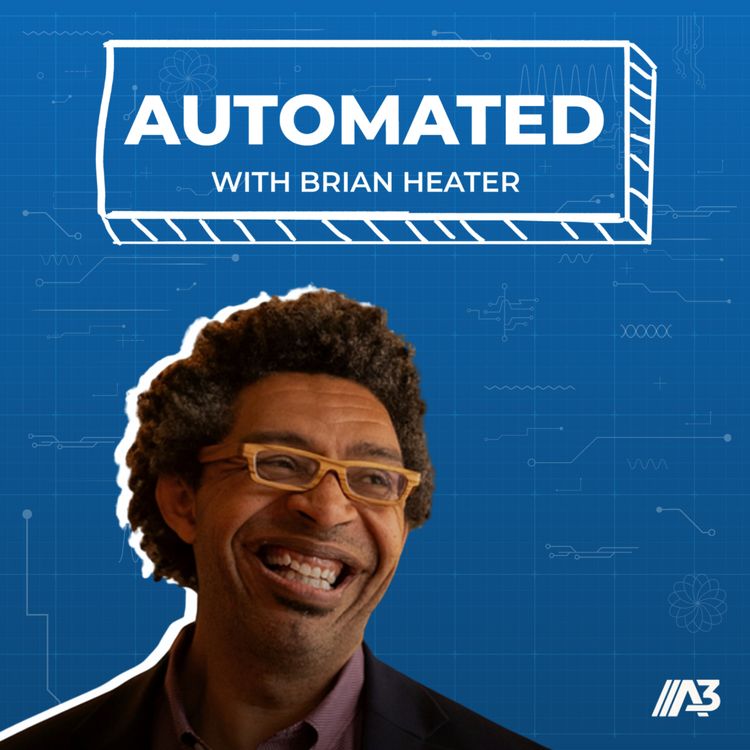
Automated with Brian Heater
When AI Leaves the Demo Stage: Kence Anderson on What Lasts
The most interesting work around AI doesn’t occur at the height of the hype cycle.
Kence Anderson has watched promising ideas overperform in demos, underperform in reality, and eventually re-emerge as something more modest and more useful. This episode focuses on that middle ground, where engineering judgment replaces speculation and progress looks slower than the headlines suggest.
An engineer who led autonomous systems work at Microsoft and now runs AMESA, Kence brings that experience into A3’s Designing Industrial AI Agents course.
Learn more about Amesa: https://www.amesa.com/
Connect with Kence: https://www.linkedin.com/in/kence/
We’d love to hear from you! Have thoughts or guest suggestions? Reach us at podcast@automate.org.
You can find the transcript and more episodes of Automated at automated.fm.
Unlock full access to Automated and explore everything automation. Subscribe today and leave a review on YouTube, Apple Podcasts, and Spotify.
Subscribe to the Automated Newsletter:
https://www.automate.org/automation/newsletter-automation-roundup
You can also find us on:
LinkedIn https://www.linkedin.com/showcase/automated-podcast-by-a3/
Instagram https://www.instagram.com/automatedpod/
More episodes
View all episodes
31. Ranjay Krishna on Why Robots Still Fail in the Real World and the Data Problem Holding Them Back
42:56||Ep. 31Robotics is advancing quickly, but real-world deployment is still far more difficult than most people expect.In this episode of Automated, Brian Heater speaks with Ranjay Krishna, a professor at the University of Washington and former researcher at Ai2, about the fundamental challenges preventing robots from working reliably outside controlled environments, and why solving the data problem is key to unlocking the next wave of robotics.Much of the work discussed in this episode was developed during his time at Ai2.Ranjay explains why today’s robots struggle with tasks that humans find intuitive, from learning by observation to understanding perspective and adapting to new environments. While AI models have made massive progress in language and vision, robotics introduces a new layer of complexity where actions change the world in real time and small errors compound over time.The conversation explores the limitations of current approaches, including why training robots in simulation often fails to translate to the real world, and how the lack of diverse environments creates major gaps in performance. Ranjay shares how his team at the Allen Institute is addressing this by building large-scale simulated environments designed to better reflect the variability of real-world spaces.They also discuss the concept of an ImageNet moment for robotics, and what it would take to create the kind of large, diverse datasets that transformed AI. By generating hundreds of thousands of simulated environments and scaling data collection, his team is exploring whether robots can learn more effectively in simulation and generalize those skills into the physical world.The conversation also covers why robotics requires more than just better models, including challenges in hardware, sensing, and real-world interaction. From embodiment and perception to reasoning and adaptation, it is a grounded look at why robotics remains one of the hardest problems in AI and what needs to happen next for the industry to move forward.We’d love to hear from you. Have thoughts or guest suggestions? Reach us at podcast@automate.org.You can find the transcript and more episodes of Automated at automated.fm.Also, join us at MassRobotics for a happy hour with Brian Heater from A3. Wednesday, April 8 - 4:30 PM - 6:00 PM EDTUnlock full access to Automated and explore everything automation. Subscribe today and leave a review on YouTube, Apple Podcasts, and Spotify.Subscribe to the Automated Newsletter:https://www.automate.org/automation/newsletter-automation-roundupYou can also find us on:LinkedIn https://www.linkedin.com/showcase/automated-podcast-by-a3/Instagram https://www.instagram.com/automatedpod/
30. Erik Nieves on Why Humanoid Robots Are Failing the Most Important Test
49:00||Ep. 30Billions are flowing into humanoid robots. But on the factory floor, nobody cares what the robot looks like. In this episode of Automated, Brian Heater speaks with Erik Nieves, CEO and co-founder of Plus One Robotics, about the gap between robotics investment and real-world deployment. Recorded live at the A3 Business Forum in Miami, Nieves explains why enterprise customers have one question and one question only: does it hit 2,200 picks per hour with three nines of uptime?From the Cambrian explosion happening across warehouse automation to why dexterity remains the biggest unsolved problem in robotics, Nieves gives one of the most grounded, honest assessments of where the industry actually stands. He also explains why human-in-the-loop systems are not a limitation but a competitive advantage, and why robots are about to end the era of labor arbitrage entirely.Key Moments:(00:00) Why Enterprise Customers Don't Care What the Robot Looks Like(00:38) From Astronomy to Robotics: Erik Nieves' Origin Story(04:44) CES Humanoid Demos vs Real-World Deployment(06:52) Has the Capital Outpaced the Technology(09:32) Plus One Robotics at Year Ten(11:15) What Has Changed and What Has Stayed the Same(12:25) KPIs Matter More Than Form Factor(13:28) Why Humanoids Cannot Meet Industrial Rates Yet(15:59) Dexterity Is the Real Problem Nobody Is Solving(19:33) Legs vs Wheels: The Debate That Won't Die(21:43) Why Robots Are Still Behind a Fence(23:06) The Fence Is Not There to Keep the Robot In(24:59) The Cambrian Explosion in Robotics(26:57) How Plus One Robotics Was Founded(29:42) Why Human in the Loop Was the Right Bet(34:27) Robots Will End the Era of Labor Arbitrage(36:01) Nearshoring vs Reshoring(37:53) Why San Antonio Is a Hidden Advantage(39:08) Talent, Universities, and the AI Pipeline(41:04) Why Hardware Companies Cannot Go Fully Remote(42:17) Mentorship Only Works in Person(46:34) The One KPI That Runs the Entire CompanySponsored by SANYO DENKI America: SANMOTION delivers precise, reliable multi-axis control for advanced robotics systems. Learn more at https://www.sanyodenki.com/america/We'd love to hear from you! Have thoughts or guest suggestions? Reach us at podcast@automate.orgYou can find the transcript and more episodes of Automated at automated.fmUnlock full access to Automated and explore everything automation. Subscribe today and leave a review on YouTube, Apple Podcasts, and Spotify.Subscribe to the Automated Newsletter: https://www.automate.org/automation/newsletter-automation-roundupYou can also find us on: LinkedIn https://www.linkedin.com/showcase/automated-podcast-by-a3/ Instagram https://www.instagram.com/automatedpod/
29. iRobot CEO Gary Cohen on Turnarounds, Feature Wars, and the Future of Roomba
43:13||Ep. 29Robot vacuums have been on the market for over 20 years and are still in fewer than 20 percent of US homes. In this episode of Automated, Brian Heater speaks with Gary Cohen, CEO of iRobot and the brand behind Roomba, about what it actually takes to rebuild one of the most iconic names in consumer robotics.Gary breaks down the shift from feature-led to consumer-led product development, explaining why iRobot missed key market opportunities and how competitors used that window to take significant market share. He shares the full story behind the failed Amazon acquisition, the Chapter 11 restructuring, and how he rebuilt the company's entire product line in under 12 months to win Prime Day 2025.They also discuss why the robot vacuum market is far from saturated, why simplifying the setup and onboarding experience matters more than any new feature, and what the Gillette razor wars teach us about the robot vacuum arms race happening right now. Gary also addresses data privacy under the new ownership structure and previews what iRobot's roadmap looks like over the next two to three years, including a Japan-first product launch and the long-awaited iRobot lawnmower.We'd love to hear from you! Have thoughts or guest suggestions? Reach us at podcast@automate.orgYou can find the transcript and more episodes of Automated at automated.fm.Unlock full access to Automated and explore everything automation. Subscribe today and leave a review on YouTube, Apple Podcasts, and Spotify.Subscribe to the Automated Newsletter:https://www.automate.org/automation/newsletter-automation-roundupYou can also find us on:LinkedInhttps://www.linkedin.com/showcase/automated-podcast-by-a3/Instagramhttps://www.instagram.com/automatedpod/
28. Mehul Nariyawala on Why Home Robots Must Be Vision-First and “Delegate, Not Collaborate”
52:24||Ep. 28Home robotics has been promised for decades, but most products still struggle to meet everyday expectations. In this episode of Automated, Brian Heater speaks with Mehul Nariyawala of Matic Robots about why the robot vacuum category became the beachhead for home robots, and what it actually takes to ship a product people trust.Mehul breaks down the shift from “default trust” to “default skepticism” in consumer hardware, and why robotics lives in the “march of nines,” where demos look impressive at 90%, but real products require relentless work to reach the reliability customers demand. He explains why people will collaborate with AI software, but they want robots to delegate tasks completely, which raises the bar dramatically for home robotics.They also talk through what makes Matic’s approach different, including why the company believes vision-only autonomy is the only economically viable path for indoor robots at scale, and how mapping, localization, and on-device intelligence lay the foundation for future home capabilities beyond vacuuming. The conversation closes with Mehul’s view of an “iPhone moment” in home robotics, and how Matic plans to keep improving through software updates while building toward what comes next.We’d love to hear from you! Have thoughts or guest suggestions? Reach us at podcast@automate.org.You can find the transcript and more episodes of Automated at automated.fm. Unlock full access to Automated and explore everything automation. Subscribe today and leave a review on YouTube, Apple Podcasts, and Spotify.Subscribe to the Automated Newsletter:https://www.automate.org/automation/newsletter-automation-roundupYou can also find us on:LinkedIn https://www.linkedin.com/showcase/automated-podcast-by-a3/Instagram https://www.instagram.com/automatedpod/
27. Rob Cochran on Shipping a Developer-First Humanoid at Fauna Robotics
48:53||Ep. 27“We wanted to ship before we talked.”That’s how Rob Cochran, co-founder of Fauna Robotics, explains the company’s decision to stay in stealth until its humanoid robot was already in customers’ hands. In this episode of Automated, Brian Heater speaks with Cochran about launching a humanoid startup in one of the most competitive and uncertain moments in robotics.Instead of targeting factories or chasing headline-grabbing demonstrations, Fauna built Sprout, a lightweight, three-and-a-half-foot-tall humanoid designed for developers and real-world experimentation. The robot is soft to the touch, expressive, and modular by design, supporting teleoperation, mapping and navigation, voice interaction, and AI model development out of the box. The goal is not to claim that humanoids are solved, but to create a platform where researchers, startups, and enterprises can begin solving them.They discuss why shipping matters more than announcements, the realities of pricing and scaling hardware, how developer ecosystems accelerate the adoption of emerging technologies, and why modular AI stacks may be more practical than a single end-to-end model. The conversation also covers data ownership, teleoperation versus autonomy, early commercial deployments, and the long-term vision for consumer and home robotics. It is a pragmatic look at what it takes to move humanoids from concept videos to working systems in the world.Sponsored by SANYO DENKI America: SANMOTION delivers precise, reliable multi-axis control for advanced robotics systems. Learn more at https://www.sanyodenki.com/america/.We’d love to hear from you! Have thoughts or guest suggestions? Reach us at podcast@automate.org.You can find the transcript and more episodes of Automated at automated.fm. Unlock full access to Automated and explore everything automation. Subscribe today and leave a review on YouTube, Apple Podcasts, and Spotify.Subscribe to the Automated Newsletter:https://www.automate.org/automation/newsletter-automation-roundupYou can also find us on:LinkedIn https://www.linkedin.com/showcase/automated-podcast-by-a3/Instagram https://www.instagram.com/automatedpod/
26. Péter Fankhauser on Building a Fleet of Autonomous Robots at ANYbotics
45:01||Ep. 26“Nobody wants a robot.” That’s how Péter Fankhauser, CEO of ANYbotics, reframes industrial automation. Customers are not buying quadrupeds for spectacle. They are investing in solutions that solve real operational problems. In this episode of Automated, Brian Heater speaks with the ETH Zurich spinout founder about turning cutting-edge robotics research into a commercially deployed inspection platform used in offshore wind, oil and gas, and other hazardous environments.They discuss why ANYbotics is not chasing humanoid hype, how the company built traction through real-world deployments, what industrial facilities actually look like behind the scenes, and how reinforcement learning reshaped their control systems. The conversation also covers transparency in robotics marketing, the role of teleoperation in autonomy, the shift from collecting data to delivering insights, and the ethical line the company drew around weaponization. It is a grounded look at where industrial AI is delivering value today and what it takes to scale autonomous robots in the real world.Sponsored by SANYO DENKI America: High-performance SANMOTION C S300 delivers precise, reliable multi-axis control. Learn more at sanyodenki.com/america.We’d love to hear from you! Have thoughts or guest suggestions? Reach us at podcast@automate.org.You can find the transcript and more episodes of Automated at automated.fm. Unlock full access to Automated and explore everything automation. Subscribe today and leave a review on YouTube, Apple Podcasts, and Spotify.Subscribe to the Automated Newsletter: https://www.automate.org/automation/newsletter-automation-roundupYou can also find us on:LinkedIn https://www.linkedin.com/showcase/automated-podcast-by-a3/Instagram https://www.instagram.com/automatedpod/
25. Building Safe, Scalable Robots at GM With Mikell Taylor
38:51||Ep. 25Talk about humanoid robots is everywhere, but how useful are they in industrial settings?In this live episode of Automated, Brian Heater talks with Mikell Taylor, former Amazon Robotics leader and current head of General Motors’ Autonomous Robotics Center. Recorded in front of an audience at A3’s Business Forum, the conversation dives into safety, collaboration, automation at scale, and why the best robots don’t necessarily look like us.From Amazon’s Proteus AMR to GM’s next generation of manufacturing automation, this episode cuts through the hype and focuses on what actually works in the real world.We’d love to hear from you! Have thoughts or guest suggestions? Reach us at podcast@automate.org.You can find the transcript and more episodes of Automated at automated.fm. Unlock full access to Automated and explore everything automation. Subscribe today and leave a review on YouTube, Apple Podcasts, and Spotify.Subscribe to the Automated Newsletter: https://www.automate.org/automation/newsletter-automation-roundupYou can also find us on:LinkedIn https://www.linkedin.com/showcase/automated-podcast-by-a3/Instagram https://www.instagram.com/automatedpod/
23. How Democratizing Access to Robotics will Benefit All: Intrinsic’s Brian Gerkey on Open-Source Software
48:25||Ep. 23Brian Gerkey believes deeply in the importance of open-sourcing robotics technology. His career, with time spent at Willow Garage, Open Robotics, and now as CTO at Intrinsic, has been guided by this philosophy.In this episode of Automated, Gerkey explains why “simple” tasks like picking and placing remain some of the toughest problems to solve, especially in high-variability environments. We explore Intrinsic’s software-first approach to making automation economically viable, the idea of artificial functional intelligence (AFI), and how technology only succeeds when workers trust and understand how to use it. Bryan reflects on the tight-knit spirit of the industry, and why community, relationships, and impact, not just perfect tech, drive it forward and keep him dedicated to robotics after all of these years.We’d love to hear from you! Have thoughts or guest suggestions? Reach us at podcast@automate.org.You can find the transcript and more episodes of Automated at automated.fm. Unlock full access to Automated and explore everything automation. Subscribe today and leave a review on YouTube, Apple Podcasts, and Spotify.Subscribe to the Automated Newsletter: https://www.automate.org/automation/newsletter-automation-roundupYou can also find us on:LinkedIn https://www.linkedin.com/showcase/automated-podcast-by-a3/Instagram https://www.instagram.com/automatedpod/