Share
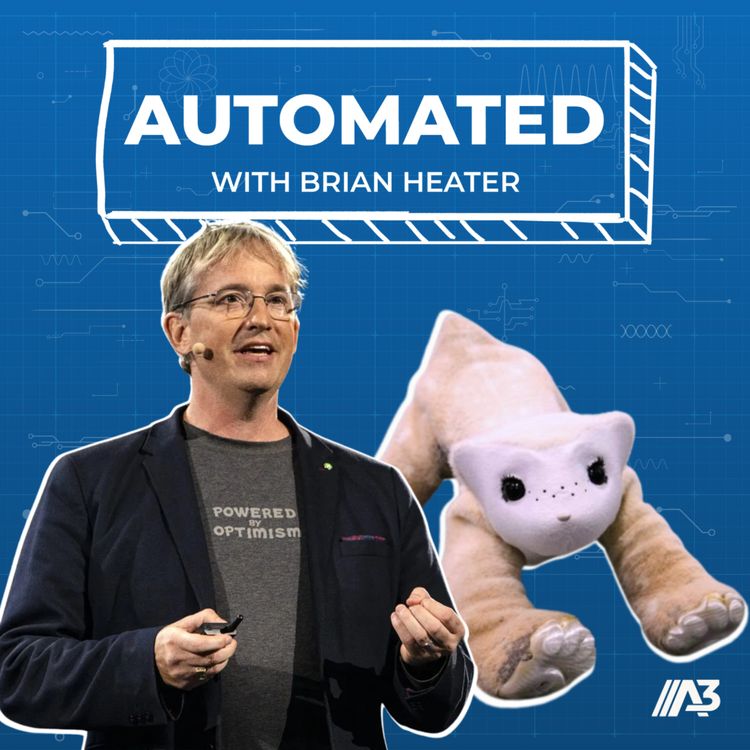
Automated with Brian Heater
Colin Angle on Why Home Robots Failed Before and Why AI Changes Everything
Home robots have been promised for decades.
Most of them did not fail because the ambition was too small. They failed because the technology was not yet good enough to understand people, adapt to real homes, or earn a place in daily life.
In this episode of Automated, Brian Heater speaks with Colin Angle, founder and CEO of Familiar Machines & Magic and co-founder of iRobot, about why this moment in robotics feels fundamentally different.
After helping define consumer robotics with Roomba, Colin is now focused on a new category of robot built not just to perform tasks, but to understand context, respond with intention, and build long-term connections inside the home.
The conversation explores why the hardest problem in robotics was never simply movement. For years, robots could hear commands and execute narrow tasks, but they struggled with situational awareness, context, and the complexity of real-world environments. Colin explains why recent advances in AI have changed that, making capabilities that once felt impossible now practical.
Brian and Colin also revisit one of Roomba's most important lessons. A robot can technically work and still fail in the home. The real challenge is not just functionality. It is whether the product fits naturally into people’s routines. Colin shares why one of Roomba’s biggest failure modes was not a rare edge case, but something much more common: people turning it off because it was annoying at the wrong time, and never turning it back on.
The conversation also digs into what physical presence adds to AI. Colin reflects on early iRobot experiments like My Real Baby and explains why embodied systems can create a deeper and more memorable connection than software on a screen.
They also discuss why Colin believes the next major consumer robot will not be a humanoid trying to replicate human labor in the home. Instead, he argues the real opportunity is building machines people trust, enjoy interacting with, and want around over time.
Privacy is another major part of that equation. Colin explains why home robots need to run on the edge, not rely on constant cloud streaming, and why trust, latency, and cost all matter just as much as technical capability.
This conversation is a deep look at what held home robotics back, what AI has finally unlocked, and why the next breakthrough may come from building robots that feel less like tools and more like a natural part of everyday life.
Connect with Colin Angle
https://www.linkedin.com/in/colinangle/
Learn more about Familiar Machines & Magic
https://www.familiarmachines.com/
We’d love to hear from you.
Have thoughts or guest suggestions?
Reach us at podcast@automate.org.
You can find the transcript and more episodes of Automated at automated.fm.
Unlock full access to Automated and explore everything automation.
Subscribe today and leave a review on YouTube, Apple Podcasts, and Spotify.
Subscribe to the Automated Newsletter:
https://www.automate.org/automation/newsletter-automation-roundup
You can also find us on:
LinkedIn https://www.linkedin.com/showcase/automated-podcast-by-a3/
Instagram https://www.instagram.com/automatedpod/
More episodes
View all episodes
43. Rick Faulk on Locus Robotics, Warehouse Automation, and Physical AI
44:55||Ep. 43Warehouse automation is not about building the flashiest robot.It is about solving the right problem at scale.In this episode of Automated, Brian Heater speaks with Rick Faulk, CEO of Locus Robotics, about what it really takes to deploy robots inside working warehouses and why the future of physical AI may look very different from the humanoid hype cycle.Rick explains how Locus grew out of a major logistics problem. Quiet Logistics had been using Kiva robots before Amazon acquired Kiva and took the product off the market. Instead of returning to a manual operation, the team started building its own robotics solution inside the warehouse.That origin story shaped the company’s entire approach. Rick says many robotics companies fail because they start with the robot instead of the customer’s problem. Locus was different because it was built inside the environment it was trying to automate.Brian and Rick also discuss why fixed automation can be limiting in warehouses with seasonal peaks, shifting demand, labor shortages, and changing order volume. Rick explains why flexible systems, Robots-as-a-Service, and scalable deployments matter when operators need to handle holiday surges, back-to-school volume, and unpredictable demand.The conversation digs into one of the biggest topics in robotics right now: humanoids. Rick says humanoids may eventually play a role, but purpose-built warehouse robots have a clearer path to ROI today. In his view, the winning systems are not trying to fold laundry, make burgers, and work in a warehouse. They are designed to do one important job extremely well.They also get into Locus’s real-world data advantage. Rick says Locus has completed more than seven billion picks and is now doing around 150 picks per second. Every pick becomes part of a data flywheel that helps robots move more safely, respond to warehouse conditions, and improve productivity.Rick also breaks down Locus Array, the company’s autonomous Robots-to-Goods system. He explains why mobile manipulation is so difficult, why picking in a warehouse is much harder than it looks, and why Array is designed as a practical physical AI system for fulfillment.Finally, Brian and Rick discuss what automation means for warehouse workers, why robotics can create higher-value roles inside facilities, and how companies can compete in a logistics world shaped by Amazon-level expectations.Connect with Rick Faulkhttps://www.linkedin.com/in/rickfaulkLearn more about Locus Roboticshttps://locusrobotics.com/Learn more about Locus Arrayhttps://locusrobotics.com/blog/locus-array-autonomous-warehouse-eraWe’d love to hear from you. Have thoughts or guest suggestions?Reach us at podcast@automate.orgYou can find the transcript and more episodes of Automated at automated.fmUnlock full access to Automated and explore everything automation.Subscribe today and leave a review on YouTube, Apple Podcasts, and Spotifyhttps://www.youtube.com/@automatedpodcasthttps://podcasts.apple.com/us/podcast/automated-with-brian-heater/id1837762221https://open.spotify.com/show/60olq6brlBEIJWggx2fMR6You can also find us on:LinkedIn https://www.linkedin.com/showcase/automated-podcast-by-a3/Instagram https://www.instagram.com/automatedpod/
42. Aya Durbin on Turning Atlas Into a Real Industrial Robot
46:46||Ep. 42Humanoid robots are everywhere in the headlines.But Aya Durbin says the real test is not whether a robot can impress people in a demo. It is whether that robot can deliver real value, positive ROI, and reliable performance inside industrial environments.In this episode of Automated, Brian Heater speaks with Aya Durbin, Director of Product for Atlas at Boston Dynamics, about what it will actually take to bring humanoid robots out of the lab and into the workforce.Aya explains why she considers herself both a dreamer and a pragmatist. Boston Dynamics has shown what is possible with legged robots, viral demos, and advanced mobility, but productizing Atlas means focusing on customer value, uptime, deployment, serviceability, and hard industrial work.The conversation explores why Atlas has legs, what Boston Dynamics learned from Spot and Stretch, and why the first meaningful humanoid deployments will likely happen in structured industrial environments before anything broader.Brian and Aya also dig into the reality behind Boston Dynamics’ famous robot videos. The backflips, gymnastics, and playful demos may look like fun, but Aya explains how many of those moments are tied to the same core technology used to train robots for real tasks.They also discuss why Atlas is being built around AI-based tools rather than hard-coded applications, how early customers will help shape the roadmap, and why integration, IT, security, downtime, and ROI are just as important as the robot itself.Finally, Aya outlines Boston Dynamics’ current timeline for Atlas, including customer pilots planned for 2028 and Hyundai’s commitment to building 30,000 Atlas robots a year starting in 2030.This is a grounded look at what humanoid robotics looks like beyond the hype, and what has to happen before Atlas becomes a trusted member of the industrial workforce.Connect with Aya Durbinhttps://www.linkedin.com/in/alexa-durbinLearn more about Boston Dynamics Atlashttps://bostondynamics.com/products/atlas/Thanks for being an Automated fan! Enter our giveaway to win robot-building sets from some of our favorite robotics companies and exclusive Automated swag.We’d love to hear from you. Have thoughts or guest suggestions?Reach us at podcast@automate.orgYou can find the transcript and more episodes of Automated at automated.fmUnlock full access to Automated and explore everything automation.Subscribe today and leave a review on YouTube, Apple Podcasts, and Spotifyhttps://www.youtube.com/@automatedpodcasthttps://podcasts.apple.com/us/podcast/automated-with-brian-heater/id1837762221https://open.spotify.com/show/60olq6brlBEIJWggx2fMR6You can also find us on:LinkedIn https://www.linkedin.com/showcase/automated-podcast-by-a3/Instagram https://www.instagram.com/automatedpod/
41. Andrew Barry on Why Dexterity Is the Next Breakthrough in Physical AI
44:03||Ep. 41Physical AI is moving quickly.But Andrew Barry says one of the biggest unlocks in robotics is not just getting robots to move through the world. It is getting them to touch, grasp, adjust, and manipulate the world with real dexterity.In this episode of Automated, Brian Heater speaks with Andrew Barry, co-founder and CTO of Generalist, about how the company is building general intelligence for the physical world and why dexterous robots may be the starting point for far more capable automation.Andrew explains why Generalist is focused on the tasks that are both difficult and valuable. Robots have made major progress in mobility, but their ability to manipulate objects is still limited. If robots can solve dexterity, they can become useful in a much wider range of real-world environments.The conversation explores how Generalist is collecting massive amounts of real-world manipulation data. Andrew describes the handheld data capture devices the company built, why they chose that approach over teleoperation, and how thousands of devices have helped them scale a much richer data set for robot learning.Brian and Andrew also discuss the commercial side of physical AI. Andrew explains why the company is not just chasing impressive demos, but benchmarking against real tasks people are already paying for today. That distinction matters because a viral robot demo is not the same thing as a deployable robotic system.They also dig into one of the most surprising parts of modern robot learning: improvisation. Andrew shares the moment when a robot picked up a baggie with the opposite hand from the one it had been trained on, completed the task anyway, and left the team realizing something very different was happening inside the model.The episode also covers Generalist’s GEN-1 model, the parallels between robotics and the early GPT era, why flexible objects like cables are so difficult to automate, what data flywheels may actually look like in robotics, and why robots sometimes learn human mistakes from the data they are trained on.Finally, Andrew reflects on his path from Boston Dynamics to the Broad Institute and then to Generalist, explaining how work in molecular biology, machine learning, transformers, and robotics all shaped the way he thinks about building intelligence for the physical world.Connect with Andrew Barryhttps://www.linkedin.com/in/andy-barryLearn more about Generalisthttps://generalistai.com/We’d love to hear from you.Have thoughts or guest suggestions?Reach us at podcast@automate.orgYou can find the transcript and more episodes of Automated at automated.fm.Unlock full access to Automated and explore everything automation.Subscribe today and leave a review on YouTube, Apple Podcasts, and Spotify.https://www.youtube.com/@automatedpodcasthttps://podcasts.apple.com/us/podcast/automated-with-brian-heater/id1837762221https://open.spotify.com/show/60olq6brlBEIJWggx2fMR6You can also find us on:LinkedIn https://www.linkedin.com/showcase/automated-podcast-by-a3/Instagram https://www.instagram.com/automatedpod/Subscribe to the Automated Newsletter:https://www.automate.org/automation/automated-newsletter
40. Daniel Rausch on How Alexa Was Rebuilt for the AI Era
49:00||Ep. 40Alexa is entering a very different era.For years, voice assistants were built around rules, scripted responses, and carefully designed commands. But with the rise of large language models and generative AI, Amazon had to rethink what Alexa could be and how people might use it.In this episode of Automated, Brian Heater speaks with Daniel Rausch, Amazon’s Vice President of Alexa and Echo, about Alexa+, the company’s AI-powered evolution of its voice assistant. Daniel explains why the shift from traditional voice assistance to foundational AI assistance required a full rearchitecture of the technology behind Alexa.The conversation explores how Alexa moved from a deterministic system to one powered by more than 70 models, why customers do not care which model is working behind the scenes, and how Amazon thinks about choosing the right AI tool for the job.Brian and Daniel also discuss one of the biggest questions around AI assistants: trust. Daniel explains why Alexa is designed to understand that it is AI, why it should help people prioritize human relationships, and why guardrails matter as assistants become more conversational, personal, and ambient in the home.They also get into the smart home, where Daniel says Alexa+ is changing how people interact with connected devices. Instead of needing to know the right command or app, people can speak naturally, whether they are unlocking a door, checking a Ring camera, controlling lights, or asking for help while cooking.The conversation also covers Echo hardware, privacy controls, personality styles, language and dialect differences, AI’s impact on robotics, and why Daniel sees Amazon as an invention machine at a moment when AI is moving faster than ever.Connect with Daniel Rauschhttps://www.linkedin.com/in/danielrauschLearn more about Alexa+https://www.amazon.com/alexaplus/dp/B0CXRRF584Learn more about Amazon Echo deviceshttps://www.amazon.com/b?ie=UTF8&node=210779651011We’d love to hear from you.Have thoughts or guest suggestions?Reach us at podcast@automate.orgYou can find the transcript and more episodes of Automated at automated.fmUnlock full access to Automated and explore everything automation.Subscribe today and leave a review on YouTube, Apple Podcasts, and Spotify.You can also find us on:LinkedIn https://www.linkedin.com/showcase/automated-podcast-by-a3/Instagram https://www.instagram.com/automatedpod/
39. Daniela Rus on Humanoid Robots, Physical AI, and the Future of Robotics
50:30||Ep. 39Physical AI is moving fast.But Daniela Rus says the future of robotics will not be defined by viral humanoid robot demos alone. The real challenge is building robots that can understand the physical world, make safe decisions in real time, and work reliably outside controlled lab environments.In this episode of Automated, Brian Heater speaks with Daniela Rus, Director of MIT CSAIL, about humanoid robots, self-driving cars, embodied AI, on-device AI, robot learning, and why the next wave of artificial intelligence needs to move beyond the cloud and into the physical world.Daniela explains why humanoid robots are exciting, but not ready for prime time. A robot may look impressive in a short demo, but operating safely and consistently around people requires common sense, physical understanding, and real-world adaptability that robots still do not fully have.The conversation also explores why self-driving cars remain one of the hardest problems in robotics. Daniela breaks down the long tail of autonomous driving, from bad weather and unpredictable human behavior to the messy edge cases that make real-world deployment so difficult.Brian and Daniela also discuss why the future of AI robotics may depend on smaller, more efficient AI models that can run directly on devices. If a car is moving at 60 miles an hour, it cannot wait for the cloud to decide what to do next. For robotics, speed, safety, energy use, and reliability all point toward a hybrid future where AI runs both in the cloud and on the machine itself.Daniela also shares why physical AI needs more than video data. Robots interact with the world through forces, torques, motion, contact, and uncertainty. For many tasks, robot learning requires a deeper understanding of physics, not just visual imitation.The episode also moves into some of the most fascinating frontiers of AI and robotics, including Daniela’s work with Project CETI and the effort to better understand sperm whale communication using machine learning, robotics, and large-scale data collection.Finally, Daniela talks about AI systems that could help design robots from natural language prompts, why engineering constraints can drive creativity, what octopus intelligence can teach us about decentralized robots, and why this moment in robotics feels like the future researchers imagined decades ago is finally arriving.Connect with Daniela Rushttps://www.csail.mit.edu/person/daniela-rusLearn more about MIT CSAILhttps://www.csail.mit.edu/Learn more about Liquid AIhttps://www.liquid.ai/team/daniela-l-rusLearn more about Project CETIhttps://www.projectceti.org/We’d love to hear from you.Have thoughts or guest suggestions?Reach us at podcast@automate.org.You can find the transcript and more episodes of Automated at automated.fm.Unlock full access to Automated and explore everything automation.Subscribe today and leave a review on YouTube, Apple Podcasts, and Spotify.Subscribe to the Automated Newsletter:https://www.automate.org/automation/automated-newsletterYou can also find us on:LinkedIn https://www.linkedin.com/showcase/automated-podcast-by-a3/Instagram https://www.instagram.com/automatedpod/
38. Matthew Johnson-Roberson on Why Physical AI Still Has a Missing Piece
57:11||Ep. 38Physical AI is moving fast.But Matthew Johnson-Roberson says robotics is still missing something fundamental. The field has data, models, and momentum, but it still does not have the simple learning objective that helped language models scale so quickly.In this episode of Automated, Brian Heater speaks with Matthew Johnson-Roberson, founding dean of Vanderbilt’s College of Connected Computing, about why physical AI may not follow the same playbook as large language models.Matthew explains why robotics still feels stuck between promise and deployment. We still do not live in a world where you can look out your window and see robots everywhere. That gap is not just about hype. It is about the difficulty of building systems that can learn from physical experience in a way that actually scales.Brian and Matthew also discuss what self-driving taught the broader automation world, why last-mile delivery still has not cracked scale, and what Amazon’s long arc with Kiva robots reveals about how real hardware progress actually happens.The conversation also explores healthcare, where Matthew says AI scribes are already making a real impact, even as outdated infrastructure like fax-based record sharing shows how much friction remains. That experience also helped inspire Patients.app, the startup he co-founded after watching how much clinician time gets lost to documentation.They also get into the tension between startups and academia. Matthew argues that startups are powerful vehicles for scaling known solutions, but much worse fits for decade-long research questions that still do not have clear answers.Finally, Matthew reflects on building Vanderbilt’s new College of Connected Computing, why higher ed can take on 30- and 40-year problems in a way few other institutions can, and how AI agents have changed his own workflow so dramatically that he says he has not directly written a line of code in three months.Connect with Matthew Johnson-Robersonhttps://www.linkedin.com/in/mattkjrLearn more about Vanderbilt’s College of Connected Computinghttps://computing.vanderbilt.edu/bio/matthew-johnson-roberson/Learn more about Patients.apphttps://patients.app/We’d love to hear from you.Have thoughts or guest suggestions?Reach us at podcast@automate.org.You can find the transcript and more episodes of Automated at automated.fm.Unlock full access to Automated and explore everything automation.Subscribe today and leave a review on YouTube, Apple Podcasts, and Spotify.Subscribe to the Automated Newsletter:https://www.automate.org/automation/automated-newsletterYou can also find us on:LinkedIn https://www.linkedin.com/showcase/automated-podcast-by-a3/Instagram https://www.instagram.com/automatedpod/
37. Sergey Levine on Why Real-World Data Will Define Physical AI
46:27||Ep. 37Physical AI looks closer than ever.But the hardest part in robotics is not getting a machine to do one impressive task on camera. It is building systems that can improve from real-world experience, handle edge cases, and scale across different robots and environments.In this episode of Automated, Brian Heater speaks with Sergey Levine of Physical Intelligence about why robotics has reached an inflection point, and why progress now requires more than great models in a lab.Sergey explains why the next phase of robotics will depend on something much less flashy than a viral demo: collecting the right real-world data, learning from it efficiently, and building systems that improve through deployment.The conversation explores what makes a robot experience useful in the first place. Sergey describes a concept borrowed from child psychology called the “zone of proximal development,” where the best learning happens when a system is challenged just beyond what it can already do. For robots, that means creating environments where they can succeed, fail, adapt, and improve.Brian and Sergey also discuss how the bottleneck in robotics is changing. Basic motor skills are improving fast. The harder problem now is judgment. A robot may be able to clean dishes, but if it drops a clean plate on the floor, it still has to understand that the plate needs to be washed again. That kind of common sense remains one of the biggest unsolved challenges in physical AI.They also dig into one of the biggest debates in robotics right now: data. Sergey argues that real-world data collection is not the impossible obstacle many researchers once assumed. In fact, he believes the long-term path to better robots is more practical than people think. Deploy systems, collect experience, improve the model, and repeat.The conversation also covers why Physical Intelligence is focused on a general intelligence layer rather than a single-narrow product, why robots should not just be treated as metal versions of people, and what surprised Sergey most about controlling very different robot platforms with the same model.Finally, Sergey reflects on why Physical Intelligence is structured more like a lab than a traditional startup, why experimentation matters so much in modern AI, and how we may one day look back on this era as the moment AI moved beyond internet data and into the physical world.Connect with Sergey Levinehttps://www.linkedin.com/in/sergey-levine-5a31a24Learn more about Physical Intelligencehttps://www.physicalintelligence.company/We’d love to hear from you.Have thoughts or guest suggestions?Reach us at podcast@automate.org.You can find the transcript and more episodes of Automated at automated.fmUnlock full access to Automated and explore everything automation.Subscribe today and leave a review on YouTube, Apple Podcasts, and Spotify.Subscribe to the Automated Newsletter:https://www.automate.org/automation/automated-newsletterYou can also find us on:LinkedIn https://www.linkedin.com/showcase/automated-podcast-by-a3/Instagram https://www.instagram.com/automatedpod/
35. Martial Hebert on Why Self-Driving Cars Took So Long and What Everyone Got Wrong About AI
47:52||Ep. 35Self-driving cars were supposed to be everywhere by now.They are not.And the reason is not what most people think.In this episode of Automated, Brian Heater speaks with Martial Hebert, Dean of Carnegie Mellon University’s School of Computer Science, about the reality behind decades of robotics and AI development.Martial has spent more than 40 years at the Robotics Institute and worked on some of the earliest autonomous vehicle systems. From that perspective, the story is not about technology failing.It is about expectations being wrong.The core technology for self-driving cars has existed for years. What slowed everything down is something far less visible: validation, safety, and the challenge of proving these systems can operate reliably in the real world.That gap between “it works” and “it can be trusted” is where most timelines break.The conversation also explores why physical AI is fundamentally different from the AI most people are familiar with. Unlike software, robots have to operate in unpredictable environments, interact with people, and handle edge cases that cannot be fully simulated.Martial explains why simulation alone is not enough, and why real-world experimentation is still essential, even when it is slow, expensive, and difficult to scale.They also discuss the robotics data problem. While large language models benefit from massive amounts of internet data, robotics systems struggle to collect the kind of real-world data they actually need.Brian and Martial also dig into a deeper idea that often gets overlooked: progress in robotics is not just about better algorithms. It is about building long-term ecosystems of talent, culture, and expertise.That is part of what turned places like Carnegie Mellon into leaders in autonomy, and why many of today’s breakthroughs are the result of decades of accumulated work.They also explore the role of DARPA and long-term research funding, not as a way to build products quickly, but as a way to push the limits of what is possible and force entirely new breakthroughs.This conversation offers a grounded perspective on why progress in AI takes longer than expected and what it actually takes to move from impressive demos to systems that work in the real world.Connect with Martial Heberthttps://www.linkedin.com/in/martial-hebert-76448756/Learn more about Carnegie Mellon Roboticshttps://www.ri.cmu.edu/We’d love to hear from you. Have thoughts or guest suggestions? Reach us at podcast@automate.org.You can find the transcript and more episodes of Automated at automated.fm.Unlock full access to Automated and explore everything automation.Subscribe today and leave a review on YouTube, Apple Podcasts, and Spotify.Subscribe to the Automated Newsletter:https://www.automate.org/automation/newsletter-automation-roundupYou can also find us on:LinkedIn https://www.linkedin.com/showcase/automated-podcast-by-a3/Instagram https://www.instagram.com/automatedpod/