Share
Autistic Culture Presents...
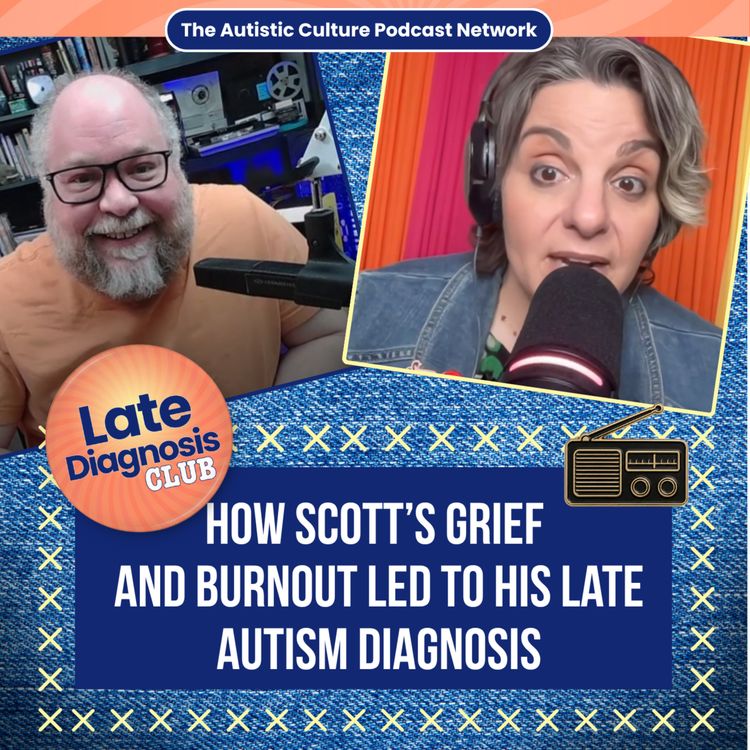
Late Diagnosis Club: How Scott’s Grief and Burnout Led to His Late Autism Diagnosis
Warning: This episode includes discussion of terminal cancer, sudden bereavement, grief, burnout, and mental health struggles. Please listen with care.
In this meeting of The Late Diagnosis Club, Dr Angela Kingdon welcomes Scott Simpson, a late-identified Autistic and ADHD creator, former broadcast journalist, and widowed father who has been raising his son solo since 2016.
After decades working in radio, Scott’s life began to unravel through grief, burnout, and the collapse of the structures that had quietly supported him for years. What followed was a search to understand executive functioning, ADHD, and eventually Autism.
Together, Angela and Scott explore hidden support needs, burnout after loss, Autistic shutdown, identity through memoirs and community, and why many late-identified adults only recognise their needs once life’s scaffolding disappears.
This is a conversation about grief, structure, survival, and finally understanding yourself.
🪑 Attendees
Chair: Dr Angela Kingdon — Author, community-builder, and Autistic advocate
Guest: Scott Simpson — Content creator, former broadcaster, and late-identified AuDHD parent
You: The Listener!
🗒️ Meeting Agenda
- Opening remarks from the Chair
- Member introduction: Gifted kid, burnout, and late recognition
- Discussion: Special education and social confusion
- Widowhood, solo parenting, and hidden support needs
- Radio career collapse and autistic burnout
- ADHD diagnosis and later Autism recognition
- Structure, scaffolding, and unmet needs
- Key learnings
- Club announcements
🧾 Minutes from the Meeting
1️⃣ Opening Remarks
Angela introduces Scott Simpson, a creator and former radio professional whose late identification followed years of grief, burnout, and trying to understand why life had become so much harder.
2️⃣ Member Introduction: Scott’s Story
Scott was identified as “gifted” in childhood and placed into a specialist education program. While his intelligence was recognised early, his social struggles and deeper support needs were not.
As an adult, he built a long career in broadcasting, married, became a father, and later experienced profound loss when his wife died of cancer while their son was still young.
When career structure and family scaffolding fell away, Scott began exploring executive functioning, received an ADHD diagnosis, and later recognised Autism.
3️⃣ Discussion Highlights
- Gifted program: Early intelligence recognised, while deeper needs were missed
- Smart but struggling: Academic ability masking social confusion
- Relationship patterns: Trying hard without understanding the rules
- Sudden grief: Becoming a widowed father to a three-year-old
- Radio collapse: Career pressure, impossible demands, and burnout
- Hidden scaffolding: Job structure and parenting routines quietly sustaining life
- ADHD first: Executive functioning becomes the doorway to understanding
- Autism later: Shutdowns, overwhelm, and lifelong patterns making sense
- Memoirs mattered: Learning through Autistic voices and lived experience
- Support needs emerge: Struggles become visible once the structure disappears
4️⃣ Key Learnings
- High achievement can hide unmet support needs.
- Grief and burnout often expose needs that were once masked.
- Executive functioning struggles are often misunderstood as laziness or failure.
- Late recognition can come after life changes remove coping systems.
- Autistic voices and memoirs can be more powerful than diagnostic checklists.
- Support is often invisible until it is gone.
📌 Notice Board
📣 Club Announcements
🎧 The Late Diagnosis Club is available on Spotify, Apple Podcasts, and all major platforms.
💬 Join our online meetups and community at latediagnosis.club.
📌 Check the LDC Notice Board for Member Contributions
💜 There is a small charge — but no one is turned away for lack of funds.
🌈 Celebrate autistic voices with early access, ad-free listening, and our full archive at AutisticCulturePlus.com
🌐 Visit www.autisticculturepodcast.com
📲 Follow us on Instagram: @autisticculturepodcast
🎙️ Executive Producers: Amy Burns, Anamaria B Call, Andrew Banner, Anna Goodson, Ashley Apelzin, Audrea Volker, Ben Coulson, Brian Churcek, Cappy Hamper, Carley Biblin, Charlene Deva, Chloe Cross, Clay Duhigg, Clayton Oliver, Danny Dunn, Daria Brown, David Garrido, Emily Burgess, Eric Crane, Erik Stenerud, Fiona Baker, Grace Norman, Helen Shaddock, Jaimie Collins, Jason Killian, Jen Unruh, Jennifer Carpenter, Julia Tretter, Kathie Watson-Gray, Kenneth Knowles, Kira Cotter, Kristine Lang, Kyle Raney, Llew P Williams, Laura Alvarado, Laura De Vito, Laura Provonsha, Lily George, Nelly Darmi, Nigel Rogers, Rachel Miller, Tim Scott, Tyler Kunz, Victoria Steed, Yanina Wood.
🎧 Producers: AJ Knight, Bobby Simon, Da Kovac, Eleanor Collins, Emily Griffiths, Hannah Hughes, Jennifer Kemp, Jonas Fløde, Kate F, Katie N Benitez, Kendra Murphy, Lisa Dennys, Logan Wall, Louise Lomas, Melissa Nance, Nicola Owen, Rebecka Johansson, Sam Morris, Sarah Hannah Morris.
More episodes
View all episodes
10. The Neurocomplex Creative: The First Pancake
48:54||Season 11, Ep. 10The first pancake never comes out right. It's the one you're willing to get wrong so every one after it is better.In this episode of The Neurocomplex Creative, Vicki Peterson reunites with playwright and theatre educator Jared Eberlein, whom she met as part of the very first cohort of a low-residency MFA program in New Hampshire.Together, they look back on becoming friends while raising young children, developing their craft and navigating the intensity of an experimental new program. Vicki also reflects on that experience through a neurocomplex lens, recognising how hyperfocus allowed her to meet its creative demands while her need for downtime, regulation and support remained largely invisible.Jared shares his journey from acting to playwriting and education, exploring creative constraints, persistence and why the life of a project isn't always determined by its first reception. Now teaching the next generation of theatre makers, he and Vicki reflect on what they've learned about sustaining a creative life, supporting other artists and allowing their children to see them as people with creative identities of their own.📲 Follow Jared on Instagram: @jaredeberlein📚 Mentioned in this episode:Notes to Screenwriters by Vicki Peterson & Barbara Nicolosihttps://www.amazon.com/Notes-Screenwriters-Advancing-Screenplay-Hollywood/dp/1615932135📝 Go deeper on Substack:https://ahatonahatonahat.substack.com/☕ Support the show:https://buymeacoffee.com/vickipetersonProduced for the Autistic Culture Podcast Network.🎧 The Neurocomplex Creative is available on Spotify, Apple Podcasts, and all major platforms.🌈 Celebrate autistic voices with early access, ad-free listening, and our full archive at AutisticCulturePlus.com🌐 Visit www.autisticculturepodcastnetwork.com📲 Follow us on Instagram: @autisticculturepodcast
8. Clinical Misfits: Why Is Chronic Pain So Common in Neurodivergent People?
17:59||Season 9, Ep. 8Why does pain sometimes continue long after an injury has healed — and why can chronic pain be such a significant part of neurodivergent life?In this episode of Clinical Misfits, Dr Mary explores chronic pain and its relationship with the neurodivergent nervous system. She breaks down different types of pain, from superficial and deep pain to visceral and nerve pain, and considers the role of interoception and the autonomic nervous system in how pain is experienced and processed.Dr Mary also explores why pain can persist after the original injury has healed, and how ongoing autonomic dysregulation might contribute to a much wider collection of symptoms. Drawing on her experience as a neurologist, she then discusses approaches to managing chronic pain, with a particular focus on her clinical experience using buprenorphine.Alongside medication, Dr Mary looks at other approaches to pain management and nervous-system regulation, including physical and occupational therapy, movement, massage, meditation and other non-pharmacological options — while considering what it means to treat chronic pain as a genuine neurological experience rather than something a person should simply be able to push through.Produced for the Autistic Culture Podcast Network.🎧 Clinical Misfits is available on Spotify, Apple Podcasts, and all major platforms.🌈 Celebrate autistic voices with early access, ad-free listening, and our full archive at AutisticCulturePlus.com🌐 Visit www.autisticculturepodcastnetwork.com📲 Follow us on Instagram: @autisticculturepodcast
1. AI and Autism: Can AI Keep Up With an Autistic Brain?
40:58||Season 26, Ep. 1Advisory: This episode discusses parental loss, relationship separation, panic attacks, addiction and Alcoholics Anonymous.What happens when AI meets a brain running 17 trains of thought at once?In the first episode of AI and Autism, Bre Ransome is joined by writer Madison Kirby (Madii Bee), who recently identified as Autistic while navigating several major changes in her life — the loss of her stepfather, the end of a relationship and moving back into her childhood home at 30.Together, Bre and Madii explore the possibilities and limitations of using AI as a neurodivergent person. From external processing and internal scripting to break-up messages, memorial skateboard tattoos and the strange intimacy of saying please and thank you to a language model, they consider what happens when AI can keep up with your thoughts — and the moments when it really can't.They also discuss using AI during periods of isolation, wearable technology such as the Oura Ring to better understand stress responses, and the pressure to reach some imagined “rock bottom” before allowing yourself to recognise your needs or seek support.Mentioned in this episode:Oura Ring — discussed by Bre and Madii in relation to monitoring physiological stress.Common Therapy Advice To Ignore When You’re Autistic — an article by Autistic therapist Jackie Schuld.Wheels by Steve MoaklerConnect with Madii:Madii Bee on Substack — follow The Second Daughterhood, exploring life as a 30-year-old Autistic woman moving back into her childhood home.InstagramTikTokConnect with Bre:Subscribe to ai.tism — Bre's Substack exploring AI, neurodivergence and the ways she uses AI as an accessibility tool.Get in touch with Bre — share your experiences with AI, tell Bre what you're experimenting with, or express your interest in joining AI and Autism as a guest.🎧 AI and Autism is available on Spotify, Apple Podcasts, and all major platforms.🌈 Celebrate autistic voices with early access, ad-free listening, and our full archive at AutisticCulturePlus.com🌐 Visit www.autisticculturepodcastnetwork.com📲 Follow us on Instagram: @autisticculturepodcast
28. Mindful Mondays With Ashley Dupuy: Touch, Movement & the Neurodivergent Nervous System
36:47||Ep. 28In this episode of Mindful Mondays, we continue our exploration of the senses by turning toward something deeply personal and often overlooked: touch and movement.For many neurodivergent and highly sensitive people, the body can feel confusing, overwhelming, or even unsafe at times. And yet, movement and touch are not optional extras - they are fundamental ways the nervous system orients, regulates, and makes sense of the world.In this episode, Ashley explores:* How touch can regulate the nervous system - from weighted blankets to co-regulation* Why movement is one of the most powerful (and underrated) forms of medicine* The reality of sensory sensitivities - from textures and hugs to proprioception and coordination* The overlap between neurodivergence and chronic conditions like hypermobility and Ehlers–Danlos Syndrome* Why “clumsiness,” rushing, and discomfort in the body are not personal failings - but nervous system information* How small, gentle movements can help shift both physical and emotional stucknessThis episode also includes a guided practice to help you reconnect with your body through tiny, accessible movements and gentle awareness, meeting yourself with curiosity rather than pressure.Movement doesn’t have to be intense to be meaningful.Touch doesn’t have to be complicated to be regulating.Sometimes, the smallest shift is enough to remind your system:You are here. You exist. You belong to this moment.If you’d like to explore this work more deeply, Ashley is currently accepting expressions of interest for a final round of one-to-one journeys (May–July), as well as upcoming group coaching programmes.📩 integrativeiom@gmail.comMore details will be available soon at:🌐 www.integrativeiom.co.ukIf you enjoyed this episode, please follow, share, and leave a review — it helps this work reach more people who need it.And remember…We’re all just walking each other home.Our Sponsors:🧘♀️ Ashley Dupuy – Integrative Coaching, Breathwork & Hypnotherapy & https://insighttimer.com/AshleyDupuy🤝 Sophie James - Neurodivergent Mentoring: sophiejamesndmentoring.com🎧 The Neurodivergent Experience is available on Spotify, Apple Podcasts, and all major platforms.🌈 Celebrate autistic voices with early access, ad-free listening, and our full archive at AutisticCulturePlus.com🌐 Visit www.autisticculturepodcast.com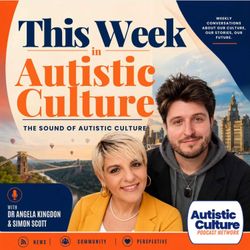
17. This Week in Autistic Culture #17 | The Neurodiversity Language Debate | Is Dune Autistic Culture?
01:32:51||Ep. 17This week, Angela and Simon dive into a growing debate about neurodiversity language. Are terms like neurodivergent, neurodiverse and Autistic becoming blurred together — and does that matter? Responding to new research questioning how broadly neurodiversity terminology is used, they explore why umbrella terms can be incredibly useful, where specificity still matters, and what we lose when very different neurotypes and experiences are treated as interchangeable.For our second excavation into the Autistic Culture Archive, Simon is taking Angela to Arrakis. Using the Ten Pillars of Autistic Culture as their guide, they dig into Frank Herbert’s Dune, uncovering extraordinary world-building, systems within systems, pattern-matching, passionate superfanning and a fictional universe that rewards you for wanting to know absolutely everything about it. By the end, there’s only one question left: is Dune Autistic culture?And if our trip to Arrakis leaves you wanting to dig even deeper, you can explore the full Dune Field Report in the Autistic Culture Archive, where Simon brings together the research, evidence, rabbit holes and connections to the Ten Pillars that couldn’t fit into the show — and, as always, you can add your own field notes, because the archive is never finished!As always, we’ll take you through everything coming up across the Autistic Culture Podcast Network this week!🌐 Subscribe to our newsletter and read our Autistic Culture Archive Field Reports: www.autisticculturepodcast.com🎧 Listen: This Week in Autistic Culture is available on Spotify, Apple Podcasts and all major podcast platforms.🌈 Become a Culture Builder: Get early access, ad-free listening and our full podcast archive at AutisticCulturePlus📲 Follow us on Instagram: @autisticculturepodcast
Autistic Culture Podcast Rewind - Cats are Autistic
01:04:36|In this episode of The Autistic Culture Podcast, hosts Dr. Angela Kingdon and Matt Lowry, LPP draw connections between the behaviors and traits exhibited by cats and the common experiences of autistic individuals.🎧 What You’ll LearnComparing feline quirks—like sensory preferences, strong routines, and communication styles—with autistic traits.Why cats’ particular needs for predictability and clear communication mirror autistic desires for understandable, safe environments.An exploration of famous autistic-coded cat characters in media: Garfield, Hello Kitty, the Cat in the Hat, and Hobbes from Calvin and Hobbes.Using examples of cat behavior to critique ABA (Applied Behavior Analysis) therapy, arguing for acceptance and accommodation rather than forced conformity.Celebrating cats as powerful symbols of neurodiversity—embracing feline tendencies as an emblem of the autistic experience.Resources:Kathy Hoopmann’s websiteVideo: How I Taught My Cat to Talk | Beginner TutorialVideo: Cat Kicks Boyfriend out of the HouseVideo: Where Dad? Billi SpeaksRelated Episodes:Peanuts is AutisticAnimation is Autistic🌟 Connect With Us📱 Follow us on Instagram🎧 Find us on Apple Podcasts and Spotify🛍️Our Autism-affirming merch shop🌐 Learn more at www.autisticculturepodcast.com
131. The Neurodivergent Experience: My Parents Hid My Autism Diagnosis for 15 Years | Reddit Stories
01:26:27||Ep. 131In this week's Reddit Stories episode, Jordan and Simon dive into three stories about autism, relationships, diagnosis and what happens when understanding neurodivergence collides with the expectations of the people around us.First, an autistic man asks how he can explain to his girlfriend that his autism isn't something he can simply change. As the story unfolds through its updates, Jordan and Simon discuss masking, communication, compromise in relationships and the difference between asking a partner to work on their behaviour and expecting them to fundamentally change who they are.Next, a 29-year-old woman says she's divorcing her husband because he has autism and wants to know how she can do it respectfully. Jordan and Simon unpack what's really behind that statement, the realities of neurodivergent relationships, compatibility, communication and why sometimes a relationship ending isn't necessarily about autism itself.Finally, an 18-year-old discovers that her parents withheld an autism diagnosis from her for 15 years after rejecting the original assessment she received as a child. Jordan and Simon discuss parents seeking second opinions, growing up without answers, the impact of discovering a diagnosis years later and why knowing you're autistic can provide important context for a lifetime of feeling different.The stories discussed in this episode are public Reddit posts. Titles may be shortened for readability, and all opinions expressed are those of the original posters.How Do I Explain to My Girlfriend That My Autism Isn't Something I Can Change?I'm Divorcing My Husband Because He Has Autism. How Can I Do It Respectfully?My Parents Withheld a Diagnosis From Me for 15 YearsOur Sponsors:🧘♀️ Ashley Dupuy – Integrative Coaching, Breathwork & Hypnotherapy & https://insighttimer.com/AshleyDupuy🤝 Sophie James - Neurodivergent Mentoring: sophiejamesndmentoring.com🎧 The Neurodivergent Experience is available on Spotify, Apple Podcasts, and all major platforms.🌈 Celebrate autistic voices with early access, ad-free listening, and our full archive at AutisticCulturePlus.com🌐 Visit www.autisticculturepodcast.com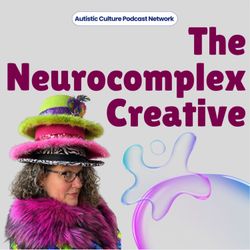
9. The Neurocomplex Creative: Lucy Lane's Story
41:17||Season 11, Ep. 9She was born on Sunset Boulevard and has had an agent since she was four — but if you ask her, she hasn't done much in Hollywood. And that's kind of funny.In this episode of The Neurocomplex Creative, Vicki Peterson sits down with her daughter, Lucy Lane, a young actor, singer and musical theatre performer beginning her professional career in New York City.Lucy reflects on growing up as a child actor in Hollywood, discovering acting techniques that helped her feel more grounded, and what she's learning about building a creative life around a brain and body that don't always work like everyone else's. She and Vicki discuss EDS, dysautonomia, advocating for invisible needs and navigating the physical demands of professional performance without allowing a medical record to define what's possible.They also explore Lucy's relationship with music, why singing can make her ADHD brain feel quiet, and how performing offers a way to express emotions that aren't always accessible through words alone. It's a warm conversation between mother and daughter about creativity, self-advocacy, autistic joy and finding the thing that allows your whole nervous system to rest.📲 Follow Lucy on Instagram: @the_lucylane📝 Go deeper on Substack:https://ahatonahatonahat.substack.com/☕ Support the show:https://buymeacoffee.com/vickipetersonProduced for the Autistic Culture Podcast Network.🎧 The Neurocomplex Creative is available on Spotify, Apple Podcasts, and all major platforms.🌈 Celebrate autistic voices with early access, ad-free listening, and our full archive at AutisticCulturePlus.com🌐 Visit www.autisticculturepodcastnetwork.com📲 Follow us on Instagram: @autisticculturepodcast
7. Clinical Misfits: What If Your Neurological Symptoms Can’t Be Explained? | Functional Neurological Disorder
23:11||Season 9, Ep. 7What happens when you're experiencing very real neurological symptoms, but medicine can't explain what's causing them?In this episode of Clinical Misfits, Dr Mary explores functional neurological disorder (FND), a term used to describe neurological symptoms that can include changes in sensation, speech and movement, paralysis and seizure-like episodes. She questions the language historically used to describe these experiences and what happens when unexplained symptoms are too readily dismissed as psychological or “all in your head.”Dr Mary considers the relationship between these symptoms, the autonomic nervous system and trauma, particularly for neurodivergent people whose lives may include experiences of bullying, rejection, chronic illness, pain and other forms of trauma. She also discusses approaches used to manage symptoms, from medication and trauma therapies to sensory regulation, movement and other forms of self-care.Throughout the episode, Dr Mary returns to a simple principle: when medicine doesn't yet have an explanation for someone's neurological symptoms, that uncertainty shouldn't become a reason to blame or disbelieve the person experiencing them.Produced for the Autistic Culture Podcast Network.🎧 Clinical Misfits is available on Spotify, Apple Podcasts, and all major platforms.🌈 Celebrate autistic voices with early access, ad-free listening, and our full archive at AutisticCulturePlus.com🌐 Visit www.autisticculturepodcastnetwork.com📲 Follow us on Instagram: @autisticculturepodcast