Share
Autistic Culture Presents...
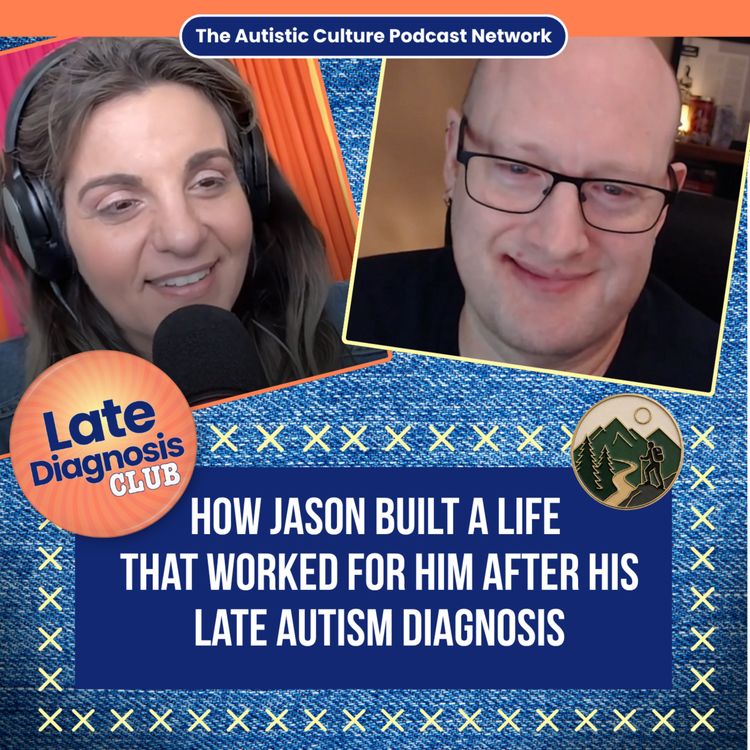
Late Diagnosis Club: How Jason Built a Life That Worked for Him After His Late Autism Diagnosis
In this meeting of The Late Diagnosis Club, Dr Angela Kingdon welcomes Jason Killian, an engineer, hiking instructor, and long time member of the club, who shares his journey to understanding himself as Autistic in his 40s.
Growing up in a neurodivergent household, Jason was unknowingly accommodated in early childhood. Despite strong academic performance, Jason struggled with social integration, bullying, and later workplace dynamics, experiences that only made sense years later through the lens of Autism.
This is a conversation about understanding your needs, building a life that fits, and what changes when you finally have the right framework.
🪑 Attendees
Chair: Dr Angela Kingdon — Author, community-builder, and Autistic advocate
Guest: Jason Killian — Engineer, hiking instructor, and Autistic advocate
You: The Listener!
🗒️ Meeting Agenda
- Opening remarks from the Chair
- Member introduction: Early environment and hidden accommodations
- Discussion: School overwhelm and social expectations
- IEPs, missed diagnoses, and academic masking
- Workplace challenges and burnout
- Late identification and diagnosis journey
- Self-accommodation and relationships
- Hiking, regulation, and sensory experience
- Key learnings
- Club announcements
🧾 Minutes from the Meeting
1️⃣ Opening Remarks
Angela introduces Jason Killian, a longtime LDC member whose story explores what it means to grow up supported, but not understood, and to find clarity later in life.
2️⃣ Member Introduction: Jason’s Story
Jason grew up in a neurodivergent family where his needs were naturally accommodated — quiet spaces, independence, and room to explore interests.
But once he entered school, sensory overwhelm, social expectations, and group environments became challenging. Without a framework for Autism, these struggles were interpreted as social difficulties rather than unmet needs.
Although he performed well academically, Jason experienced bullying, isolation, and later workplace challenges, particularly around communication, expectations, and social norms.
It wasn’t until adulthood — after years of reflection, therapy, and recognising patterns — that Jason identified as Autistic and sought a formal diagnosis.
3️⃣ Discussion Highlights
- Neurodivergent household: Early needs met without formal recognition
- School shock: Sensory overwhelm and social confusion in group settings
- IEP limitations: Focus on social skills, not sensory or learning needs
- Bullying experience: Social differences targeted in adolescence and work
- College turning point: Finding acceptance in the queer community
- Pandemic reflection: Patterns recognised through shared experiences online
- Relationship clarity: Shared neurodivergence improves understanding
- Workplace shift: Smaller company enabling better fit and autonomy
- Hiking regulation: Nature as a consistent nervous system support
- Sensory joy: Smell, sound, and visual richness in outdoor environments
4️⃣ Key Learnings
- Support without understanding can still leave gaps.
- Academic success does not mean needs are being met.
- Late identification often comes through pattern recognition over time.
- Self-accommodation is a critical skill for wellbeing.
- Relationships can improve with shared understanding and language.
- Environment plays a major role in regulation and success.
- Special interests can become both careers and lifelines.
📣 Club Announcements
🎧 The Late Diagnosis Club is available on Spotify, Apple Podcasts, and all major platforms.
💬 Join our online meetups and community at latediagnosis.club.
📌 Check the LDC Notice Board for Member Contributions
💜 There is a small charge — but no one is turned away for lack of funds.
🌈 Celebrate autistic voices with early access, ad-free listening, and our full archive at AutisticCulturePlus.com
🌐 Visit www.autisticculturepodcast.com
📲 Follow us on Instagram: @autisticculturepodcast
🎙️ Executive Producers: Amy Burns, Anamaria B Call, Andrew Banner, Anna Goodson, Ashley Apelzin, Audrea Volker, Ben Coulson, Brian Churcek, Cappy Hamper, Carley Biblin, Charlene Deva, Chloe Cross, Clay Duhigg, Clayton Oliver, Danny Dunn, Daria Brown, David Garrido, Emily Burgess, Eric Crane, Erik Stenerud, Fiona Baker, Grace Norman, Helen Shaddock, Jaimie Collins, Jason Killian, Jen Unruh, Jennifer Carpenter, Julia Tretter, Kathie Watson-Gray, Kenneth Knowles, Kira Cotter, Kristine Lang, Kyle Raney, Llew P Williams, Laura Alvarado, Laura De Vito, Laura Provonsha, Lily George, Nelly Darmi, Nigel Rogers, Rachel Miller, Tim Scott, Tyler Kunz, Victoria Steed, Yanina Wood.
🎧 Producers: AJ Knight, Bobby Simon, Da Kovac, Eleanor Collins, Emily Griffiths, Hannah Hughes, Jennifer Kemp, Jonas Fløde, Kate F, Katie N Benitez, Kendra Murphy, Lisa Dennys, Logan Wall, Louise Lomas, Melissa Nance, Nicola Owen, Rebecka Johansson, Sam Morris, Sarah Hannah Morris.
More episodes
View all episodes
1. Collecting Fish: Your First Aquarium
32:53||Ep. 1In the opening episode of Collecting Fish, host James Hepworth shares his personal journey into fishkeeping — from childhood memories of exploring rock pools on family holidays to building his first aquarium at just five years old.Blending nostalgia with practical beginner advice, James explores what it really takes to start an aquarium for the first time, including:Choosing the right tankUnderstanding filtration and the nitrogen cycleSetting up plants and hardscapeSelecting beginner-friendly fishAvoiding common early mistakes.James discusses the deeper appeal of fishkeeping for neurodivergent people, discussing the calming effects of aquariums, the connection to nature, and the value of slower, more mindful hobbies in an increasingly fast-paced world.Part beginner’s guide and part personal reflection, this episode is an honest introduction to the rewards, responsibilities, and emotional connection behind the aquarium hobby.🐠 Subscribe now to hear future episodes.🌈 Celebrate autistic voices with early access, ad-free listening, and our full archive at AutisticCulturePlus.com🌐 Learn more about the network at AutisticCulturePodcastNetwork.com
1. Theatrically Authentic: The Neurodivergent Pull of Theatre
01:05:08||Ep. 1In the inaugural episode of Theatrically Authentic, hosts Sarah Atherton-Knight and Simon Scott explore why theatre feels so magnetic to neurodivergent people — both onstage and backstage.From “performance brains” and “technical brains” to masking, hyperfocus, burnout, and the emotional intensity of live performance, this episode unpacks the unique relationship between neurodivergence and the theatre industry. Sarah and Simon share their own journeys into theatre, discuss how working in the industry shaped their understanding of themselves, and reflect on the strange balance theatre creates between regulation and overwhelm.Featuring discussions of Hamilton, Shakespeare performance, backstage life, and the emotional reality of making art collaboratively, this episode sets the stage for the rest of the series.📢 Subscribe now to hear future episodes.🌈 Celebrate autistic voices with early access, ad-free listening, and our full archive at AutisticCulturePlus.com🌐 Learn more about the network at AutisticCulturePodcastNetwork.com
1. Hyperfocus FC: The 2006 FIFA World Cup
55:46||Ep. 1In the first episode of this Hyperfocus FC mini-series, Simon Scott is joined by James Hepworth and Jack Hoban to revisit the 2006 FIFA World Cup — a tournament many fans consider the last truly classic World Cup.From iconic kits, legendary players, and unforgettable matches to Germany's incredible atmosphere as host nation, the trio share their memories of a summer that helped define their love of football. Featuring discussions on Zidane's final tournament, Brazil's galáctico squad, England's Golden Generation, the Battle of Nuremberg, and one of the most famous World Cup Finals ever played, this episode is a nostalgic celebration of a tournament that still feels bigger than football. ⚽ Subscribe now to hear future episodes.🌈 Celebrate autistic voices with early access, ad-free listening, and our full archive at AutisticCulturePlus.com🌐 Learn more about the network at AutisticCulturePodcastNetwork.com
1. Creative Becoming: Doodling Not Doomscrolling
30:21||Ep. 1Welcome to Creative Becoming, a podcast for the creative and the curious. If you're ready to swap doomscrolling for doodling, this is the show for you!In this debut episode, hosts Helen and Elizabeth explore the idea of "creative becoming" and how art and storytelling can help us better understand ourselves. Helen shares her experience as a late-diagnosed autistic artist using graphic diaries to navigate identity, while Elizabeth reflects on using creativity to explore a major life milestone.Together they discuss narrative identity, autistic culture, creative practice, and the importance of creating safe spaces where creativity can flourish.In this episode:What "creative becoming" meansGraphic diaries and self-discoveryNarrative identity and storytellingCreativity through an autistic cultural lensCreating spaces that support creative explorationResources and LinksHelen's graphic diary archive: https://arted.online/blog/diaries/Graphic diary template: https://arted.online/toolbox/resource-diary-template/The 10 Pillars of Autistic Culture: https://www.autisticculturepodcast.com/p/the-10-pillars-revisited-episodeContact: creativebecomingpod@gmail.comSupportIf you are experiencing distress, please contact your GP or a relevant support service in your area.DisclaimerCreative Becoming is connected to Helen Shaddock's practice-based PhD, "Welcome to My Messy World": A practice-based, messy auto-ethnographic artistic exploration into multimedia storytelling as an integral method towards creative becoming.🎨 Subscribe now to hear future episodes.🌈 Celebrate autistic voices with early access, ad-free listening, and our full archive at AutisticCulturePlus.com🌐 Learn more about the network at AutisticCulturePodcastNetwork.com
1. The Autistic Rant Hour: Product Analytics and Being Autistic in Tech
59:58||Ep. 1You know how they tell you that websites and apps follow your every move and then design their product to get the most out of you? And you know how each and every time a digital product gets updated it gets worse and harder to use? How can both of these be true? Well, let me get you in on a Product Analytics secret: It’s true that most websites and apps collect your data, but most of them just let it rot in dashboards nobody looks at, and release major features and redesigns without performing any mathematically rigorous analysis of the users’ response. This is only one of many reasons why it’s so hard to be autistic in Tech. My Product Analytics ex-colleague, Carolina (pronouns: she/they), will join me on this episode to rant with all our accumulated frustrations about the sad sad fact that most digital product providers really don’t care about your data, and also just in general about being autistic in Tech.You can find Carolina on Instagram @millenialspinster Language note: The words Shit and Bullshit are being said a few times in the episode. You can support Aut2Aut on Betterplace and Gofundme, or buy our #ActuallyAutistic designs in our print-on-demand shop. This will help prepped.to go on providing a platform for autistic folks to share locations’ sensory info and service instructions. Mentioned in this episode:Aut2Aut, the nonprofit I founded, providing free platforms and content by and for autistic peopleprepped.to is the website I created where autistic folks can upload and consult sensory info and service instructions about places, so folks can prep and script before going thereHow to support my nonprofitTheme music composed and produced by Lir Lutau Shahar (pronouns: he/fae/sea): YouTube, Soundcloud. For collaborations: lutaoshzh@gmail.com Follow Dr. Gal Schkolnik on LinkedIn, Mastodon or Tumblr📢 Subscribe now to hear future episodes.🌈 Celebrate autistic voices with early access, ad-free listening, and our full archive at AutisticCulturePlus.com🌐 Learn more about the network at AutisticCulturePodcastNetwork.com
1. Clinical Misfits: Identifying Clinical Misfits
30:33||Ep. 1Dr Mary Sims is an AuDHD (autistic with attention deficit hyperactivity disorder, and some overlap with obsessive compulsive disorder) who has both dealt with neurodivergent patients in crisis and been one herself.In Episode One of Clinical Misfits, Dr Mary describes in detail a unique way to identify neurodivergent people who are approaching or in the middle of burnout, who she calls Clinical Misfits. She emphasizes a gestalt approach to diagnosis, looking for patterns, in true autistic style, rather than focusing on specific organ systems, or parts of the body, and the afflictions thereof.The episode recommends a thorough examination of all parts of a person's life, looking for numerous vague symptoms, in many different categories, that have characteristics commonly seen in neurodivergent people in crisis. Below are links to materials that may be helpful.Clinical ToolsList of Podcasts that are helpful to neurodivergent people facing burnout:Autistic Culture PodcastBeyond Six SecondsMeet My Autistic BrainDivergent Conversations/ Divergent InsightsWebpages dedicated to caring for neurodivergent people in affirming, non-ableist ways: Allbrainsbelong.orgIf you know of other resources, please contact Dr Mary: maredog3d@icloud.com🩺 Subscribe now to hear future episodes.🌈 Celebrate autistic voices with early access, ad-free listening, and our full archive at AutisticCulturePlus.com🌐 Learn more about the network at AutisticCulturePodcastNetwork.com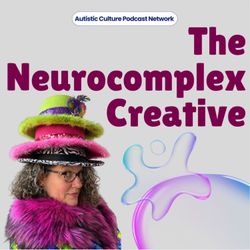
1. The Neurocomplex Creative: I Am a Hat on a Hat on a Hat
34:39||Ep. 1In this solo intro episode, host Vicki Peterson introduces herself, the show, and the question she's sitting with this season: how do I create again — in a way that actually honors who I am — after spending decades doing it in a way that was slowly taking me apart?Vicki is a screenwriter, educator, late-diagnosed autistic person, and recovering perfectionist living with Ehlers-Danlos Syndrome and its many comorbidities. This episode is her origin story — the Hollywood years, the diagnoses, the collapse, the grief, and the decision to rebuild. Out loud. Imperfectly. On generator power.It's also a note on process: why this show uses scripted monologues alongside interviews, why AI tools are part of the workflow, and why the best this host can do today is enough.MENTIONED IN THIS EPISODE:Lindsey Mackereth — therapist, researcher, and founder of the neurocomplexity framework. The term "neuro complex" comes from her work.Lindsey's Substack: https://lindseymackereth.substack.com/The Ehlers-Danlos Society — for more information on EDS and its comorbidities:EDS Society: https://www.ehlers-danlos.com/Hat on a Hat on a Hat (Substack): https://ahatonahatonahat.substack.com/SUPPORT THE SHOWIf this episode resonated with you, share it with someone who might need it.Hat on a Hat on a Hat (Substack): https://ahatonahatonahat.substack.com/Donations are gratefully accepted and help keep this show going at whatever pace is sustainable.Buy Me a Coffee: https://buymeacoffee.com/vickipeterson✍️Subscribe now to hear future episodes.🌈 Celebrate autistic voices with early access, ad-free listening, and our full archive at AutisticCulturePlus.com🌐 Learn more about the network at AutisticCulturePodcastNetwork.com
1. Drinking to Mask and Unmask: Building an Identity You Need Alcohol to Maintain
21:54||Ep. 1What happens when the person you've spent years trying to be turns out to be built around survival rather than authenticity?In this episode, Chelsey Flood is joined by Bre Ransome to explore late diagnosis, drinking culture, and the unsettling experience of discovering that many traits you thought were part of your personality were actually coping strategies. Together they discuss identity, self-understanding, and what happens when long-held assumptions begin to unravel.In this episode:Late diagnosis and self-discoveryAlcohol and social expectationsCoping strategies and identityRethinking the past through a neurodivergent lensContent Note: This episode includes discussion of alcohol use, late diagnosis, and mental health.🎙️ Subscribe now to hear future episodes.🌈 Celebrate autistic voices with early access, ad-free listening, and our full archive at AutisticCulturePlus.com🌐 Learn more about the network at AutisticCulturePodcastNetwork.com
1. Regulation Station: Regulating Two Nervous Systems - Parenting Through Crisis
42:23||Ep. 1In this episode of Regulation Station, Becca Engle is joined by Jillian Eisloeffel, founder of Bobby's World: Profound Autism and parent to an 11-year-old child with high support needs.Together they discuss caregiving, self-injurious behaviours, medical advocacy, and the realities of supporting a child with complex needs. Jillian shares her family's experiences navigating crisis periods, adapting their home for safety, advocating for medical answers, and finding ways to regulate herself while caring for her son.The conversation also explores the challenges families face accessing support, the importance of community, and why understanding the full spectrum of autistic experiences matters.In this episode:Parenting a child with profound autismSelf-injurious behaviours and medical advocacyWhy caregiver regulation mattersCreating safe environments at homeThe realities of school, healthcare, and support systemsFinding community and support as a caregiverBalancing privacy, dignity, and advocacy onlinePractical advice for families navigating difficult seasonsContent Note: This episode includes discussion of self-injurious behaviour, caregiver stress, medical trauma, family challenges, and disability support systems.🚂 Subscribe now to hear future episodes.🌈 Celebrate autistic voices with early access, ad-free listening, and our full archive at AutisticCulturePlus.com🌐 Learn more about the network at AutisticCulturePodcastNetwork.com