Share

Autistic Culture Presents...
Late Diagnosis Club: How Dale Missed His Autism Diagnosis Despite Working in Special Education
In this meeting of The Late Diagnosis Club, Dr Angela Kingdon welcomes Dale Pickles — host of Sendcast and Managing Director of B Squared — for a wide-ranging conversation on late diagnosis, education systems, and what it really means to support neurodivergent people.
Dale shares how he grew up surrounded by special education — yet still missed his own Autism and ADHD. It wasn’t until 2023, prompted by supporting his daughter through her diagnosis journey, that everything finally clicked.
This is a conversation about understanding yourself, supporting the next generation, and rethinking systems that weren’t built for neurodivergent minds.
🪑 Attendees
Chair: Dr Angela Kingdon — Author, community-builder, and Autistic advocate
Guest: Dale Pickles — SEND specialist, podcast host, and Managing Director of B Squared
You: The Listener!
🗒️ Meeting Agenda
- Opening remarks from the Chair
- Member introduction: Family neurodivergence and missed recognition
- Learning social rules and masking
- Late diagnosis through parenting
- Navigating the UK diagnosis system
- Education system challenges and executive function in schools
- SEND reform and needs-led support
- AI and neurodivergent support tools
- Key learnings
- Club announcements
🧾 Minutes from the Meeting
1️⃣ Opening Remarks
Angela introduces Dale Pickles and reflects on how someone can grow up immersed in special education and still miss their own neurodivergence.
2️⃣ Member Introduction: Dale’s Story
Dale grew up in a family deeply connected to special education, yet his own Autism and ADHD were not identified.
Although he recognised he was different, he didn’t feel he met diagnostic criteria. Instead, he developed ways to adapt, learning social rules, structuring his environment, and building a life that worked for him.
His path to diagnosis came later, prompted by supporting his daughter through her own challenges and recognition.
3️⃣ Discussion Highlights
- Missed in plain sight: Growing up around SEND without recognising himself
- Family neurodivergence: Traits present across generations
- Long-term relationships: Building connections through learned skills
- Diagnosis trigger: Supporting his daughter through school struggles
- Self-accommodation: Designing life to reduce friction
- Labels vs reality: Diagnosis doesn’t define ability
- Fail-first system: Support often comes only after crisis
- SEND reform: Moving toward needs-led support
- Early intervention: Preventing long-term harm
- Executive function gap: A missing focus in schools
- AI support: Tools for communication, reflection, and preparation
- Environmental impact: Needs to change depending on context
4️⃣ Key Learnings
- You can build a life that works without knowing why it works.
- Late diagnosis often comes through supporting others.
- Self-accommodation is a powerful but often invisible skill.
- Diagnosis is personal and not always necessary for everyone.
- Education systems often require failure before support.
- Early support can prevent long-term harm and trauma.
- Executive function is a key area often overlooked in schools.
📌 Notice Board
- Dale’s Podcast - https://thesendcast.com/sendcast-episodes/
- Dale’s LinkedIn - www.linkedin.com/in/dalepickles
- Brain in Hand App
📣 Club Announcements
🎧 The Late Diagnosis Club is available on Spotify, Apple Podcasts, and all major platforms.
💬 Join our online meetups and community at latediagnosis.club.
📌 Check the LDC Notice Board for Member Contributions
💜 There is a small charge — but no one is turned away for lack of funds.
🌈 Celebrate autistic voices with early access, ad-free listening, and our full archive at AutisticCulturePlus.com
🌐 Visit www.autisticculturepodcast.com
📲 Follow us on Instagram: @autisticculturepodcast
🎙️ Executive Producers: Amy Burns, Anamaria B Call, Andrew Banner, Anna Goodson, Ashley Apelzin, Audrea Volker, Ben Coulson, Brian Churcek, Cappy Hamper, Carley Biblin, Charlene Deva, Chloe Cross, Clay Duhigg, Clayton Oliver, Danny Dunn, Daria Brown, David Garrido, Emily Burgess, Eric Crane, Erik Stenerud, Fiona Baker, Grace Norman, Helen Shaddock, Jaimie Collins, Jason Killian, Jen Unruh, Jennifer Carpenter, Julia Tretter, Kathie Watson-Gray, Kenneth Knowles, Kira Cotter, Kristine Lang, Kyle Raney, Llew P Williams, Laura Alvarado, Laura De Vito, Laura Provonsha, Lily George, Nelly Darmi, Nigel Rogers, Rachel Miller, Tim Scott, Tyler Kunz, Victoria Steed, Yanina Wood.
🎧 Producers: AJ Knight, Bobby Simon, Da Kovac, Eleanor Collins, Emily Griffiths, Hannah Hughes, Jennifer Kemp, Jonas Fløde, Kate F, Katie N Benitez, Kendra Murphy, Lisa Dennys, Logan Wall, Louise Lomas, Melissa Nance, Nicola Owen, Rebecka Johansson, Sam Morris, Sarah Hannah Morris.
More episodes
View all episodes
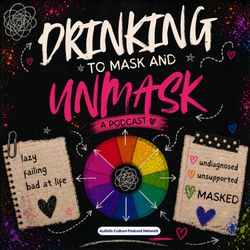
4. Drinking to Mask and Unmask: When the Mask Stops Masking
28:06||Season 8, Ep. 4What happens when the strategies that once helped you survive stop working?Ebony Nash joins Chelsey Flood for a conversation about alcohol, neurodivergence, burnout, and identity. Together they explore the limits of coping strategies, the impact of masking over time, and what it means to build a life that no longer depends on survival mechanisms.In this episode:Alcohol and copingNeurodivergence and identityBurnout and exhaustionLetting go of strategies that no longer serve youFinding a way forwardContent Note: This episode includes discussion of alcohol use and mental health.🎙️ Subscribe now to hear future episodes.🌈 Celebrate autistic voices with early access, ad-free listening, and our full archive at AutisticCulturePlus.com🌐 Learn more about the network at AutisticCulturePodcastNetwork.com
6. Regulation Station: Navigating Life as an AuDHD Therapist
36:49||Season 16, Ep. 6In this episode of Regulation Station, Becca Engle is joined by psychotherapist and Clinically Awkward host Alyssa Zimmerman for a conversation about therapy, neurodivergence, relationships, and what it means to build a life that works with your brain rather than against it.Together they explore the realities of being an AuDHD therapist, the impact of masking and burnout, and the importance of creating environments that support neurodivergent needs. Alyssa shares insights from both her professional practice and personal experiences, discussing everything from executive dysfunction and special interests to dating, boundaries, and self-acceptance. In this episode: Being an AuDHD therapist Creating neurodivergent-friendly work environments Masking, burnout, and identity Executive dysfunction and reducing shame Special interests and hyperfixations Neurodivergence, dating, and relationships Boundaries, communication, and emotional safety Why humour can be an important regulation tool Guest:Alyssa Zimmerman is a New York City-based psychotherapist and the host of Clinically Awkward, a podcast for neurodivergent women, femmes, and thems exploring hyperfixations, identity, and everyday life.Clinically Awkward Podcast 🚂 Subscribe now to hear future episodes.🌈 Celebrate autistic voices with early access, ad-free listening, and our full archive at AutisticCulturePlus.com🌐 Learn more about the network at AutisticCulturePodcastNetwork.com
39. Mindful Mondays With Ashley Dupuy | From Mask to Map: The Neurodivergent Nuance of Curiosity
39:08||Season 7, Ep. 39What changes when we stop trying to force an answer and become genuinely curious about what is happening?In this episode of Mindful Mondays, Ashley explores curiosity as one of the most powerful ways we can shift the context of a difficult moment - moving from frustration, judgement and fixed conclusions into pattern, relationship and possibility.After discovering that she had mentioned curiosity in more than 600 emails to clients, Ashley reflects on why this quality runs so deeply through her work. She shares the deceptively simple moment that brought it all into focus: trying to untangle a knotted wire and suddenly asking:“What is the relationship here?”That question changed the entire experience. The knot became a pattern, her hands began to move more intuitively, and the solution seemed to emerge through a deeper intelligence than conscious effort alone.Through a neurodivergent and From Mask to Map lens, the episode explores how natural curiosity may become hidden beneath masking, how judgement can disguise itself as a question, and why compassionate inquiry helps us see the relationships between our nervous system, environment, beliefs and behaviour.Ashley also introduces three living prompts:What is the relationship here?I’m learning. They’re learning.Where’s the gift?The episode closes with The Living Question, a guided practice using body awareness, breath and imagery to explore how attention changes experience - and how one spacious question can create room for the deeper mind to respond.Perhaps curiosity’s greatest gift is that it allows reality to remain more interesting than our first conclusion.Mindful Mondays is part of The Neurodivergent Experience on the Autistic Culture Podcast Network.Our Sponsors:🧘♀️ Ashley Dupuy – Integrative Coaching, Breathwork & Hypnotherapy🤝 Sophie James - Neurodivergent Mentoring: sophiejamesndmentoring.com🎧 The Neurodivergent Experience is available on Spotify, Apple Podcasts, and all major platforms.⭐ Leave a quick review on Apple Podcasts or Spotify🔔 Turn on notifications for new weekly episodes🌈 Celebrate autistic voices with early access, ad-free listening, and our full archive at AutisticCulturePlus.com🌐 Visit www.autisticculturepodcast.com
6. Theatrically Authentic: Built Like a System — Hamilton
01:02:06||Season 15, Ep. 6In this episode of Theatrically Authentic, Sarah Atherton-Knight and Simon Scott dive deep into Hamilton — the cultural phenomenon that transformed modern musical theatre and became a hyperfixation for an entire generation of neurodivergent fans.From lyrical density and internal rhyme to reprises, motifs, and layered historical storytelling, they explore why Hamilton feels less like a musical… and more like a system built to be decoded. Sarah reflects on her experience working on Hamilton in London’s West End as a member of the sound department, sharing behind-the-scenes insight into learning and mixing one of the most structurally complex musicals ever staged — and how the show shaped both her career and understanding of her own neurodivergence.📢 Subscribe now to hear future episodes.🌈 Celebrate autistic voices with early access, ad-free listening, and our full archive at AutisticCulturePlus.com🌐 Learn more about the network at AutisticCulturePodcastNetwork.com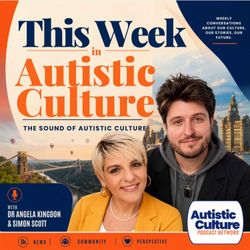
6. This Week in Autistic Culture #6 | Collecting Fish, Spain Win the World Cup & Understanding ARFID
50:38||Ep. 6Welcome to another edition of This Week in Autistic Culture, our Sunday magazine that brings together the stories, conversations, and ideas shaping Autistic culture each week.As Angela is away this week, James Hepworth, host of Collecting Fish and Hyperfocus FC, joins Simon as a guest co-host.We begin with a look back at Collecting Fish, reflecting on the first season and sharing an update on how James’ marine tank is developing. Then we turn to the FIFA World Cup Final, where Spain lifted the trophy while Argentina’s tournament ended in controversy, before looking back at the competition as a whole and what made this year’s tournament so memorable.As always, we’ll also take you through everything coming up this week across the Autistic Culture Podcast Network, with new episodes exploring Hamilton, masking and burnout, therapy, genetics, humour, ARFID, basketball, and much more. Let’s dive in.🎧 Start Here: Autistic Culture Radio: https://open.spotify.com/playlist/0yJ56B3GcrqrlOMS537ve1?si=JxKnd3u_QS6andwrN8yHOA📻 On Air This Week:Monday 27th July:Theatrically Authentic – Episode 6: Built like A System - HamiltonSarah Atherton-Knight and Simon Scott dive deep into Hamilton — the cultural phenomenon that transformed modern musical theatre and became a hyperfixation for an entire generation of neurodivergent fans.Mindful Mondays with Ashley DupuyAshley returns with another mindful reflection and guided meditation to help neurodivergent listeners begin the week with intention and regulation.Tuesday 28th July:Drinking to Mask and Unmask - Episode 4: When the Mask Stops MaskingWhat happens when the strategies that once helped you survive stop working?Ebony Nash joins Chelsey Flood on Drinking to Mask and Unmask for a conversation about alcohol, neurodivergence, burnout, and identity. Together they explore the limits of coping strategies, the impact of masking over time, and what it means to build a life that no longer depends on survival mechanisms.Regulation Station – Episode 6: Navigating Life as an AuDHD TherapistIn this week's episode of Regulation Station, Becca Engle is joined by psychotherapist and Clinically Awkward host Alyssa Zimmerman for a conversation about therapy, neurodivergence, relationships, and what it means to build a life that works with your brain rather than against it.Wednesday 29th July:Clinical Misfits - Episode 4: Collagen Changes EverythingIn the final episode of Clinical Misfits, Dr Mary discusses some genetic conditions that account for a lot of the physical, mental, psychological and behavioural characteristics present in varying degrees in the majority of neurodivergent people. These are largely due to defects in collagen!Two Mics No Masking - Episode 3: Humour as Kryptonite to HierarchyKatie Scott and Jenna Goldstein explore the power of humour as more than entertainment. For many neurodivergent people, laughter can challenge assumptions, expose contradictions, and create connection in ways that words alone often can't.Thursday 30th July:NEW SHOW - Autism Help– Episode 1: ARFID and AutismHeather McKay talks about ARFID in autistic people, and how the current treatments for ARFID actually make our ARFID worse, and cause us to drop safe foods.The Neurodivergent Experience - Episode 121Jordan James and Simon Scott return for a conversation about the Neurodivergent Experience!Friday 31st July:Hot Topic FridayA new discussion from The Neurodivergent Experience team, tackling a fresh topic from the world of neurodivergence.Under The Lights - Episode 2: Top 10 NBA Playoff SeriesTurrell Burgess counts down the greatest NBA Playoff series from a lifetime of watching basketball.📚 From the Archive - Saturday 1st AugustAutistic Culture Podcast Rewind – Sherlock is AutisticRewind with an Autistic Culture Podcast classic, as we investigate Sherlock Holmes as an Autistic-coded cultural icon.Please rate, share and review our shows, as it helps them grow and reach more people! ⭐⭐⭐⭐⭐
Autistic Culture Podcast Rewind - Hans Christen Andersen is Autistic
01:03:46||Season 1In this episode of The Autistic Culture Podcast, hosts Dr. Angela Kingdon and Matt Lowry, LPP reframe Hans Christian Andersen—not as the “awkward, difficult” writer he’s often portrayed to be, but as a figure whose life and work reflect Autistic culture.🎧 What You’ll Learn:How Andersen’s special interests, social struggles, and speech differences align with Autistic traits.Why stories like The Ugly Duckling, The Little Mermaid, and The Princess and the Pea resonate so strongly with Autistic experiences of difference, masking, and sensory sensitivity.How sensory seeking and avoiding show up in both Andersen’s life and his fairytales.Why direct communication, existential loneliness, and intense friendships (like his troubled bond with Charles Dickens) are part of the Autistic lens.Matt’s critique of exposure therapy and why Autistics don’t “habituate” the way allistics do—making sensitivity a trait, not a flaw.Angela’s personal reflection on The Princess and the Pea as a story that validated her own sensitivity and reframed it as special.How Andersen’s work, viewed through Autistic culture, provides representation, validation, and connection across generations.Resources:Complete Works of Hans Christian AndersenHans Christian Andersen CentreA Weird visit to Dickens House: Charles Dickens really, really hated his fanboy Hans Christian Andersen.BLEAK HOUSE GUEST (movie)Dickens Mistress Nelly:Charles Dickens AWESOME Wife CatherineThe Genesis of Artistic Creativity: Asperger's Syndrome and the ArtsWriters on the SpectrumRelated Episodes:Beauty and the Beast is Autistic🌟 Connect With Us📱 Follow us on Instagram🎧 Find us on Apple Podcasts and Spotify🛍️Our Autism-affirming merch shop🌐 Learn more at www.autisticculturepodcast.com
Trailer: Welcome to Autism Help
01:25||Season 19Understanding autism means understanding everything that comes with it.Welcome to Autism Help, a podcast exploring the co-occurring conditions, daily challenges, and practical realities that shape the lives of autistic people and those who support them. Part of the Autistic Culture Podcast Network.Hosted by Heather McKay (she/they)—a late-diagnosed autistic mother of two, educator, company director, and author of Autism: The Big Book Set of Help—the series provides honest, neuroaffirming conversations about topics that are often overlooked, misunderstood, or poorly explained by mainstream services.Drawing on lived experience, years of facilitating support groups, and extensive research, Heather explores subjects including ARFID, executive dysfunction, sleep disorders, fibromyalgia, incontinence, literacy, and supporting multiply-disabled children. Each episode aims to provide practical knowledge, reduce isolation, and help listeners better understand autistic life beyond the diagnostic criteria.Whether you're autistic yourself, a parent, educator, support worker, or healthcare professional, Autism Help offers accessible, evidence-informed conversations grounded in both expertise and lived experience.🎧 Autism help is available on Spotify, Apple Podcasts, and all major platforms.🌈 Celebrate autistic voices with early access, ad-free listening, and our full archive at AutisticCulturePlus.com🌐 Visit www.autisticculturepodcastnetwork.com📲 Follow us on Instagram: @autisticculturepodcast
1. Under The Lights: Top 10 March Madness Moments
29:09||Season 18, Ep. 1In the debut episode of Under the Lights, Turrell Burgess counts down his favourite March Madness moments from a lifetime of watching the NCAA Men's Basketball Tournament. From unforgettable buzzer-beaters and stunning Cinderella runs to shocking upsets and championship drama, this is a celebration of the games that became part of college basketball history.Whether you've followed the tournament for decades or you're discovering March Madness for the first time, Turrell revisits the moments that captured the imagination of fans and explains why they still stand out today.🏀 Subscribe now to hear future episodes.🌈 Celebrate autistic voices with early access, ad-free listening, and our full archive at AutisticCulturePlus.com🌐 Learn more about the network at AutisticCulturePodcastNetwork.com
Hot Topic: Zinc and ADHD - Could It Really Make a Difference?
22:33||Season 6Could a simple zinc supplement help with ADHD symptoms?In this Hot Topic, Jordan shares his personal experience after taking zinc for over two months, while Simon explores the latest research into zinc, dopamine and brain health. They discuss what the science says, how zinc may support ADHD alongside medication, and why it's no replacement for medical advice—plus plenty of laughs along the way.Our Sponsors:🧘♀️ Ashley Dupuy – Integrative Coaching, Breathwork & Hypnotherapy🤝 Sophie James - Neurodivergent Mentoring: sophiejamesndmentoring.com🔗 Stay ConnectedInstagram: @theneurodivergentexperiencepodFacebook: The Neurodivergent Experience & Jordan's Facebook pageYouTube: @TheNeurodivergentExperienceTikTok: @neurodivergentexperience🎧 The Neurodivergent Experience is available on Spotify, Apple Podcasts, and all major platforms.⭐ Leave a quick review on Apple Podcasts or Spotify🔔 Turn on notifications for new weekly episodes🌈 Celebrate autistic voices with early access, ad-free listening, and our full archive at AutisticCulturePlus.com🌐 Visit www.autisticculturepodcast.com