Share
Autistic Culture Presents...
Info Dump: Music Composition
Aaron Wyatt joins Hannah Brockway to explore the art of music composition, sharing how his passions for composing, conducting and computer programming have shaped his career.
Together they discuss Aaron's work developing the Decibel ScorePlayer app, composing and performing contemporary classical music, and the creative possibilities that emerge when music and technology come together. The conversation also explores the growing recognition of Indigenous Australian classical music and the importance of using composition to tell stories, preserve culture and inspire audiences.
Find out more:
🎼 Decibel: https://decibelnewmusic.com/
🎓 Aaron Wyatt's research profile: https://research.monash.edu/en/persons/aaron-wyatt/
🖤 Reconciliation Australia – Voice to Parliament: https://www.reconciliation.org.au/support-a-voice-to-parliament/
📺 Spicks and Specks: https://www.youtube.com/playlist?list=PLsPVOdZ3LN6elvOMcOt4bbyYrhQXugyfS
Instagram: https://www.instagram.com/house_elf_hannah/
https://www.instagram.com/hannah_unmasked/
eBook: https://play.google.com/store/books/details/Hannah_Brockway_A_Cautionary_Tale?id=VeAHEQAAQBAJ&pli=1
Book: https://www.amazon.com.au/Cautionary-Tale-Hannah-Brockway/dp/0648399915
Blogs:
https://reframingautism.org.au/masking-for-survival-my-life-as-a-sleeper-agent/
https://reframingautism.org.au/autism-and-eating-disorders-a-dangerous-duo/
https://lifestoriesdiary.com/2024/07/01/autism-and-anorexia-the-difference-a-diagnosis-makes/
https://www.edneuroaus.com/post/hannah-part-1
https://www.edneuroaus.com/post/hannah-part-2
Produced for the Autistic Culture Podcast Network.
🎧 Info Dump is available on Spotify, Apple Podcasts, and all major platforms.
🌈 Celebrate autistic voices with early access, ad-free listening, and our full archive at AutisticCulturePlus.com
🌐 Visit www.autisticculturepodcastnetwork.com
📲 Follow us on Instagram: @autisticculturepodcast
🎙️ Executive Producers: Amy Burns, Anamaria B Call, Andrew Banner, Anna Goodson, Ashley Apelzin, Audrea Volker, Ben Coulson, Brian Churcek, Cappy Hamper, Carley Biblin, Charlene Deva, Chloe Cross, Clay Duhigg, Clayton Oliver, Danny Dunn, Daria Brown, David Garrido, Emily Burgess, Eric Crane, Erik Stenerud, Fiona Baker, Grace Norman, Helen Shaddock, Jaimie Collins, Jason Killian, Jen Unruh, Jennifer Carpenter, Julia Tretter, Kathie Watson-Gray, Kenneth Knowles, Kira Cotter, Kristine Lang, Kyle Raney, Llew P Williams, Laura Alvarado, Laura De Vito, Laura Provonsha, Lily George, Nelly Darmi, Nigel Rogers, Rachel Miller, Tim Scott, Tyler Kunz, Victoria Steed, Yanina Wood.
🎧 Producers: AJ Knight, Bobby Simon, Da Kovac, Eleanor Collins, Emily Griffiths, Hannah Hughes, Jennifer Kemp, Jonas Fløde, Kate F, Katie N Benitez, Kendra Murphy, Lisa Dennys, Logan Wall, Louise Lomas, Melissa Nance, Nicola Owen, Rebecka Johansson, Sam Morris, Sarah Hannah Morris.
More episodes
View all episodes
1. Autistic Standpoint Theory: We Have Existed. We Will Exist
02:04:56||Season 24, Ep. 1In the first episode of Autistic Standpoint Theory, Isha Snow is joined by Dani Stephens to explore what changes when neurodivergent people begin to understand themselves — and are finally given the support they need to succeed.Dani shares their journey through ADHD and autism identification, navigating university as a neurodivergent student, and the difference that access to accommodations has made to their education. Together, they discuss burnout, disability support, inaccessible systems and what happens when struggles previously understood as personal failings are viewed through a neurodivergent lens.They also explore the importance of finding community. Inspired by Isha's own peer support work, Dani created a neurodivergent social group at Washington State University that became a registered student club.From discovering a new understanding of yourself to building spaces where others can belong, this conversation asks what becomes possible when neurodivergent people are supported rather than expected to become someone else.Autistic Standpoint Theory is part of the Autistic Culture Podcast Network.🎧 Autistic Standpoint Theory is available on Spotify, Apple Podcasts, and all major platforms.🌈 Celebrate autistic voices with early access, ad-free listening, and our full archive at AutisticCulturePlus.com🌐 Visit www.autisticculturepodcastnetwork.com📲 Follow us on Instagram: @autisticculturepodcast
3. The Still Growing Up Film Club: How to Survive the Zombie Apocalypse – or Any Day – with Zombieland
35:05||Season 23, Ep. 3What can surviving a zombie apocalypse teach us about surviving everyday life?In this episode of The Still Growing Up Film Club, Cece Fanning takes an unconventional coming-of-age trip into Zombieland, following Columbus, Tallahassee, Wichita and Little Rock through a world where staying alive requires rules, resilience, courage — and occasionally a desperate search for a Twinkie.Using Columbus's famous survival rules as a starting point, Cece explores our need for structure and predictability, the comfort of self-imposed rules, and what happens when keeping ourselves safe begins to get in the way of actually living. Through a neurodivergent lens, she reflects on anxiety, hypervigilance, vulnerability, finding safe people and the complicated process of learning when to trust ourselves enough to take a risk.But survival is only part of the story. Zombieland is also about finding your people, knowing what keeps you going, doing things even when you're scared, enjoying the little things and making room for fun when life feels overwhelming.Because sometimes the rules that keep us safe are exactly what we need. And sometimes growing means knowing when it's okay to break them.Follow Cece:📸 Instagram: https://www.instagram.com/thenotoriouscece📱 TikTok: https://www.tiktok.com/@thenotoriouscece✍️ Blog: https://cecewhatimean.com/🛍️ Store: https://stillgrowinguppodcast.dashery.com/Produced for the Autistic Culture Podcast Network.🎧 The Still Growing Up Film Club is available on Spotify, Apple Podcasts, and all major platforms.🌈 Celebrate autistic voices with early access, ad-free listening, and our full archive at AutisticCulturePlus.com🌐 Visit www.autisticculturepodcastnetwork.com📲 Follow us on Instagram: @autisticculturepodcast
13. This Week in Autistic Culture #13 | Elizabeth Holmes, Armchair Diagnosis and Autistic Standpoints
57:53||Ep. 13Welcome to another edition of This Week in Autistic Culture, our Sunday magazine podcast that brings together the stories, conversations and ideas shaping Autistic culture each week.This week, Angela and Simon dive into the unexpected new Elizabeth Holmes documentary You Can See Everything, created by Nathan Fielder and Lance Oppenheim. From Fielder’s famously awkward interviewing style and fascination with aviation to Holmes’ carefully constructed public persona, routines and intense eye contact, they explore the Autistic traits they recognise in both figures — and what happens when we look at familiar cultural stories through an Autistic lens.That conversation also raises a bigger question about so-called “armchair diagnosis”. Is there a difference between diagnosing somebody and recognising Autistic traits in another person? And why can simply suggesting that somebody might be Autistic provoke such a strong reaction? Angela and Simon consider whether some of that discomfort reveals more about the stigma still attached to autism than the act of recognising those traits itself.As always, we’ll also take you through everything coming up across the Autistic Culture Podcast Network this week, including the launch of Isha Snow’s Autistic Standpoint Theory, alongside new episodes exploring Zombieland, friendship and creativity, nervous-system regulation, Neurodivergent tales from Reddit, Alfred Kinsey and a joyful deep dive into the world of Pokémon.Plus, we head to the Community Notice Board for books, events and opportunities from across the wider Autistic community.📌 Community NoticeboardThe Community Noticeboard is your space to share what’s happening across autistic culture. Whether you’re launching a book, hosting an event, releasing a podcast, starting a creative project, celebrating a milestone, or have something you’d like the community to know about, we’d love to hear from you.Send your announcements, links and updates to autisticculturepodcast@gmail.com, and we’ll feature as many as we can in a future edition of This Week in Autistic Culture.This Week’s Topics:New Nathan Fielding/Lance Oppenheim releasing Elizabeth Holmes surprise movieIf you don’t know Nathan Fielding, watch this: https://www.youtube.com/watch?v=_8AYmVyIFscElizabeth Holmes podcast - https://podcasts.apple.com/us/podcast/the-dropout/id1449500734Matt Lucas has publicly shared for the first time that he is autistic, disclosing while speaking to Romesh Ranganathan on BBC Radio 2.Books and Research:Burning The Behaviorist Blueprint by Scott R Frasard, PhDEvents:XMTR.FM/FESTIVAL - Annual Audio Arts Festival in St Leonards-on-Sea. 25th-27th September 2026📻 Listen to Autistic Culture Radio🌈 Celebrate autistic voices with early access, ad-free listening, and our full archive at AutisticCulturePlus.com🌐 Visit www.autisticculturepodcastnetwork.com📲 Follow us on Instagram: @autisticculturepodcast
24. Mindful Mondays With Ashley Dupuy: How Gratitude Rewires the Neurodivergent Brain
33:40||Season 7, Ep. 24If the word gratitude has ever made you roll your eyes, this episode is for you.This isn’t about toxic positivity or pretending everything is fine. It’s about neuroscience.In this episode, Ashley explores how gratitude reshapes your Reticular Activating System (RAS) — the brain’s internal filter that decides what gets noticed. For neurodivergent nervous systems wired for intensity, pattern recognition, and threat detection, that filter can easily become tuned toward what’s overwhelming or missing.Gratitude, practised intentionally, becomes a neural training practice.You’ll learn how negativity bias and modern media hijack your attention, why simply searching for something to appreciate changes your brain, and how a simple six-week challenge can gently retrain your inner lens.This is grounded, science-backed, and fully relevant to the lived experience of neurodivergence.Gratitude isn’t naive.It’s neural.Our Sponsors:🧘♀️ Ashley Dupuy – Integrative Coaching, Breathwork & Hypnotherapy & https://insighttimer.com/AshleyDupuy🤝 Sophie James - Neurodivergent Mentoring: sophiejamesndmentoring.com🎧 The Neurodivergent Experience is available on Spotify, Apple Podcasts, and all major platforms.🌈 Celebrate autistic voices with early access, ad-free listening, and our full archive at AutisticCulturePlus.com🌐 Visit www.autisticculturepodcast.com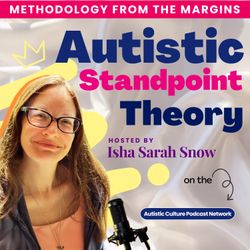
Trailer: Welcome to Autistic Standpoint Theory
01:26||Season 24What changes when Autistic people aren't simply the subjects of knowledge — but the people producing it?Autistic Standpoint Theory is a new podcast hosted by researcher and author Isha Snow, exploring how Autistic experience can offer a distinct way of understanding ourselves, each other and the systems around us.Hosted by researcher and author Isha Snow, Isha is joined by Autistic thinkers, researchers and advocates for conversations spanning Autistic history, identity and culture, religious trauma, the Double Empathy Problem, epistemic injustice and the systems that shape whose knowledge gets recognised.Drawing on decolonial theory, attachment science, and the Double Empathy Problem, the show builds a rigorous, accessible framework for understanding neurodivergence not as a deficit, but as a legitimate standpoint, for listeners who are done being explained and ready to explain.🎧 Autistic Standpoint Theory is available on Spotify, Apple Podcasts, and all major platforms.🌈 Celebrate autistic voices with early access, ad-free listening, and our full archive at AutisticCulturePlus.com🌐 Visit www.autisticculturepodcastnetwork.com📲 Follow us on Instagram: @autisticculturepodcast
Autistic Culture Podcast Rewind - Andy Warhol is Autistic
01:08:16|In this episode of The Autistic Culture Podcast, hosts Dr. Angela Kingdon and Matt Lowry, LPP dive into the life and legacy of Andy Warhol, one of the most influential artists of the 20th century, exploring his story through the lens of Autistic culture.🎧 What You’ll Learn:The Autistic traits visible in Warhol’s life—monotropic focus, echolalia in interviews, sensory differences with food, dyslexia, and obsessive collecting.How Warhol embraced repetition and visual thinking in his iconic works (Campbell’s soup cans, celebrity portraits) in ways that resonate deeply with autistic patterns of creativity and comfort.The role of costume parties as safe, structured spaces for Warhol and his guests to connect authentically while bypassing small talk.Warhol’s careful balance of masking and authenticity, including his downplayed public queerness and art-world outsider identity.How his “safe foods”—the limited, comforting diet he stuck to after being shot—paralleled the way autistic people rely on safe foods for regulation.The joy and validation of collecting trinkets and objects, which Warhol leaned into as a creative and personal practice.Why society labeled him “eccentric” instead of recognizing his communication and creative methods as Autistic strengths.The enduring power of his art to reflect neurodivergent ways of seeing the world—down to the detail of wearing the same brand of underwear every single day.Resources:Was autism the secret of Warhol's art?'Andy Warhol' (NY Times)Will We Ever Really Know Who Andy Warhol Was? A New Docuseries Digs Into His Private LifeAndy Warhol Eating a HamburgerAndy Warhol & Edie Sedgwick INTERVIEW 1965Related episodes:Questlove is AutisticPoetry is AutisticEminem is Autistic🌟 Connect With Us📱 Follow us on Instagram🎧 Find us on Apple Podcasts and Spotify🛍️Our Autism-affirming merch shop🌐 Learn more at www.autisticculturepodcast.com
127. The Neurodivergent Experience: Should I Date Someone With a Cognitive Disability? | Reddit Stories
01:24:36||Season 5, Ep. 127In this week's Reddit Stories episode, Jordan and Simon discuss four neurodivergent dilemmas shared by the online community.They begin with a disabled woman whose parents complain about having to drive her places despite doctors advising her not to drive. Jordan and Simon discuss autism, ADHD, disability, independence, family expectations and the difficult balance between needing support and finding ways to build autonomy.Next, a man considers ending a new relationship after the woman he's dating reveals she has a cognitive disability. They explore disability and dating, assumptions about someone's capabilities, hyperfixation, emotional intensity, guilt, masking and whether fear about becoming someone's carer is enough reason to walk away.Then, a drunken student pretends to have a speech impediment after a doorman refuses to let him back into a bar to retrieve his keys and student ID. Jordan and Simon debate impulsivity, disability as an excuse, drunken decision-making and whether the lie was justified when it ultimately got him his belongings back.Finally, an autistic man becomes overwhelmed and leaves a family dinner in tears after accidentally spilling his drink. Jordan and Simon discuss autistic overwhelm, shutdowns, RSD, catastrophising, masking, social expectations and how changing the environment can make meeting a partner's family far more manageable.*The stories discussed in this episode are public Reddit posts. Titles may be shortened for readability, and all opinions expressed are those of the original posters.• AITA I told my parents they birthed a disabled child so they just have to live with it.• I (25M) matched with a woman (24F) who later told me she has a cognitive disability• AITA for pretending to have a speech impediment?• My(18F) boyfriend (19M) (has autism) had a breakdown when we are at my family's house for dinner. My parents are understanding but he feels to nervous to face them againOur Sponsors:🧘♀️ Ashley Dupuy – Integrative Coaching, Breathwork & Hypnotherapy & https://insighttimer.com/AshleyDupuy🤝 Sophie James - Neurodivergent Mentoring: sophiejamesndmentoring.com🎧 The Neurodivergent Experience is available on Spotify, Apple Podcasts, and all major platforms.🌈 Celebrate autistic voices with early access, ad-free listening, and our full archive at AutisticCulturePlus.com🌐 Visit www.autisticculturepodcast.com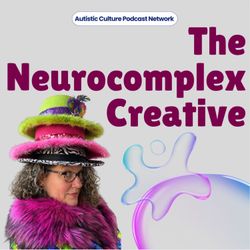
5. The Neurocomplex Creative: Going Off Script
29:52||Season 11, Ep. 5Creating again means going off script — in a lot of other people's stories — in order to claim your own.In the Season Two premiere of The Neurocomplex Creative, Vicki Peterson reflects on what it actually takes to create while recovering from autistic burnout and living with chronic illness. From working in "low battery mode" to creating from a recliner, she explores what happens when conventional expectations around productivity no longer fit your brain or body.Vicki examines masking, late diagnosis and the process of stitching together the different versions of ourselves we've developed throughout our lives. At the heart of the episode is the double bind of being a neurocomplex creative: when creating is fundamental to your identity and purpose, but the work itself can exceed your available capacity.Through burnout recovery, friendship and rediscovering the silly, theatrical parts of herself, Vicki finds something worth building towards — autistic joy, and a creative life designed around who she actually is. Plus, she introduces some of the friends and family joining her throughout Season Two.📝 Go deeper on Substack:https://ahatonahatonahat.substack.com/☕ Support the show:https://buymeacoffee.com/vickipeterson🎧 The Neurocomplex Creative is available on Spotify, Apple Podcasts, and all major platforms.🌈 Celebrate autistic voices with early access, ad-free listening, and our full archive at AutisticCulturePlus.com🌐 Visit www.autisticculturepodcastnetwork.com📲 Follow us on Instagram: @autisticculturepodcast