Share
Autistic Culture Presents...
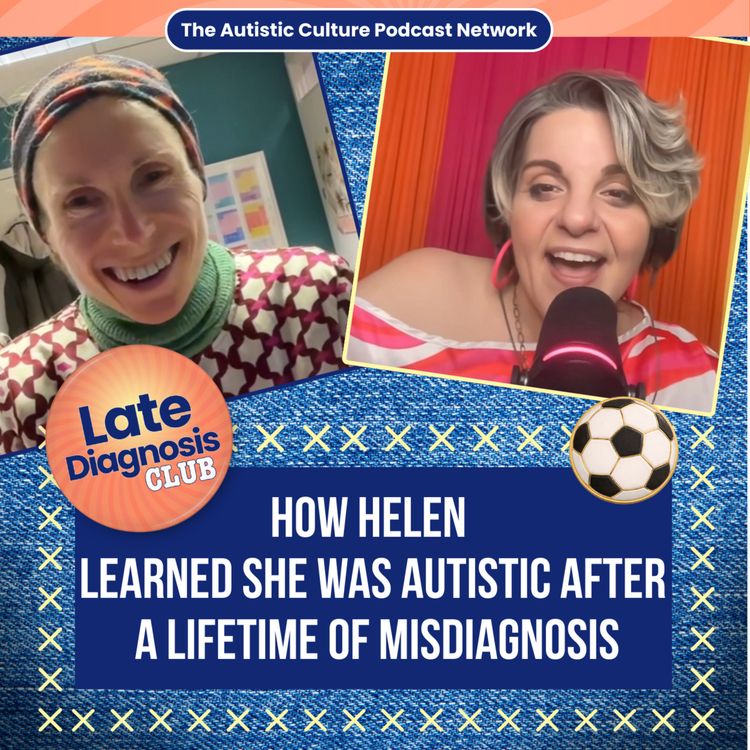
Late Diagnosis Club: How Helen Learned She Was Autistic After a Lifetime of Misdiagnosis
In this meeting of The Late Diagnosis Club, Dr Angela Kingdon welcomes Helen Shaddock, a multidisciplinary artist, writer, and PhD researcher whose work explores autism, eating distress, OCD, and healing through creativity.
Helen was diagnosed with anorexia at 13 and spent the next 25 years moving through eating-disorder pathways that never fully explained her experience. It wasn’t until her late 30s — after years of treatment, physical injury, and burnout — that an occupational therapist recognised what others had missed: Helen was Autistic.
Helen and Angela explore the long overlap between eating distress, OCD, and autism, how Autistic regulation was repeatedly misread as pathology, and how late diagnosis reframed decades of self-blame. Helen shares her experiences around interoception, stimming, routine, sensory regulation, and the difference between Autistic eating and eating disorder treatment.
This episode is also about creative becoming — how art, writing, and storytelling can be tools for survival, meaning-making, and identity reconstruction.
🪑 Attendees
Chair: Dr Angela Kingdon — Author, community-builder, and Autistic advocate
Guest: Helen Shaddock — Autistic multidisciplinary artist, writer, and PhD researcher
You: The Listener!
🗒️ Meeting Agenda
- Opening remarks from the Chair
- Member introduction: Autism missed across treatment pathways
- CBT, clinical harm, and misinterpretation of Autistic regulation
- Autistic eating vs eating disorder frameworks
- Burnout, grief, and late autism recognition
- Creative becoming through art and storytelling
- Key learnings
- Club announcements
🧾 Minutes from the Meeting
1️⃣ Opening Remarks
Angela welcomes Helen as a long-standing member of the LDC community and frames the conversation around storytelling, creativity, and late recognition. This meeting emphasises intimacy and pacing — meeting one another “one at a time,” in a way that feels distinctly Autistic.
2️⃣ Member Introduction: Helen’s Story
Helen was diagnosed with anorexia at 13 and spent her adolescence and adulthood navigating eating-disorder treatment, CBT, and medical surveillance.
Many Autistic traits, including routine, stimming, sensory sensitivity, and the need for predictability, were interpreted as pathology rather than regulation.
She experienced chronic fatigue in early adolescence, missed significant periods of school, and was bullied. Later injuries, stress fractures, and physical complications were consistently attributed to anorexia, obscuring the role of autism and interoceptive differences.
3️⃣ Discussion Highlights
- 25 years missed: Autism identified at 38 after decades of eating-disorder treatment
- Misinterpretation: Autistic stimming and regulation framed as calorie-burning or compulsion
- Interoception: Pain, hunger, and bladder signals go unnoticed until extreme
- Routine & safety: The difference between Autistic eating and eating distress
- Grief: Mourning the support that could have existed earlier
- Language shift: Choosing “eating distress” over “eating disorder”
- Creative becoming: Identity as fluid, evolving, and reconstructed through art
- ArtEd: Digital storytelling, visual diaries, and community zines
4️⃣ Key Learnings
- Eating distress can mask autism — and vice versa
- Late diagnosis can dissolve decades of self-blame
- Autistic regulation is often misunderstood as a disorder
- Creativity is not a luxury — it is a survival tool
- Community reduces isolation and restores dignity
📌 Notice Board
📣 Club Announcements
🎧 The Late Diagnosis Club is available on Spotify, Apple Podcasts, and all major platforms.
💬 Join our online meetups and community at latediagnosis.club.
📌 Check the LDC Notice Board for Member Contributions
💜 There is a small charge — but no one is turned away for lack of funds.
🌈 Celebrate autistic voices with early access, ad-free listening, and our full archive at AutisticCulturePlus.com
🌐 Visit www.autisticculturepodcast.com
📲 Follow us on Instagram: @autisticculturepodcast
🎙️ Executive Producers: Amy Burns, Anamaria B Call, Andrew Banner, Anna Goodson, Ashley Apelzin, Audrea Volker, Ben Coulson, Brian Churcek, Cappy Hamper, Carley Biblin, Charlene Deva, Chloe Cross, Clay Duhigg, Clayton Oliver, Danny Dunn, Daria Brown, David Garrido, Emily Burgess, Eric Crane, Erik Stenerud, Fiona Baker, Grace Norman, Helen Shaddock, Jaimie Collins, Jason Killian, Jen Unruh, Jennifer Carpenter, Julia Tretter, Kathie Watson-Gray, Kenneth Knowles, Kira Cotter, Kristine Lang, Kyle Raney, Llew P Williams, Laura Alvarado, Laura De Vito, Laura Provonsha, Lily George, Nelly Darmi, Nigel Rogers, Rachel Miller, Tim Scott, Tyler Kunz, Victoria Steed, Yanina Wood.
🎧 Producers: AJ Knight, Bobby Simon, Da Kovac, Eleanor Collins, Emily Griffiths, Hannah Hughes, Jennifer Kemp, Jonas Fløde, Kate F, Katie N Benitez, Kendra Murphy, Lisa Dennys, Logan Wall, Louise Lomas, Melissa Nance, Nicola Owen, Rebecka Johansson, Sam Morris, Sarah Hannah Morris.
More episodes
View all episodes
5. The Neurocomplex Creative: Going Off Script
29:52||Season 11, Ep. 5Creating again means going off script — in a lot of other people's stories — in order to claim your own.In the Season Two premiere of The Neurocomplex Creative, Vicki Peterson reflects on what it actually takes to create while recovering from autistic burnout and living with chronic illness. From working in "low battery mode" to creating from a recliner, she explores what happens when conventional expectations around productivity no longer fit your brain or body.Vicki examines masking, late diagnosis and the process of stitching together the different versions of ourselves we've developed throughout our lives. At the heart of the episode is the double bind of being a neurocomplex creative: when creating is fundamental to your identity and purpose, but the work itself can exceed your available capacity.Through burnout recovery, friendship and rediscovering the silly, theatrical parts of herself, Vicki finds something worth building towards — autistic joy, and a creative life designed around who she actually is. Plus, she introduces some of the friends and family joining her throughout Season Two.📝 Go deeper on Substack:https://ahatonahatonahat.substack.com/☕ Support the show:https://buymeacoffee.com/vickipeterson🎧 The Neurocomplex Creative is available on Spotify, Apple Podcasts, and all major platforms.🌈 Celebrate autistic voices with early access, ad-free listening, and our full archive at AutisticCulturePlus.com🌐 Visit www.autisticculturepodcastnetwork.com📲 Follow us on Instagram: @autisticculturepodcast
4. Autistic Menopause: Surviving Autistic Menopause
45:48||Season 22, Ep. 4Autistic people are often told that independence is the goal. But what happens when menopause changes what you can do, what you can tolerate, and how much support you need?In this episode, Sam Galloway (she/her) explores the reality of changing support needs during autistic menopause. Drawing on her own experiences of severe perimenopause, cognitive regression, chronic pain, medical gaslighting, suicidal ideation, and surgical menopause, she examines what happens when lifelong coping strategies stop working.Sam discusses the barriers that prevent autistic adults from seeking support, including masking, internalised ableism, trauma, and societal expectations around independence. She also shares the practical accommodations, medical interventions, community supports, and mindset shifts that helped her survive one of the most difficult periods of her life.This episode is a reminder that support is not failure, accommodation is not cheating, and quality of life matters at every age.Content Warning: This episode includes frank discussion of mental health crisis and suicidal thoughts, alongside experiences of autistic burnout, medical care, chronic pain, and menopause. Please take care while listening and skip any sections that may be difficult for you.Resources mentioned or relevant:📋 Canadian Occupational Performance Measure (COPM)🌐 Divergent Menopause community and newsletter📖 MENO-D – A rating scale to detect depression in menopause🌿 Australasian Menopause Society📚 Autistic Menopause – A Guide to the Menopausal Transition for Autistic People and those Supporting Them by Dr. Rachel Moseley and Professor Gamble-Turner (2026)📄 Resources for autistic (/neurodivergent) women and people with ovaries at menopause – Dr. Rachel Moseley and Professor Julie Gamble-Turner, Bournemouth University📱 Balance – menopause symptom tracking and information from menopause specialist Dr. Louise NewsonContinue the conversation:Find Sam at Divergent Menopause for essays, research updates, practical reflections, and stories from the neurodivergent menopause community.Every article is free to read. Paid subscriptions operate as a patron model and help fund the advocacy, research translation, and community work behind Divergent Menopause.🌐 https://samgallowayaudhd.substack.com/☕ Support Sam's work: https://buymeacoffee.com/samgallowayProduced for the Autistic Culture Podcast Network.🎧 Autistic Menopause is available on Spotify, Apple Podcasts, and all major platforms.🌈 Celebrate autistic voices with early access, ad-free listening, and our full archive at AutisticCulturePlus.com🌐 Visit www.autisticculturepodcastnetwork.com📲 Follow us on Instagram: @autisticculturepodcast
2. The Still Growing Up Film Club: How to Be Royalty with The Princess Diaries
46:44||Season 23, Ep. 2What does it actually mean to become the person you're capable of being — without losing the person you already are?In this episode of The Still Growing Up Film Club, Cece Fanning revisits the beloved coming-of-age classic The Princess Diaries and Mia Thermopolis's unexpected journey from invisible teenager to Princess of Genovia.Through princess lessons, makeovers, friendship fallouts, embarrassing mistakes and one very important royal decision, Cece explores what Mia's story can teach us about identity, confidence, courage and finding our own voice. She considers the difference between changing to meet other people's expectations and allowing ourselves to grow in ways that genuinely feel right.Cece also looks at The Princess Diaries through a neurodivergent lens, reflecting on the parts of Mia she finds particularly relatable — from literal thinking and feeling awkward or out of place to the struggle of stepping outside an identity other people have prescribed for us.Because becoming more confident doesn't have to mean becoming somebody else. Sometimes growing up is about discovering that you can change, make mistakes, ask for help and still remain entirely yourself.Follow Cece:📸 Instagram: https://www.instagram.com/thenotoriouscece📱 TikTok: https://www.tiktok.com/@thenotoriouscece✍️ Blog: https://cecewhatimean.com/🛍️ Store: https://stillgrowinguppodcast.dashery.com/Produced for the Autistic Culture Podcast Network.🎧 The Still Growing Up Film Club is available on Spotify, Apple Podcasts, and all major platforms.🌈 Celebrate autistic voices with early access, ad-free listening, and our full archive at AutisticCulturePlus.com🌐 Visit www.autisticculturepodcastnetwork.com📲 Follow us on Instagram: @autisticculturepodcast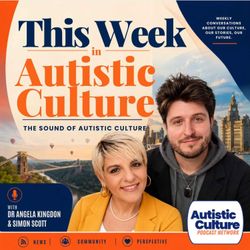
12. This Week in Autistic Culture #12 | Finding Your People, Synaptic Pruning and Neurocomplex Creativity
55:22||Ep. 12Welcome to another edition of This Week in Autistic Culture, our Sunday magazine podcast that brings together the stories, conversations and ideas shaping Autistic culture each week.This week, Angela and Simon explore what it means to find your people, after a story from Boomtown Festival about an Autistic festivalgoer who arrived alone and left with a whole new group of friends. Simon reflects on his own experiences of finding community through music festivals, and how a muddy field in Leeds became one of the first places he experienced neurodivergence without deficit.They also dive into new research using lab-grown brain models to study differences in synaptic pruning, and the uncomfortable questions raised when understanding Autistic brains becomes intertwined with attempts to change them. If science could one day offer a pill that altered the neurological differences associated with autism, would we want it? And where would improving someone’s quality of life end and changing who they are begin?As always, we’ll also take you through everything coming up across the Autistic Culture Podcast Network this week, including the return of The Neuro Complex Creative for its second season, new episodes exploring the Kākāpō, The Princess Diaries, Autistic menopause, burnout, Neurodivergent tales on Reddit and Andy Warhol.Plus, we head to the Community Notice Board for books, events and opportunities from across the wider Autistic community.📌 Community NoticeboardThe Community Noticeboard is your space to share what’s happening across autistic culture. Whether you’re launching a book, hosting an event, releasing a podcast, starting a creative project, celebrating a milestone, or simply have something you’d like the community to know about, we’d love to hear from you.Send your announcements, links and updates to autisticculturepodcast@gmail.com, and we’ll feature as many as we can in a future edition of This Week in Autistic Culture.This Week’s Topics: Strangers at festival help autistic man realise dreamLargest ever ‘map’ of autism may hold clues for new targeted therapiesBooks and Research:Focus: The ADHD guide to productivity - by ADHD experts and co-hosts of the popular ADHD Adults podcast, Professor James Brown and Sam BrownFocus Pocus: A Parent’s Guide to Fostering Concentration, Resilience, and Academic Achievement in a Distracted World - by Nancy Howes, MEdEvents:Angela’s guest appearance on the ‘Every Day's a Train Wreck’ podcastDivergent Doodler’s Symposium - Recovery College Collective Newcastle upon Tyne, England - Wednesday, September 9 • 5:30 PM - 7:30 PMBuilding Our Resilience Course with Joe Lenton - NeuroHub Community Ltd - Starts Sunday, September 6th - 6 to 7 pm - Pay what you canTransitions, Change & Uncertainty - Choose Your Way ND BrainSpace - Tuesday, September 8th - 12 to 1 pm - FreeBeyond RSD: Building Confidence as a Neurodivergent Business Owner with Suzi Payton - Inclusion Support Hub - Wednesday, September 9th - 2 to 3 pm - Free📻 Listen to Autistic Culture Radio🌈 Celebrate autistic voices with early access, ad-free listening, and our full archive at AutisticCulturePlus.com🌐 Visit www.autisticculturepodcastnetwork.com📲 Follow us on Instagram: @autisticculturepodcast
44. Mindful Mondays With Ashley Dupuy: From Mask to Map | The Neurodivergent Nuance of Psychedelics
34:39||Season 7, Ep. 44This week marks one full year of Mindful Mondays! And to celebrate, we're going somewhere a little adventurous: the growing research into psychedelics, neuroplasticity, and what it might mean for neurodivergent minds. Ashley explores the idea of a "slow psychedelic" - how From Mask to Map's substance-free process can offer a slower, more integrated version of the revelation psychedelics can provide in a single night. Plus: emerging research on psychedelics and neurodivergence (including autism and ADHD), a few honest words on due diligence, and a brand-new guided practice, Meeting What You Carry.In this episode:- The origin of the word "psychedelic" - and the more poetic meaning behind its Greek roots- Why psychedelic experiences can feel so revealing, and what neuroscience says about prediction, filtering, and neuroplasticity- The "slow psychedelic": how From Mask to Map's Aware, Allow, Align process works without substances- What's genuinely known so far about psychedelics and neurodivergence, including autism and ADHD research- A few honest words on due diligence and care- A guided practice: Meeting What You CarryLinks & resources:From Mask to Map - founding cohort begins 15 September, ten places: integrativeiom.co.uk/from-mask-to-mapAshley's psychedelic and mental-health series on Tenacious Be: https://youtu.be/HKrEN6-3-r4?si=F9687B3CbrsBOcH7 - the show itself is also on Spotify and Apple PodcastsNext week: revisiting a favourite from the archive - Episode 24, How Gratitude Rewires the Neurodivergent BrainOur Sponsors:🧘♀️ Ashley Dupuy – Integrative Coaching, Breathwork & Hypnotherapy🤝 Sophie James - Neurodivergent Mentoring: sophiejamesndmentoring.com🎧 The Neurodivergent Experience is available on Spotify, Apple Podcasts, and all major platforms.🌈 Celebrate autistic voices with early access, ad-free listening, and our full archive at AutisticCulturePlus.com🌐 Visit www.autisticculturepodcast.com
6. Info Dump: The Kākāpō
40:54||Season 20, Ep. 6Krista joins Hannah Brockway to share her passion for the kākāpō, New Zealand's critically endangered flightless parrot, and the remarkable conservation efforts helping to bring the species back from the brink of extinction.Together they explore what makes the kākāpō so unique, from its unusual behaviours and breeding habits to the challenges of protecting such a vulnerable species. Krista also shares how this extraordinary bird has inspired her own creative projects and why celebrating wildlife can be just as rewarding as helping to protect it.Find out more:🦜 Sarah May Little: https://www.instagram.com/sarahmaylittle?igsh=bXBjMDk1dzZyamI3📸 Krista: https://www.instagram.com/skrarks.and.recreation/🌿 Kākāpō Recovery: https://www.instagram.com/kakapo_recovery?igsh=eXAxYTBld2ZiN2Rk🌐 Kākāpō Recovery website: https://www.doc.govt.nz/our-work/kakapo-recovery/Instagram: https://www.instagram.com/house_elf_hannah/https://www.instagram.com/hannah_unmasked/eBook: https://play.google.com/store/books/details/Hannah_Brockway_A_Cautionary_Tale?id=VeAHEQAAQBAJ&pli=1Book: https://www.amazon.com.au/Cautionary-Tale-Hannah-Brockway/dp/0648399915Blogs:https://reframingautism.org.au/masking-for-survival-my-life-as-a-sleeper-agent/https://reframingautism.org.au/autism-and-eating-disorders-a-dangerous-duo/https://lifestoriesdiary.com/2024/07/01/autism-and-anorexia-the-difference-a-diagnosis-makes/https://lifestoriesdiary.com/2024/08/12/how-do-i-differentiate-between-autistic-rigidity-and-anorexia-nervosa/https://www.edneuroaus.com/post/hannah-part-1https://www.edneuroaus.com/post/hannah-part-2Produced for the Autistic Culture Podcast Network.🎧 Info Dump is available on Spotify, Apple Podcasts, and all major platforms.🌈 Celebrate autistic voices with early access, ad-free listening, and our full archive at AutisticCulturePlus.com🌐 Visit www.autisticculturepodcastnetwork.com📲 Follow us on Instagram: @autisticculturepodcast
Autistic Culture Podcast Rewind - Chess is Autistic
01:09:46|In this episode of The Autistic Culture Podcast, hosts Dr. Angela Kingdon and Matt Lowry, LPP dive into the timeless world of chess—a game woven deeply into Autistic culture. Through the story of legendary chess player Bobby Fischer and the Netflix hit The Queen’s Gambit, the hosts explore why this game resonates so strongly with the Autistic community.🎧 What You’ll Learn:Why chess belongs alongside trains and Star Trek as quintessential parts of Autistic culture.The way chess rewards deep focus, pattern recognition, and monotropic thinking—all classic Autistic strengths.Bobby Fischer’s story: a chess prodigy whose intense focus, logical worldview, and social differences mirror many Autistic traits.The Queen’s Gambit’s Beth Harmon: a fictional but autistic-coded character whose love for chess feels powerfully familiar to Autistic audiences.How chess creates opportunities for authentic socialization without the burden of small talk—connection through shared strategy instead.Why Autistic excellence in chess highlights cultural virtues of fairness, morality, and respect for an opponent’s skills.Angela’s reflections on proving value through accomplishment and Matt’s celebration of the info-dump joy that comes from finding Autistic community.Resources:The Queen’s Gambit and the Beautifully Messy Future of Autism on TVTen reasons your autistic child needs to learn chessAsperger’s and Intimacy Through Chess | Organization for Autism ResearchDid Bobby Fischer have Aspergers Syndrome? - Chess Forums - Chess.comDevon Price’s bookRelated Episodes:Pokemon is AutisticDungeons & Dragons is AutisticParks and Rec is Autistic🌟 Connect With Us📱 Follow us on Instagram🎧 Find us on Apple Podcasts and Spotify🛍️Our Autism-affirming merch shop🌐 Learn more at www.autisticculturepodcast.com
126. The Neurodivergent Experience: I Told My Daughter to Limit Her Therapy | Reddit Stories
01:33:21||Season 5, Ep. 126This week on The Neurodivergent Experience, Jordan and Simon are joined by the show’s in-house therapist and Mindful Mondays host Ashley Dupuy for four Reddit stories exploring therapy, parenting, disability, neurodivergence and the complicated line between support and autonomy.First, a father questions why his teenage daughter needs to continue therapy when, in his eyes, she should have already dealt with her trauma. The conversation explores why healing doesn’t work to somebody else’s timetable, the importance of trusting the therapeutic process, and what happens when financial concerns collide with a young person asking for help.Then, a parent wonders whether speech therapy is really worth paying for when their fast-talking nine-year-old can technically be understood. Jordan, Simon and Ashley discuss communication differences, the danger of defining support purely around whether other people find someone inconvenient, and why “there’s nothing wrong with her” doesn’t necessarily mean there’s nothing she could benefit from support with.The third story introduces a much more complicated question: can too much support hold a neurodivergent child back? A parent declines an IEP for their six-year-old autistic daughter after feeling that her previous school was “coddling” her. The discussion looks at independence versus accommodation, learned helplessness, individualised support, parental fear about the future and why the answer doesn’t have to be either support them with everything or make them cope alone. Finally, the conversation turns to a raw TrueOffMyChest post from a parent who loves her significantly disabled son but hates what their lives have become. It opens up a difficult discussion around caregiver exhaustion, grief, resentment, guilt and the uncomfortable feelings parents and carers may experience but feel they are never allowed to say aloud. Plus, Ashley introduces From Mask to Map, her new eight-week programme exploring late neurodivergent discovery, identity, masking, nervous-system regulation and finding out who you are underneath the roles you’ve learned to play. https://www.integrativeiom.co.uk/from-mask-to-map*The stories discussed in this episode are public Reddit posts. Titles may be shortened for readability, and all opinions expressed are those of the original posters.• AITA for telling my daughter to limit her therapy sessions• AITA for not wanting to waste money on speech therapy for my daughter• AITA for declining an IEP for my child?• My son has significant disabilities, and I hate that this is my lifeOur Sponsors:🧘♀️ Ashley Dupuy – Integrative Coaching, Breathwork & Hypnotherapy🤝 Sophie James - Neurodivergent Mentoring: sophiejamesndmentoring.com🎧 The Neurodivergent Experience is available on Spotify, Apple Podcasts, and all major platforms.🌈 Celebrate autistic voices with early access, ad-free listening, and our full archive at AutisticCulturePlus.com🌐 Visit www.autisticculturepodcast.com
8. Two Mics No Masking: Liberated Parenting
47:18||Season 17, Ep. 8In this episode of Two Mics, No Masking, Katie Scott and Jenna Goldstein are joined by Shubha Bala, Media Justice advocate, to explore what parenting looks like when the goal shifts from helping children fit in to helping them be understood.Together they discuss moving beyond compliance-based parenting, building relationships through connection, and creating environments where neurodivergent children are accepted for who they are. Through an honest conversation about trust, understanding, and belonging, they explore what it means to raise children in ways that honour their individuality rather than asking them to mask it.🎙️ Subscribe now to hear future episodes.🌈 Celebrate autistic voices with early access, ad-free listening, and our full archive at AutisticCulturePlus.com🌐 Learn more about the network at AutisticCulturePodcastNetwork.com