Share
Autistic Culture Presents...
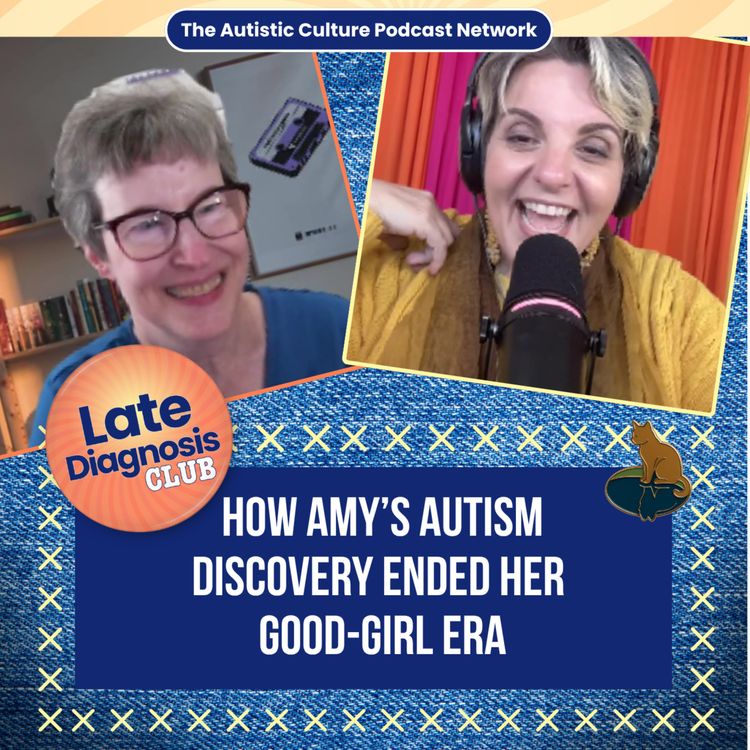
Late Diagnosis Club: How Amy's Autism Discovery Ended Her Good-Girl Era
In this meeting of The Late Diagnosis Club, Dr Angela Kingdon welcomes Amy Permann, a writer and Substack creator who discovered she’s Autistic in her 50s after decades of burnout, people-pleasing, and perfectionism.
Together, Angela and Amy discuss self-diagnosis, trusting intuition, unlearning pressure, and why self-acceptance is a radical act of care.
🪑 Attendees
Chair: Dr Angela Kingdon — Author, community-builder, and Autistic advocate
Guest: Amy Permann — Autistic writer and creator of Seeking Authenticity
You: The Listener!
🗒️ Meeting Agenda
- Opening remarks from the Chair
- Member introduction: Amy’s journey from “good girl” to self-advocate
- Discussion: Misdiagnosis, boundaries, and self-trust
- Key learnings from the meeting
- Club announcements🧾 Minutes from the Meeting
1️⃣ Opening Remarks
Angela opens by asking: What happens when your entire life is built around expectations that were never yours?
She welcomes Amy as a club member who’s learning to unlearn—redefining success, self-care, and what it means to live authentically.
2️⃣ Member Introduction: Amy’s Story
After years of therapy and being the “good daughter,” Amy learned she was Autistic — not broken, not oversensitive.
Her diagnosis followed her niece’s, sparking a journey through online communities, self-assessment, and finally, a validating experience.
3️⃣ Discussion Highlights
- Parentified and People-Pleasing: How early responsibility shaped Amy’s self-image.
- The Good Girl Mask: Why pressure isn’t a motivator — and why saying no is survival.
- Trusting Your Own Intuition: Unlearning the habit of assuming others know best.
- Medical Gaslighting & Boundaries: Why autistic women often stop seeking care — and how Amy’s learning to ask questions again.
- Living Authentically: From checklist living to joyful presence — finding beauty in small moments, cats, and nature.
4️⃣ Key Learnings
- You can’t heal by pleasing everyone.
- Autistic women deserve support that trusts their self-knowledge.
- Self-diagnosis and formal diagnosis are equally valid paths to clarity.
- Living authentically means honouring your timing, your needs, and your truth.
📣 Club Announcements
🎧 The Late Diagnosis Club is available on Spotify, Apple Podcasts, and all major platforms.
💬 Join our online meetups and community at latediagnosis.club.
📌 Check the LDC Notice Board for Member Contributions
💜 There is a small charge — but no one is turned away for lack of funds.
🌈 Celebrate autistic voices with early access, ad-free listening, and our full archive at AutisticCulturePlus.com
🌐 Visit www.autisticculturepodcast.com
📲 Follow us on Instagram: @autisticculturepodcast
🎙️ Executive Producers: Amy Burns, Anamaria B Call, Andrew Banner, Anna Goodson, Ashley Apelzin, Audrea Volker, Ben Coulson, Brian Churcek, Cappy Hamper, Carley Biblin, Charlene Deva, Chloe Cross, Clay Duhigg, Clayton Oliver, Danny Dunn, Daria Brown, David Garrido, Emily Burgess, Eric Crane, Erik Stenerud, Fiona Baker, Grace Norman, Helen Shaddock, Jaimie Collins, Jason Killian, Jen Unruh, Jennifer Carpenter, Julia Tretter, Kathie Watson-Gray, Kenneth Knowles, Kira Cotter, Kristine Lang, Kyle Raney, Llew P Williams, Laura Alvarado, Laura De Vito, Laura Provonsha, Lily George, Nelly Darmi, Nigel Rogers, Rachel Miller, Tim Scott, Tyler Kunz, Victoria Steed, Yanina Wood.
🎧 Producers: AJ Knight, Bobby Simon, Da Kovac, Eleanor Collins, Emily Griffiths, Hannah Hughes, Jennifer Kemp, Jonas Fløde, Kate F, Katie N Benitez, Kendra Murphy, Lisa Dennys, Logan Wall, Louise Lomas, Melissa Nance, Nicola Owen, Rebecka Johansson, Sam Morris, Sarah Hannah Morris.
More episodes
View all episodes
3. Autistic Menopause: The Autistic Body in Menopause
46:58||Season 22, Ep. 3Menopause affects far more than mood and cognition.In this episode, Sam Galloway (she/her) examines the profound physical impact of menopause on the neurodivergent body. From severe dry eye syndrome, sensory hypersensitivity and chronic pain to sleep disruption, premenstrual dysphoria disorder (PMDD), temperature dysregulation, bladder changes, fatigue and mobility challenges, she explores how hormonal changes can transform everyday life.Drawing on her own experiences, Sam discusses the complex relationship between menopause symptoms, sensory processing, trauma, chronic stress and autistic wellbeing. She also reflects on how physical changes can contribute to shrinking worlds, increased support needs and loss of identity.This episode highlights the importance of recognising physical symptoms that are often dismissed, minimised or incorrectly attributed to ageing alone.Content Warning: This episode includes frank discussion of mental health crisis and suicidal thoughts, alongside experiences of autistic burnout, medical care, and menopause. Please take care while listening and skip any sections that may be difficult for you.Resources mentioned or relevant:📖 The Mind-Blowing Symptoms of Perimenopause that will have your doctor dismissing your autistic intuition by Sam Galloway🌐 Divergent Menopause community and newsletter📖 MENO-D – A rating scale to detect depression in menopause🌿 Australasian Menopause Society📚 Autistic Menopause – A Guide to the Menopausal Transition for Autistic People and those Supporting Them by Dr. Rachel Moseley and Professor Gamble-Turner (2026)📄 Resources for autistic (/neurodivergent) women and people with ovaries at menopause – Dr. Rachel Moseley and Professor Julie Gamble-Turner, Bournemouth University📱 Balance – menopause symptom tracking and information from menopause specialist Dr. Louise NewsonContinue the conversation:Find Sam at Divergent Menopause for essays, research updates, practical reflections, and stories from the neurodivergent menopause community.Every article is free to read. Paid subscriptions operate as a patron model and help fund the advocacy, research translation, and community work behind Divergent Menopause.🌐 https://samgallowayaudhd.substack.com/☕ Support Sam's work: https://buymeacoffee.com/samgallowayProduced for the Autistic Culture Podcast Network.🎧 Autistic Menopause is available on Spotify, Apple Podcasts, and all major platforms.🌈 Celebrate autistic voices with early access, ad-free listening, and our full archive at AutisticCulturePlus.com🌐 Visit www.autisticculturepodcastnetwork.com📲 Follow us on Instagram: @autisticculturepodcast
43. Mindful Mondays With Ashley Dupuy: From Mask to Map | The Nine Adaptation Patterns
35:43||Season 7, Ep. 43We please. We rescue. We perform. We hold everything together - until sometimes we disappear or reach for escape.But what if these familiar responses are not fixed identities? What if they are intelligent adaptations: ways we learned to secure safety, belonging, continuity or relief?Following last week’s introduction to From Mask to Map, Ashley explores the Nine Adaptation Patterns at the heart of this developing body of work: the Pleaser, Rescuer, Performer, Chameleon, Strong One, Perfectionist, Controller, Vanisher and Escaper.Moving through the different ways we reach towards belonging, attempt to hold ourselves and the world together, or create distance from overwhelming intensity, Ashley considers the protective purpose, genuine strengths and present-day costs carried within each pattern.These are not diagnoses, personality types or nine new boxes in which to place ourselves. With careful attention to Neurodivergent Nuance, Ashley explores why the behaviour alone cannot reveal the whole pattern. Structure may be an essential accommodation rather than control. Solitude may be restoration rather than disappearance. Social fluency may be joyful expression rather than compulsory performance. What matters is the job the behaviour is performing, the freedom we have around it and the price we may now be paying.Ashley also returns to the work of Jungian analyst Dr James Hollis and his question of what, beyond survival, may be seeking expression through us as meaning and purpose.Through recollection, Shakespeare’s “ravelled sleave of care” and the image of the Weaver, the episode becomes an invitation to gather every thread of our experience without mistaking any single pattern for the whole design.The episode closes with a brief guided practice, The Weaver and the Thread.The complete guided exploration of the Nine Adaptation Patterns - including discovering your own configuration and mapping the way forward - will be exclusive to the founding From Mask to Map group coaching and hypnotherapy cohort beginning on 15 September. The programme is fully online, limited to ten people and available worldwide, with replays provided for those unable to attend live.Spaces are still available. Visit integrativeiom.co.uk/from-mask-to-map for full details.Our Sponsors:🧘♀️ Ashley Dupuy – Integrative Coaching, Breathwork & Hypnotherapy🤝 Sophie James - Neurodivergent Mentoring: sophiejamesndmentoring.com🎧 The Neurodivergent Experience is available on Spotify, Apple Podcasts, and all major platforms.🌈 Celebrate autistic voices with early access, ad-free listening, and our full archive at AutisticCulturePlus.com🌐 Visit www.autisticculturepodcast.com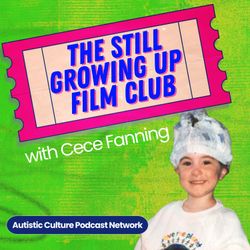
1. The Still Growing Up Film Club: How to Have an Amazing Day Off with Ferris Bueller's Day Off
44:01||Season 23, Ep. 1What can Ferris Bueller teach us about letting go of the plan and actually enjoying the moment we're in?In the first episode of The Still Growing Up Film Club, Cece Fanning revisits the 1986 coming-of-age classic Ferris Bueller's Day Off and the lessons hidden inside one unforgettable day of playing hooky.Through Ferris, Cameron and Sloane's adventure across Chicago, Cece explores spontaneity, friendship, anxiety, masking and the pressure we can put on ourselves to make everything go according to plan. From Ferris's determination to make the day count to Cameron learning to confront his fear, the film offers a reminder that growing up sometimes means taking a chance, finding your people and accepting that life can still be meaningful when it goes off script.For a neurodivergent brain that loves schedules and certainty, perhaps Ferris has something particularly useful to teach us: leave a little room for the unexpected.Follow Cece:📸 Instagram: https://www.instagram.com/thenotoriouscece📱 TikTok: https://www.tiktok.com/@thenotoriouscece✍️ Blog: https://cecewhatimean.com/🛍️ Store: https://stillgrowinguppodcast.dashery.com/Produced for the Autistic Culture Podcast Network.🎧 The Still Growing Up Film Club is available on Spotify, Apple Podcasts, and all major platforms.🌈 Celebrate autistic voices with early access, ad-free listening, and our full archive at AutisticCulturePlus.com🌐 Visit www.autisticculturepodcastnetwork.com📲 Follow us on Instagram: @autisticculturepodcast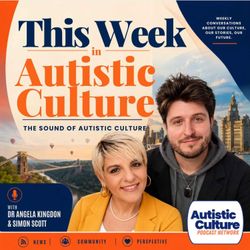
11. This Week in Autistic Culture #11 | ADHD Myths, Media Misrepresentation and Autistic Voices
55:14||Ep. 11Welcome to another edition of This Week in Autistic Culture, our Sunday magazine podcast that brings together the stories, conversations and ideas shaping Autistic culture each week.This week, Angela and Simon turn their attention to Channel 4 documentary The Great ADHD Myth and the backlash it has received from the ADHD community. They discuss its claims around diagnosis and medication, the decision to centre the experiences of a ten-year-old boy, and what happens when mainstream media tells stories about neurodivergent people without meaningfully including the communities at the centre of them.Simon also reflects on his own experience of ADHD medication, from finding the right dose to the difference it has made to his life, as Angela and Simon explore the wider narratives around overdiagnosis, masking and the idea that people must be visibly struggling for their neurodivergence to be considered legitimate.As always, we’ll also take you through everything coming up across the Autistic Culture Podcast Network this week, including the launch of The Still Growing Up Film Club, a new Mindful Mondays, Autistic Menopause and plenty more from across the network.Plus, we head to the Community Notice Board for books, events and opportunities from across the wider Autistic community.📌 Community NoticeboardThe Community Noticeboard is your space to share what’s happening across autistic culture. Whether you’re launching a book, hosting an event, releasing a podcast, starting a creative project, celebrating a milestone, or simply have something you’d like the community to know about, we’d love to hear from you.Send your announcements, links and updates to autisticculturepodcast@gmail.com, and we’ll feature as many as we can in a future edition of This Week in Autistic Culture.This Week’s Topics ADHD charity complains about Channel 4 documentaryThe Great ADHD Myth? Review – the most controversial show of the year is hereThere is nothing scientific about The Great ADHD Myth? ‘documentary’ - Gina RipponBooks & researchDifferent Minds Online Book Launch - Pete Wharmby - Thursday, September 3rd - 8 to 9 pm - FreeManly While Stimming - Eric GarciaEventsAutistic Burnout, Psychosis, and the Ecology of Distress - David Gray-Hammond - Monday, August 31st - 6 to 7.30pm - £5.60Burnout, Masking and The Body: A Somatic Lens On ND Burnout with Octavia Landy- Onlinevents - Wednesday, September 2nd - 6 to 8pm - By donationPolyvagal Purrs: Rescue Cat Inspired Self Care for Trauma and AuDHD with Eve Menezes Cunningham - Onlinevents - Saturday, September 5th - 10am to 12pm - By donation📻 Listen to Autistic Culture Radio🌈 Celebrate autistic voices with early access, ad-free listening, and our full archive at AutisticCulturePlus.com🌐 Visit www.autisticculturepodcastnetwork.com📲 Follow us on Instagram: @autisticculturepodcast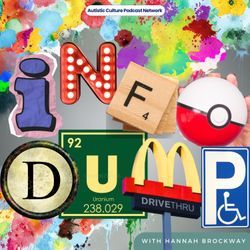
5. Info Dump: Microtonal Music
01:16:02||Season 20, Ep. 5Dr Lillian Hearn joins Hannah Brockway for a fascinating introduction to the world of microtonal music, exploring the sounds, scales and tuning systems that exist beyond the notes most of us hear every day.Together they discuss how microtonal music is written and performed, why musicians are drawn to these alternative ways of thinking about sound, and the surprising connections between music, mathematics and synaesthesia. They also explore why so many neurodivergent people are part of the microtonal community, making this an episode about curiosity and creativity as much as music itself.Find out more:🎼 Online microtonal community: https://www.facebook.com/groups/xenharmonic2/🎵 Sevish: https://www.youtube.com/@Sevish🎶 Lillian's band – Yak Herders: https://www.youtube.com/@YakHerders📖 Lillian's PhD dissertation: https://researchers.westernsydney.edu.au/en/studentTheses/the-cognition-of-harmonic-tonality-in-microtonal-scales/🎭 Afterglow: https://griffintheatre.com.au/whats-on/afterglow/Produced for the Autistic Culture Podcast Network.🎧 Info Dump is available on Spotify, Apple Podcasts, and all major platforms.🌈 Celebrate autistic voices with early access, ad-free listening, and our full archive at AutisticCulturePlus.com🌐 Visit www.autisticculturepodcastnetwork.com📲 Follow us on Instagram: @autisticculturepodcast
Autistic Culture Podcast Rewind - Dino Nuggets are Autistic
01:04:21|In this episode of The Autistic Culture Podcast, hosts Dr. Angela Kingdon and Matt Lowry, LPP, dig into the rich world of Autistic food culture—exploring safe foods, same foods, and the deep comfort Autistic people find in ritualized eating.📚 What’s Inside This Episode:How food shapes culture across the world—and how Autistic food culture fits in.The difference between “safe foods” (comforting, reliable, calming foods) and “same foods” (the exact same foods eaten daily with joy).Matt’s Easter family tradition: the legendary Throckmorton McNugget Platter, complete with sauces.Why same-fooding is not “picky eating” but a valid cultural practice rooted in predictability, sensory regulation, and ritual.How sensory aversions and sensory-seeking palates shape Autistic food choices—ranging from bland comfort foods to spicy, adventurous flavors.Why forcing Autistics to eat foods they dislike is harmful, and how embracing Autistic food culture supports both physical and mental health.The joys of efficiency, comfort, and community that come with Autistic approaches to food.Resources: Super Taster TestsSafefood: The Medicinal Properties of Chicken NuggetsWhat Do Autistic People Cook?Autistic EmpathWhy do autistic people tend to samefood? Is it different than picky eating?Related Episodes:Dimensions of Autistic CultureWarhol is Autistic🌟 Connect With Us📱 Follow us on Instagram🎧 Find us on Apple Podcasts and Spotify🛍️Our Autism-affirming merch shop🌐 Learn more at www.autisticculturepodcast.com
125. The Neurodivergent Experience: They Invited Every Child Except the Autistic Kid | Reddit Stories
01:45:58||Season 5, Ep. 125In this week's Reddit Stories episode, Jordan and Simon unpack another selection of dilemmas involving autism, ADHD, relationships and the realities of being neurodivergent.They begin with a parent who invites an entire class to her son's birthday party — except for one autistic child. Jordan and Simon discuss exclusion, ableism, reasonable accommodations and the lasting impact of being the child who is always left out.Next, they explore another neurodivergent dilemma and the assumptions people make about behaviour, asking where personal responsibility ends and understanding someone's disability begins.The conversation then turns to the complicated ways neurodivergent traits can be interpreted by the people around us, including executive dysfunction, forgetfulness and behaviours that can easily be mistaken for laziness or a lack of care.Finally, a woman takes to Reddit to describe her husband as stupid, prompting a discussion about ADHD, dyslexia, executive dysfunction, relationships, resentment and what happens when the person you love doesn't understand the way your brain works.*The stories discussed in this episode are public Reddit posts. Titles may be shortened for readability, and all opinions expressed are those of the original posters.• AITA for inviting my sons entire class except for one child because of his autism?• AITA for disagreeing with my daughter’s ADHD diagnosis?• My speech disability has ruined my life and I think I will never amount to anything.• My husband is so dumb and I think I need to leave him because of itOur Sponsors:🧘♀️ Ashley Dupuy – Integrative Coaching, Breathwork & Hypnotherapy🤝 Sophie James - Neurodivergent Mentoring: sophiejamesndmentoring.com🎧 The Neurodivergent Experience is available on Spotify, Apple Podcasts, and all major platforms.🌈 Celebrate autistic voices with early access, ad-free listening, and our full archive at AutisticCulturePlus.com🌐 Visit www.autisticculturepodcast.com
7. Two Mics No Masking: Designing a Life That Works
45:30||Season 17, Ep. 7In this episode of Two Mics, No Masking, Katie Scott and Jenna Goldstein are joined by Rabbi Shoshana Meira Friedman, founder of the PDA Safe Circle, to explore what happens when we stop trying to fit ourselves into systems that were never designed for us.Together they discuss nervous system literacy, questioning the default blueprints we've inherited, and what it means to build a life that is sustainable, authentic, and aligned with who we are. Rather than asking how we can adapt to existing expectations, Katie, Jenna, and Shoshana explore how we can create lives that genuinely work for us.🎙️ Subscribe now to hear future episodes.🌈 Celebrate autistic voices with early access, ad-free listening, and our full archive at AutisticCulturePlus.com🌐 Learn more about the network at AutisticCulturePodcastNetwork.com
3. Rethinking Autism Therapy: How DIRFloortime® Meets Autistic Needs with Dr. Emile Gouws
43:45||Season 21, Ep. 3How does DIRFloortime® meet autistic needs in a neurodiversity-affirming way?In this third episode of the Rethinking Autism Therapy mini-series, Daria Brown is joined by autistic self-advocate, researcher, and ICDL Board President Dr. Emile Gouws to explore how the DIR® model aligns with autistic lived experience and why relationships, respect, and understanding are essential for meaningful development.Drawing on his own experiences growing up as a nonspeaking autistic child, Emile shares the challenges of being viewed through a medical-model lens, the trauma of compliance-based interventions, and the profound impact of finally being seen, understood, and supported through a relationship-based approach. Together, Daria and Emile discuss how DIRFloortime® differs from approaches focused on normalization by emphasizing individual differences, emotional development, authentic communication, and connection.The conversation highlights how autistic development may look different from neurotypical development, why practitioners must be mindful of ableist assumptions, and how play, co-regulation, and meaningful relationships create the conditions for growth. They also explore the role of neurodiversity, self-advocacy, sensory differences, and the Double Empathy Problem in shaping a more affirming understanding of autism.Learn more:🌐 Dr. Emile Gouws: https://emilegouws.org/🌐 ICDL Board: https://www.icdl.com/about/boardProduced for the Autistic Culture Podcast Network.🎧 Rethinking Autism Therapy is available on Spotify, Apple Podcasts, and all major platforms.🌈 Celebrate autistic voices with early access, ad-free listening, and our full archive at AutisticCulturePlus.com🌐 Visit www.autisticculturepodcastnetwork.com📲 Follow us on Instagram: @autisticculturepodcast