Share
Autistic Culture Presents...
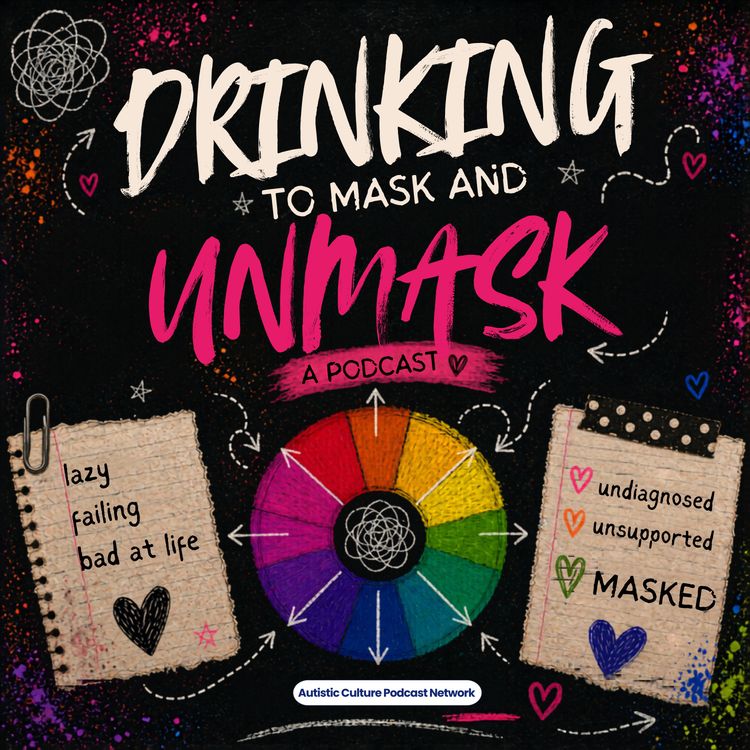
Drinking to Mask and Unmask: We Thought Everyone Did This
Sometimes the stories families tell about what is "normal" look very different after a diagnosis.
Chelsey Flood is joined by her mum, Caroline Dale, for a conversation about family, misunderstanding, drinking, and late diagnosis. Together they reflect on the assumptions families make, the experiences that go unnoticed, and how understanding neurodivergence can change the way we view the past.
In this episode:
- Family relationships and understanding
- Drinking culture and expectations
- Late diagnosis
- Looking back with new perspective
- Neurodivergence within families
Content Note: This episode includes discussion of family relationships, alcohol use, and late diagnosis.
🎙️ Subscribe now to hear future episodes.
🌈 Celebrate autistic voices with early access, ad-free listening, and our full archive at AutisticCulturePlus.com
🌐 Learn more about the network at AutisticCulturePodcastNetwork.com
🎙️ Executive Producers: Amy Burns, Anamaria B Call, Andrew Banner, Anna Goodson, Ashley Apelzin, Audrea Volker, Ben Coulson, Brian Churcek, Cappy Hamper, Carley Biblin, Charlene Deva, Chloe Cross, Clay Duhigg, Clayton Oliver, Danny Dunn, Daria Brown, David Garrido, Emily Burgess, Eric Crane, Erik Stenerud, Fiona Baker, Grace Norman, Helen Shaddock, Jaimie Collins, Jason Killian, Jen Unruh, Jennifer Carpenter, Julia Tretter, Kathie Watson-Gray, Kenneth Knowles, Kira Cotter, Kristine Lang, Kyle Raney, Llew P Williams, Laura Alvarado, Laura De Vito, Laura Provonsha, Lily George, Nelly Darmi, Nigel Rogers, Rachel Miller, Tim Scott, Tyler Kunz, Victoria Steed, Yanina Wood.
🎧 Producers: AJ Knight, Bobby Simon, Da Kovac, Eleanor Collins, Emily Griffiths, Hannah Hughes, Jennifer Kemp, Jonas Fløde, Kate F, Katie N Benitez, Kendra Murphy, Lisa Dennys, Logan Wall, Louise Lomas, Melissa Nance, Nicola Owen, Rebecka Johansson, Sam Morris, Sarah Hannah Morris.
More episodes
View all episodes
5. Info Dump: Microtonal Music
01:16:02||Season 20, Ep. 5Dr Lillian Hearn joins Hannah Brockway for a fascinating introduction to the world of microtonal music, exploring the sounds, scales and tuning systems that exist beyond the notes most of us hear every day.Together they discuss how microtonal music is written and performed, why musicians are drawn to these alternative ways of thinking about sound, and the surprising connections between music, mathematics and synaesthesia. They also explore why so many neurodivergent people are part of the microtonal community, making this an episode about curiosity and creativity as much as music itself.Find out more:🎼 Online microtonal community: https://www.facebook.com/groups/xenharmonic2/🎵 Sevish: https://www.youtube.com/@Sevish🎶 Lillian's band – Yak Herders: https://www.youtube.com/@YakHerders📖 Lillian's PhD dissertation: https://researchers.westernsydney.edu.au/en/studentTheses/the-cognition-of-harmonic-tonality-in-microtonal-scales/🎭 Afterglow: https://griffintheatre.com.au/whats-on/afterglow/Produced for the Autistic Culture Podcast Network.🎧 Info Dump is available on Spotify, Apple Podcasts, and all major platforms.🌈 Celebrate autistic voices with early access, ad-free listening, and our full archive at AutisticCulturePlus.com🌐 Visit www.autisticculturepodcastnetwork.com📲 Follow us on Instagram: @autisticculturepodcast
Autistic Culture Podcast Rewind - Dino Nuggets are Autistic
01:04:21|In this episode of The Autistic Culture Podcast, hosts Dr. Angela Kingdon and Matt Lowry, LPP, dig into the rich world of Autistic food culture—exploring safe foods, same foods, and the deep comfort Autistic people find in ritualized eating.📚 What’s Inside This Episode:How food shapes culture across the world—and how Autistic food culture fits in.The difference between “safe foods” (comforting, reliable, calming foods) and “same foods” (the exact same foods eaten daily with joy).Matt’s Easter family tradition: the legendary Throckmorton McNugget Platter, complete with sauces.Why same-fooding is not “picky eating” but a valid cultural practice rooted in predictability, sensory regulation, and ritual.How sensory aversions and sensory-seeking palates shape Autistic food choices—ranging from bland comfort foods to spicy, adventurous flavors.Why forcing Autistics to eat foods they dislike is harmful, and how embracing Autistic food culture supports both physical and mental health.The joys of efficiency, comfort, and community that come with Autistic approaches to food.Resources: Super Taster TestsSafefood: The Medicinal Properties of Chicken NuggetsWhat Do Autistic People Cook?Autistic EmpathWhy do autistic people tend to samefood? Is it different than picky eating?Related Episodes:Dimensions of Autistic CultureWarhol is Autistic🌟 Connect With Us📱 Follow us on Instagram🎧 Find us on Apple Podcasts and Spotify🛍️Our Autism-affirming merch shop🌐 Learn more at www.autisticculturepodcast.com
125. The Neurodivergent Experience: They Invited Every Child Except the Autistic Kid | Reddit Stories
01:45:58||Season 5, Ep. 125In this week's Reddit Stories episode, Jordan and Simon unpack another selection of dilemmas involving autism, ADHD, relationships and the realities of being neurodivergent.They begin with a parent who invites an entire class to her son's birthday party — except for one autistic child. Jordan and Simon discuss exclusion, ableism, reasonable accommodations and the lasting impact of being the child who is always left out.Next, they explore another neurodivergent dilemma and the assumptions people make about behaviour, asking where personal responsibility ends and understanding someone's disability begins.The conversation then turns to the complicated ways neurodivergent traits can be interpreted by the people around us, including executive dysfunction, forgetfulness and behaviours that can easily be mistaken for laziness or a lack of care.Finally, a woman takes to Reddit to describe her husband as stupid, prompting a discussion about ADHD, dyslexia, executive dysfunction, relationships, resentment and what happens when the person you love doesn't understand the way your brain works.*The stories discussed in this episode are public Reddit posts. Titles may be shortened for readability, and all opinions expressed are those of the original posters.• AITA for inviting my sons entire class except for one child because of his autism?• AITA for disagreeing with my daughter’s ADHD diagnosis?• My speech disability has ruined my life and I think I will never amount to anything.• My husband is so dumb and I think I need to leave him because of itOur Sponsors:🧘♀️ Ashley Dupuy – Integrative Coaching, Breathwork & Hypnotherapy🤝 Sophie James - Neurodivergent Mentoring: sophiejamesndmentoring.com🎧 The Neurodivergent Experience is available on Spotify, Apple Podcasts, and all major platforms.🌈 Celebrate autistic voices with early access, ad-free listening, and our full archive at AutisticCulturePlus.com🌐 Visit www.autisticculturepodcast.com
7. Two Mics No Masking: Designing a Life That Works
45:30||Season 17, Ep. 7In this episode of Two Mics, No Masking, Katie Scott and Jenna Goldstein are joined by Rabbi Shoshana Meira Friedman, founder of the PDA Safe Circle, to explore what happens when we stop trying to fit ourselves into systems that were never designed for us.Together they discuss nervous system literacy, questioning the default blueprints we've inherited, and what it means to build a life that is sustainable, authentic, and aligned with who we are. Rather than asking how we can adapt to existing expectations, Katie, Jenna, and Shoshana explore how we can create lives that genuinely work for us.🎙️ Subscribe now to hear future episodes.🌈 Celebrate autistic voices with early access, ad-free listening, and our full archive at AutisticCulturePlus.com🌐 Learn more about the network at AutisticCulturePodcastNetwork.com
3. Rethinking Autism Therapy: How DIRFloortime® Meets Autistic Needs with Dr. Emile Gouws
43:45||Season 21, Ep. 3How does DIRFloortime® meet autistic needs in a neurodiversity-affirming way?In this third episode of the Rethinking Autism Therapy mini-series, Daria Brown is joined by autistic self-advocate, researcher, and ICDL Board President Dr. Emile Gouws to explore how the DIR® model aligns with autistic lived experience and why relationships, respect, and understanding are essential for meaningful development.Drawing on his own experiences growing up as a nonspeaking autistic child, Emile shares the challenges of being viewed through a medical-model lens, the trauma of compliance-based interventions, and the profound impact of finally being seen, understood, and supported through a relationship-based approach. Together, Daria and Emile discuss how DIRFloortime® differs from approaches focused on normalization by emphasizing individual differences, emotional development, authentic communication, and connection.The conversation highlights how autistic development may look different from neurotypical development, why practitioners must be mindful of ableist assumptions, and how play, co-regulation, and meaningful relationships create the conditions for growth. They also explore the role of neurodiversity, self-advocacy, sensory differences, and the Double Empathy Problem in shaping a more affirming understanding of autism.Learn more:🌐 Dr. Emile Gouws: https://emilegouws.org/🌐 ICDL Board: https://www.icdl.com/about/boardProduced for the Autistic Culture Podcast Network.🎧 Rethinking Autism Therapy is available on Spotify, Apple Podcasts, and all major platforms.🌈 Celebrate autistic voices with early access, ad-free listening, and our full archive at AutisticCulturePlus.com🌐 Visit www.autisticculturepodcastnetwork.com📲 Follow us on Instagram: @autisticculturepodcast
2. Autistic Menopause: The Autistic Brain in Menopause
41:50||Season 22, Ep. 2What happens when the cognitive strengths you've relied upon your entire life suddenly stop working?In this episode, Sam Galloway (she/her) explores the neurological impact of menopause on the autistic brain. Through personal examples of memory loss, executive dysfunction, shutdowns, meltdowns, speech difficulties and skill regression, she examines how hormonal changes can amplify existing neurodivergent traits and create challenges that extend far beyond typical descriptions of brain fog.Sam discusses autistic burnout, involuntary unmasking, sensory overwhelm, loss of independence, and the fear that accompanies sudden changes in cognition and identity. She also shares some of the strategies, accommodations and treatments that have helped her navigate this difficult period.For many listeners, this episode may provide language for experiences that have previously felt impossible to explain.Content Warning: This episode includes frank discussion of mental health crisis and suicidal thoughts, alongside experiences of autistic burnout, medical care, and menopause. Please take care while listening and skip any sections that may be difficult for you.Resources mentioned or relevant:📖 How to Write an Autism Adapted Suicide Safety Plan – A call to action in Autistic suicide prevention by Sam Galloway📖 Why PMDD Worsens During Neurodivergent Perimenopause Or: Stop the World, I Want to Get Off by Sam Galloway🌐 International Association for Premenstrual Disorders (IAPMD)🌐 Divergent Menopause community and newsletter📖 MENO-D – A rating scale to detect depression in menopause🌿 Australasian Menopause Society📚 Autistic Menopause – A Guide to the Menopausal Transition for Autistic People and those Supporting Them by Dr. Rachel Moseley and Professor Gamble-Turner (2026)📄 Resources for autistic (/neurodivergent) women and people with ovaries at menopause – Dr. Rachel Moseley and Professor Julie Gamble-Turner, Bournemouth University📱 Balance – menopause symptom tracking and information from menopause specialist Dr. Louise NewsonContinue the conversation:Find Sam at Divergent Menopause for essays, research updates, practical reflections, and stories from the neurodivergent menopause community.Every article is free to read. Paid subscriptions operate as a patron model and help fund the advocacy, research translation, and community work behind Divergent Menopause.🌐 https://samgallowayaudhd.substack.com/☕ Support Sam's work: https://buymeacoffee.com/samgallowayProduced for the Autistic Culture Podcast Network.🎧 Autistic Menopause is available on Spotify, Apple Podcasts, and all major platforms.🌈 Celebrate autistic voices with early access, ad-free listening, and our full archive at AutisticCulturePlus.com🌐 Visit www.autisticculturepodcastnetwork.com📲 Follow us on Instagram: @autisticculturepodcast
Trailer: Welcome to The Still Growing Up Film Club
01:30||Season 23What can coming-of-age movies teach us about growing up - even when we're already adults?In this trailer, discover The Still Growing Up Film Club, a podcast exploring the lessons hidden within coming-of-age films and what their characters, choices and experiences can teach us about our own lives.With a special appreciation for the late-diagnosed autistic community and all who love them, each episode takes the form of a stand-alone essay focused on a different film, exploring identity, relationships, belonging, personal growth and what it really means to grow up.Follow Cece:📸 Instagram: https://www.instagram.com/thenotoriouscece📱 TikTok: https://www.tiktok.com/@thenotoriouscece✍️ Blog: https://cecewhatimean.com/🛍️ Store: https://stillgrowinguppodcast.dashery.com/Produced for the Autistic Culture Podcast Network.🎧 The Still Growing Up Film Club is available on Spotify, Apple Podcasts, and all major platforms.🌈 Celebrate autistic voices with early access, ad-free listening, and our full archive at AutisticCulturePlus.com🌐 Visit www.autisticculturepodcastnetwork.com📲 Follow us on Instagram: @autisticculturepodcast
42. Mindful Mondays With Ashley Dupuy: From Mask to Map | Your Adaptation Is Not Your Identity
32:34||Season 7, Ep. 42In this episode, Ashley explores the ideas that gave rise to From Mask to Map: her developing body of work, book and coaching cohort for late-discovered neurodivergent adults.Drawing on Dr Andrew Huberman’s conversation with Jungian analyst Dr James Hollis, she considers meaning, purpose and the deeper intelligence within us that may be continually trying to bring us back into relationship with ourselves. She also returns to the question of State or Trait? - and asks what changes when we stop assuming that every familiar response reveals something fixed about who we are.Ashley revisits the Transactional Analysis Drivers, a framework that remains immensely valuable within her work, while explaining why something more was needed to reflect the Neurodivergent Nuance of lived experience. Through six years of research, client work and personal exploration, the Nine Adaptation Patterns began to emerge - not as diagnoses, labels or another set of boxes, but as a compassionate way of recognising the protective roles we may have mistaken for identity.This episode introduces the patterns and tells the story of how they came into being. Next week, we will meet all nine more fully.The episode closes with a short guided practice, The Part That Learned the Way - an invitation to approach one of your adaptations with curiosity rather than judgement, honour the intelligence within it and begin reading the survival directions written for earlier terrain.Ashley’s eight-week From Mask to Map group coaching programme begins on 15 September 2026 and is limited to ten people. Find out more at integrativeiom.co.uk.Our Sponsors:🧘♀️ Ashley Dupuy – Integrative Coaching, Breathwork & Hypnotherapy🤝 Sophie James - Neurodivergent Mentoring: sophiejamesndmentoring.com🎧 The Neurodivergent Experience is available on Spotify, Apple Podcasts, and all major platforms.🌈 Celebrate autistic voices with early access, ad-free listening, and our full archive at AutisticCulturePlus.com🌐 Visit www.autisticculturepodcast.com