Share
Autistic Culture 101
A deep dive into the values, identity, and traditions that define Autistic Culture
Latest episode
1. Autistic Culture 101: The 10 Pillars of Autistic Culture
01:14:56||Ep. 1In this episode of Autistic Culture 101, Dr. Angela Kingdon kicks off a brand-new chapter by reintroducing the 10 Pillars of Autistic Culture—the foundation for how we understand and celebrate the richness of autistic identity. This remastered episode revisits the original conversation that first defined the 10 pillars back in January 2024, now with updated insights and refined language to match how this framework has evolved.Whether you’re just discovering the show or have been with us since the beginning, this is your starting point for the cultural model that grounds everything we do.💡 The 10 Pillars of Autistic Culture (Updated for 2024)Bottom-Up Processing (formerly “Logic & Strategy”) - Detail-first cognition. Pattern before conclusion. Think: Sherlock Holmes, chess masters, system builders.Rhythmic Communicating (formerly “Linguistics & Accents”) - Scripting, echolalia, tangents, infodumping. Communication as rhythm, poetry, and flow.Norm Challenging (formerly “Deep Thinking & Insight”) - Authenticity over politeness. Insight over illusion. Questioning over compliance.World Building - Narrative universes built from imagination and logic. Think: Pokémon, Dungeons & Dragons, Star Wars.Pattern Matching (formerly “Data Gathering & Analysis”) - SPINs, trivia, research, and structured inquiry. We find meaning in what others miss.Game Changing (formerly “Innovative Ideas”) - System redesigners. Trendsetters. Rethinkers. From Eadweard Muybridge to Questlove.Boldly Creating (formerly “Artistic Expression”) - Art as regulation. Performance as communication. Stim as aesthetic.Predictably Comforting (formerly “Consistency & Reliability”) - Rituals, repetition, routines. These aren’t constraints—they’re comfort, safety, and power.Justice Seeking (formerly “Justice & Honesty”) - Fairness as instinct. Truth as obligation. Emotional intensity as ethical compass.Passionate Superfanning (formerly “Fictional Friends”) - Lore, fandoms, and parasocial joy. Star Trek. Doctor Who. My Little Pony. Fandom is family.🧭 The Framework Going ForwardThese 10 Pillars will guide the next phase of The Autistic Culture Podcast—each episode will highlight one of them, offering deep dives into their cultural meaning, emotional resonance, and pop culture representation.The pillars span across three domains:🎭 Arts & Entertainment🪴 Lifestyle & Leisure🏛️ Society, Values & KnowledgeAnd at the centre of them all: Autistic joy, identity, and truth.So whether you’re autistic, exploring the possibility, or someone who loves and respects autistic people—you are welcome here. You are part of Autistica.🌟 Connect With Us📱 Follow us on Instagram🎧 Find us on Apple Podcasts and Spotify🛍️Our Autism-affirming merch shop🌐 Learn more at www.autisticculturepodcast.com
More episodes
View all episodes
2. Autistic Culture 101: Pillar 1 - Bottom-up Processing
01:02:39||Ep. 2In this episode of The Autistic Culture 101, Dr. Angela Kingdon explores Pillar 1 of Autistic Culture: Bottom-Up Processing.We begin our deep dive into the 10 Pillars of Autistic Culture with the cognitive foundation that shapes how many autistic people interpret, analyse, and interact with the world—from sensory input to social understanding.This remastered episode reintroduces the core principles of bottom-up thinking through the lens of one of fiction’s most iconic detail-driven characters: Sherlock Holmes.🎧 What You’ll LearnWhy autistic cognition favours detail-first processing over top-down assumptionsHow bottom-up processing supports pattern recognition, innovation, and autonomyThe role of sensory integration and special interests in cognitive and emotional navigationHow society pathologizes bottom-up thinkers as insubordinate, difficult, or even “broken”How internalized ableism can lead autistic people to distrust their own cognitive strengthsWhy reclaiming and celebrating bottom-up processing can improve mental health and self-trustRelated Episodes:Chess is AutisticBroadway is AutisticWashington DC is Autistic🌟 Connect With Us📱 Follow us on Instagram🎧 Find us on Apple Podcasts and Spotify🛍️Our Autism-affirming merch shop🌐 Learn more at www.autisticculturepodcast.com
3. Autistic Culture 101: Pillar 2 - Rhythmic Communicating
59:51||Ep. 3In this episode of Autistic Culture 101, Dr. Angela Kingdon explores Pillar 2 of Autistic Culture: Rhythmic Communicating — a core expression of how autistic people connect with the world and each other. This isn’t “just how we talk.” It’s how we create culture.This special remastered episode dives into echolalia, scripting, infodumping, and the poetic, patterned flow that defines autistic communication. Through the lens of pop icon Taylor Swift, we uncover how rhythm, repetition, and lyrical structure mirror autistic expression.Resources:Deaf President Now documentary: The story of the great civil rights movement most people have never heard about. During eight tumultuous days in 1988 at the world's only Deaf university, four students must find a way to lead a revolution and change the course of history.Related Episodes:ShakespeareFern BradyAnimation & Voice Acting🌟 Connect With Us📱 Follow us on Instagram🎧 Find us on Apple Podcasts and Spotify🛍️Our Autism-affirming merch shop🌐 Learn more at www.autisticculturepodcast.com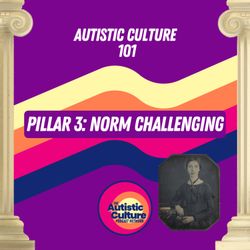
4. Autistic Culture 101: Pillar 3 - Norm Challenging
58:12||Ep. 4In this episode of Autistic Culture 101, Dr. Angela Kingdon continues our journey through the 10 Pillars of Autistic Culture as we move onto Pillar 3 — Norm Challenging.This episode explores truth-telling, gender defiance, sensory preferences, and Emily Dickinson’s poetic rebellion that made her a quintessential norm challenger—and an early voice of neurodivergent power.🎧 What You’ll LearnWhy Emily Dickinson’s life was an act of radical autistic norm defiance.How literal thinking, moral clarity, and pattern recognition challenged the social structures around her.The connection between rejection sensitivity and creative brilliance.How “masking” created safety—but didn’t stop her from telling the truth.What we can reclaim from being called “too intense” or “too much.”Related Episodes:Emily DickinsonCourtney Love (Referenced)Being an Expat🌟 Connect With Us📱 Follow us on Instagram🎧 Find us on Apple Podcasts and Spotify🛍️Our Autism-affirming merch shop🌐 Learn more at www.autisticculturepodcast.com
5. Autistic Culture 101: Pillar 4 - World Building with Dr Scott Frasard
01:08:40||Ep. 5In this episode of Autistic Culture 101, Dr. Angela Kingdon welcomes Dr. Scott Frasard, autistic author and advocate, as they dive into Pillar 4 of Autistic Culture: World-Building—the powerful autistic drive to construct immersive systems, structures, and stories, both real and imagined.In his essay “The World We Built: A Future Where Autistic People Are Respected, Not Repaired”, Dr. Frasard envisions a future (set in 2075) where diagnosis has given way to identity co-creation, and neurodivergence is celebrated—not pathologized. This episode explores how autistic people don’t just survive systems—we reimagine them.👉 Read the full essay here → here.🎧 What You’ll LearnWhy world-building is more than fantasy—it’s how autistic minds make meaningHow mental mapping, systems thinking, and SPINs shape autistic cultureWhy tools like timelines, frameworks, and rituals are forms of self-preservation, not inflexibilityHow world-building starts in childhood and evolves into leadership, creativity, and advocacyWhat it looks like to lean in to your vision instead of hiding it to blend in👤 Featured Guest: Scott FrasardDr. Scott Frasard is an outspoken critic of behaviourist interventions in autism treatment and a fierce advocate for strengths-based, identity-first approaches. He’s a published author and long-time learning strategist.🔗 Connect on LinkedIn📖 The World We Built – Buy the book on AmazonRelated Episodes:George LucasRen FestsDisney🌟 Connect With Us📱 Follow us on Instagram🎧 Find us on Apple Podcasts and Spotify🛍️Our Autism-affirming merch shop🌐 Learn more at www.autisticculturepodcast.com
6. Autistic Culture 101: Pillar 5 - Pattern Matching with Jodi Britcha-Coyne
01:06:37||Ep. 6In this episode of Autistic Culture 101, Dr. Angela Kingdon is joined by Jodi Britcha-Coyne, author, life coach, and systems-thinker, to explore Pillar 5: Pattern Matching—the cultural superpower at the heart of autistic insight, organization, and perception.Autistic pattern matching isn’t robotic—it’s deep, human, creative, and emotionally charged. From recognizing micro-patterns in conversation to creating vast knowledge maps across disciplines, autistic people don’t generalize—we observe. We track anomalies. We notice what others miss. And in a world built on noise and guesswork, this precision is transformative.🎧 What You’ll LearnWhy autistic people are data-hungry, detail-oriented, and insight-drivenHow monotropic focus and repetition build meaning and emotional groundingWhy pattern matching isn’t about cold logic—it’s about finding order, comfort, and connectionExamples of real-world pattern thinking: board games, Kinsey’s research, Wikipedia editing, Magic the Gathering, and moreHow to embrace your “pattern brain” in a world that often mislabels it as “too much”👤 Featured Guest: Jodi Britcha-CoyneJodi is a Certified Life Coach, Strategic Interventionist, and author of Are You Still There God? It’s Me, Jodi—a witty, honest look at midlife, motherhood, and systems-thinking.📘 Buy Jodi’s BookResources Mentioned:🧠 “The Predictive Coding Account of Psychosis and Autism” – Frontiers in Psychiatry📖 “The Prehistory of Autism” – Rounded Globe📘 “Understanding Autism” – IntechOpen Chapter🎓 Monotropism Slides – Dr. Damian Milton🌐 Monotropism.org – Wellbeing & FocusRelated Episodes:Sex/Alfred KinseyBoard Games🌟 Connect With Us📱 Follow us on Instagram🎧 Find us on Apple Podcasts and Spotify🛍️Our Autism-affirming merch shop🌐 Learn more at www.autisticculturepodcast.com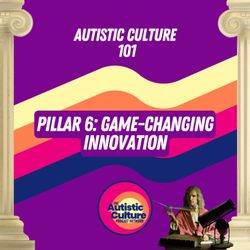
7. Autistic Culture 101: Pillar 6 - Game Changing Innovation
59:36||Ep. 7In this episode of Autistic Culture 101, Dr. Angela Kingdon explores Pillar 6: Game-Changing Innovation—the autistic drive to question assumptions, reimagine systems, and create from sensory truth and moral clarity.Autistic innovation isn’t about chasing trends or applause. It’s about paradigm shifts. From Isaac Newton’s invention of calculus to Richard Branson’s rebellious business model to Angela’s father building his own Hot Rod kit cars—this episode shows how autistic game changers build entirely new systems when old ones fail.🎧 What You’ll LearnWhy autistic thinkers often notice problems no one else seesHow emotional intensity, deep focus, and sensory perception drive innovationThe difference between trend-following disruption and authentic paradigm-buildingHow masking stifles game-changing potential—and how to lean into your visionStories of iconic game changers like Isaac Newton, Steve Jobs, Hannah Gadsby, and Martha Stewart📚 Resources Mentioned🎤 Angela’s TEDx Talk at TEDx Tamworth — on Newton as an autistic game changer📘 Make ‘Em Beg to Work for You – Angela’s Hiring Book📖 Big Magic by Elizabeth Gilbert📺 Lessons in Chemistry (TV series featuring autistic-coded innovation)Related Episodes:Industrial Light & MagicLessons in Chemistry is AutisticFreddie Mercury🌟 Connect With Us📱 Follow us on Instagram🎧 Find us on Apple Podcasts and Spotify🛍️Our Autism-affirming merch shop🌐 Learn more at www.autisticculturepodcast.com