Share
Atelier
Recovering a Life's Work with Jessica Roscio & Rachel Passannante
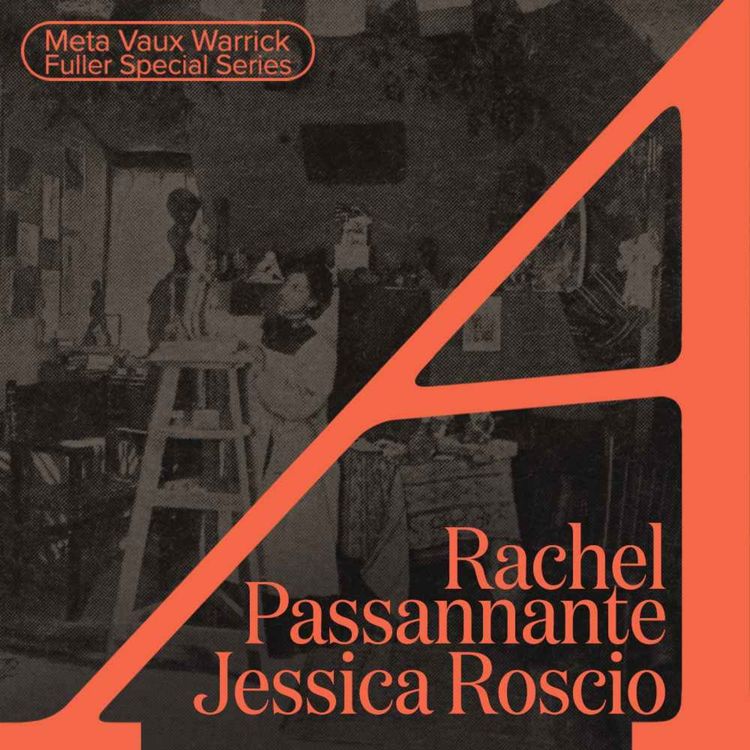
Museums rarely build a permanent space around a single artist's life, but doing so can transform how an institution understands its own collection. The Danforth Art Museum's relationship to Meta Vaux Warrick Fuller, whose family gifted nearly 400 works to the museum in 2006, has evolved through building a hard-won permanent gallery and a recreated studio space modeled on a single surviving photograph.
In this episode, Jessica Roscio, director and curator at the Danforth Art Museum, and Rachel Passannante, the museum's associate curator, discuss how they built Fuller's permanent gallery after the museum's 2019 relocation, the ongoing research challenges posed by undocumented and unattributed works, and their continued relationship with the Fuller family, including descendant David Fuller in Framingham. They describe the 1910 fire that destroyed much of Fuller's early body of work, the recovery of her career through later commissions including Ethiopia Awakening, and the more than century-old scrapbook recently donated to the museum, now digitized and accessible through the Danforth's website.
This special series of Atelier was produced in conjunction with a three-day symposium dedicated to celebrating the work and life of Meta Vaux Warrick Fuller. Across these conversations, we bring together scholars, curators, and other special guests to revisit her legacy and situate it within its historical moment.
The symposium and podcast series were made possible with support from the Columbia Global Paris Center and the Terra Foundation for American Art, and with the participation of the Columbia Institute for Ideas and Imagination, the Schomburg Center for Research in Black Culture, the Metropolitan Museum of Art, and the Danforth Art Museum at Framingham State University.
Website - globalcenters.columbia.edu/paris
Newsletter - globalcenters.columbia.edu/content/paris-newsletters
Instagram - instagram.com/cgcparis
LinkedIn - linkedin.com/company/cgcparis
YouTube - youtube.com/@CGCParis
Host: Marie Doezema
Production: Marie Doezema, Tessa Overvoorde, and Anthony Valette
Editing: Theo Albaric
Music: Robert Schumann’s Rêverie performed by Magdalena Stern-Baczewska
The Columbia Global Paris Center is part of a network of 11 global centers of Columbia University in the City of New York, one of the world's leading academic institutions. The centers serve as knowledge hubs that aim to educate and inspire through research, dialogue, and action. They advance understanding, facilitate partnerships, and build the bridges necessary to tackle our changing world.
Columbia Global brings together the Columbia Global Centers, Columbia World Projects, the Committee on Global Thought, and the Institute for Ideas and Imagination.
More episodes
View all episodes
2. Stitching Memory and Reclaiming Identity with Maha Al-Daya
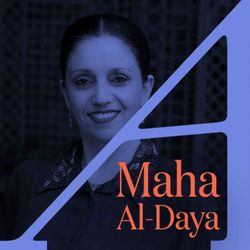
34:39||Season 3, Ep. 2In April 2024, after enduring six months of war, Palestinian artist Maha Al-Daya was forced to flee her home in Gaza with her family. Throughout her exodus, Al-Daya continued to make art using whatever surrounded her: charcoal from burnt wood, canvas from her tent, flyers dropped by the Israeli planes. It was the only way she knew how to process her loss and maintain her identity. Al-Daya is now an artist-in-residence at Reid Hall, jointly hosted by the Columbia Institute for Ideas and Imagination, the Columbia Global Paris Center, and Sciences Po as part of the PAUSE program. In this episode, she tells her story and discusses her latest works, created entirely through embroidery—a medium she calls "the language of Palestinian women." She also shares the challenges of building a new life in France while feeling the constant pull of the home she left behind, her approach to different artistic mediums and techniques, and her ambition to create art that focuses less on war, and more on hope.Website - globalcenters.columbia.edu/parisNewsletter - globalcenters.columbia.edu/content/paris-newslettersInstagram - instagram.com/cgcparisLinkedIn - linkedin.com/company/cgcparisYouTube - youtube.com/@CGCParisHost: Marie DoezemaProduction: Marie Doezema, Tessa Overvoorde, and Anthony ValetteTranslation and Interpretation: Yasmine HajEditing: Theo AlbaricMusic: Lili Boulanger’s Nocturne performed by Magdalena Baczewska and Sasha HeWith thanks to the Nadia and Lili Boulanger International Centre in ParisThe Columbia Global Paris Center is part of a network of 11 global centers of Columbia University in the City of New York, one of the world's leading academic institutions. The centers serve as knowledge hubs that aim to educate and inspire through research, dialogue, and action. They advance understanding, facilitate partnerships, and build the bridges necessary to tackle our changing world.Columbia Global brings together the Columbia Global Centers, Columbia World Projects, the Committee on Global Thought, and the Institute for Ideas and Imagination.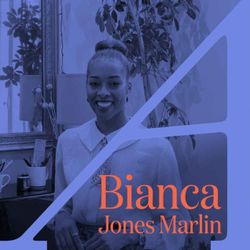
1. Can Experiences Be Inherited? with Dr. Bianca Jones Marlin
33:54||Season 3, Ep. 1How can a young girl’s experience of starvation lead to metabolic issues in her grandchildren? The answer is transgenerational epigenetic inheritance – how biological responses to physical, emotional, or environmental stress can be passed down through generations. In this episode, Dr. Bianca Jones Marlin, the Herbert and Florence Irving Assistant Professor of Cell Research at the Zuckerman Institute at Columbia University in New York City, explains the mechanics behind transgenerational epigenetic inheritance and provides a glimpse into her latest project, TRANSMIND, which investigates whether memories alone can be inherited in some form. She also shares how growing up with foster siblings fed her interest in parental-offspring relationships, explores whether scientists can be activists, and challenges the assumed objectivity of science.Bianca Jones Marlin was a 2025 – 2026 Reid Hall Faculty Visitor, an initiative jointly supported by the Columbia Global Paris Center and the Institute for Ideas and Imagination.Website - globalcenters.columbia.edu/parisNewsletter - globalcenters.columbia.edu/content/paris-newslettersInstagram - instagram.com/cgcparisLinkedIn - linkedin.com/company/cgcparisYouTube - youtube.com/@CGCParisHost: Marie DoezemaProduction: Marie Doezema, Tessa Overvoorde, and Anthony ValetteEditing: Theo AlbaricMusic: Lili Boulanger’s Nocturne performed by Magdalena Baczewska and Sasha HeWith thanks to the Nadia and Lili Boulanger International Centre in ParisThe Columbia Global Paris Center is part of a network of 11 global centers of Columbia University in the City of New York, one of the world's leading academic institutions. The centers serve as knowledge hubs that aim to educate and inspire through research, dialogue, and action. They advance understanding, facilitate partnerships, and build the bridges necessary to tackle our changing world.Columbia Global brings together the Columbia Global Centers, Columbia World Projects, the Committee on Global Thought, and the Institute for Ideas and Imagination.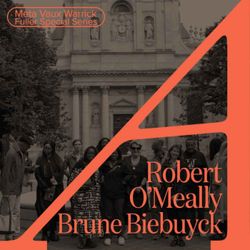
10. Returning to Reid Hall with Robert O’Meally and Brune Biebuyck
45:13||Season 2.5, Ep. 10An institution founded to welcome American women artists once turned Meta Vaux Warrick Fuller away at the door. Decades later, bringing a symposium on Fuller to that same place, Reid Hall, was a deliberate act of reckoning. In this episode, Robert O’Meally, Zora Neale Hurston Professor of English and Comparative Literature at Columbia University, and Brune Biebuyck, director of Reid Hall and the Columbia Global Paris Center, reflect on what the symposium uncovered—and where it might lead next. O’Meally considers Fuller alongside figures including Bessie Smith, Frederick Douglass, and Henry Ossawa Tanner, tracing a shared impulse toward self-determination and artistic freedom. Biebuyck reflects on the symposium as an act of reparation and looks ahead to what could follow: annual gatherings, future residencies, and perhaps even a sculpture inspired by Fuller’s work at Reid Hall.This special series of Atelier was produced in conjunction with a three-day symposium dedicated to celebrating the work and life of Meta Vaux Warrick Fuller. Across these conversations, we bring together scholars, curators, and other special guests to revisit her legacy and situate it within its historical moment.The symposium and podcast series were made possible with support from the Columbia Global Paris Center and the Terra Foundation for American Art, and with the participation of the Columbia Institute for Ideas and Imagination, the Schomburg Center for Research in Black Culture, the Metropolitan Museum of Art, and the Danforth Art Museum at Framingham State University.Website - globalcenters.columbia.edu/parisNewsletter - globalcenters.columbia.edu/content/paris-newslettersInstagram - instagram.com/cgcparisLinkedIn - linkedin.com/company/cgcparisYouTube - youtube.com/@CGCParisHost: Marie DoezemaProduction: Marie Doezema, Tessa Overvoorde, and Anthony ValetteEditing: Theo AlbaricMusic: Robert Schumann’s Rêverie performed by Magdalena Stern-BaczewskaThe Columbia Global Paris Center is part of a network of 11 global centers of Columbia University in the City of New York, one of the world's leading academic institutions. The centers serve as knowledge hubs that aim to educate and inspire through research, dialogue, and action. They advance understanding, facilitate partnerships, and build the bridges necessary to tackle our changing world.Columbia Global brings together the Columbia Global Centers, Columbia World Projects, the Committee on Global Thought, and the Institute for Ideas and Imagination.
9. The Wife, the Mother, the Grandmother with David Fuller
35:57||Season 2.5, Ep. 9Though archival work can piece together Meta Vaux Warrick Fuller’s work, exhibitions, and influence across generations, some things can only be known through the people who knew her: the everyday details, memories, and stories that bring an artist’s life into focus.In this episode, David Fuller, grandson of Meta Vaux Warrick Fuller, shares personal memories of the woman he knew as a gentle, tireless presence in the family home at 31 Warren Road in Framingham. He describes her quiet dedication to her work and to the women in her neighborhood whom she helped through poetry, conversation, and long walks in the garden; the story of the studio she built from her own inheritance, without telling her husband until the walls were up; the man sent by neighbors to ask the Fullers to move, and how a china tea service and a list of her sculptures changed his mind. He also reflects on what the Paris symposium revealed to him about her life before the family home — the Paris years, the fire, the decades of work he was too young to fully understand — and on what he hopes to carry back to his siblings, his children, and his grandchildren.This special series of Atelier was produced in conjunction with a three-day symposium dedicated to celebrating the work and life of Meta Vaux Warrick Fuller. Across these conversations, we bring together scholars, curators, and other special guests to revisit her legacy and situate it within its historical moment.The symposium and podcast series were made possible with support from the Columbia Global Paris Center and the Terra Foundation for American Art, and with the participation of the Columbia Institute for Ideas and Imagination, the Schomburg Center for Research in Black Culture, the Metropolitan Museum of Art, and the Danforth Art Museum at Framingham State University.Website - globalcenters.columbia.edu/parisNewsletter - globalcenters.columbia.edu/content/paris-newslettersInstagram - instagram.com/cgcparisLinkedIn - linkedin.com/company/cgcparisYouTube - youtube.com/@CGCParisHost: Marie DoezemaProduction: Marie Doezema, Tessa Overvoorde, and Anthony ValetteEditing: Theo AlbaricMusic: Robert Schumann’s Rêverie performed by Magdalena Stern-BaczewskaThe Columbia Global Paris Center is part of a network of 11 global centers of Columbia University in the City of New York, one of the world's leading academic institutions. The centers serve as knowledge hubs that aim to educate and inspire through research, dialogue, and action. They advance understanding, facilitate partnerships, and build the bridges necessary to tackle our changing world.Columbia Global brings together the Columbia Global Centers, Columbia World Projects, the Committee on Global Thought, and the Institute for Ideas and Imagination.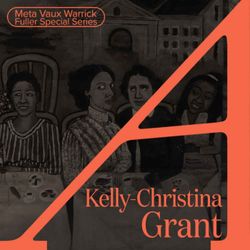
8. A Lineage of Black Women Artists with Kelly-Christina Grant
25:04||Season 2.5, Ep. 8Artistic influence rarely travels in straight lines. It moves through chance encounters, shared geography, oral advice passed between generations, and letters that outlast the people who wrote them. Understanding how one artist shapes another requires tracing those paths across time and place, and accepting that the connections most worth studying are often the ones history has not yet named.In this episode, art historian Kelly Christina Grant discusses her research into the relationship between Meta Vaux Warrick Fuller and Lois Mailou Jones, two Black women artists separated by nearly three decades but linked by a formative encounter at Oak Bluffs on Martha's Vineyard — one of the few places during widespread segregation where Black leisure and community were possible. Grant traces how Fuller's direct encouragement to travel to Paris shaped Jones's decision to sail there in 1937, and how their correspondence continued into the 1940s, revealing a relationship built on mutual recognition rather than one-directional influence. She also situates Fuller within a broader lineage of Harlem Renaissance artists — including Aaron Douglas and Elizabeth Catlett — who drew on her early integration of Pan-African identity and narrative into sculptural form, and reflects on what the symposium revealed about the archives and materials that still remain to be examined, including diaries at the Schomburg, photographs at the Musée Rodin, and her own poetry, brought to the symposium by her grandson David Fuller.This special series of Atelier was produced in conjunction with a three-day symposium dedicated to celebrating the work and life of Meta Vaux Warrick Fuller. Across these conversations, we bring together scholars, curators, and other special guests to revisit her legacy and situate it within its historical moment.The symposium and podcast series were made possible with support from the Columbia Global Paris Center and the Terra Foundation for American Art, and with the participation of the Columbia Institute for Ideas and Imagination, the Schomburg Center for Research in Black Culture, the Metropolitan Museum of Art, and the Danforth Art Museum at Framingham State University.Website - globalcenters.columbia.edu/parisNewsletter - globalcenters.columbia.edu/content/paris-newslettersInstagram - instagram.com/cgcparisLinkedIn - linkedin.com/company/cgcparisYouTube - youtube.com/@CGCParisHost: Marie DoezemaProduction: Marie Doezema, Tessa Overvoorde, and Anthony ValetteEditing: Theo AlbaricMusic: Robert Schumann’s Rêverie performed by Magdalena Stern-BaczewskaThe Columbia Global Paris Center is part of a network of 11 global centers of Columbia University in the City of New York, one of the world's leading academic institutions. The centers serve as knowledge hubs that aim to educate and inspire through research, dialogue, and action. They advance understanding, facilitate partnerships, and build the bridges necessary to tackle our changing world.Columbia Global brings together the Columbia Global Centers, Columbia World Projects, the Committee on Global Thought, and the Institute for Ideas and Imagination.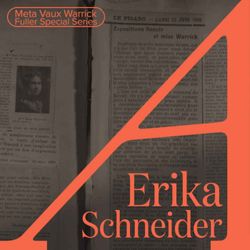
7. The Making of a Catalogue Raisonné with Erika Schneider
25:03||Season 2.5, Ep. 7A catalogue raisonné could be considered as an act of recovery, built from scattered archives, family memory, and chance encounters. Tracking an artist's full body of work means deciding, piece by piece, whether something is destroyed or simply unlocated, and living with the uncertainty that distinction requires.In this episode, art historian Erika Schneider discusses her years-long project to build a digital catalogue raisonné of Meta Vaux Warrick Fuller's work, now spanning more than 265 sculptures across twenty public collections. Schneider describes mapping Fuller's life and career using ArcGIS, her method for sourcing fragmentary addresses and exhibition records in Paris, and her 2022 Panorama article examining the deletions and corrections Fuller made to her own scrapbook. She also traces the aftermath of the 1910 fire that destroyed much of Fuller's early work, including the fate of The Impenitent Thief, and reflects on her ongoing conversations with Fuller's descendants as new pieces and archives continue to surface.This special series of Atelier was produced in conjunction with a three-day symposium dedicated to celebrating the work and life of Meta Vaux Warrick Fuller. Across these conversations, we bring together scholars, curators, and other special guests to revisit her legacy and situate it within its historical moment.The symposium and podcast series were made possible with support from the Columbia Global Paris Center and the Terra Foundation for American Art, and with the participation of the Columbia Institute for Ideas and Imagination, the Schomburg Center for Research in Black Culture, the Metropolitan Museum of Art, and the Danforth Art Museum at Framingham State University.Website - globalcenters.columbia.edu/parisNewsletter - globalcenters.columbia.edu/content/paris-newslettersInstagram - instagram.com/cgcparisLinkedIn - linkedin.com/company/cgcparisYouTube - youtube.com/@CGCParisHost: Marie DoezemaProduction: Marie Doezema, Tessa Overvoorde, and Anthony ValetteEditing: Theo AlbaricMusic: Robert Schumann’s Rêverie performed by Magdalena Stern-BaczewskaThe Columbia Global Paris Center is part of a network of 11 global centers of Columbia University in the City of New York, one of the world's leading academic institutions. The centers serve as knowledge hubs that aim to educate and inspire through research, dialogue, and action. They advance understanding, facilitate partnerships, and build the bridges necessary to tackle our changing world.Columbia Global brings together the Columbia Global Centers, Columbia World Projects, the Committee on Global Thought, and the Institute for Ideas and Imagination.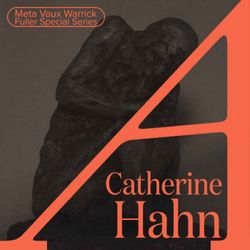
6. Teaching the Overlooked with Catherine Hahn
29:12||Season 2.5, Ep. 6Art history has long organized itself around movements and groupings that determine whose work gets taught, preserved, and remembered. When the gaps in that history align with race, gender, and geography, what gets lost is structural.In this episode, artist and academic Catherine Hahn discusses how she first encountered Meta Vaux Warrick Fuller in a fifteen-minute segment of a Harlem Renaissance course at SOAS in 1993, and how that encounter eventually led her to create a dedicated undergraduate module at the University of Kent. Hahn offers a close reading of Secret Sorrow, also known as Man Eating His Heart, tracing its relationship to Stephen Crane's 1895 symbolist poem In the Desert and arguing that the story of Fuller's visit to Rodin belongs to Fuller, not to him. She also closes with an urgent note on the ongoing collapse of arts education in British universities, and what is at stake when a newly diversified curriculum is dismantled before it takes root.This special series of Atelier was produced in conjunction with a three-day symposium dedicated to celebrating the work and life of Meta Vaux Warrick Fuller. Across these conversations, we bring together scholars, curators, and other special guests to revisit her legacy and situate it within its historical moment.The symposium and podcast series were made possible with support from the Columbia Global Paris Center and the Terra Foundation for American Art, and with the participation of the Columbia Institute for Ideas and Imagination, the Schomburg Center for Research in Black Culture, the Metropolitan Museum of Art, and the Danforth Art Museum at Framingham State University.Website - globalcenters.columbia.edu/parisNewsletter - globalcenters.columbia.edu/content/paris-newslettersInstagram - instagram.com/cgcparisLinkedIn - linkedin.com/company/cgcparisYouTube - youtube.com/@CGCParisHost: Marie DoezemaProduction: Marie Doezema, Tessa Overvoorde, and Anthony ValetteEditing: Theo AlbaricMusic: Robert Schumann’s Rêverie performed by Magdalena Stern-BaczewskaThe Columbia Global Paris Center is part of a network of 11 global centers of Columbia University in the City of New York, one of the world's leading academic institutions. The centers serve as knowledge hubs that aim to educate and inspire through research, dialogue, and action. They advance understanding, facilitate partnerships, and build the bridges necessary to tackle our changing world.Columbia Global brings together the Columbia Global Centers, Columbia World Projects, the Committee on Global Thought, and the Institute for Ideas and Imagination.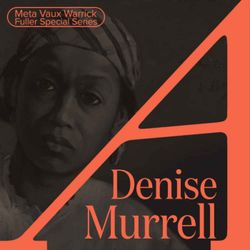
5. At the Dawn of the Harlem Renaissance with Denise Murrell
30:54||Season 2.5, Ep. 5More than a cultural flourishing, the Harlem Renaissance was a deliberate act of remaking the image of Black America at a moment when it was suppressed and rendered invisible by the mainstream art world. For the women artists at its center, that effort operated under an additional pressure: the expectation that marriage and family should take precedence over a professional artistic career.In this episode, Denise Murrell, curator-at-large at the Metropolitan Museum of Art, discusses Meta Vaux Warrick Fuller's place at the founding of the Harlem Renaissance and the transatlantic currents that shaped her most significant works. Murrell offers close readings of Ethiopia Awakening and In Memory of Mary Turner as a Silent Protest Against Mob Violence, tracing their formal debt to Rodin and their engagement with the aesthetics of the African continent. She also reflects on why Fuller's refusal to choose between artistic vocation and family life makes her a founding figure not only in sculpture, but in the history of women's self-determination. Murrell's exhibitions include The Harlem Renaissance and Transatlantic Modernism at the Metropolitan Museum of Art and Posing Modernity: The Black Model from Manet to Matisse at Columbia University's Wallach Art Gallery and the Musée d'Orsay.This special series of Atelier was produced in conjunction with a three-day symposium dedicated to celebrating the work and life of Meta Vaux Warrick Fuller. Across these conversations, we bring together scholars, curators, and other special guests to revisit her legacy and situate it within its historical moment.The symposium and podcast series were made possible with support from the Columbia Global Paris Center and the Terra Foundation for American Art, and with the participation of the Columbia Institute for Ideas and Imagination, the Schomburg Center for Research in Black Culture, the Metropolitan Museum of Art, and the Danforth Art Museum at Framingham State University.Website - globalcenters.columbia.edu/parisNewsletter - globalcenters.columbia.edu/content/paris-newslettersInstagram - instagram.com/cgcparisLinkedIn - linkedin.com/company/cgcparisYouTube - youtube.com/@CGCParisHost: Marie DoezemaProduction: Marie Doezema, Tessa Overvoorde, and Anthony ValetteEditing: Theo AlbaricMusic: Robert Schumann’s Rêverie performed by Magdalena Stern-BaczewskaThe Columbia Global Paris Center is part of a network of 11 global centers of Columbia University in the City of New York, one of the world's leading academic institutions. The centers serve as knowledge hubs that aim to educate and inspire through research, dialogue, and action. They advance understanding, facilitate partnerships, and build the bridges necessary to tackle our changing world.Columbia Global brings together the Columbia Global Centers, Columbia World Projects, the Committee on Global Thought, and the Institute for Ideas and Imagination.