Share

Another Nobody
Sheryl "Mac" McCollum: CSI Investigator
Sheryl McCollum—renowned crime scene investigator, cold case expert, and founder of the Cold Case Investigative Research Institute—joins Travis Myers on the Another Nobody podcast to discuss her book Swans Don't Swim In A Sewer.
In this in-depth conversation, McCollum shares insights from decades in forensic investigation, the psychology behind violent crime, and what the public often misunderstands about real-world investigations. She also opens up about the inspiration behind her book, the cases that shaped her career, and why truth, victim advocacy, and evidence must always come first.
This episode is a must-watch for true crime followers, aspiring investigators, and anyone interested in the realities behind headlines and documentaries.
🔔 Subscribe for more interviews with investigators, authors, and voices shaping the true crime conversation.
#TrueCrime #SherylMcCollum #AnotherNobody #ColdCases #Forensics #TravisMyers
Sheryl McCollum interview, Swans Don't Swim In A Sewer, Another Nobody podcast, Travis Myers interview, cold case investigator, CSI expert interview, true crime podcast interview, forensic investigation, crime analysis discussion, cold case research institute, true crime author interview
More episodes
View all episodes
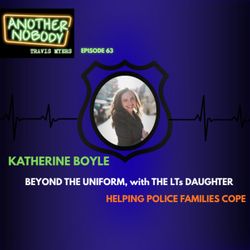
63. Katherine Boyle: Beyond The Uniform With The LTs Daughter, Helping Police Families Cope
01:30:27||Ep. 63In this insightful interview, Katherine Boyle, known as the LT's daughter, shares her journey from fashion to advocating for police families. She discusses the impact of law enforcement careers on families, the importance of communication, and practical tools to strengthen family bonds amidst the challenges faced by police officers.police families, mental health, family communication, law enforcement, advocacy, trauma, work-life balance, police culture, support tools key topicsImpact of police careers on family lifeTools for supporting police familiesThe importance of communication and small gesturesMental health challenges in law enforcementGenerational shifts in police culture and wellness
62. The Dancer And The Cannibal
29:54||Ep. 62In this episode of Storytime with Travis, Another Nobody host Travis Myers tells one of the most disturbing crimes in New York City history.In the summer of 1989, a young Swiss dancer named Monica Birel moved into an East Village apartment with a strange and charismatic man named Daniel Rakowitz. What began as a roommate situation quickly spiraled into something far darker.Rakowitz, known around Tompkins Square Park as a marijuana dealer and eccentric street preacher, claimed to be both Jesus Christ and the Antichrist. But beneath the bizarre persona was something far more dangerous.After Monica tried to force him out of the apartment, Rakowitz murdered her in a brutal attack, dismembered her body, and over the following days cooked parts of her remains.According to witnesses, he even made a stew and served it to unsuspecting homeless people in Tompkins Square Park.This horrifying case shocked New York City and remains one of the most bizarre and disturbing crimes ever committed in the East Village.Join Travis as he breaks down the full story of Monica Birel, Daniel Rakowitz, and the Tompkins Square Park Cannibal.This is Storytime with Travis.true crimetrue crime podcastanother nobody podcaststorytime with travistravis myers podcastmonica bireldaniel rakowitztompkins square park cannibalnyc cannibal caseeast village murder1989 nyc murdernew york crime historycannibal killerdisturbing true crimeunsolved mysteriesnyc horror storiestrue crime stories
61. Dr Fiona Girkin PHD: The Darker Side Of Women
01:04:31||Ep. 61Ever wondered why some women excel at manipulation? Let’s dive into the dark tetrad traits that might explain it. Tag someone who needs to hear this! In our latest chat, Dr. Fiona Girkin breaks down the dark tetrad: psychopathy, narcissism, Machiavellianism, and sadism. These traits can be subtle yet powerful, often lurking in workplaces and social interactions. Did you know that not all narcissists are psychopaths, but all psychopaths are narcissists? Understanding these traits can help you navigate personal and professional relationships better. With the rise of online interactions, sadistic behaviors are also on the rise. The dynamics of female aggression play out differently in digital spaces, and it’s crucial to recognize this shift. Let's keep the conversation going. What’s your take on these traits in today’s society? #DarkTetrad #Psychopathy #Narcissism #MentalHealthAwareness #Psychology
60. POLICE STORIES: VIOLENCE AND RESTRAINT
43:40||Ep. 60In this episode of the Another Nobody podcast, Travis Myers shares heartfelt feedback from listeners and dives into gripping police stories that highlight the themes of restraint and the realities of law enforcement. Through personal anecdotes, he illustrates the challenges faced by police officers and the importance of restraint in high-pressure situations. The conversation also touches on public perceptions of police actions and the statistics that reveal the truth behind police shootings.TakeawaysListener feedback is crucial for improving the podcast.Real-life stories resonate deeply with the audience.Policing involves moments of high tension and decision-making.Restraint is a key principle taught to police officers.Statistics show that most police officers never fire their weapons.Public perception often misrepresents the reality of police work.Travis shares personal experiences to highlight police challenges.The media often sensationalizes police shootings.Understanding the context of police actions is essential.Police are trained to avoid unnecessary violence.
59. Critical Thinking With Carolyn Kraft
01:33:47||Ep. 59Learn five effective strategies to improve your critical thinking skills. This guide is valuable for anyone aiming to think more independently and make informed decisions.In today's fast-paced world, the ability to think critically is more crucial than ever. Yet, many people believe they possess this skill without realizing the complexities involved. In this post, we will explore five essential strategies to enhance your critical thinking skills, enabling you to navigate information more effectively and make informed decisions.Understanding Critical ThinkingCritical thinking involves analyzing facts to form a judgment. It is not merely about being critical but rather about being able to evaluate information, understand different perspectives, and make reasoned decisions. However, as discussed in the recent conversation with Carolyn Kraft, many individuals struggle with critical thinking due to inherent biases and emotional influences. Enhancing your critical thinking skills involves humility, a willingness to engage with diverse perspectives, and a commitment to lifelong learning. By adopting these strategies, you can navigate the complexities of information in today's world with greater confidence and clarity. Takeaways- Embrace humility and acknowledge your limitations.- Seek diverse perspectives and engage in discussions.- Develop strong argumentation skills.- Utilize reliable sources to inform your beliefs.- Cultivate intellectual curiosity for continuous growth.
58. Benjamin Ryan, Journalist For The Free Press: The Fox Varian Decision How Will It Affect The Transgender Movement
01:11:07||Ep. 58gender transition, medical malpractice, parental consent, affirmative therapy, court case, transgender rights, mental health, medical ethics, youth treatment, societal norms summaryThis conversation with Benjamin Ryan delves into the complexities surrounding a recent court case involving a transgender youth and the medical professionals involved in their treatment. The discussion highlights the challenges of affirmative therapy, parental influence, and the evolving standards of care in gender transition. It also addresses the societal and political implications of these medical decisions, the emotional toll on families, and the backlash faced by journalists covering these sensitive topics. Through personal insights and reflections, the conversation emphasizes the importance of truth and ethical considerations in the discourse surrounding gender identity and medical treatment. takeawaysThe case involved significant media attention and public interest.Affirmative therapy practices are under scrutiny in the context of gender transition.Parental consent and coercion play critical roles in medical decisions for minors.Medical organizations are reevaluating guidelines for gender-related surgeries.Cultural norms influence the acceptance of gender transition treatments.The emotional impact on families is profound and often overlooked.Journalists face backlash for covering controversial topics in gender identity.The legal landscape for gender transition cases is evolving and unpredictable.Ethical considerations differ significantly between treating children and adults.Personal experiences shape perspectives on gender identity and medical treatment."I was just praying that she would win.""You can wind up giving tacit approval.""I know what my mother would think."
57. George of the Tinmen: Domestic Violence is a Two Way Street
01:15:50||Ep. 57domestic violence, intimate partner violence, gender roles, male victims, statistics, societal norms, support services, generational changes, violence perception, Erin PizzeyThis conversation delves into the complexities of domestic violence, particularly focusing on intimate partner violence. It highlights the often-overlooked statistics regarding male victims, the differences between bilateral and unilateral violence, and the societal norms that shape perceptions of violence. The discussion also touches on the need for more support services for male victims and the implications of generational changes on violence rates. Furthermore, it critiques the domestic violence industry and its tendency to overlook male victimization, emphasizing the importance of a more inclusive understanding of domestic violence.TakeawaysDomestic violence is a complex issue that affects all genders.Statistics show that a significant percentage of domestic abuse victims are male.Bilateral violence, where both partners are involved, is common in domestic situations.Societal norms often normalize violence by women towards men.There is a lack of support services for male victims of domestic violence.Generational changes have influenced the rates of violence among different demographics.The domestic violence industry often overlooks male victimization in favor of a gendered narrative.Erin Pizzey's work highlights the need for inclusive support for all victims.Awareness and education are crucial in addressing domestic violence.Understanding the complexities of domestic violence can lead to better support and solutions.
55. Lauren Leggieri of The LGB Courage Coalition: Stop Un-Gaying Our Children
01:16:52||Ep. 55transgender, activism, medical ethics, social contagion, gender nonconformity, corruption, detransition, autogynephilia, compassion, societal implicationsIn this conversation, Travis Myers and Lauren Leggieri discuss the complexities surrounding transgender issues, focusing on the impact of social contagion, medical ethics, and the consequences of medical interventions on vulnerable populations. They explore the role of gender nonconformity, the influence of organizations, and the need for compassionate dialogue in addressing these issues. The conversation highlights the societal implications of current transgender policies and the importance of advocating for the rights of same-sex attracted individuals.TakeawaysLauren Leggieri's activism began 20 years ago due to concerns about the rapid transition of friends.The conversation highlights the social contagion effect among gender nonconforming youth.Medical interventions for transgender individuals often lack ethical justification and can lead to harm.There is a significant correlation between autism and transgender identification among youth.The medical community has failed to self-regulate, leading to harmful practices.Many organizations perpetuating transgender ideology are driven by financial incentives.The concept of 'true trans' often excludes the voices of gay and lesbian individuals.Detransitioners face significant backlash from the transgender community.The conversation emphasizes the need for compassion in addressing transgender issues.Legislative action is necessary to protect vulnerable populations from harmful medical practices."It's a very dangerous trend.""We need to start fighting back.""We are all paying for it."