Share

Another Nobody
Professor Stephen Giannangelo: Talks About Samuel Little; America’s Most Prolific Serial Killer
# Exploring the Shadows: Samuel Little and the Overlooked Truths of Black Serial Killers
> Unpacking the complexities of race and violence in true crime.
Samuel Little, a name that rarely graces the headlines, emerges as one of America’s most prolific serial killers, having confessed to 93 murders spanning three decades and 19 states. Yet, his story is often eclipsed by the notoriety of his white counterparts. In this issue, we delve into the complexities surrounding how race influences the perception and media portrayal of serial killers, especially those of African descent.
## The Inquiry That Sparked a Discussion
Recently, we received a thought-provoking letter from a listener named Dave in Winthrop, Massachusetts, who asked, "Why do we never hear about black serial killers?" This question opens a door to a broader conversation about the societal and media biases that affect how stories of violence are shared.
Travis Myers and Steve engage in a rich dialogue about Samuel Little, discussing how he is often overshadowed by more widely publicized white serial killers. **Steve notes** that the FBI's statistics have shifted dramatically, revealing that black male serial killers now constitute over 50% of cases, yet they remain largely absent from public consciousness:
> "The media as a rule basically has never been interested in the black serial killer."
## The Unseen Victims
Little’s victims, often referred to as the "less dead," were primarily marginalized individuals—sex workers and homeless people—whose disappearances seldom made it to the front page. This underscores a critical issue in the narrative of crime: victim visibility is often tied to societal values. Steve points out:
> "These are the kind of victims that we're talking about. Nobody really cares about a whole lot of them because these are the kind of victims that nobody reports that they're missing."
## Media's Role in Shaping Perception
The conversation highlights how media representation shapes public interest and awareness around serial killers. For instance, Travis shares his thoughts on the appeal of certain killers:
> "I do think it's media driven. There is something... that people are attracted to."
The portrayal of serial killers often gravitates toward those who fit a specific mold—typically characterized by their psychological profiles and the sensationalism of their crimes, which further complicates the narrative around black serial killers.
## A Shift in Perspective
As the discussion unfolds, both Travis and Steve reflect on the implications of categorizing killers, especially with the FBI's evolving definitions. Steve argues for a broader understanding of what constitutes a serial killer, emphasizing the importance of psychological motivations over mere statistics:
> "It takes a certain amount of lack of empathy to kill people on a routine basis and continue doing that."
Travis adds that not all killings are driven by the same motivations, citing differences between gang-related violence and sadistic serial murder.
## Conclusion: The Call for Awareness
By uncovering the stories of those like Samuel Little, we challenge the prevailing narratives that often overlook the complexities of race, media representation, and societal values regarding life and death. As we reflect on these discussions, we invite you to think critically about who gets remembered and why.
For those interested in a deeper exploration of these themes, tune into the full episode where we unpack more about Samuel Little and the broader implications of race in crime narratives.
---
This newsletter aims to not only inform but also to provoke thought and discussion around the often-hidden aspects of true crime. We hope you find it enlightening as we continue to delve into the shadows of these stories.
More episodes
View all episodes

89. Stay Silent or Resign: Dr Karla Solheim
53:23||Ep. 89Dr. Karla Solheim, former chair of the Iowa section of the American College of Obstetricians and Gynecologists, joins Travis Myers for a wide-ranging conversation about medical guidelines, pediatric gender medicine, scientific debate, and the personal cost of challenging professional institutions.Dr. Solheim discusses why she wrote an article questioning the evidence behind gender-related medical interventions for young people, what happened after she shared those concerns with ACOG, and why she ultimately chose to resign rather than stop speaking publicly.The conversation also examines Dr. Solheim’s criticisms of WPATH, the role of professional guidelines in medical practice, the visibility of detransitioners in medical research, and the concerns she says doctors and parents should consider when evaluating gender-related care.Dr. Solheim also explains her work with the LGB Courage Coalition and why she believes people with differing views should be allowed to examine evidence, ask difficult questions, and challenge established medical guidance.Topics CoveredWhy Dr. Solheim challenged ACOG’s guidanceThe evidence behind pediatric gender medicineWPATH and the development of medical guidelinesScientific disagreement and professional censorshipThe role of detransitioners in medical researchWhy some physicians may be afraid to speak publiclyGender nonconformity, adolescence, and pubertyQuestions parents may want to ask healthcare providersWhat doctors should know about long-term outcomesDr. Solheim’s work with the LGB Courage CoalitionChapters00:00 Introduction to Dr. Karla Solheim00:53 Researching pediatric gender care02:16 Questions about the evidence04:43 Court documents and the article06:21 ACOG’s response07:41 Is WPATH a scientific or advocacy organization?11:07 How professional guidelines influence doctors15:43 What ACOG objected to17:41 The resign-or-stay-silent ultimatum19:40 Why Dr. Solheim chose to resign22:43 The LGB Courage Coalition26:54 Concerns about long-term outcomes29:49 Gender dysphoria and adolescence31:56 Social media and detransition32:58 Why doctors may not hear about detransitioners36:45 Why physicians may stay silent41:36 Advice for parents44:30 Questions to ask a doctor47:26 What doctors should know48:58 Where to find Dr. Solheim’s workGuestDr. Karla SolheimDr. Solheim is a physician from Iowa and the medical director of the LGB Courage Coalition. In this episode, she shares her perspective on medical guidelines, gender-related care, scientific debate, and professional accountability.Important ContextThis episode presents the views and claims discussed by the guest and host. It is intended for conversation and commentary, not as medical advice. Parents and patients should consult qualified healthcare professionals regarding individual medical decisions.Suggested Call to ActionIf you found this conversation valuable, subscribe to the channel, share the episode, and leave a comment with your perspective on scientific debate and professional accountability in medicine.gender medicine debate, Dr. Karla Solheim interview, pediatric gender care, medical guidelines, ACOG guidelines, WPATH controversy, gender dysphoria, detransitioners, medical freedom, scientific debate, academic freedom in medicine, doctors speaking out, medical censorship, gender nonconforming children, puberty and gender dysphoria, parents and gender medicine, long-term outcomes gender medicine, LGB Courage Coalition, Informed Descent, Travis Myers interview, healthcare whistleblower, medical ethics, evidence-based medicine, professional medical organizations
88. Carolyn Kraft: The Generational Divide
01:29:17||Ep. 88# Navigating the Generational Gap: Insights on Happiness and Mental HealthExploring how social media shapes our well-being across generations.In a candid exchange between Travis Myers and Carolyn Kraft, they delve into the complex dynamics of generational differences, particularly regarding mental health and happiness. ## The Generational DivideTravis opens the conversation by highlighting a concerning trend: only about 30% of millennials and Gen Z report feeling truly happy, a stark contrast to 60% of women from previous decades. He expresses his worry about the pessimistic attitudes that seem to permeate younger generations. Carolyn acknowledges these feelings but points to the role of social media in shaping perceptions of happiness and self-worth.## The Impact of Social MediaCarolyn emphasizes how social media creates an environment rife with comparison. "Comparison is the death of happiness," she states, reflecting on how curated online personas can lead to unrealistic standards and feelings of inadequacy. She observes that teenage girls, in particular, may struggle with their mental health due to the constant barrage of edited images and highlight reels that don't reflect reality."Social media is everyone's highlight reel. People forget that what they see isn't the full picture."## The Double-Edged Sword of AwarenessThe conversation shifts to how social media also normalizes discussions around mental health issues. While this can foster solidarity, Carolyn warns that it might lead some to identify too closely with their struggles, potentially exacerbating their anxiety. She shares her experience with anxiety and how online discussions can sometimes implant new fears rather than alleviate them. This perspective leads to a thoughtful dialogue about the consequences of oversharing and the potential for social contagion in mental health.## Rethinking Therapy and RecoveryTravis and Carolyn discuss the evolution of therapy in today's culture. Carolyn points out that while therapy can be beneficial, it can also lead to an overemphasis on one’s problems. She argues for a balance between acknowledging struggles and actively working to move past them, suggesting that sometimes, simply pushing through is necessary. "There comes a time when you're dealing with something, and you almost have to just shut your mind off and get over it."## Conclusion: Finding BalanceThe episode closes with a reflection on the importance of maintaining a positive mindset amidst the noise of social media and generational expectations. Both Travis and Carolyn advocate for a proactive approach to mental health — one that embraces positivity and recognizes the power of choice in shaping our perspectives.This discussion is a reminder that while the challenges of modern life are real, so too are the tools we have to navigate them. For a deeper dive into this conversation, listen to the full episode.
87. Travis Talks Stuff: Role Models/War on Language/Some Crime Reads
28:44||Ep. 87# Lessons from Role Models: Reflections on Influence Exploring the impact of role models on personal growth and language.In this episode of the Another Nobody Podcast, Travis Myers dives into the profound influence of role models on personal development. He responds to questions from listeners, reflecting on the figures who shaped his life and the language we use today.## Who Shaped Travis?Travis begins by addressing a question from Lori M. about his role models during his youth. He recalls the significant impact of his mother, Mary, who taught him resilience and the importance of kindness. "My mother... taught me how to read when the school system failed me... she did everything to teach us kids right from wrong." He also credits his grandfathers for instilling values of respect and responsibility, despite not having a strong relationship with his own father. Travis mentions other influential figures from his neighborhood, like John Pierce and Larry Marley, who treated him as an equal despite being just a kid. "They spoke to me as if I were an equal, even though I was just a kid. That always meant something." Additionally, he shares how he found inspiration in TV and movie characters, particularly John Wayne and the tough yet moral Fonzie from *Happy Days*. ## The Language We UseThe conversation shifts as Travis addresses a statement from Joe P., who expresses frustration about the misapplication of words in today's language. "I am so irritated by the misuse and fabrication of words... there seems to be an outright war on the English language." Travis agrees, lamenting how words like "gaslighting" have lost their original meaning and context in modern vernacular. He emphasizes the importance of preserving the integrity of language as a reflection of our thoughts and culture.## Final ThoughtsTravis concludes this episode by encouraging listeners to consider the role models in their lives and how they influence their understanding of language and values. He reflects on the need for decent role models in a world that seems to lack them today. This episode resonates with anyone reflecting on the figures that have shaped their lives and challenges us to think critically about the words we choose to use. Listen to the full episode for more insights and stories from Travis's life.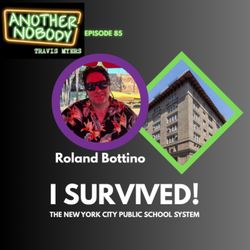
85. Roland Bottino: I Survived! The NYC Public School System
01:09:00||Ep. 85# Remembering the Freedom of Youth in NYC> A nostalgic conversation about growing up in the city and its lost freedoms.Roland and Travis reminisce about their childhood experiences growing up in New York City, touching on the unique freedoms they enjoyed and the vibrant community life that seems lost today.## The Passage of Time"It went really quick. It really did." Reflecting on their shared past, Roland and Travis acknowledge how quickly time has flown since their days at Wagner Junior High School. As they discuss their childhood, they remind us all to cherish the fleeting moments of youth.## The Grind of TeachingTravis points out that despite the perception of teachers having summers off, the reality is often a grind. Roland, who retired from teaching, agrees, sharing how the job can wear you down, yet there's a thrill in the energy of the classroom. > "I feel like I'm back as a teacher, but I don't have to go in... There really is an energy what you say about a grind."## Adventures and ChoicesBoth men reflect on their youthful indiscretions and adventures, revealing how their early experiences shaped them. Roland mentions his time in the army as a transformative period.> "A lot of experiences... when you're a hellraiser, you put yourself in bad situations. You have a lot of stories to tell."## A New Generation's RealityAs they compare their upbringing with that of today's youth, they lament the loss of freedom and the impact of technology. "Young people today don’t know the freedoms that we enjoyed. It’s lost on them," Travis asserts, highlighting how the digital age has altered social interactions.## Nostalgia for NightlifeThey also express nostalgia for the vibrant nightlife of their youth, recalling how the city was filled with clubs and social venues where people dressed to impress and engaged with one another. > "Even if you were dressing down, you cared how you looked. Today, you go to New York City, all those places are gone."## ReflectionIn their warm exchange, Roland and Travis not only celebrate their shared history but also reflect on what has been lost in today's world. Their conversation serves as a reminder of the value of genuine connection and the simple joys of youth that seem to fade away with time. To hear more about their stories and insights, listen to the full episode.
84. Terrence P Dwyer: Author And Retired NYS Police Investigator
01:32:31||Ep. 84# From Bronx Beginnings to Crime Solving> Terry Dwyer shares his journey through law enforcement and life.In an eye-opening conversation, Terry Dwyer reflects on his path to becoming a law enforcement officer, sharing stories that blend personal anecdotes with the realities of crime in New York City.## A Love Letter to Law EnforcementTravis Myers kicks off the discussion by complimenting Terry's book, which he describes as both a memoir and a true crime narrative. It's not just about crime; it’s a heartfelt tribute to his wife, Joan, showcasing the personal side of a profession often portrayed in stark terms.## Growing Up in the BronxTerry recounts his upbringing in the Bronx during a tumultuous time for the city. He paints a vivid picture of a community rife with crime, where his father’s connections to law enforcement sparked his interest in the field. > "I grew up in the Bronx in a time when the Bronx was like an oasis compared to the rest of New York City," Terry shares, highlighting the neighborhood's unique culture and challenges.## The Call to ServeHis journey began as a correction officer at Rikers Island, where he learned invaluable skills in communication and conflict resolution. > "Every cop should start off in correction... you learn to talk to people and the most unreasonable people in the world," Terry explains, emphasizing the lessons learned during his time in correctional facilities.## The Transition to the State PoliceTerry's career transitioned to the New York State Police after being inspired by the respect troopers commanded among inmates. > "I heard them talking about the troopers, and just the respect and fear they had was eye-opening," he recalls, underscoring the influence of that moment on his decision.## A Detective's PerspectiveDuring his seventeen-and-a-half-year tenure in the Bureau for the State Police, Terry thrived on engaging with the public to uncover truths rather than simply seeking guilt. > "As a detective, we don't seek guilt. We seek the truth. And the truth can be so fascinating sometimes," he states, capturing the essence of detective work as a pursuit of understanding.Terry Dwyer’s narrative is not just one of crime and law enforcement; it’s a reflection on life, community, and the personal stories that shape us. Through his experiences, he reminds us that understanding people is at the heart of solving mysteries.For more insights and engaging stories, listen to the full episode.
83. Jason Arday: Academia’s Miracle Man
26:05||Ep. 83# The Complex Legacy of Jason Arday> Exploring the life, achievements, and controversies of a remarkable figure.In this issue, we dive into the life and tragic death of Jason Arday, a Cambridge University professor whose journey was marked by remarkable claims and serious allegations. ## A Promising Scholar Jason Arday was a 41-year-old professor of sociology at the University of Cambridge, focusing on critical issues like race, mental health, and social justice. His work sought to illuminate the experiences of the underrepresented, making his untimely death a point of sorrow for many. Yet, as we explore, his legacy is complicated by serious accusations of academic dishonesty. ## The Circumstances of His Death Day was found dead at his home in South London on August 14, 2023. While initial reports indicated no foul play, the details surrounding his death have raised questions. His family described a campaign of misinformation and abuse that left him feeling overwhelmed. Friends reported he expressed despair in the days leading up to his passing, leading many to believe he may have taken his own life. > "Many friends have publicly reported that he had expressed despair and was saying that he could not go on in the days before his death." ## The Plagiarism Scandal The media spotlight intensified following allegations that Day had plagiarized significant portions of his academic work. A report revealed that his thesis, completed in 2015, had over 180 sentences directly lifted from another scholar’s work. This shocking revelation prompted scrutiny not just on his academic integrity, but also on the systems that allowed such behavior to persist. Day's defense centered around claims of inadequate supervision during his PhD program, stating, "I was not given the guidance I needed." Despite the overwhelming evidence, his university concluded that the issues were merely "honest and reasonable errors," allowing his PhD to stand. ## A Life of Contradictions Day's life story is filled with extraordinary claims, from overcoming severe developmental challenges to becoming a celebrated athlete and scholar. He recounted being diagnosed with autism at a young age, facing expectations of never speaking or walking. Yet, he claimed to have defied these odds dramatically, attributing his recovery to intensive therapy and support from his wife.Yet, as we look deeper, inconsistencies in his narratives raise eyebrows. He claimed to have run multiple marathons and raised millions for charity, but questions remain about the veracity of these accomplishments. > "Let me say that again. The chances that his thesis was not plagiarized was one in a hundred billion." ## Reflection Jason Arday's story serves as a poignant reminder of the complexities of human experience. His contributions to academia and advocacy for social justice are overshadowed by the controversies surrounding his integrity. As we reflect on his life, we’re left with questions about the cost of ambition and the pressures faced by those in the public eye. For a deeper exploration of Day's life and the implications of his choices, listen to the full episode.
82. Lisa Britton: Is Modern Feminism hurting Women?
01:08:35||Ep. 82feminism, gender dynamics, economic shifts, gender pay gap, systemic bias, family impact, victimhood misogyny, happiness, modern womanSummaryIn this conversation, Travis Myers and Lisa discuss the evolution of feminism and its impact on modern society, particularly focusing on how current feminist movements may be failing women. They explore historical waves of feminism, economic shifts affecting gender dynamics, misconceptions surrounding the gender pay gap, systemic biases against men, and the implications of the so-called gender wars on family structures. The discussion also touches on the happiness of women today compared to previous decades, emphasizing the need for harmony between genders rather than competition.TakeawaysFeminism today is perceived as failing women.Men and women should work together, not as rivals.The gender pay gap is often misrepresented.Men predominantly occupy dangerous jobs.Happiness among women is linked to marriage and motherhood.The narrative of male privilege is being challenged.There is a growing loneliness crisis among young people.Victimhood misogyny is emerging as a backlash.The gender war is detrimental to family structures.True equality values the differences between genders.
81. Travis Goes To The Movies: The 15 Best New York City Movies According To “Nobody”
26:44||Ep. 81# Exploring New York Through Cinema: A Personal Journey> Travis Myers shares his top films set in the Big Apple.Hey there,In this episode, Travis Myers dives deep into his love for cinema, specifically movies set in New York City. It's a journey through time, nostalgia, and the emotional connections that these films evoke.## Favorite Films About New York CityTravis reflects on the challenge of narrowing down his favorite films, leading to an expansive list of 16 movies that capture the essence of New York. Instead of ranking them, he decided to present them chronologically, allowing us to experience the evolution of storytelling through the decades.### Classic Gems- **A Tree Grows in Brooklyn (1945)**: A heartbreaking story of a young girl, Francie Nolan, who finds solace in books while living in a tough Brooklyn tenement. Travis emphasizes, _"It's a classic tear jerker and a must-watch, beautifully written, beautifully acted."_- **On the Waterfront (1954)**: Featuring Marlon Brando, this film explores the moral dilemmas of a washed-up boxer caught between loyalty and integrity. Travis notes its critical acclaim, highlighting its 12 Academy Award nominations.- **Marty (1955)**: A touching romance about an unattractive butcher who finds love, showing the beauty of ordinary lives. _"This is another must-see film, especially for those who really love a classic romance,"_ Travis shares.### Iconic New York Narratives- **The Godfather (1972 & 1974)**: Combining both parts, Travis calls it a perfect representation of a New York mafia family, showcasing the depth of its characters and story arcs. _"If you don't know these two, you need to get with it,"_ he asserts.- **Taxi Driver (1976)**: A powerful exploration of urban alienation, this film delves into the psyche of a Vietnam veteran navigating a decaying city. _"Another one you just gotta see to appreciate,"_ says Travis.### Coming-of-Age and Family Dynamics- **The Wanderers (1979)**: A nostalgic look at teenage life in the Bronx, this film resonates with Travis as it reflects the experiences of real New York City teenagers. _"It's a fun, it's a real fun one. It's got a great look, a great feel, and a great soundtrack,"_ he enthuses.- **Fatso (1980)**: A heartwarming comedy about a middle-aged bachelor navigating love and family dynamics while dealing with weight loss. Travis describes it as _"a sweet, funny, heartwarming story of a nutty family."_---As Travis shares these cinematic treasures, it's clear that each film tells a unique story about New York City, capturing the spirit of the city through the lens of unforgettable characters and narratives. For a full exploration of these films and more insights from Travis, tune in to the latest episode!