Share
And The Writer Is...with Ross Golan
Ep. 264: How Aaron Dessner Became an Industry Favorite and the 3AM Text That Became 'folklore'
Today's guest is a musician's musician who co-founded The National, the Grammy-winning band behind Boxer, High Violet and Sleep Well Beast.
He co-wrote and produced Taylor Swift's folklore and evermore, including cardigan and willow. folklore won Album of the Year at the Grammys.
He worked on The Tortured Poets Department and produced Ed Sheeran's Subtract.
He's behind Gracie Abrams' I Love You, I'm Sorry and Noah Kahan's Porch Light.
In the last year alone, he's made records with Mumford & Sons, Florence + the Machine, Brandi Carlile, Sam Barber, Kevin Morby and Suki Waterhouse.
He's one half of Big Red Machine with Bon Iver's Justin Vernon.
And he built Long Pond, the Hudson Valley studio where many of these songs were made.
And The Writer Is... Aaron Dessner!
Hit subscribe and turn on notifications. Every week, we go deep with the most interesting creatives in music.
Follow us on socials: @andthewriteris
A special thank you to our sponsors for making these conversations possible.
Amazon Music for Songwriters. Your support means the world to us.
And SONA — Songwriters of North America. If you write songs, join them. They fight for us.
0:00 Intro
1:00 Cardigan, willow, Porch Light — and eight albums in a year
5:26 Why "I Love You, I'm Sorry" was never the single
7:27 Secretly rooting for the weird song
8:17 When a pop star needs a single right now
10:25 Don't fill the space: how he walks into a session
12:12 Long Pond and "you never make a mistake investing in your creativity"
17:24 Twin brothers and their dad's jazz drums
22:48 "We faked it": how The National got signed
26:48 Playing to no one — then 500 strangers in Michigan
30:05 "Did you lose yourself?"
33:14 When one bandmate starts writing hits for other people
35:38 On stage with Taylor: "You're playing a stadium. It's okay."
37:27 "Hey, it's Taylor": the text in 2020
40:34 The Dropbox folder — and cardigan by 3 a.m.
47:45 The thank-you note that became willow
51:49 Meeting Gracie Abrams — and 2–3 songs a day
57:47 How an instrumentalist became the storyteller's whisperer
1:01:11 Why his albums don't get shelved: finishing Prizefighter
1:04:23 Studio stories: Gracie, Brandi Carlile, Florence, Sam Barber
1:11:40 Noah Kahan arrives burnt out — and Porch Light
1:15:41 Live Q&A: finding the corners, his first key change
1:18:24 Advice for musicians with day jobs
1:20:07 What all the greats have in common
Credits:
Hosted by Ross Golan
Produced by Joe London & Jad Saad
More episodes
View all episodes
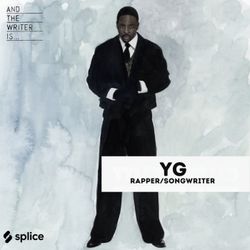
Ep. 267: YG Opens Up. Bad Deals, Hit Records, and a Midlife Crisis
01:36:46|Today’s guest is a multi-platinum rapper and songwriter who took Compton to the charts and gave the world “My Hitta,” “Who Do You Love?” and “Big Bank.” From his debut album My Krazy Life to collaborations with Drake, Nipsey Hussle, and Nicki Minaj, he’s built a catalog that’s done serious damage to club speakers. Now, with The Gentlemen’s Club, he’s getting personal and reminding everyone there’s a storyteller behind the hits. And The Writer Is… YG! In this episode we go deep on:- The inspiration behind his new album - The Def Jam singles deal with five album options: "I could have sued everybody" - What he'd tell an 18-year-old holding a label offer- Why having a catalog doesn't mean you own it - What a YG session looks like: tequila, "next beat," and a BPM in his head - How "FDT" got made with Nipsey, and why Def Jam wouldn't release it - The night Nicki said "don't put this out without me" - "Who Do You Love?": three months, hook writers, and Drake telling him to do it himself And much more... Hit subscribe and turn on notifications.Every week, we go deep with the most interesting creatives in music. Follow us on socials: @andthewriteris A special thank you to our sponsors for making these conversations possible. Our lead sponsor, our Patreon! Patreon.com/andthewriteris And @splice — the best sample library on the market. Period. Chapters 0:00 Intro 0:32 Hiring a "Hitman" 8:07 "Were you ever suicidal?" and the homies who said "same" 9:10 Chin up, chest out: what the streets never let you say 10:28 "2004," the song he cut from the album 24:31 Turning himself in while his song blew up, and the label that called his mom 27:31 Signing young: "I could have sued everybody" 28:24 Ross: athletes get rookie orientation, artists get "good luck" 34:57 What he'd tell an 18-year-old holding a label offer 39:40 The masters trap: you have a catalog, but you don't own it 41:30 What a session with YG actually looks like 47:39 Why he made Gentleman's Club: "they were playing with my name" 50:10 How "Hollywood" with Shoreline Mafia got made 53:51 How "FDT" happened with Nipsey, and why Def Jam passed 59:40 Meeting Nipsey: two different gangs, one mission 1:05:56 How do you stay brave when the people around you get killed? 1:10:59 The night "My Hitta" got made 1:13:03 "Big Bank": Nicki says don't put it out without me 1:18:15 What he knows at 36 that he didn't at 20: the streets don't love you back 1:27:20 "Who Do You Love?": three months and Drake's "you do the hook" 1:30:02 What makes a Mustard beat different Credits Hosted by Ross Golan Produced by Joe London and Jad Saad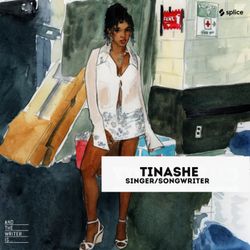
Ep. 266: Tinashe’s Guide to Making It on Your Own Terms
01:18:09|Today’s guest is a singer, songwriter, producer and dancer who has spent her career trusting her own instincts—and building a world around them.From “2 On” to “Nasty” and “No Broke Boys,” Tinashe has kept releasing music through major-label deals, independent projects and viral breakthroughs.She’s collaborated with artists including Calvin Harris, Charli xcx and Kaytranada, and joins us to talk about the journey behind it all.And The Writer Is... Tinashe!Hit subscribe and turn on notifications. Every week, we go deep with the most interesting creatives in music.Follow us on socials: @andthewriterisA special thank you to our sponsors for making these conversations possible.Splice, the best sample library on the market, period.and our lead sponsor, our Patreon page!We're still giving away free Universal Audio Recording Gear in our next zoom hang.Join us on Patreon: patreon.com/andthewriterisCHAPTERS0:00 Intro0:46 Tinashe and Ross reconnect—back to The Stunners3:48 “Deep in the Night”—the song she wrote at five5:08 Tinashe’s French fry rankings6:12 Child acting, Whoopi Goldberg, and moving to LA9:11 Life in a girl group without creative control11:22 Buying a microphone and building a bedroom studio14:10 Getting signed—and expecting it to be easy18:40 Join the ATWI Patreon19:32 Splice: Sounds and Variations20:39 Early Travis Scott sessions and being taken seriously in the studio23:29 Recording 200 songs—and trusting the big producer’s opinion26:33 Trusting your gut and knowing when to leave a session30:43 “2 On” takes off. What happens after the first hit?36:03 Writing “2 On” in a garage with friends37:37 Does having a hit teach you how to make one?39:20 Leaving her label and rebuilding trust in her own ideas43:29 What releasing music independently actually takes46:10 Filming her own videos and building her visual world48:14 How dancing shapes the way she writes songs50:08 Working with a label again—and finding Ricky Reed52:11 Getting the call from Calvin Harris53:52 Why genre doesn’t define her music55:19 “Nasty” takes off after she stops needing another hit57:04 Why she won’t write for a TikTok trend58:43 Charli xcx and finding freedom after early hits1:00:41 The unexpected remix journey of “No Broke Boys”1:03:31 Taking the Grammy off her lock screen after seven years1:05:14 Making POPSTAR—and giving herself time to play1:05:55 Which POPSTAR song fits every mood?1:08:19 Claiming the pop star she’s always been1:13:32 “Just don’t stop”—keep putting your music out1:14:42 Her advice to young women in music: intuitionCreditsHosted by Ross GolanProduced by Joe London and Jad Saad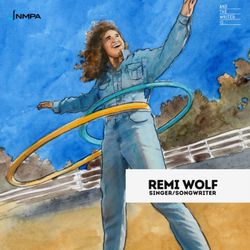
Ep. 265: How Remi Wolf Built Her Career: Study the Greats, Take the Gig, Say Yes
01:36:26|Today’s guest is one of the most unmistakable voices in modern pop — an artist, songwriter and producer who has built a career by making music that sounds like nobody else. Her catalog has passed two billion global streams. She’s played top billing at festivals including Coachella, Lollapalooza and Outside Lands, opened for Olivia Rodrigo, Lorde and Paramore, and collaborated with artists including Nile Rodgers, Beck, Dominic Fike and Sylvan Esso. And The Writer Is... Remi Wolf! In this episode, we get into - The USC training that rebuilt her voice - Waiting tables and taking Craigslist gigs while building a career - The 30-minute session behind “Photo ID,” - Industry lessons for every artist to take notes on... and much more. Hit subscribe and turn on notifications. Every week, we go deep with the most interesting creatives in music. Join us on Patreon: patreon.com/andthewriteris Follow us on socials: @andthewriteris A special thank you to our sponsors for making these conversations possible. Our lead sponsor, NMPA — the National Music Publishers' Association. Your support means the world to us. CHAPTERS 0:00 Intro 0:40 “You can’t teach tone” — how Remi found hers 2:13 USC: “We’re going to beat you down until you feel like you’re nothing” 6:15 Fourteen, busking the Bay Area, and writing songs in Chloe’s kitchen 13:40 “Carousel” — the first song she ever wrote 15:41 A substitute teacher, an apartment, and her first recording 18:05 Ski racer by day, songwriter by night 19:05 Meeting Jared Solomon at 15 — then finding each other again 21:07 Applebee’s on tour — and the road to sobriety 24:04 Rehab, writing Juno sober, and why clarity changed the songs 29:02 “It’s not ready” — why she refused to release music in college 30:22 Six songs in one week — the reunion that started everything 34:24 Restaurant shifts and Craigslist gigs: how she paid to keep making music 39:26 The Sofar show that led to her first manager 42:39 “I had no expectations” — making music before the industry got involved 45:28 35,000 decisions a day — what creative control actually costs 49:22 “You have to start protecting yourself” 51:34 What is the goal? Redefining success 56:51 Her first album rollout sober 59:21 Social media, warped expectations, and screaming into the void 63:22 “Photo ID,” TikTok, and the accident that helped it explode 66:40 “Photo ID” took 30 minutes — and she thought it was horrible 70:15 Her first professional topline session: “I was overcome with social anxiety” 72:11 Why I’m Allergic to Dogs worked during lockdown 74:56 Why Juno is called Juno 78:50 Hayley Williams and singing with another “belt queen” 82:25 Five years of nonstop touring — and finally hitting pause 87:15 “I Won’t Cry” — her favorite song she’s ever written 89:15 “I was sick of the uptempo shit” — writing 130 songs for Mud 90:49 Her first pitch session was for BTS 92:34 Which Mud song fits every mood 94:10 “I’m the happiest I’ve been in my life”CreditsHosted by Ross Golan Produced by Joe London & Jad Saad
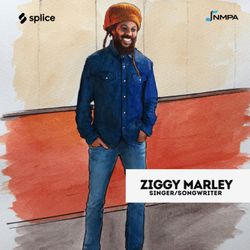
263. Ep. 263: Ziggy Marley on Family Rules for Life, Music, and Success
01:03:48||Ep. 263Today's guest is a Grammy-winning songwriter, bandleader and activist who has spent four decades inside the most famous name in reggae — but whose real story isn't the inheritance. It's the set of rules underneath it, the ones the family actually lives by, which turn out to have almost nothing to do with music.And The Writer Is... Ziggy Marley!Subscribe to our channel and follow us on socials @andthewriteris Every week we go deep with the most interesting creatives in music.A special thank you to our sponsors for making these conversations possible.Our lead sponsor, NMPA — the National Music Publishers' Association. Your support means the world to us. And @splice — the best sample library on the market. Period.Chapters:0:00 He inherited a legacy and built a voice of his own0:45 Why reggae heals 4:53 What makes the Marley family so consistent6:43 Seven kids, and the family business that isn't music8:36 Why the whole album is tuned to 43212:32 The one song he left at 44016:06 What makes this album different from the other fifteen18:11 Finishing the songs before going into the studio20:37 Why he wrote "Many Mourn For Bob" 45 years later24:54 Umbrella or shadow: being a Marley26:39 The funeral, and the drive to Nine Miles30:54 NMPA + Splice33:15 Breaking the four-bar on "Racism"36:03 "It sounds light, but it's heavy underneath"38:37 What "Beach in Hawaii" is actually about43:37 How he found out "Tomorrow People" was a hit46:14 The Melody Makers, and the line you don't cross49:15 "Create your own space"53:45 Advice to the next Marleys55:27 "You can't just ChatGPT life experience"59:12 "When the fridge was empty, I was happy"1:00:26 "I know my value"1:03:07 "It's always new. Still a kid."Credits:Hosted by Ross GolanProduced by Joe London & Jad Saad
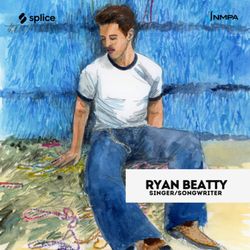
262. Ep. 262: Ryan Beatty | How to Make It in Music Without Losing Yourself
01:06:40||Ep. 262Today's guest is an artist and songwriter whose career has taken him from teenage YouTube covers to working with Beyoncé, Tyler, The Creator, Brockhampton, Miley Cyrus and Jack Antonoff.But this conversation is really about something bigger: How to build a career in music without losing yourself along the way.Ryan talks about learning to trust his own taste, being grateful he never had a hit record, protecting what makes an artist special, and refusing to let success, algorithms or other people's expectations define him.We also get into Boy in Jeans, Brockhampton, Tyler the Creator's unexpected DM, writing four songs on Cowboy Carter, the making of "Bruises Off the Peach," and his new album Sweet Fortune.And The Writer Is... Ryan Beatty!Subscribe for more conversations with the artists, songwriters and producers shaping music.Follow us: @andthewriterisA special thank you to our sponsors:NMPA — the National Music Publishers' Association Splice — the best sample library on the market. Period.Chapters0:00 Intro1:36 The Greek, Hollywood Bowl & Pokémon evolutions3:08 Being made fun of for singing4:09 “I refuse to continue just being one thing”8:32 Why being hard to define is freedom9:52 How Ryan approaches a songwriting session11:52 Teach people how to treat you13:43 “I’m grateful I’ve never had a hit record”14:12 What success feels like vs. what it looks like20:08 “I didn’t feel smart enough to be a songwriter”20:55 Boy in Jeans — finding his voice as a songwriter26:42 Jack Antonoff and an unexpected Broadway placement27:30 NMPA + Splice29:19 His advice for artists going viral31:55 The moment he decided to do it his way34:06 Brockhampton, Kevin Abstract & finding confidence37:05 Why Ryan never pitches songs40:43 Tyler, The Creator’s unexpected DM42:35 Dreaming of David, touring & burnout44:52 Making “Bruises Off the Peach”48:17 Finding his actual singing voice50:30 Cowboy Carter — four songs, told nobody54:30 Making Sweet Fortune & chasing timelessness57:32 How he wants listeners to see themselves in his songs59:36 Amy Allen, Clairo & making the studio a place of joy1:04:25 “Doing this is scary for me”CreditsHosted by Ross Golan Produced by Joe London & Jad Saad Edited by Jad Saad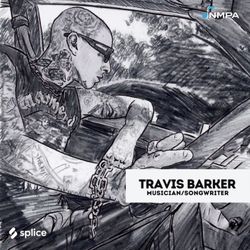
Ep. 261: Travis Barker | Survival and Building a Legendary Career out of the Ashes
01:45:48|Today's guest is the drummer who took punk out of the garage, put it on your radio, then on MTV, then on your body. But his real story isn't the discography. It's what he did with everything that was supposed to end him.From a four-piece kit in Fontana to the center of the album cover, Travis carries three things simultaneously that most musicians never figure out how to hold at once: the craft of writing a drum part as a hook — singing it in his head before his hands ever get there; the conviction that no genre gets to own him, and no one else gets to write his ending; and the contrarian edge to ban Auto-Tune, editing, and drum samples from his own studio at the exact moment the rest of the industry is sprinting toward machine-clean.And The Writer Is... Travis Barker!Hit subscribe and turn on notifications. Every week, we go deep with the most interesting creatives in music.Join us on Patreon: patreon.com/andthewriterisWe're giving away 4 pieces of premium recording gear on zoom on August 25th! Join Patreon for details.Follow us on socials: @andthewriterisA special thank you to our sponsors for making these conversations possible. Our lead sponsor, NMPA — the National Music Publishers' Association. Your support means the world to us. And @splice — the best sample library on the market. Period.CHAPTERS0:00 Intro1:51 Why the documentary sat for nine years3:18 The producers pitch an ending: "Can you just walk onto a plane?"4:51 Survivor's guilt: "They wouldn't want me to sit here and not fly again"6:33 "The doc was dead to me" — and living your life like it's a movie9:41 "I don't make beats." "Now you do. I need it in two days."12:23 Beastie Boys, Bad Brains, Buck Owens — refusing the box15:28 The drums are a hook, not a timekeeper15:54 "That's not music" — the teacher who wouldn't teach him rock17:25 How he actually writes a part: "I sing it in my head"18:21 Learning the whole blink-182 set in an hour21:29 Trash men in Laguna, and one store that sold their tape22:52 The untitled album, and the day the process changed25:57 The lyrics he wrote: "We'll have Halloween on Christmas"27:15 "I Miss You" — the loop he had to convince them to keep28:07 "You have to put your ego away to be a drummer who's a songwriter"35:46 The burn center: "How am I going to play drums?"36:25 The hand he couldn't feel, and why he told no one43:20 "Too heavy for blink" — Boxcar Racer, and Mark56:30 "There was no therapy for what happened"1:10:19 What drummers should actually practice1:19:29 AI: "I hate it" — no Auto-Tune, no editing, no samples1:31:20 "All the Small Things" — the day Tom told him to open the valve1:33:33 "Where's all the hits?" — the note that made Rock Show and First Date1:35:15 "One More Time": writing about your own band breaking upCredits:Hosted by Ross GolanProduced by Joe London and Jad Saad