Share
And The Writer Is...with Ross Golan
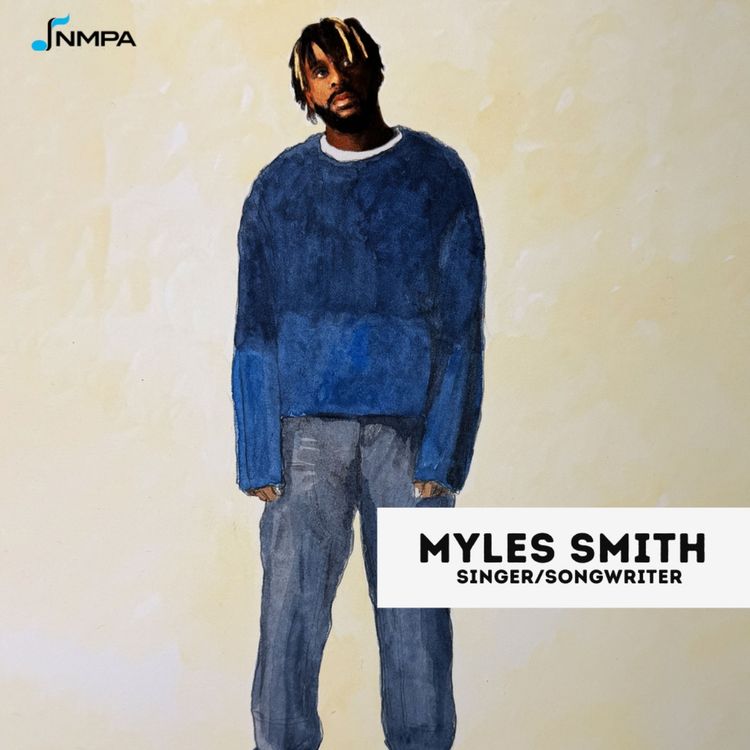
Ep. 251: Myles Smith | Stargazing, Therapy, and The Secret Cost of Success
Today's guest is a rising star who's risen so fast he's not really rising anymore — he's just a star.
From a bedroom in Luton playing $50 nylon-string covers and open mics playing for 4 people... Three years later: a billion streams, "Stargazing" on President Obama's summer playlist, two singles that took over pop radio before he'd ever made a debut album, and a debut album sourced from the notes he wrote in therapy that saved him.
He's proof that sometimes all you really need is a guitar, a work ethic, and a Taco Bell-poisoned night in Malibu to write a song people argue about in twenty languages.
And the writer is... Myles Smith!
If you've ever wanted something so badly you didn't think to ask what it would cost when it arrived — this is the conversation.
And The Writer Is... Myles Smith!
In this episode of And The Writer Is, we go deep on:
• Why he scrubbed every song he made before 2023 — and what "I didn't exist before 2023" actually means
• His advice for up and coming artists...
• The end-of-Covid breakdown at 18 that almost ended things — and the therapy notes that became My Mess, My Heart, My Life.
• Meeting Peter Fenn on the last day of a six-week US trip — and writing "My Home" in the first hour
• The Taco Bell food-poisoning night in Malibu that produced "Stargazing"
• The hidden cost of success on his relationships
• "Hey mom, I want to retire you" — and what she said back
And much more...
Hit subscribe and turn on notifications. Every week, we go deep with the most interesting creatives in music.
Follow us on socials: @andthewriteris
A special thank you to our sponsors for making these conversations possible.
Our lead sponsor, NMPA — the National Music Publishers' Association. Your support means the world to us.
CHAPTERS
0:00 Intro
2:21 My Mess, My Heart, My Life.
3:16 The pressure of being "right at the start of the journey"
4:35 "If you take away the hits, you could see where I really am"
4:54 "I wake up some days in a catastrophe"
6:01 The five albums he wore out
7:23 His mum, his absent dad, and a single-parent household
8:22 Singing in church with his grandma
11:41 First talent show: Fix You by Coldplay
13:01 The $50 nylon-string guitar that started it
14:02 Playing "Dream Girl" for his mum at 10
15:23 Growing up Black in Luton and the Labrinth Electronic album that broke his brain open
18:45 Open mics at 11 — his mum driving him to every one
20:18 Why open mics built him in a way the algorithm can't
21:43 "I was really lucky that I got to fail a thousand times"
22:30 The first real gig — 100 cap, 90 friends and family, indie band Bear with a Three
29:18 Covid, isolation, rock bottom
30:44 Therapy — and the notes that became the album
33:06 Trust issues, anxiety, the night at 18 he tried to "ctrl alt delete on life"
35:12 What he'd say to 18-year-old him
36:55 The videographer who pushed him to try TikTok
37:25 "I'm not trying that shit" — and the Sweater Weather cover that changed everything
40:24 How he paved his way onto an Amber Run tour with one recorded song
43:40 NMPA mid-roll
44:22 The day his career actually started: meeting Peter Fenn
46:08 "Music with other people is supposed to be fun" — Peter's first lesson
49:01 "My Home" — written in the first hour of meeting Peter
54:48 After Stargazing: "stuck in the future"
60:06 Brain scans, burnout, smiling through it all
62:30 "Hey mom, I want to retire you" — and what she said
63:31 The UK artists who don't love being famous — Ed Sheeran, James Bay, Niall Horan
66:12 Are you happy?
78:29 "I hated Niall Horan" — and why
80:11 Rapid fire
83:32 Meeting his wife with all this happening
85:00 The album as the closing of the first chapter
90:46 Pulling up the old voice memos
92:02 The Taco Bell night that became "Stargazing"
95:39 The biggest pinch-me moment of the last three years
98:06 Ross and Joe tape notes
Watch on Spotify. Spotify Premium users get no commercial breaks on our show.
CREDITS BLOCK
Credits:
Hosted by Ross Golan
Produced by Joe London & Jad Saad
Edited by Jad Saad
Post-Production VFX by Pratik Karki
More episodes
View all episodes

264. Ep. 264: How Aaron Dessner Became an Industry Favorite and the 3AM Text That Became 'folklore'
01:22:03||Ep. 264Today's guest is a musician's musician who co-founded The National, the Grammy-winning band behind Boxer, High Violet and Sleep Well Beast.He co-wrote and produced Taylor Swift's folklore and evermore, including cardigan and willow. folklore won Album of the Year at the Grammys.He worked on The Tortured Poets Department and produced Ed Sheeran's Subtract.He's behind Gracie Abrams' I Love You, I'm Sorry and Noah Kahan's Porch Light.In the last year alone, he's made records with Mumford & Sons, Florence + the Machine, Brandi Carlile, Sam Barber, Kevin Morby and Suki Waterhouse.He's one half of Big Red Machine with Bon Iver's Justin Vernon.And he built Long Pond, the Hudson Valley studio where many of these songs were made.And The Writer Is... Aaron Dessner!Hit subscribe and turn on notifications. Every week, we go deep with the most interesting creatives in music.Follow us on socials: @andthewriterisA special thank you to our sponsors for making these conversations possible.Amazon Music for Songwriters. Your support means the world to us.And SONA — Songwriters of North America. If you write songs, join them. They fight for us.0:00 Intro1:00 Cardigan, willow, Porch Light — and eight albums in a year5:26 Why "I Love You, I'm Sorry" was never the single7:27 Secretly rooting for the weird song8:17 When a pop star needs a single right now10:25 Don't fill the space: how he walks into a session12:12 Long Pond and "you never make a mistake investing in your creativity"17:24 Twin brothers and their dad's jazz drums22:48 "We faked it": how The National got signed26:48 Playing to no one — then 500 strangers in Michigan30:05 "Did you lose yourself?"33:14 When one bandmate starts writing hits for other people35:38 On stage with Taylor: "You're playing a stadium. It's okay."37:27 "Hey, it's Taylor": the text in 202040:34 The Dropbox folder — and cardigan by 3 a.m.47:45 The thank-you note that became willow51:49 Meeting Gracie Abrams — and 2–3 songs a day57:47 How an instrumentalist became the storyteller's whisperer1:01:11 Why his albums don't get shelved: finishing Prizefighter1:04:23 Studio stories: Gracie, Brandi Carlile, Florence, Sam Barber1:11:40 Noah Kahan arrives burnt out — and Porch Light1:15:41 Live Q&A: finding the corners, his first key change1:18:24 Advice for musicians with day jobs1:20:07 What all the greats have in commonCredits:Hosted by Ross GolanProduced by Joe London & Jad Saad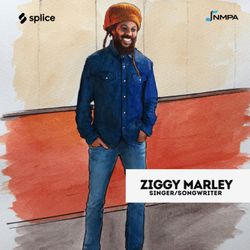
263. Ep. 263: Ziggy Marley on Family Rules for Life, Music, and Success
01:03:48||Ep. 263Today's guest is a Grammy-winning songwriter, bandleader and activist who has spent four decades inside the most famous name in reggae — but whose real story isn't the inheritance. It's the set of rules underneath it, the ones the family actually lives by, which turn out to have almost nothing to do with music.And The Writer Is... Ziggy Marley!Subscribe to our channel and follow us on socials @andthewriteris Every week we go deep with the most interesting creatives in music.A special thank you to our sponsors for making these conversations possible.Our lead sponsor, NMPA — the National Music Publishers' Association. Your support means the world to us. And @splice — the best sample library on the market. Period.Chapters:0:00 He inherited a legacy and built a voice of his own0:45 Why reggae heals 4:53 What makes the Marley family so consistent6:43 Seven kids, and the family business that isn't music8:36 Why the whole album is tuned to 43212:32 The one song he left at 44016:06 What makes this album different from the other fifteen18:11 Finishing the songs before going into the studio20:37 Why he wrote "Many Mourn For Bob" 45 years later24:54 Umbrella or shadow: being a Marley26:39 The funeral, and the drive to Nine Miles30:54 NMPA + Splice33:15 Breaking the four-bar on "Racism"36:03 "It sounds light, but it's heavy underneath"38:37 What "Beach in Hawaii" is actually about43:37 How he found out "Tomorrow People" was a hit46:14 The Melody Makers, and the line you don't cross49:15 "Create your own space"53:45 Advice to the next Marleys55:27 "You can't just ChatGPT life experience"59:12 "When the fridge was empty, I was happy"1:00:26 "I know my value"1:03:07 "It's always new. Still a kid."Credits:Hosted by Ross GolanProduced by Joe London & Jad Saad
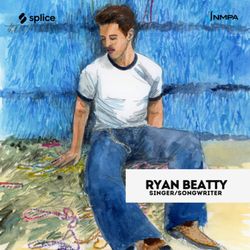
262. Ep. 262: Ryan Beatty | How to Make It in Music Without Losing Yourself
01:06:40||Ep. 262Today's guest is an artist and songwriter whose career has taken him from teenage YouTube covers to working with Beyoncé, Tyler, The Creator, Brockhampton, Miley Cyrus and Jack Antonoff.But this conversation is really about something bigger: How to build a career in music without losing yourself along the way.Ryan talks about learning to trust his own taste, being grateful he never had a hit record, protecting what makes an artist special, and refusing to let success, algorithms or other people's expectations define him.We also get into Boy in Jeans, Brockhampton, Tyler the Creator's unexpected DM, writing four songs on Cowboy Carter, the making of "Bruises Off the Peach," and his new album Sweet Fortune.And The Writer Is... Ryan Beatty!Subscribe for more conversations with the artists, songwriters and producers shaping music.Follow us: @andthewriterisA special thank you to our sponsors:NMPA — the National Music Publishers' Association Splice — the best sample library on the market. Period.Chapters0:00 Intro1:36 The Greek, Hollywood Bowl & Pokémon evolutions3:08 Being made fun of for singing4:09 “I refuse to continue just being one thing”8:32 Why being hard to define is freedom9:52 How Ryan approaches a songwriting session11:52 Teach people how to treat you13:43 “I’m grateful I’ve never had a hit record”14:12 What success feels like vs. what it looks like20:08 “I didn’t feel smart enough to be a songwriter”20:55 Boy in Jeans — finding his voice as a songwriter26:42 Jack Antonoff and an unexpected Broadway placement27:30 NMPA + Splice29:19 His advice for artists going viral31:55 The moment he decided to do it his way34:06 Brockhampton, Kevin Abstract & finding confidence37:05 Why Ryan never pitches songs40:43 Tyler, The Creator’s unexpected DM42:35 Dreaming of David, touring & burnout44:52 Making “Bruises Off the Peach”48:17 Finding his actual singing voice50:30 Cowboy Carter — four songs, told nobody54:30 Making Sweet Fortune & chasing timelessness57:32 How he wants listeners to see themselves in his songs59:36 Amy Allen, Clairo & making the studio a place of joy1:04:25 “Doing this is scary for me”CreditsHosted by Ross Golan Produced by Joe London & Jad Saad Edited by Jad Saad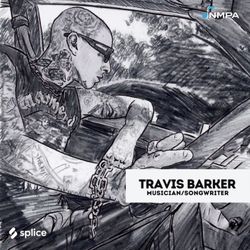
Ep. 261: Travis Barker | Survival and Building a Legendary Career out of the Ashes
01:45:48|Today's guest is the drummer who took punk out of the garage, put it on your radio, then on MTV, then on your body. But his real story isn't the discography. It's what he did with everything that was supposed to end him.From a four-piece kit in Fontana to the center of the album cover, Travis carries three things simultaneously that most musicians never figure out how to hold at once: the craft of writing a drum part as a hook — singing it in his head before his hands ever get there; the conviction that no genre gets to own him, and no one else gets to write his ending; and the contrarian edge to ban Auto-Tune, editing, and drum samples from his own studio at the exact moment the rest of the industry is sprinting toward machine-clean.And The Writer Is... Travis Barker!Hit subscribe and turn on notifications. Every week, we go deep with the most interesting creatives in music.Join us on Patreon: patreon.com/andthewriterisWe're giving away 4 pieces of premium recording gear on zoom on August 25th! Join Patreon for details.Follow us on socials: @andthewriterisA special thank you to our sponsors for making these conversations possible. Our lead sponsor, NMPA — the National Music Publishers' Association. Your support means the world to us. And @splice — the best sample library on the market. Period.CHAPTERS0:00 Intro1:51 Why the documentary sat for nine years3:18 The producers pitch an ending: "Can you just walk onto a plane?"4:51 Survivor's guilt: "They wouldn't want me to sit here and not fly again"6:33 "The doc was dead to me" — and living your life like it's a movie9:41 "I don't make beats." "Now you do. I need it in two days."12:23 Beastie Boys, Bad Brains, Buck Owens — refusing the box15:28 The drums are a hook, not a timekeeper15:54 "That's not music" — the teacher who wouldn't teach him rock17:25 How he actually writes a part: "I sing it in my head"18:21 Learning the whole blink-182 set in an hour21:29 Trash men in Laguna, and one store that sold their tape22:52 The untitled album, and the day the process changed25:57 The lyrics he wrote: "We'll have Halloween on Christmas"27:15 "I Miss You" — the loop he had to convince them to keep28:07 "You have to put your ego away to be a drummer who's a songwriter"35:46 The burn center: "How am I going to play drums?"36:25 The hand he couldn't feel, and why he told no one43:20 "Too heavy for blink" — Boxcar Racer, and Mark56:30 "There was no therapy for what happened"1:10:19 What drummers should actually practice1:19:29 AI: "I hate it" — no Auto-Tune, no editing, no samples1:31:20 "All the Small Things" — the day Tom told him to open the valve1:33:33 "Where's all the hits?" — the note that made Rock Show and First Date1:35:15 "One More Time": writing about your own band breaking upCredits:Hosted by Ross GolanProduced by Joe London and Jad Saad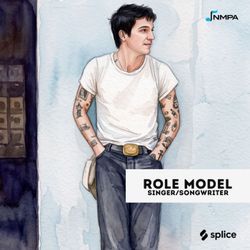
260. Ep. 260: Role Model | Being Discovered by Mac Miller & How Getting Signed Changed His Music
58:16||Ep. 260Today's guest is an artist most people meet through the bit: the deadpan internet, the cowboy suit, the one-sided war he's been waging with Harry Styles for a year that Harry Styles knows nothing about. So this is the other version of him. A kid in Pittsburgh with a borrowed mic and beats ripped off YouTube, broke and failing out of school, who gets a message that Mac Miller loves a song off his first EP — and uses those three days in LA to convince his parents to let him drop out. It's also one of the more honest conversations we've had about what the industry's upgrades actually cost you. Not the version where getting signed is the happy ending — the version where the nice studio, the engineer recording your vocals, and the A&R in your ear slowly make music that isn't yours. Chuck Timely & The Hourglass is what's on the other side of that: a record about time, made by someone who spent years trying to get his own back. And the only person who ever told him not to make it was his mother.And The Writer Is... Role Model!A special thank you to our sponsors for making these conversations possible.Our lead sponsor, NMPA — the National Music Publishers' Association. Your support means the world to us. And @splice — the best sample library on the market. Period.They are also maybe the only ethical ai-integrated sample library and they pay creators for using their work in the new Variations update and beyond. Chapters0:00 Intro2:00 The year-long war with Harry Styles that Harry Styles knows nothing about2:41 Mac Miller and Odd Future on Vine are why he finally said yes to TikTok3:33 The message about "Stolen Car" that came while he was failing out of school15:01 "Did you scrub the internet?" — "Yes. Because I was embarrassed."16:13 "I was trying to impress a label. I just made shitty music."24:16 A 16-year-old in Portland, Maine, and an EP made entirely over email25:44 The labels start calling: "I was a sitting duck"27:01 The studio trap — how nice rooms take the music out of your hands28:01 The two EPs he's blocked out: "I don't remember making that music"28:54 Why he won't pitch songs to other artists31:06 The 80s synth album they made for two months and scrapped34:33 The two rules: no synths, no drum machines35:06 His mom: "There's country in it? Your fans are gonna hate that."37:39 "Sally," written in the 30 minutes a session ran short42:09 "But who is Chuck?" — inventing Chuck Timely47:12 Ross defines a good song: "This will piss off a lot of people"53:10 What he'd say to Mac Miller54:44 "Look at That Woman" started as a joke — and why the loose ones win56:27 The permission Kansas Anymore gave other songwritersCredits: Hosted by Ross Golan Produced by Joe London & Jad Saad
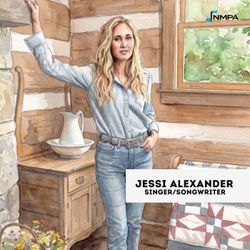
Ep. 259: Jessi Alexander on Writing "The Climb" The Week She Almost Quit... + What It Takes To Last as a Nashville Songwriter
01:27:44|Today's guest wrote "The Climb." She also wrote "I Drive Your Truck," "Mine Would Be You," "Don't Think Jesus," and "Ain't No Love in Oklahoma." But her real story isn't the hits. It's the ten years before the first one, the five years after it when the phone stopped ringing, and what she figured out in between about how to actually last in this business.From a dropped record deal and years as what she calls a washed-up artist nobody would write with, to Song of the Year, a Grammy nomination, and a run of hits she wrote while raising three kids under three. She carries three things at once that almost no writer figures out how to hold together: a working method she can actually teach, a conviction that this is a calling and not a job, and a refusal to write the safe version of anything.And The Writer Is... Jessi Alexander!Hit subscribe and turn on notifications. Every week, we go deep with the most interesting creatives in music.Follow us on socials: @andthewriterisA special thank you to our sponsors for making these conversations possible.Our lead sponsor, NMPA — the National Music Publishers' Association. Your support means the world to us.0:00 Intro0:48 Her favorite non-songwriting songwriter trick1:54 "How do you make unavailable country men emotional?"5:33 The five songs on her Hall of Fame plaque11:07 Pool halls and stick shifts: "that color is what I draw from"12:42 The artist deal that fizzled — "I wasn't the artist type"13:31 No man's land: "no one took me seriously, I was a washed-up artist"14:01 The insane story behind writing The Climb: "just another damn day"20:11 Bud Light, a guitar pull, and a British director22:07 Being told The Climb would change her life "Sir, that doesnt happen to people like me"28:08 Nashville still said No30:38 Getting men to sing: long notes and the falsetto flip31:44 "What part of their tool belt have they not used?"34:32 The professor who told her to quit school36:18 Her album, the mergers, and Redneck Woman40:27 New mom: "they'll just put someone else in my spot"45:30 Good mom or good at work — never both46:16 2015 to 2020: "the water just turned off"48:23 Advice for the writer whose phone stopped ringing50:24 The song that rang every bell57:21 Concept-first or melody-first: "I'm the director"61:16 Songwriters own it. Screenwriters sell it.64:16 Imposter syndrome and the Billy Strings answer65:24 What makes Morgan Wallen great69:46 "I don't like to not know where all the bodies are buried"71:43 I Drive Your Truck (Crazy story)74:37 Her granddad's truck in the driveway75:44 "Call in the third. Call in the fourth. Call in the 10th."76:46 No #1 party until they found him80:36 The truck-song traffic jam they were worried sick about85:38 "Keep your head down." Still the only answer.Credits:Hosted by Ross GolanProduced by Joe London & Jad Saad