Share
Africa Here and NOW
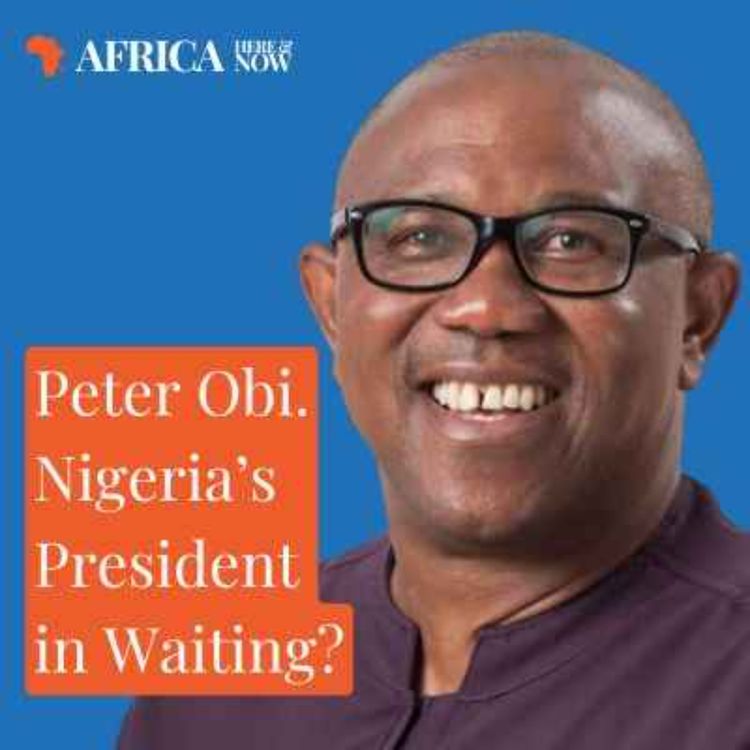
Nigeria's President-in-Waiting? PETER OBI
PETER OBI believes he would have been Nigeria’s president now, were it not for widespread vote rigging at the last election in 2023. It’s a view shared by many of his fellow countrymen and women. In a wide-ranging interview with Africa Here And Now MR OBI confirms that he plans to run again in 2027 and believes that this time the outcome will be different.
He says he’s optimistic that people will vote for the best candidate and not cast their ballot on the basis of tribe or religion – accusing the current political elite of deliberately fuelling divisions. “Nigerians will see that we voted religion, we voted tribe, now let's vote competence, capacity,” he says. He feels people would rise up if there were further attempts to manipulate the vote, knowing that failure to do so would lead to more years of hunger, darkness and disappointment.
PETER OBI outlines what he would do differently if he were in charge, making education a priority to unleash Nigeria’s potential. He wants to see the country move from consumption to production, bemoaning the fact that 60% of Nigeria’s arable land is currently uncultivated. “We can make more money from agriculture than we can from oil,” he tells us.
The former governor of Anambra State – a devout Christian - says despite his personal wealth he has always believed in helping the less privileged in society: “I don’t look down on people unless I am going to pull them up.”
Looking east for inspiration, PETER OBI believe Nigeria could learn from the economic boom of recent decades in Asian countries including China, India and Vietnam. He expresses admiration for the former president of Indonesia, Joko Widodo, as someone who made his country better. It’s an ambition he holds for his own country and one he hopes to have a chance to fulfil after the next presidential election in Nigeria.
We also find out a little about the man behind the politics. Donu asks him who his heroes are and what he is currently reading.
We discover that PETER OBI is not given to taking holidays. ‘Can you take a holiday when your house is burning?’ he asks. He likens the situation to the Titanic sinking while people on the upper decks were dancing!
Asking the questions with me was DONU KOGBARA, Abuja-based journalist and commentator. We chatted with PETER OBI in Abuja on June 11th 2025.
#PeterObi #NigeriaPolitics #2027Elections #GoodGovernance #NigerianGovernment #LeadershipInAfrica #NaijaPolitics #ObidientMovement #AfricanLeadership #ElectionTalks #NigeriaDevelopment
More episodes
View all episodes
6. 2029 South Africa's First Non-ANC Leader?
28:02||Season 7, Ep. 6South Africa's first non-ANC president in 2029?In this interview, Mmusi Maimane discusses South Africa’s political future, coalition politics, non-racialism, and the possibility of the country electing its first non-ANC president in 2029. He argues that South Africa needs reformers focused on the future, not only on addressing the legacies of the past.Key topicsWhy Maimane left the Democratic Alliance and founded Build One South Africa, which he says better reflects his vision for a non-racial country.His concern that South African politics is increasingly shaped by racial, ethnic, and tribal identities rather than shared political ideals.How apartheid’s spatial legacy, unequal education, and economic inequality continue to reinforce racial divisions.Build One South Africa’s ambition to offer a centrist, non-racial alternative, attract younger voters, and play a role in coalition politics.Maimane’s opposition to the “balkanization” of South Africa and to political movements organized around ethnic or racial nationalism.Why he believes many former ANC voters are moving toward MK and the EFF rather than BOSA.How he would approach South Africa’s relationship with Washington, including the role of trade and broader African cooperation.His rejection of white genocide claims as a false narrative amplified by domestic political actors.Why Maimane describes himself as a reformer—and how he sees faith, Ubuntu, and shared values as sources of national unity.His belief that South Africa could elect its first non-ANC president in 2029, and why he thinks he could be that leader.Timestamps00:00 — Could South Africa elect its first non-ANC president in 2029? 01:27 — Why Maimane left the DA and how he sees the political landscape 03:47 — What a de-racialized South Africa could look like 06:42 — Race, inclusion, and leaving the Democratic Alliance 08:34 — Why Build One South Africa is still growing 10:30 — Coalition politics and the role of a centrist “kingmaker” 11:29 — Where former ANC voters are going 13:24 — Coalition red lines and working with corrupt parties 14:32 — How Maimane would approach South Africa’s relationship with Washington 15:31 — The white genocide myth and its domestic political roots 18:23 — Trade and practical steps to ease tensions with the US 19:15 — Why Maimane wants to be seen as a reformer 21:07 — Mandela’s legacy and the need for a new generation of leaders 22:04 — Faith in a secular, multi-religious country 23:31 — Shared identity, churches, and the search for political unity 25:19 — Why Maimane thinks a non-ANC president could emerge in 2029 26:49 — Why he believes he could be that leaderNotable quotesCopy“I want to be seen as a reformer.”Copy“Mandela was the Moses, he certainly didn't send us into the promised land.”Copy“I believe I could be” the first non-ANC president in 2029. keywordsSouth Africa, de-racialization, coalition politics, economic reform, social unity, Musi Maimani, Build One South Africa, political change key topicsDe-racialization of South AfricaCoalition politics and role of Build One South AfricaEconomic and educational reforms for equalityManaging international relations and foreign policyUrban renewal and infrastructure in Johannesburg sound bites"Liberation movements fragment their surrogates, often the immediate beneficiaries.""Building a non-racial centre is essential for South Africa's future.""Johannesburg must be reimagined as a financial and technological hub."
5. PLO Lumumba: Africa Will Be Eaten For Breakfast
35:18||Season 7, Ep. 5PLO Lumumba on ethnicity, Traore's rule, power in the Sahel, and Africa’s future We speak with Patrick Loch Ochieng Lumumba, widely known as PLO Lumumba, about African politics, identity, and the continent’s struggle to build stable, people-centered governance. PLO reflects on his own journey as a public intellectual, from his name and upbringing to his education in Belgium, his martial arts background, and how he wants to be remembered PLO Lumumba explains how he came by the name PLO: which comes from his initials, and why the name became part of his public identity. *He discusses the legacy of being named after Patrice Lumumba and how that shaped his awareness of African history and anti-colonial politics. *He shares how studying in Belgium happened through scholarship and academic opportunity rather than a deliberate plan. *He argues that public speaking comes naturally to him and says his public persona is different from his private one. *He traces his political thinking to Pan-Africanists like Julius Nyerere and Samora Machel, especially their emphasis on moving beyond sloganeering and ethnic allegiance. *He says ethnic identity has been weaponized by political elites across Africa to win office, access resources, and entrench power. *He proposes proportional representation and rotational office holding as possible ways to reduce the zero-sum nature of politics in ethnically diverse countries. *He says constitutional reform alone cannot eliminate “political bad manners” if the deeper culture of politics remains unchanged. *He argues that prosperity and better resource management can reduce the intensity of ethnic competition for power. *He points to Ghana and Tanzania as cautiously hopeful cases, while saying Rwanda, Burkina Faso, and the Sahel remain uncertain or too early to judge. *He warns that expelling former colonial powers only to invite new external powers can amount to “swapping one slave master for another.” *He says Africa is still disorganized regionally and continentally, making it vulnerable in a new global scramble for minerals and influence. *He describes himself as a committed public intellectual, not just an orator, and says he values disagreement because it sharpens ideas. *He recalls being deported from Zambia after comments about the treatment of opposition leader Hakainde Hichilema. *He closes by saying he wants to be remembered as a warrior for truth, justice, and an Africa that stands on its own feet. 00:00 - Burkina Faso, foreign influence, and whether regime change is truly a success 00:27 - Who PLO Lumumba is and why his name matters 00:56 - Why Martine Dennis went to Nairobi to speak with him 01:22 - The burden and meaning of being named after Patrice Lumumba 03:16 - How he ended up studying in Belgium 04:14 - Private self versus public persona 05:13 - What shaped his Pan-African politics 06:39 - Samora Machel, ethnicity, and the “tribe must die” idea 07:05 - Why identity politics is resurging across Africa 08:29 - Can African constitutions solve ethnic politics? 10:25 - Why he supports proportional representation and rotation 12:50 - Why prosperity matters more than constitutional words 13:20 - The Congo example and the cost of disorganization 16:11 - Ghana, Tanzania, and other countries that give him hope 18:08 - What would have to happen for Rwanda to become a model 18:36 - Why Burkina Faso is too early to call a success 20:25 - The danger of replacing Western influence with Russian, Chinese, or other influence 21:49 - The rise of executive power grabs across the continent 23:15 - Politicized armies, ethnic capture, and weak institutions 24:08 - The new scramble for Africa and why regional blocs are failing 26:27 - How he sees himself as a public intellectual 28:45 - Why he tries to be measured and write to leaders first 29:14 - The Zambia deportation episode 30:06 - How he wants to be remembered 31:01 - Martial arts, discipline, and what he does for fun#plolumumba #kenya #traore
4. Africa Can't Win the A.I Race as 54 Countries
32:07||Season 7, Ep. 4Africa can’t win the AI race as 55 statesProfessor Arthur Mutambara argues that AI is a revolution on the scale of fire, electricity, and the steam engine, and says Africa must respond as one bloc rather than 55 fragmented states. He explains the five layers of the AI industry, the risks of superintelligence and autonomous weapons, and why Africa needs energy, data centers, talent, and continental-scale coordination to have any real leverage.In this episode: Arthur Mutambara lays out why AI is not just another digital trend, but a civilization-level shift with implications for industry, geopolitics, and human development.He says AI has five layers - energy, chips, infrastructure, models, and applications - and Africa must participate in all of them, not just consume the final products.Prof Mutambara argues that without energy and digital infrastructure, there can be no meaningful AI development anywhere on the continent.He warns that AI systems inherit the values and biases of the data and people who build them, which is why Africans must harvest, curate, store, and train on their own data.He makes the case for African unity at scale, saying South Africa, Nigeria, and other individual states are too small to compete alone in an AI economy dominated by China and the US.He links AI to industrialization by pointing to productivity gains, efficiency, innovation, and cost savings across agriculture, mining, education, healthcare, and manufacturing.He says Africa needs data centers on the continent for data sovereignty and AI sovereignty, while acknowledging the land, energy, and water costs they bring.He distinguishes between digital AI and physical AI, saying humanoids, drones, and driverless cars are the next frontier and that China is moving quickly there.He warns that jobs will be modified more than destroyed, but only if African countries develop skills, urgency, and participation across the AI stack.He says recursive self-improvement could arrive around 2028 and artificial superintelligence by 2036, making governance and global regulation increasingly difficult.00:00 - AI as a revolution on the scale of fire and electricity00:30 - Arthur Mutambara’s background and why his perspective matters01:30 - Superintelligence, recursive self-improvement, and weaponized AI02:34 - AI as a general-purpose technology for development02:55 - Why AI depends on digital transformation and infrastructure03:22 - The five layers of the AI industry04:14 - Africa must build, not just consume, AI05:18 - Energy, data centers, and critical minerals as Africa’s leverage05:52 - What a GPU is and why hardware matters06:55 - Bias in AI systems and the need for diverse creators08:31 - Why Africa needs scale to compete in AI09:17 - The talent, funding, and energy needed for AI factories10:08 - Negotiating with China and the US as a continental bloc11:07 - How AI supports industrialization and productivity12:27 - AU awareness, urgency, and linking AI to human development14:21 - Why Africa-first leadership and integration matter16:25 - Partnering to manufacture chips using African minerals17:49 - Geopolitical competition and the governance problem19:45 - Why Africa should negotiate as one block on minerals20:33 - Learning from China while protecting African interests21:39 - AI, climate pressure, and the case for green AI23:00 - Why Africa needs data centers on the continent24:55 - Digital AI versus physical AI26:04 - Job displacement, job modification, and new skills27:43 - Recursive self-improvement and the 2028 timeline28:57 - Artificial superintelligence and the 2036 projection29:44 - What happens if Africa misses the AI revolutionHe says:*“We must be like China. We must be like India.”*“AI is a game of numbers. It requires scale.” *“We must be creators, not consumers.”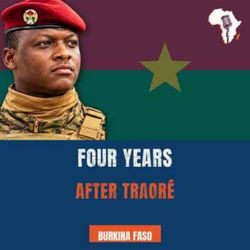
3. My Burkina Faso: Four Years of Captain Ibrahim Traore
25:42||Season 7, Ep. 3My Burkina Faso, Four Years After TraoréThis episode examines Burkina Faso four years into Captain Ibrahim Traoré’s rule, using a conversation with Dr. Lamourdia Thombiano, a soil scientist and writer from eastern Burkina Faso. It explores security, sovereignty, indigenous values, and the political mood in the country, with a strong focus on how many Burkinabe people see the changes firsthand.Dr. Thombiano argues that the country has more hope, cohesion, and national purpose than it did before Traoré took power, especially outside the cities. He also explains why many citizens view the current period less through the lens of elections and individual rights, and more through development, social unity, and cultural grounding.Key topicsDr. Thombiano says Burkina Faso feels more vibrant and politically engaged than it did four or five years ago.He links today’s patriotism to the legacy of Thomas Sankara, saying Traoré’s appeal partly comes from continuing Sankara’s unfinished project.Security remains a major challenge, but he frames it as part of a broader package that includes peace, social cohesion, development, and public confidence.He says the army’s morale has improved because soldiers are better equipped and supported by civilians who share information, food, and water.He argues that many Burkinabe people would prefer development spending on health, agriculture, and education over the costs of elections.He describes a shift toward indigenous governance, including traditional leaders handling disputes that are then recognized by the Ministry of Justice.He says Burkina Faso is moving toward a model where democracy is not only about elections, but about good governance and communal responsibility.He highlights concrete agricultural changes, including subsidized fertilizer, government ploughing support, and new crops such as coffee, cacao, plantain, banana plantain, and wheat.He says youth are being trained through “immersion patriotique,” with 65,000 young people reportedly trained this year in values like solidarity, hospitality, fairness, and service.On freedoms and repression, he argues that in Burkinabe culture the collective takes priority over the individual, so public speech is judged by whether it helps or harms the community.Chapters00:00 — Dr. Thombiano introduces himself and Burkina Faso’s new political reference points 00:56 — Traoré’s rise, his sovereignty message, and the promise to restore security 01:26 — Why many Burkinabe people feel renewed enthusiasm and national momentum 03:50 — Sankara’s influence and Traoré’s revolutionary legacy 04:20 — Security as part of a wider package of peace, cohesion, and development 05:19 — Why Sahel insecurity is viewed as a regional and global problem 06:20 — Improved army morale and stronger public support 07:18 — Dissolving political parties and delaying elections 07:47 — Indigenous values and traditional dispute resolution 09:16 — Democracy through a Burkinabe lens 10:41 — Why many people reportedly prefer development spending over election costs 11:09 — Mobile hospitals, rural healthcare, and agricultural support 12:07 — How Burkina Faso’s agricultural possibilities are changing 13:34 — Innovation, agricultural dynamism, and optimism 14:04 — Why optimism is stronger in rural areas 16:06 — Traoré’s hero status among young people 18:04 — French influence, Russian cooperation, and international alliances 19:59 — Burkina Faso as a country of hope and sovereignty 20:30 — “Immersion patriotique” and training a new generation 21:56 — Personal freedoms, collective responsibility, and cultural perspectivesNotable quotes“It’s a country of hope.”“The individual is at the service of the community, not the other way round.”“People realize the amount of money which is being used to organize election, they can use it for health, for agriculture, for education.”
2. Africa: 18% Global Population but Only 2% the World's Flights: RwandAir CEO Yvonne Makolo Explains
27:13||Season 7, Ep. 2Africa has 18% of the world's population and only 2% of its air traffic. RwandAir CEO Yvonne Makolo says the continent did that to itself.I speak to Yvonne about her nine years running Rwanda's national carrier — an airline that still isn't profitable, in a country of 15 million people with almost no outbound travel market, at a time when most African flag carriers have collapsed.She explains why Rwanda decided to build an airline anyway, how Kigali became a transit hub where more than half of passengers are just passing through, and that the long-delayed Qatar deal is still going through. She's blunt about what's holding African aviation back: taxes, fees, closed skies, restrictive visas, and a mindset that treats flying as a luxury for the rich.On being one of very few women running an airline, she has a sharp answer to the question she says she's always asked.And after nine years in the job, I ask her whether she'll still be doing it in ten.Yvonne says the question she's always asked — "what will you do to bring more women into aviation?" — is aimed at the wrong person. What did you make of her answer?Yvonne explains how Rwanda has used aviation as a strategic pillar for growth, why Kigali has become a growing transit hub, and how the airline’s ambitions tie into the country’s broader economy. She also reflects on the challenges facing African aviation, from high fees and restrictive visas to infrastructure gaps and geopolitical tensions.TagsRwandAir, Yvonne Makolo, African aviation, Kigali, Bugesera airport, Qatar Airways, Qatar Investment Authority, Ethiopian Airlines, open skies, Yamoussoukro Decision, IATA, AfCFTA, Rwanda, women in aviation, airline CEO, Africa Here and Now, Martine DennisThis is part of Africa Here & Now's special series on aviation including conversations with: Mesfin Tasew of Ethiopian Airlines, Kamil Al Alawadhi of IATA, Allen Onyema of Air Peace, Henok Teferra Shawl of Boeing Africa, Adefunke Adeyemi of AFCAC, and Nigeria's aviation minister Festus Keyamo.Key moments00:00 — Why Yvonne hopes the next generation takes over00:28 — Aviation and Africa’s unrealized potentialMartine introduces the special aviation series and frames the broader question of why African aviation still underperforms.00:51 — From technology to aviationYvonne shares her unusual career path from geography and environmental science into IT, telecoms, and aviation.02:33 — Entering a male-dominated industryShe describes the shock of walking into a room full of “grey suits” at her first IATA AGM.04:01 — The question women are always askedYvonne explains why conversations about bringing more women into aviation should involve men too.05:53 — Why Rwanda invested in a national airlineShe outlines the government’s deliberate decision to use aviation as a foundation for national development.06:22 — How the airline supports Rwanda’s economyTourism, exports, conferences, and sports tourism all benefit from the airline’s growth.08:20 — Measuring the value of a loss-making airlineYvonne discusses how the airline’s wider contribution to the economy matters as much as profitability.10:09 — Kigali as a hubMore than half of passengers are transit travelers, showing how Kigali is becoming a regional connection point.11:07 — Growth plans and new destinationsRwandAir is already competing internationally and plans to expand to more long-haul destinations.12:28 — Qatar Airways partnership13:23 — The new airport and future hub ambitions16:19 — Building aviation capacity in-house18:37 — Investing in aviation skills19:35 — Why African aviation is still underperforming22:23 — Why progress is too slowRwanda’s example shows what’s possible when the right policies are in place, but regional reform remains slow.23:16 — Fuel costs and geopolitical pressure24:36 — Navigating geopolitics25:34 — Looking aheadYvonne reflects on her future in the role and says it may be time for the younger generation to take over.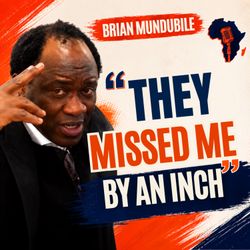
1. Brian Mundubile on Zambia's Disputed Election 2026
21:25||Season 7, Ep. 1Days after Zambia went to the polls on 13 August, opposition leader Brian Mundubile sits down with me to describe a night he says he barely survived — soldiers at his gate, gunfire inside his home, and members of his camp shot or missing. What follows is a hard conversation about whether this election can be trusted at all, and what he'll do if the result doesn't go his way. And indeed, if it does.Mundubile's central charge is simple: the vote can't be called credible until someone explains, independently, what happened to the Gen 20 forms and the rest of the election material — and who had their hands on it. He describes what he says is a country on edge, an electoral commission he no longer trusts, a campaign he says was throttled, and a claim of victory he insists he never made.He describes the mood in Zambia as close to breaking point — soldiers on the streets, soldiers at the polling stations, soldiers at the tallying centres. Not a reassuring presence, in his telling, but an intimidating one.Then the attack. He says 70 to 80 army officers came to his home and opened fire inside the house. A former transport minister was hit, he says; so was his bodyguard. Others simply vanished — among them Bishop Trevor Mwamba. The government denied any of it had happened, he says, right up until observers and cameras turned up and documented the scene.His problem with the count comes down to custody. He says the Electoral Commission suspended announcing results and started calling in Gen 20 forms in a way that broke from normal procedure — and that military and intelligence officers should never have been anywhere near election material in the first place. So he won't accept a presidential result just because it's been read out. If the core questions aren't answered, he says, an announcement means nothing. He's firm that he never declared himself the winner — he was pointing to his own side's parallel count, not crowning himself — but he's equally clear he believes that count puts him ahead.He's scathing about the conditions his campaign ran under: police blocking meetings, days lost off the trail, violence flaring in several provinces, a final stronghold he never got to visit. There are also claims here of foreign mercenaries and attackers coming across the border, and an account of his own detention and release, with the police and intelligence services in the frame.On his own past, he doesn't dodge it. He accepts the Patriotic Front fell short in government, but insists his formation has changed .And if he wins? He says he'd protect the office of the outgoing president, follow due process on any corruption allegations rather than settle scores, and build a government that reaches across regions and reconciles rather than punishes.Chapters00:00 — Zambia after the vote: a country holding its breath00:49 — Soldiers everywhere, and the first doubts about the count01:32 — The night they came: gunfire at the house04:32 — Why he says this election can't be trusted05:28 — The Gen 20 forms, and what happened to them06:40 — Chain of custody: why who holds the paper matters08:02 — What he'll accept — and what he won't08:56 — His case against the Electoral Commission's independence09:46 — A campaign run on the back foot10:37 — Violence in the provinces, and the stronghold he never reached11:30 — Soldiers guarding ballots: how did we get here?12:58 — "I never declared myself winner" — setting the record straight13:41 — Why he believes his own count leads14:18 — Mercenaries and attackers across the border15:24 — Detained and released: the role of police and intelligence17:09 — Owning the PF's failures, and drawing a line under violence19:21 — What he'd do with a defeated president20:10 — Rule of law, not payback21:38 — Reconciliation and a government for every regionNote: The claims and allegations in this interview are Brian Mundubile's own account. Africa Here & Now puts them on the record and reports them as his testimony.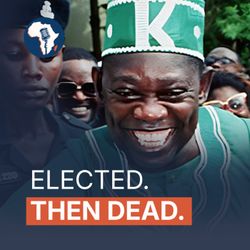
16. Who Killed MKO Abiola And Why?
30:37||Season 6, Ep. 16A new documentary asks those INVOLVED for ANSWERS to Nigeria's June 12th 1993 Election Question that Won't Go Away.In 1993, Nigeria held what many still call the freest election in its history. MOSHOOD KASHIMAWO OLAWALE ABIOLA — MKO — won it. Everyone accepted the result. Then the military annulled it, locked him up, and five years later he died in detention, collapsing during a meeting with a US delegation on the very day his release was expected. The cause of his death has never been settled.Filmmaker OSE OYAMENDAN spent years and more than a hundred hours of footage tracking down nearly everyone still alive who was in the room or near it — including GENERAL IBRAHIM BABANGIDA, who annulled the election, and GENERAL ABDULSALAMI ABUBAKAR, who was head of state when ABIOLA died. His documentary MKO had its world premiere at Sheffield DocFest 2026. He sits down with me to trace how a national election became a global mystery — and why, thirty years on, it still shapes Nigeria.In this conversation: what the record actually establishes about June 12 and the annulment; the family's final visit to a man who looked grey and unwell; BABANGIDA'S own account of why he cancelled the result; the rivalry between ABIOLA and OBASANJO; the testimony of ABIOLA's guard, THEODORE ZADOK, pulled away for forty minutes before the collapse; the tea, the cup, and why OSE is careful not to call it poison; the death of SANI ABACHA a month earlier and the connection some see between them; and what the annulment did to Nigerian democracy — including why OSE's own mother stopped voting.OSE is clear throughout that he draws no verdict on how Abiola died; the film lays out the accounts and leaves the conclusion to the viewer. Africa Here and Now follows the same line — the contested claims here belong to the film and its participants.MKO (2026) — a film by Ose Oyamendan. World Premiere, International Competition, Sheffield DocFest 2026.00:00 "we'll say it's in the tea"00:18 Getting Pickering to talk: lawyers, access, and the making of MKO01:35 Who killed Abiola? Why Ose leaves the verdict to the viewer01:57 June 12, 1993: the win everyone accepted, then detention02:22 The last days — the family's final visit, and a man gone grey03:31 The morning of the meeting: awake, singing, "excited"04:00 Building the chronology: reporting a story with various claims05:15 Babangida: the charm, the corner he boxed himself into06:34 Why he annulled it — "I don't want to die"07:03 The Abacha problem Babangida never dealt with08:41 Was Abiola too trusting? Naïve, or facing something new?10:46 The Renaissance man: the richest man who declared himself president11:13 Ose's first encounter with Abiola13:00 Obasanjo, rivalry, and "Abiola is not the Messiah"16:34 Abubakar takes over — why release everyone but him?18:22 Theodore Zadok: the guard pulled away for 40 minutes19:00 Inside the 28-minute tape: the cup, the discomfort, the collapse20:41 Was it the tea? Why the poisoning theory doesn't hold21:34 In defence of Susan Rice21:55 Abacha's death a month earlier — the apple, the connection22:55 Who benefits? Oil, the army, and the political class23:52 The mandate he would not renounce — and the Kofi Annan letter25:07 The stolen democracy: why Ose's mother stopped voting26:23 June 12 as symbol: the one man who won every part of Nigeria27:18 Has Nigeria recovered? Weak centre, strong regions, a military system29:19 Mandela's warning: no strong Nigeria, no strong continentKey figuresMKO Abiola — businessman and publisher, winner of the annulled 1993 election, died in detention 1998. Ibrahim Babangida — military president who annulled the result. Sani Abacha — seized power in late 1993, died June 1998. Abdulsalami Abubakar — head of state at the time of Abiola's death. Thomas Pickering — US Under Secretary of State, led the delegation at the final meeting. Susan Rice — then Assistant Secretary of State for Africa. Theodore Zadok — Abiola's security guard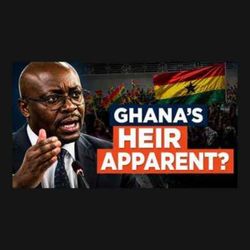
15. Could Ghana's Finance Minister CASSIEL ATO FORSON Become Leader?
12:12||Season 6, Ep. 15
14. Africa At World Cup 2026
44:45||Season 6, Ep. 14Ten African teams. The most ever at a World Cup. So why aren't the people who actually know the game convinced?Former Premier League striker and Nigerian Super Eagle, EFAN EKOKU and ex-DRC international ,GABRIEL ZAKUAN join me to break down Africa's prospects at the 2026 World Cup — from DRC's first appearance in 52 years, to why Nigeria keeps missing out, to the tiny island nation that recruited their squad on LinkedIn.This is an Africa Here & Now Special. We examine the prospects of South Africa, Algeria, Tunisia, Egypt, Morocco, DRC, Ghana, Ivory Coast, Cape Verde and Senegal in the tournament. And we nod in the direction of the diaspora: Haiti, Brazil and Curacao.🎧 Subscribe for more: https://youtube.com/@AfricaHereAndNOWPodcastCHAPTERS 00:00 Africa's best-ever chance? 03:36 Who goes far? — Efan & Gabriel's picks 04:34 Cape Verde, recruited on LinkedIn 05:06 The hurdles: visas, Ebola, and DRC's quarantine 08:26 DRC's historic return after 52 years 10:35 What's wrong with Nigeria's Super Eagles? 12:20 1974 and the ghost of Zaire 14:58 Group-by-group breakdown 33:27 Is the French team really African? 53:46 Ones to watch 56:25 Final predictions Find out about the 1993 Tragedy in which ZAMBIA'S ENTIRE National Football Squad died. They were considered the country's best ever team; many say Zambian football has never recovered. https://youtu.be/1N70VyekfTo?si=p1O6H2zGHfTF-O8l