Share
Addiction Audio
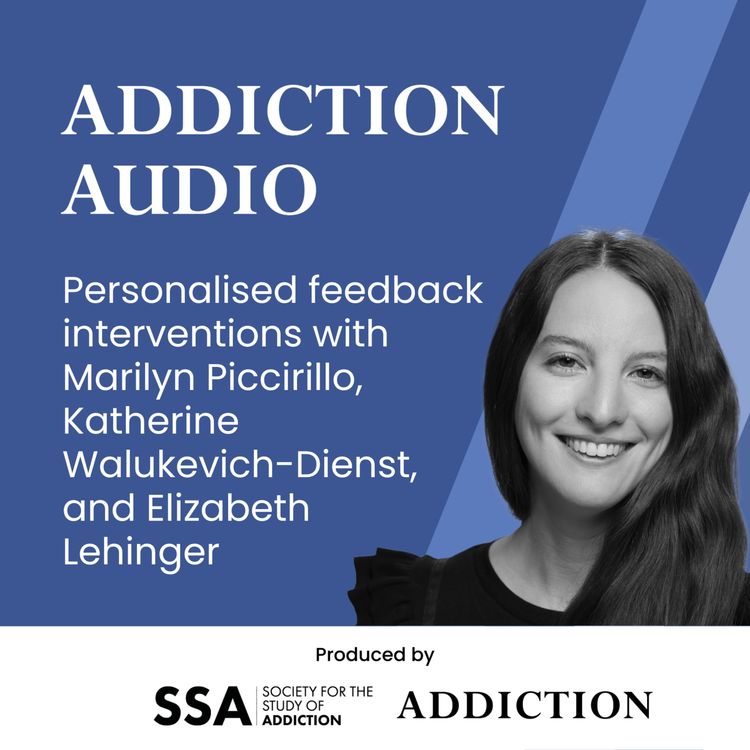
Personalised feedback interventions with Marilyn Piccirillo, Katherine Walukevich-Dienst, and Elizabeth Lehinger
In this episode, Dr Tsen Vei Lim talks to: Dr Marilyn Piccirillo from the Department of Psychiatry at Rutgers University-New Brunswick and Drs Katherine Walukevich-Dienst and Elizabeth Lehinger from the Department of Psychiatry and Behavioral Sciences at the University of Washington School of Medicine. The interview covers their research report on the longer-term efficacy of brief, alcohol-focused personalised feedback interventions among young adults in two universities on the West coast of the US.
Note for listeners: The acronym PFI is used throughout this episode, which stands for ‘personalised feedback intervention’.
· What is an alcohol-focused personalised feedback intervention? [01:48]
· An example of how one of these interventions would work in practice [03:03]
· The importance of considering distress [03:46]
· The key findings of the study [07:24]
· Why ‘less is more’ when it comes to alcohol interventions [12:19]
· How the findings contribute to policy or practice [14:46]
· The pioneers of personalised feedback interventions [17:41]
About Marilyn Piccirillo: Dr Piccirillo is a licensed psychologist and an Assistant Professor in the Department of Psychiatry at Rutgers University-New Brunswick. She is also a Core Faculty member of the Rutgers Brain Health Institute and a member of the Rutgers Addiction Research Center. Dr Piccirillo uses person-centered frameworks to study motivating and maintenance factors for substance use problems, particularly for those experiencing co-occurring anxiety, trauma, and stress. She also examines how digital tools can be used to support treatment and recovery and optimise the design and delivery of treatments for substance use problems and addiction.
About Katherine Walukevich-Dienst: Dr Walukevich-Dienst is a clinical psychologist and Assistant Professor in the Department of Psychiatry and Behavioral Sciences at the University of Washington. Her research focuses on developing and testing digital interventions to reduce substance use and improve mental health among young adults. She uses methods such as ecological momentary assessment to examine real-time behavior and intervention engagement. Dr Walukevich-Dienst has authored over 50 peer-reviewed publications and leads National Institutes of Health (NIH)-funded projects aimed at improving outcomes for cannabis and alcohol use through scalable, evidence-based approaches.
About Elizabeth Lehinger: Dr Lehinger is an Acting Assistant Professor in the Department of Psychiatry and Behavioral Sciences at the University of Washington School of Medicine. She has two primary areas of research: 1) college student alcohol prevention, and 2) trauma recovery for individuals with co-occurring substance use disorders. Her research focuses on reward processes underlying these research areas.
The authors have no conflicts of interest to disclose.
Original article: Examining the longer-term efficacy of brief, alcohol-focused personalized feedback interventions for individuals with internalizing distress: Secondary analysis of a randomized controlled trial. https://doi.org/10.1111/add.70044
The opinions expressed in this podcast reflect the views of the host and interviewees and do not necessarily represent the opinions or official positions of the SSA or Addiction journal. The SSA does not endorse or guarantee the accuracy of the information in external sources or links and accepts no responsibility or liability for any consequences arising from the use of such information.
More episodes
View all episodes
40. Recovery capital and genetic risk in remission and relapse with Janaka Kosgolla and Doug Smith
20:14||Season 4, Ep. 40In this episode, Dr Tsen Vei Lim talks to Dr Janaka Kosgolla and Professor Doug Smith. Janaka is an assistant research scientist and Doug is a professor, both from the School of Social Work at the University of Illinois Urbana-Champaign in the United States. The interview covers Janaka and Doug’s research article on joint associations of recovery capital and polygenic risk with electronic health record observed remission and relapse in drug use disorder.What is recovery capital? [01:36]Examples of recovery capital [02:32]What are polygenic risk scores? [03:30]What motivated Janaka and Doug to explore the relationship between recovery capital and polygenic risk scores [07:32]How Janaka and Doug addressed their research question [08:50]The key findings from the study [10:24]Do recovery capital and polygenic risk scores interact with each other? [11:59]Do people with greater genetic risk require more recovery capital? [14:17]Whether we have data on what type of treatment the participants received [15:20]The exploration of mental health within the relationship [16:38]The findings in the context of treatment and policy [18:03]About Tsen Vei Lim: Tsen Vei is an academic fellow supported by the Society for the Study of Addiction, currently based at the Department of Psychiatry at the University of Cambridge. His research integrates computational modelling, experimental psychology, and neuroimaging to understand the neuropsychological basis of addictive behaviours. He holds a PhD in Psychiatry from the University of Cambridge and a BSc in Psychology from the University of Bath in the UK. About Janaka Kosgolla: Janaka is an assistant research scientist at the Center for Prevention Research and Development (CPRD) in the School of Social Work at the University of Illinois Urbana-Champaign. His research focuses on adolescent substance use behaviour and recovery, as well as recovery from substance use disorders among adults. He examines how recovery capital, genetic susceptibility, and community resources relate to remission and recovery. He also works on several Medicaid projects, providing SQL programming support.About Doug Smith: Doug has served on the faculty of the School of Social Work since 2008. His research focuses on substance use disorder (SUD) treatment outcomes, especially among adolescents and emerging adults. The National Institutes of Health (NIH), Substance Abuse and Mental Health Services Administration (SAMHSA), the United States Department of Justice (DOJ), private donations, and internal sources have funded his work. He currently directs the Center for Prevention Research and Development (CPRD) inside the School of Social Work. CPRD has an annual budget of $3.5 million dollars and employs approximately 30 staff members. His recent work focuses on adolescents in recovery. His books include Emerging Adults in Substance Use Disorder Treatment (Oxford) and Motivational Interviewing with Families (Guilford).Tsen Vei, Janaka and Doug have no conflicts of interest to declare.Original article: Joint associations of recovery capital and polygenic risk with electronic health record observed remission and relapse in substance use disorder: Longitudinal evidence from the All of Us research program https://doi.org/10.1111/add.70582The opinions expressed in this podcast reflect the views of the host and interviewees and do not necessarily represent the opinions or official positions of the SSA or Addiction journal.The SSA does not endorse or guarantee the accuracy of the information in external sources or links and accepts no responsibility or liability for any consequences arising from the use of such information.Music provided by Jack Shakespeare.39. Mortality risk in gambling disorder with Yang-Chieh Brian Chen
19:25||Season 4, Ep. 39In this episode, Dr Annika Theodoulou speaks to Dr Yang-Chieh Brian Chen, a psychiatric resident at the University of Texas Health Science Center in Houston, US. The interview covers Brian’s research article on all-cause and cause-specific mortality in gambling disorder using evidence from a nation-wide matched and sibling cohort study in Taiwan.A background on gambling disorder [01:09]All-cause and cause-specific mortality in gambling disorder [02:59]Why Brian focused on the relationship between gambling disorder and quality of life and suicidal ideation [04:11]The value of looking at accidental death and natural causes [06:00]The difference between results in European populations compared to the Taiwanese population [07:38]The study design that Brian used for the study [08:58]The importance of controlling for demographic and clinical factors [11:21]A summary of the mortality risk associated with gambling disorder [12:26]How we can generalize the findings [13:24]Brian’s take home messages [15:01]The implications of the findings for clinicians [17:14]A singular message on gambling disorder for the listeners [17:47]About Annika Theodoulou: Annika is a Research Fellow at the National Centre for Education and Training on Addiction at Flinders University, South Australia. Her work focuses on health behaviours, including smoking cessation and weight management, with an emphasis on evidence synthesis. She completed a Doctor of Philosophy in Primary Health Care at the University of Oxford, where her research examined socioeconomic inequalities in smoking cessation behaviours and outcomes using quantitative and qualitative methods. Her doctoral research was funded by the Society for the Study of Addiction (SSA) and The Rotary Foundation. Annika is an Associate Editor of Nicotine & Tobacco Research and holds a Bachelor of Health Sciences and a Master of Clinical Science from the University of Adelaide.About Yang-Chieh Brian Chen: Brian is currently a psychiatry resident in the psychiatry residency program at the University of Texas Health Science Center at Houston. He graduated from China Medical University in Taichung, Taiwan, and completed two years of postgraduate training at Kaohsiung Chang Gung Memorial Hospital. He has worked with his research mentor, psychiatrist Dr. Chih-Wei Hsu, on several projects focused on database research. He is devoted to research in psychiatry with the goal of making advancements toward improved treatment options in mental health. His current research interests include interventional psychiatry and neurocircuitry. Original article: All-cause and cause-specific mortality in gambling disorder: Evidence from a nation-wide matched and sibling cohort study in Taiwan https://doi.org/10.1111/add.70397The opinions expressed in this podcast reflect the views of the host and interviewees and do not necessarily represent the opinions or official positions of the SSA or Addiction journal.The SSA does not endorse or guarantee the accuracy of the information in external sources or links and accepts no responsibility or liability for any consequences arising from the use of such information.Music by Jack Shakespeare.38. Comparing the price of alcohol-free and regular strength drinks with Abi Stevely
20:26||Season 4, Ep. 38In this episode, Dr Elle Wadsworth talks to Dr Abi Stevely, a Research Fellow at the Sheffield Addictions Research Group in the UK. The interview covers Abi’s article on the price of alcohol-free and low-alcohol drinks compared to regular-strength drinks using sales data in Great Britain.The term ‘No/lo’ refers to alcohol free (No) and low alcohol (Lo) drinks. What are alcohol-free and low alcohol drinks? [01:00]The use of ‘no/lo’ to refer to alcohol-free and low alcohol drinks [01:38]The main consumers of alcohol-free and low alcohol products in the UK [02:02]The motivation to explore the costs of alcohol-free and low alcohol drinks [02:55]How alcohol-free and low alcohol products are situated in the addiction space [04:40]The methods of the study [06:44]Are alcohol-free and low alcohol drinks more expensive than regular strength drinks across the whole off-trade market? [09:38]Are alcohol-free and low alcohol drinks more expensive than regular strength drinks across comparable products? [10:45]Are price differences associated with pack size and container type and size? [11:52]How Abi would expect the conclusions to change if on-trade sales were included [13:05]Perceptions of the price of alcohol-free and low alcohol drinks in pubs and bars [15:47]The comparison of alcohol-free and low alcohol drinks to soft drinks rather than an alternative to alcohol [17:11]The implications of Abi’s findings for alcohol price policy in the UK [18:00]The take home messages [19:11]About Elle Wadsworth: Elle is an academic fellow with the Society for the Study of Addiction. She is based at the University of Bath with the Addiction and Mental Health Group and her research interests include drug policy, cannabis legalisation, and public health. Elle holds a voluntary role at The Loop, a non-profit service provider of drug checking in the UK. About Abi Stevely: Abi is a Research Fellow in the Sheffield Addictions Research Group, where they have worked since 2020. Much of their work to date has focused on evaluating major policy interventions including minimum unit pricing in Scotland. They have also worked on understanding the impact of COVID-19 on drinking behaviour. Abi is currently working on projects evaluating the public health impact of the UK alcohol duty reforms in 2024, the uprating of minimum unit pricing in Scotland to £0.65, and the growing alcohol-free and low-alcohol drinks market.Declarations of interest: None Original article: Are alcohol-free and low-alcohol drinks more expensive than regular-strength drinks? A descriptive analysis of sales data from Great Britain, 2024 https://doi.org/10.1111/add.70568The opinions expressed in this podcast reflect the views of the host and interviewees and do not necessarily represent the opinions or official positions of the SSA or Addiction journal.The SSA does not endorse or guarantee the accuracy of the information in external sources or links and accepts no responsibility or liability for any consequences arising from the use of such information.37. Brain reward responses in young people with cannabis use disorder with Martine Skumlien and Valentina Lorenzetti
23:36||Season 4, Ep. 37In this episode, Dr Tsen Vei Lim talks to Dr Martine Skumlien and Professor Valentina Lorenzetti. Martine is a research fellow at King’s College London in the UK and Valentina is a professor at the Australian Catholic University in Australia. The interview covers Martine and Valentina’s research article on brain reward function in young people with cannabis use disorder.The idea that the brain reward system is affected in people with cannabis use disorder [01:28]How our understanding of the neuroscience behind cannabis use disorder affects how we treat cannabis use disorder [03:46]The novel contribution of Martine and Valentina’s study [06:06]How Martine and Valentina investigated the brain reward system in cannabis use disorder [08:18]The key findings from the study [09:24]How we think about the neuroscience of cannabis use disorder [12:33]How do we make sense of the findings alongside the current evidence base [14:33]How the findings sit in the theory of addiction as a brain disease [19:50]The wider implications on future treatment of cannabis use disorder [21:55]About Tsen Vei Lim: Tsen Vei is an academic fellow supported by the Society for the Study of Addiction, currently based at the Department of Psychiatry at the University of Cambridge. His research integrates computational modelling, experimental psychology, and neuroimaging to understand the neuropsychological basis of addictive behaviours. He holds a PhD in Psychiatry from the University of Cambridge (UK) and a BSc in Psychology from the University of Bath (UK). About Martine Skumlien: Martine is a Research Fellow at the King’s College London Social, Genetic & Developmental Psychiatry Centre. Her work focuses on cannabis harm reduction, policy, and impact on the brain. She was previously a research associate in the National Institutes for Health and Care Research (NIHR) Policy Research Unit in Addictions where she conducted research to inform policy within the drug and addictions field, and at the University of Bath where she carried out mixed-methods research into drug checking and detection of novel psychoactive substances. She earned her PhD from the University of Cambridge, investigating how cannabis use influences motivation and reward processing in the brain.About Valentina Lorenzetti: Valentina is a professor, founding Lead of the Neuroscience of Addiction & Mental Health Program, and co-founding Deputy Director of the Healthy Brain and Mind Research Centre at the Australian Catholic University in Melbourne Australia. She also serves as Senior Editor of the journal Addiction. Valentina has dedicated her career to understanding the neurobiology behind how people move into, and out of, addiction and entrenched mental health problems, across Australia, the UK, and Brazil, with a consistent focus on identifying with precision the core neurocircuitry affected and translating that understanding into effective intervention. Valentina’s program combines advanced multimodal neuroimaging, neuromodulation tools, global multi-site cohorts, and novel interventions such as cannabidiol, craving management strategies, and neurofeedback. Tsen Vei, Martine and Valentina have no conflicts of interest to declare.Original article: Brain reward function in young people with cannabis use disorder: A functional magnetic resonance imaging study https://doi.org/10.1111/add.70492 The opinions expressed in this podcast reflect the views of the host and interviewees and do not necessarily represent the opinions or official positions of the SSA or Addiction journal.The SSA does not endorse or guarantee the accuracy of the information in external sources or links and accepts no responsibility or liability for any consequences arising from the use of such information.Music provided by Jack Shakespeare.36. Artificial intelligence in addiction medicine with Patrick Kelly
20:48||Season 4, Ep. 36In this episode, Dr Elle Wadsworth talks to Patrick Kelly, a doctoral candidate at Brown University School of Public Health in the US. The interview covers Patrick’s article on clinicians' and people who use drugs' perspectives on artificial intelligence in addiction medicine.What is artificial intelligence and how has artificial intelligence been used in the field of addiction so far [01:18]The importance of knowing the perspectives of clinicians and people who use drugs with regards to artificial intelligence [03:39]What aspects of addiction medicine make it difficult to build artificial intelligence tools [05:34]The setting and sample of Patrick’s study [07:46]Patrick’s first theme drawn out from interviews with clinicians [08:57]Patrick’s second theme drawn out from interviews with clinicians [10:19]Patrick’s third theme drawn out from interviews with clinicians [11:30]Patrick’s fourth theme drawn out from interviews with people who use drugs [12:33]Patrick’s fifth and final theme drawn out from interviews with people who use drugs [13:31]How Patrick would like the findings to contribute to the field [15:11]Being cautiously optimistic about artificial intelligence in addiction medicine [17:39]The next steps [19:35]About Elle Wadsworth: Elle is an academic fellow with the Society for the Study of Addiction. She is based at the University of Bath with the Addiction and Mental Health Group and her research interests include drug policy, cannabis legalisation, and public health. Elle holds a voluntary role at The Loop, a non-profit service provider of drug checking in the UK.About Patrick Kelly: Patrick is an addiction scientist, National Institutes of Health (NIH) pre-doctoral fellow, and a PhD Candidate at the Brown University School of Public Health. His research program focuses on measuring multilevel stigma and unregulated drug supply changes using qualitative methods and artificial intelligence tools applied to real-world datasets to design and implement interventions that reduce addiction-related morbidity and mortality.Elle and Patrick have no declarations of interest.Original article: Clinicians' and people who use drugs' perspectives on artificial intelligence in addiction medicine https://doi.org/10.1111/add.70586The opinions expressed in this podcast reflect the views of the host and interviewees and do not necessarily represent the opinions or official positions of the SSA or Addiction journal.The SSA does not endorse or guarantee the accuracy of the information in external sources or links and accepts no responsibility or liability for any consequences arising from the use of such information.35. The effectiveness of breathing interventions for people who use drugs with Ari Roxburgh
18:41||Season 4, Ep. 35In this episode, Dr Tsen Vei Lim talks to Dr Ariel (Ari) Roxburgh. Ari is a Clinical Psychologist and addiction researcher at Monash University and Turning Point, Australia. The interview covers Ari’s review on controlled breathing and heart rate variability biofeedback for drug use-related outcomes.Please note that ‘HRVB’ used in the recording stands for heart rate variability biofeedback.Why Ari and his team explored controlled breathing [01:18]How breathing helps with drug use-related outcomes [02:20]Other breathing techniques examined in Ari’s review [05:03]The key findings from the meta-analysis [05:36]The difference between the examined breathing techniques [07:39]Whether the included studies accounted for the placebo effect [09:52]Whether Ari's findings apply to different drug use disorders [11:45]How soon controlled breathing can be included in clinical guidelines [13:40]How people can incorporate controlled breathing in their daily lives [15:40]The next steps for Ari and his team [17:06]About Tsen Vei Lim: Tsen Vei is an academic fellow supported by the Society for the Study of Addiction, currently based at the Department of Psychiatry at the University of Cambridge. His research integrates computational modelling, experimental psychology, and neuroimaging to understand the neuropsychological basis of addictive behaviours. He holds a PhD in Psychiatry from the University of Cambridge (UK) and a BSc in Psychology from the University of Bath (UK). About Ari Roxburgh: Ari is a Clinical Psychologist and addiction researcher at Monash University and Turning Point. His work focuses on novel substance use interventions, peer-led support frameworks, cognition and psychophysiology. Ari teaches in Monash’s graduate addictive behaviours program, served as convenor for the Australian Psychological Society’s Substance Use Special Interest Group, and regularly consults with government stakeholders on addiction policy.Tsen Vei and Ari have no conflicts of interest to declare.Original article: Controlled breathing and heart rate variability biofeedback for substance use-related outcomes: A systematic review and meta-analysis https://doi.org/10.1111/add.70542The opinions expressed in this podcast reflect the views of the host and interviewees and do not necessarily represent the opinions or official positions of the SSA or Addiction journal.The SSA does not endorse or guarantee the accuracy of the information in external sources or links and accepts no responsibility or liability for any consequences arising from the use of such information.Music provided by Jack Shakespeare.34. Cannabis, cognition, and the role of nicotine with Emese Kroon
20:21||Season 4, Ep. 34In this episode, Dr Tsen Vei Lim talks to Dr Emese Kroon. Emese is a postdoctoral researcher at the Center for Substance Use and Addiction Research at the Erasmus University Rotterdam in the Netherlands. The interview covers Emese’s article on associations of cannabis use with cognitive functioning in individuals with a cannabis use disorder, looking at the moderating role of nicotine.Why nicotine is important when exploring cannabis use disorder [01:29]What we know about the effects of cannabis on the human brain [02:46]What the effects of nicotine are on cognitive function [04:40]The importance of understanding cognitive function in cannabis use disorder [06:05]How Emese addressed the research question [07:16]The key findings from the research [08:56]How do the findings inform how we currently treat cannabis use disorder [13:15]The differences between Emese’s two samples in the study [16:01]Final thoughts from Emese [18:21]About Tsen Vei Lim: Tsen Vei is an academic fellow supported by the Society for the Study of Addiction, currently based at the Department of Psychiatry at the University of Cambridge. His research integrates computational modelling, experimental psychology, and neuroimaging to understand the neuropsychological basis of addictive behaviours. He holds a PhD in Psychiatry from the University of Cambridge (UK) and a BSc in Psychology from the University of Bath (UK). About Emese Kroon: Emese is a postdoctoral researcher at Erasmus University Rotterdam and Aarhus University. Her work bridges neurocognition and socio-cultural context to understand substance use and mental health. She's especially interested in accurate measurement, cross-cultural perspectives, and social influence, and is committed to translating rigorous fundamental science into real-world policy and public dialogue on substance use.Tsen Vei and Emese have no conflicts of interest to declare.Original article: Cross-sectional and longitudinal associations of cannabis use with cognitive functioning in individuals with a cannabis use disorder: The moderating role of nicotine https://doi.org/10.1111/add.70457 The opinions expressed in this podcast reflect the views of the host and interviewees and do not necessarily represent the opinions or official positions of the SSA or Addiction journal.The SSA does not endorse or guarantee the accuracy of the information in external sources or links and accepts no responsibility or liability for any consequences arising from the use of such information.Music provided by Jack Shakespeare.33. What young people see online about illicit vaping with Eleanor Bray
18:32||Season 4, Ep. 33In this episode, Dr Annika Theodoulou speaks to Eleanor Bray, a research associate at the University of East Anglia, UK. The interview covers Eleanor’s research article covering a content analysis of illicit vape messaging in young people's information sources.Illicit vaping and why it is an important issue in the UK [01:08]The Tobacco and Vapes Bill in the UK [03:21]How social media platforms like TikTok influence people’s understanding of illicit vaping [04:04]What prompted Eleanor’s team to explore this topic [05:20]The methods used in the study [06:30]The use of a public and patient engagement representative [09:25]The challenges of using TikTok in research [10:41]The main differences between TikTok and official educational resources [12:11]What we can learn from TikTok [15:45]The take home messages [17:15]About Annika Theodoulou: Annika is a Research Fellow at the National Centre for Education and Training on Addiction at Flinders University, South Australia. Her work focuses on health behaviours, including smoking cessation and weight management, with an emphasis on evidence synthesis. She completed a Doctor of Philosophy in Primary Health Care at the University of Oxford, where her research examined socioeconomic inequalities in smoking cessation behaviours and outcomes using quantitative and qualitative methods. Her doctoral research was funded by the Society for the Study of Addiction (SSA) and The Rotary Foundation. Annika is an Associate Editor of Nicotine & Tobacco Research and holds a Bachelor of Health Sciences and a Master of Clinical Science from the University of Adelaide.About Eleanor Bray: Eleanor is a Research Associate at the University of East Anglia, working within the Addiction Research Group at Norwich Medical School and the School of Psychology. She has worked on a range of projects within the Addiction Research Group exploring vaping cessation, smoking cessation and use of illegal and novel nicotine products. Her research interests focus particularly on the relationship between social media and addiction, as well as the role of co-production in facilitating harm reduction among young people. Eleanor has presented her research at an international conference and recently published her first paper published in Addiction.The authors declare no conflict of interest.Original article: #NoIDVape: A content analysis of illicit vape messaging in young people's information sources https://doi.org/10.1111/add.70476The opinions expressed in this podcast reflect the views of the host and interviewees and do not necessarily represent the opinions or official positions of the SSA or Addiction journal.The SSA does not endorse or guarantee the accuracy of the information in external sources or links and accepts no responsibility or liability for any consequences arising from the use of such information.Music by Jack Shakespeare.32. Redefining success in cannabis use disorder treatment with Toby Atkin
17:52||Season 4, Ep. 32In this episode, Dr Elle Wadsworth talks to Dr Tobias (Toby) Atkin, psychiatrist and a research fellow in Addiction Psychiatry at Columbia University in the US. The interview covers Toby’s opinion and debate piece on redefining success in cannabis use disorder treatment.[There are some light knocks/clicks in this episode – we apologise for any disruption!]The motivation behind Toby’s opinion and debate piece [00:50]The treatments that are available for cannabis use disorder today [02:52]The limitations of abstinence-focused endpoints in cannabis use disorder treatment [04:50] What we can learn from tobacco and alcohol in terms of reduction-based outcomes in cannabis use disorder treatment [06:26]Methodological challenges with measuring outcomes for cannabis use disorder treatment [08:23]The tiered outcome framework proposed in Toby’s article [09:26]Different measures of abstinence in cannabis use disorder trials [11:45]The decision to choose frequency over quantity as the core outcome [13:06]The key messages of the article [14:18]What Toby hopes to get out of this opinion and debate piece [16:27]About Elle Wadsworth: Elle is an academic fellow with the Society for the Study of Addiction. She is based at the University of Bath with the Addiction and Mental Health Group and her research interests include drug policy, cannabis legalisation, and public health. Elle holds a voluntary role at The Loop, a non-profit service provider of drug checking in the UK. About Toby Atkin, MD: Toby is an addiction psychiatry fellow in the Division of Pathophysiology and Treatment Research at New York-Presbyterian/Columbia University Irving Medical Center and the New York State Psychiatric Institute. He completed psychiatry residency at Columbia and is supported by a NIDA T32 fellowship under the mentorship of Frances Levin, MD, and Christina Brezing, MD. His research examines psychiatric comorbidity and treatment outcomes in substance use disorders, including a latent class analysis of psychiatric subtypes in opioid use disorder treatment and a pilot randomised trial of viloxazine for alcohol use disorder. He maintains a private practice in Brooklyn treating mood and addiction disorders.Declarations of interest: None Original article: Beyond abstinence: Redefining success in cannabis use disorder treatment https://doi.org/10.1111/add.70517The opinions expressed in this podcast reflect the views of the host and interviewees and do not necessarily represent the opinions or official positions of the SSA or Addiction journal.The SSA does not endorse or guarantee the accuracy of the information in external sources or links and accepts no responsibility or liability for any consequences arising from the use of such information.