Share
Eat Sleep Work Repeat - better workplace culture
Testing the New Work Manifesto
Around 12 months ago myself and Sue Todd created the new work manifesto. It was an attempt to start the debate about simple things that we can change. You can find it on the podcast website eatsleepworkrepeat.fm.
It's had a briliant response, research companies have asked to help validate it, different professions like doctors and police have been in touch asking if they can adapt it for their working. Lots of companies have told me they've been trying it out with their teams.
One person contacted me and offered to share the experience and learnings of the New Work Manifesto in their team. And that was Tom Kegode. I went down one lunch time a few weeks ago to meet Tom and his team at Lloyds Bank Group. Tom is an innovations programme manager who has helped share the new work manifesto across LBG.
You're going to hear discussion of various parts of the manifesto and the way that people at Lloyds are trying to make work more positive and enjoyable. Round the table were Lloyds employees Sam, Kate, Miranda, Verica, Ben, Jess, Heather, Shirley, Alastair, Dave and of course Tom himself.
If you're interested in using the New Work Manifesto it all on the website, it's not copyright. Use it, change it, remix it, edit it but whatever you do please hit me on linked in or via twitter to tell me how you got on.
This is the last in the series. I'll be back after the summer with a stellar list of the people who have done the best research on work, laughter, philosophy and workplace creativity.
if you want to hear those episodes you're best subscribing via your podcast app.
I appreciate you listening. Please do get in touch.
Sign up to the Make Work Better newsletter or check out the best ever episodes at the website.
Eat Sleep Work Repeat is made and hosted by Bruce Daisley.
More episodes
View all episodes

236. Does 'nothing beat in person work'?
46:00||Season 12, Ep. 236Has hybrid working been a disaster? Should we stop pretending and get back to the office? That is the claim of In-Person, a new book by Natalia Emanuel and Emma Harrington.I read the book with interest. Despite entering with an open mind, I wasn't wholly convinced by the evidence. The authors seem to be challenging fully remote work, rather than hybrid work. Additionally the whole book seems to come with an ulterior motive, intent on trying to score points rather than reflect on the best way to work.Natalia Emanuel agreed to chat with me to debate the evidence - it proves to be an engaging discussion.
235. Office politics, collective leadership and AI disruption
31:19||Season 12, Ep. 235A few people have asked me to do episodes on office politics and office interactions - one angle I wanted to look at that was through the lens of professional services firms. Laura Empson is a Professor at Bayes Business school having previously worked in professional services herself. She’s focussed on understanding the way that these firms work. Many professional services firms are a highly paid collection of partners who collectively own the firm. It means that the organisations are different to the version of work we are most used to. Rather than being low agency and low control they are high agency and are able to elect their leaders. I wanted to understand the impact that this had on the running of the companies - does the ability to elect leaders mean that politics takes place in public? Or does the overt nature of debate change the need for backchannel and gossip?We talk politics, collective leadership, identity, and also how to achieve elite performance in a collective organisation - whether there has to be trade off between comfort and success. We also discuss the growing impact of AI as a disruptive force on professional services firms and whether it is upending pressure from younger workers to make these firms less toxic.Check out Laura's podcast 'Leading Professionals'.
234. The simple answer to improving productivity: asking employees
32:57||Season 13, Ep. 234Our jobs have turned into the place where we’re told what to do: show up and follow orders. That was the finding of the latest cycle of the long-running Skills and Employment Survey.When asked, only a third of UK workers say they are given the discretion to decide how to do their jobs, a number that has dropped from two-thirds in three decades.When we hear this it’s hard not to think of the two other issues of contemporary work that have come to define the era: low engagement and low productivity. Professor Alan Felstead was one of the leads of the research and I asked him to explain the disappearance of workplace agency.Check out the workplace quiz: How Good Is My JobThere's a full transcript on the website.
233. What is REALLY happening with AI and jobs
39:41||Season 13, Ep. 233Bruce speaks with Daniel Susskind, economist and professor of business at Gresham College, about how AI is changing work, education, and the meaning of our jobs. Daniel's new book tackles AI and how we should prepare for the future.Predictions of the future have shown it is too uncertain to predict, so what can any of us do to ready ourselves? Susskind says that we should prepare by learning the basics while training on cutting edge technology. Above all else he believes we need to teach the essentials of character.We also discuss Ethan Mollick's posts on AI.AI2027 updated, Reddit post. AI2027 gives a positive vision of what is next.It's an important, timely discussion. The website has a full transcript and links to Daniel's recent lectures.
232. What hospitality teaches us about culture
38:07||Season 13, Ep. 232Danny Meyer is one of the most respected restaurateurs in the world, but beyond the success of the likes of Union Square Cafe, Gramercy Tavern and Shake Shack he's also become famous for writing a book, Setting the Table, that has become an inspiration to hundreds of thousands of readers around the world. The book is used as training manual beyond the hospitality trade by businesses who want to be famous for providing strong customer service.Danny talks about service being a monologue, whereas hospitality is a dialogue. In his new book, What Could Possibly Go Right?, he updates his story. His first book documented many slips on the way to running a series of beloved restaurants; he was proud that he'd never closed an eaterie. The new book catalogues closures, missteps, Covid and an even an intervention by his leadership team when the culture of the business was on the wrong tracks.Danny tells Bruce that restaurants are the perfect space to watch culture on fast forward, and how anyone can learn lessons from his businesses as they strive to be the most beloved venues in New York.
231. Stop talking about culture - deal with behaviours
55:42||Season 12, Ep. 231Proper ding dong this week. I have a fabulously enjoyable back-and-forth with the brilliant Professor Rob Briner.At one stage Rob says: ‘If you tell someone - whose favourite thing is organisational culture - and you tell them it’s not a very useful idea - they don’t like it.’ Well, I felt seen. To be fair I’d already acknowledged that I agreed on what he was saying that behaviours are more important than culture. Also I’m more than a culture fan, I promise.But it’s a sign that it’s an outstanding discussion. Rob’s key point was that the idea of culture is vague and subjective. Rob says that culture is ‘a description. So if you want to change something, you don’t change the description of it, you change the cause of it.’ He says we should be specific about what we're trying to change, not just wave our arms and mouth 'culture'.We discuss if an obsession with scale is the curse of modern business.How to build effective organisations.Why you should focus on being specific about culture.It's worth checking out some of Rob's posts. For example: Does changing culture change behaviour?Rob asked me to share the following bio:Rob Briner is Professor of Organisational Psychology (Queen Mary University of London) and a Research Director at Corporate Research Forum (rob@crforum.co.uk). He has been promoting Evidence-Based Practice in Management, HRM and Work Psychology for almost three decades. His recent research with Corporate Research Forum includes reports on Evidence-Based HR and how HR can more effectively drive organisational performance. He also leads CRF’s Work Psychology Network which has produced reports summarizing the best available and most practical work psychology theory and evidence around a range of topics including motivation and performance, assessing potential and behaviour change in organisations. He has also produced a series of short posts on LinkedIn where he explores various popular ideas about behaviour at work (e.g., learning styles, psychological safety, growth mindset, happy-productive worker) and asks about each: Is that really a thing? That question is answered through a combination of critical thinking and using reviews of scientific evidence. There's a full transcript at the website.
230. What chance do we have versus the machines?
43:13||Season 12, Ep. 230Sarah O'Connor is a journalist for the Financial Times who specialises in writing about work and the evolution of our jobs. Over the last year or so that has meant a lot of reflection about AI job displacement.In her new book, We Are Not Machines, Sarah reflects on how technological change is reshaping the workplace - and the invisible enshittification it often brings with it. Sarah has a strong message: firstly that we should have more belief in the unique strengths of human labour, and secondly that individual agency is the most important differentiator in our favour.It's a brilliant conversation that gives a flavour of her book.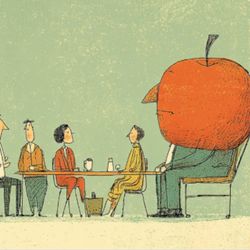
229. Can one bad apple ruin your team?
47:24||Season 12, Ep. 229Kate Murphy is the author a new book called Why We Click. It combines the very latest research into interpersonal synchrony - how we form bonds with others. It's an intriguing read - at times compelling, at times challenging.I chatted to her to understand 'the bad apple effect' and her take on whether we need face-to-face communication at all costs.There's a full transcript on the website.
228. Your colleagues like you more than you realise…
46:38||Season 12, Ep. 228Dr Gillian Sandstrom is a researcher whose work explores her fascination with our conversations with other people - whether colleagues, friends or strangers. She’s just published a fabulous new book ‘Once Upon A Stranger’.Her work says that we often have a ‘liking gap’ when we talk to people - we think they like us less than we like them - even if they are work colleagues. It turns out not to be true - our co-workers like us more than we realise.It's a brilliant discussion - and potentially a prompt for you to change how you live your life.This week's newsletter is about talking to colleagues.