Share
Outcasts of the Earth
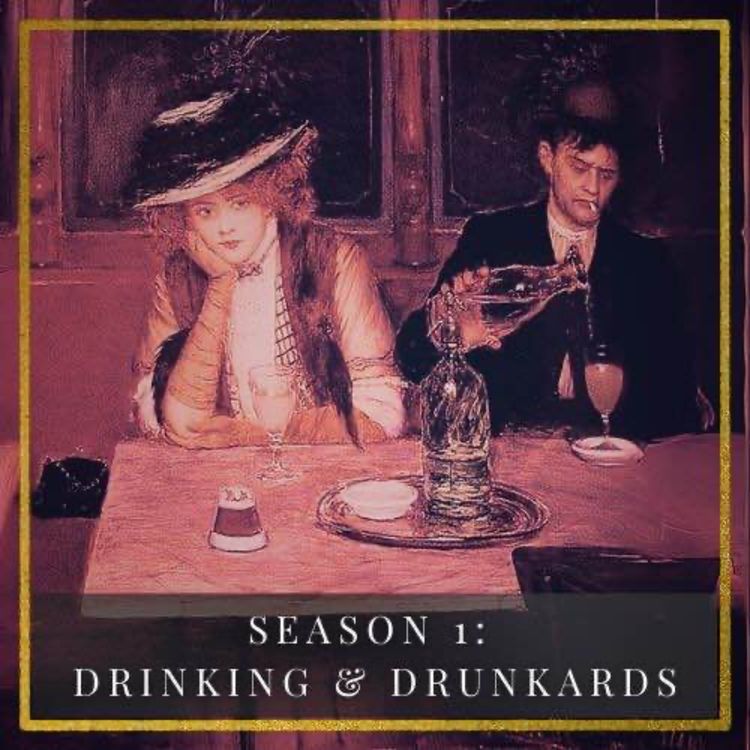
Gin Crazed, pt. 1
In this season's first two-part episode, we digging into the fascinating and disturbing history of the Gin Craze. Spanning roughly half a century, gin drinking seemed to hold London's poorer residents in an unrelenting grip. This decades long drinking binge did not happen by accident, however; this occurred as the result of legislation passed by members of Parliament who directly benefitted from the increase in domestic distillation.
For part one, we cover the origins and initial responses to the Gin Craze, including a series of laws passed by Parliament in an effort to correct the mess that they had made. Attempts to take gin away from the laboring poor only succeed in increasing open mockery of the government, subtle means of subverting the law, and even acts of violence directed toward government-funded informants. We cover all of this, as well as what the heck a "puss and mew" is and what it has to do with gin this week - check it out!
Primary Sources:
John Clayton, Friendly Advice to the Poor (Manchester: 1755).
Isaac Maddox, Sermon (London: 1750).
Thomas Wilson, Distilled Spirituous Liquors the Bane of the Nation (London: 1736).
Secondary Sources:
Richard Barnett, The Book of Gin (New York: Grove Press, 2011).
Simon Difford, “History of gin (1728-1794) - London’s gin craze,” Difford’s Guide.
Elizabeth Gilboy, Wages in Eighteenth Century England (Harvard University Press, 1934).
Andrew A. Hanham, “The Gin Acts, 1729-51,” The History of Parliament.
Alice Loxton, “What was the Gin Craze?” History Hit (January 18, 2021).
James Nicholls, The Politics of Alcohol: A History of the Drink Question in England (Manchester: Manchester University Press, 2011).
Katelyn Stieva, “‘Drunk for a Penny, Dead Drunk for Two Pence’: Drink and Culture in London’s Eighteenth Century Gin Craze,” The Mirror 36, 1 (March 1, 2016).
Jessica Warner, Craze: Gin and Debauchery in an Age of Reason (New York: Random House, 2003).
Jessica Warner and Frank Ivis, “‘Damn You, You Informing Bitch.’ Vox Populi and the Unmaking of the Gin Act of 1736,” Journal of Social History 33, 2 (Winter, 1999): 299-330.
UK National Archives Currency Converter (1270-2017).
Written and recorded by: Kenyon Payne
Theme music: "Southern Gothic" Kevin MacLeod (incompetech.com)
Licensed under Creative Commons: By Attribution 4.0 License
http://creativecommons.org/licenses/by/4.0/
Outro music: “D´vil,” anrocomposer
Additional featured music:
“The Silence,” Tunetank
“Victorian London,” Table Top Audio
“Baroque Classical Meets Underground Hip Hop Fusion,” nickpanek620
“Legacy of Passacaglia,” White_Records
“Dark Fear,” AUDIOREZOUT
“Clockwork Adventure (Steampunk),” Luis_Humanoide
“One Thousand Years Ago,” JoelFazhari
“Chance Meeting,” White_Records
“Cinematic Dramatic Tense,” Lexin_Music
More episodes
View all episodes
16. Season Conclusions: Ending the Hunts
35:29||Season 2, Ep. 16Join Kenyon in this concluding episode for season two. This episode covers some examples of trials that continued into the eighteenth century, the end of the early modern witch hunts, as well as the legacies of this history today. Kenyon also briefly discusses how modern practitioners are again looking back to the ancient roots of magic, as well as parts of the world where witch hunts continue to occur. Thank you to all for tuning in to listen to this second season! The show will be back after a break for the summer. Cheers!Visit the Outcasts of the Earth website at: www.ootepod.comOutcasts of the Earth on Instagram: @ootepodWritten and recorded by: Kenyon PayneTheme music: "Southern Gothic" Kevin MacLeod (incompetech.com)Licensed under Creative Commons: By Attribution 4.0 Licensehttp://creativecommons.org/licenses/by/4.0/Outro music: “D´vil,” anrocomposer
15. Salem Divided
01:09:06||Season 2, Ep. 15In this episode, Kenyon covers the complicated and deeply entrenched history of the Salem Witch Trials. This is part two of a two-part episode on this topic; if you have not listened to episode one ("Tituba's Confession"), please check it out! More of this episode will make sense.Picking up the story with the downward spiral that followed Tituba's confession to witchcraft, the community across Salem began to pull itself apart, suspecting neighbors and other church members of being a witch. This episode covers the backstory to family conflicts, how the Putnams became so central to the witch trials, and the repercussions followed after the trials came to an end.Next week is the final episode of season two. To vote on season three's topic, please head over to the show's Instagram page @ootepod!Visit the Outcasts of the Earth website at: www.ootepod.comOutcasts of the Earth on Instagram: @ootepodSources:SWP No. 094: Rebecca Nurse Executed July 19, 1692SWP No. 022: George Burroughs Executed, August 19, 1692SWP No. 069: Abigail HobbsCotton Mather, The Trial of Susannah Martin, at the Court of Oyer and Terminer, Held by Adjournment at Salem, June 29, 1692.—Paul Boyer and Stephen Nissenbaum, Salem Possessed: The Social Origins of Witchcraft (1976)Rebecca Brooks, “Ann Putnam, Jr: Villain or Victim?” History of Massachusetts Blog (July 6, 2015). Rebecca Brooks, “Betty Parris: First Afflicted Girl of the Salem Witch Trials,” History of Massachusetts Blog (June 10, 2013).Marc Callis, “The Aftermath of the Salem Witch Trials in Colonial America” Historical Journal of Massachusetts Volume 33, No. 2 (Summer 2005).Richard Francis, Judge Sewall's Apology: The Salem Witch Trials and the Forming of a Conscience (2016). Carol Karlsen, The Devil in the Shape of a Woman: Witchcraft In Colonial New England (1998).Mary Beth Norton, In the Devil’s Snare: The Salem Witchcraft Crisis of 1692 (2003).Jenni Tyler, “On this day in 1692: The Final Day of Salem's Witch Trial Horror,” Arcadia Publishing, Sept. 22, 2025. Written and recorded by: Kenyon PayneTheme music: "Southern Gothic" Kevin MacLeod (incompetech.com)Licensed under Creative Commons: By Attribution 4.0 Licensehttp://creativecommons.org/licenses/by/4.0/Outro music: “D´vil,” anrocomposerAdditional featured music:“Historias,” anrocomposer“Piano & cello Beautiful Poetic Music,” Denis Pavlov Music“Black Powder,” Shadows and Echoes“Around Every Corner,” Dream Protocol“Horror,” Litesaturation“Tragedy and Grief,” Ashot Danielyan“The Moon Got Tangled in the Branches," Lexin Music“Gothic & Horror,” Pianocafe_Kumi“Forgotten Waltz,” Grand ProjectBy Kevin MacLeod(incompetech.com)Licensed under Creative Commons: By Attribution 4.0 Licensehttp://creativecommons.org/licenses/by/4.0/:“Gymnopedie No 3”“Virtutes Instrumenti”“Magic Escape Room”
14. When the Witches Came to Salem: Tituba's Confession
54:10||Season 2, Ep. 14In this episode, we take on the history of one of the most infamous witch hunts in popular memory; it is also the largest witch panic in American history. The research, analysis, and discussion of the Salem Witch Trials continues to attract widespread attention and fascination (with thanks to Arthur Miller). In this first episode of a two-part discussion of the Salem Witch Trials, we focus on the contextual background to the panic that began in 1692. Years of warfare, including King Philip's War and King William's War, plus the loss of Massachusetts' colonial charter hit the Puritan community of Salem hard. Then, in 1689, Salem Village gained their new minister, Samuel Parris, who brought with him an enslaved woman named Tituba. Her eventual confession to witchcraft sent the people of Salem into a destructive, downward spiral.Visit the Outcasts of the Earth website at: www.ootepod.comOutcasts of the Earth on Instagram: @ootepodSources:SWP No. 013: Bridget Bishop Executed, June 10, 1692.SWP No. 125: Tituba.Arthur Miller, The Crucible, 1953. Edmund Randolph, “King Philip’s War,” 1675; available through the Digital History archive. —Carol Berkin, et al, Making America, Volume 1 To 1877, Cengage Learning, 2012.Jess Blumberg, “A Brief History of the Salem Witch Trials,” Smithsonian Magazine (October 24, 2022). Elaine G. Breslaw, Tituba, Reluctant Witch of Salem: Devilish Indians and Puritan Fantasies (NYU Press, 1995). Elaine G. Breslaw, “Tituba's Confession: The Multicultural Dimensions of the 1692 Salem Witch-Hunt,” Ethnohistory 44:3 (Summer 1997). Douglas O. Linder, “Bridget Bishop,” Famous Trials (1995). Rachel McShane, Ph.D., “TAMUC History Professor Busts Myths About The Salem Witch Trials,” East Texas A&M Today (October 24, 2023). Mike Messina, “America’s Most Devastating Conflict: King Philip’s War,” Your Public Media (August 12, 2014). Marilynne K. Roach, Six Women of Salem: The Untold Story of the Accused and Their Accusers in the Salem Witch Trials (Da Capo Press, 2013). Written and recorded by: Kenyon PayneTheme music: "Southern Gothic" Kevin MacLeod (incompetech.com)Licensed under Creative Commons: By Attribution 4.0 Licensehttp://creativecommons.org/licenses/by/4.0/Outro music: “D´vil,” anrocomposerOpening clip from The Crucible (1996), produced by David V. Picker Productions and distributed by 20th Century Fox. Additional featured music“Dark Lullaby,” ShadowsAndEchoes“Devotional Disorder,” Vincent-Santamaria“Dark Piano,” BrunoMagic“Dark Story,” Joel Fazhari“Soul of Classic,” Monument_MusicBy Kevin MacLeod(incompetech.com)Licensed under Creative Commons: By Attribution 4.0 Licensehttp://creativecommons.org/licenses/by/4.0/:“Clash Defiant”“Mourning Song”“Lightless Dawn”
13. The Witch & The Scarlet Letter: the True Story behind Mistress Hibbins
45:23||Season 2, Ep. 13The cantankerous and evil witch who appears to tempt Hester Prynne in Nathaniel Hawthorne's The Scarlet Letter was based on an actual person. Who was the real "Mistress Hibbins," and why does she remain identified as a witch? In this episode, Kenyon breaks down the perilous position women could find themselves in while living in Puritan New England, as well as the case of Ann Hibbins; a woman who committed the social crime of challenging the price and quality of some local carpenters’ work. In an attempt to win retribution for this perceived wrong, Ann instead became a pariah, condemned as a witch, and - thanks to Hawthorne - her memory has been forever bound to the crime that claimed her life.Visit the Outcasts of the Earth website at: www.ootepod.comOutcasts of the Earth on Instagram: @ootepodSources:John Winthrop, Winthrop's Journal, "History of New England," 1630–1649, Volume 7. Edited by James Kendall Hosmer (1908). Nathaniel Hawthorne, The Scarlet Letter (Boston, 1850). —Stephanie Buck, “This woman was executed as a witch because she complained about her carpenters,” Medium (November 29, 2016). Olivia Campbell, “She’s a Witch!” Medium (March 13, 2023). Nancy F. Cott, ed., Root of Bitterness: Documents of the Social History of American Women, second edition (Northeastern University Press, 1996). David D. Hall, ed., Witch-Hunting in Seventeenth-Century New England: A Documentary History 1638-1693 (Northeastern University Press, 1991). David Ketterer, “‘Circle of Acquaintance’: Mistress Hibbins and the Hermetic Design of The Scarlet Letter” English Studies in Canada, vol. 9, no. 3 (September 1983): 294-311. Steve LeBlanc, “Boston had witch trials, too. A group wants justice for those accused across Mass.” WBUR (October 31, 2023). William F. Poole, ed. “The Case of Ann Hibbins, Executed for Witchcraft in Boston in 1656” Joshua Scottow Papers, 5. Written and recorded by: Kenyon PayneTheme music: "Southern Gothic" Kevin MacLeod (incompetech.com)Licensed under Creative Commons: By Attribution 4.0 Licensehttp://creativecommons.org/licenses/by/4.0/Outro music: “D´vil,” anrocomposerAdditional featured music:By Kevin MacLeod(incompetech.com)Licensed under Creative Commons: By Attribution 4.0 Licensehttp://creativecommons.org/licenses/by/4.0/:“Myst on the Moor”“Lasting Hope”“Lightless Dawn”“Leaving Home”“SPC-x5x”“Blue Feather”“Dark Fog”
12. The Witchfinder General
49:19||Season 2, Ep. 12In this episode, we break down the origins of the deadliest witch hunt in English history, and how one man became responsible for the arrest and execution of hundreds. Set in the midst of the English Civil War, which threw the country into a state of violent turmoil, we look at the story of Matthew Hopkins, and how this self-styled Witchfinder General came to create this new occupation for himself as fears around witchcraft were once again on the rise. This is a story of an opportunistic man who left a deadly legacy in his wake. How exactly does one become a witchfinder? Tune in to find out... Visit the Outcasts of the Earth website at: www.ootepod.comOutcasts of the Earth on Instagram: @ootepodSources:Matthew Hopkins, The Discovery of Witches: In Answer to Severall Queries Lately… (1647). Made available through Project Gutenberg. Ellen Castelow, “Matthew Hopkins, Witch-Finder General,” Historic UK (April 4, 2017). Malcolm Gaskill, Witchfinders: A Seventeenth-Century English Tragedy (Harvard University Press, 2005). Diane Purkiss, “Matthew Hopkins and the Panic about Witches,” in Literature, Gender, and Politics During the English Civil War, edited by Diane Purkiss (Cambridge University Press, 2005). James A. Sharpe, Instruments of Darkness: Witchcraft in England, 1550-1750 (Penguin, 1996). Jim Sharpe, “The Devil in East Anglia: the Matthew Hopkins Trials Reconsidered” in New Perspectives on Witchcraft, Magic and Demonology, Volume 3: Witchcraft in the British Isles and New England, edited by Brian P. Levack (Routledge, 2001). Written and recorded by: Kenyon PayneTheme music: "Southern Gothic" Kevin MacLeod (incompetech.com)Licensed under Creative Commons: By Attribution 4.0 Licensehttp://creativecommons.org/licenses/by/4.0/Outro music: “D´vil,” anrocomposerAdditional featured musicBy Kevin MacLeod(incompetech.com)Licensed under Creative Commons: By Attribution 4.0 Licensehttp://creativecommons.org/licenses/by/4.0/:“Leaving Home”“Mourning Song”“String Impromptu Number 1”“Blue Feather”“Double Drift”“Constance”
11. Caught in a Lie: the Case of Anne Gunter
49:06||Season 2, Ep. 11What happens when someone claiming to be bewitched admits that it was all a lie? What also happens when that confession is made directly to a King? In this episode, Kenyon looks into a case of witchcraft accusations gone wrong. In a tale of feuding neighbors, feigned curses, and parental abuse, we follow the story of Anne Gunter, whose claims nearly brought three local women to the gallows. Instead, confessions of fictitious allegations turned this case of witchcraft into one of alarming manipulation and physical torment. How did this young woman end up making such damning claims against her neighbors? And why was her father so invested in winning this case that he appealed to the King of England himself? Sources:Megan Benson, “Anne Gunter,” in A Biographical Encyclopedia of Early Modern Englishwomen: Exemplary Lives and Memorable Acts, 1500-1650, edited by Carole Levin, Anna Riehl Bertolet, and Jo Eldridge Carney (2016). James Sharpe, The Bewitching of Anne Gunter (Routledge, 2000). Written and recorded by: Kenyon PayneTheme music: "Southern Gothic" Kevin MacLeod (incompetech.com)Licensed under Creative Commons: By Attribution 4.0 Licensehttp://creativecommons.org/licenses/by/4.0/Outro music: “D´vil,” anrocomposerAdditional featured musicBy Kevin MacLeod(incompetech.com)Licensed under Creative Commons: By Attribution 4.0 Licensehttp://creativecommons.org/licenses/by/4.0/:“Vanishing”“Morgana Rides”“SCP-x1x”“Interloper”“Heavy Heart”
10. Love Thy Neighbor? The Infamous Case of the Witches of Warboys
45:35||Season 2, Ep. 10Bad neighbors, demons named Snack, and a house full of possessed girls. Talk about a wild case to study. In fact, this one ranks among one of the more famous instances of witchcraft to come out of 16th century England: the Witches of Warboys. In this episode, we see how a household of young girls claimed to be bewitched by their older neighbor, Alice Samuel. Digging deeper, though, we see the numerous layers that appear before us, including a wealthy household that chose to use its power and influence to take control over the prosecution of the accusations, as well as the construction of the narrative that followed. Did you hear the fun news at the end of the episode? This is one spoiler to share, but Outcasts of the Earth has its own website! You can visit it at: www.ootepod.com. Feel free to check it out!Sources:Anon., The Most Strange and Admirable Discoverie of the Three Witches of Warboys… (London: 1593). Philip C. Almond, Demonic Possession and Exorcism in Early Modern England (Cambridge University Press, 2004). Anne Reiber DeWindt, “Witchcraft and Conflicting Visions of the Ideal Village Community,” Journal of British Studies, Vol. 34, No. 4 (Oct., 1995), pp. 427-463.Enid Porter, “Witchcraft in Warboys” Nov. (1968), 28-30.Willow Winsham, “The Witches of Warboys and the Death of Lady Cromwell” (August 8, 2018). Written and recorded by: Kenyon PayneTheme music: "Southern Gothic" Kevin MacLeod (incompetech.com)Licensed under Creative Commons: By Attribution 4.0 Licensehttp://creativecommons.org/licenses/by/4.0/Outro music: “D´vil,” anrocomposerAdditional featured music:By Kevin MacLeod(incompetech.com)Licensed under Creative Commons: By Attribution 4.0 Licensehttp://creativecommons.org/licenses/by/4.0/:“Long Note Three”“The Escalation”“Krampus Workshop”“Spacial Harvest”
9. Of Kings and Midwives: the First Witch Hunt in Scotland
35:30||Season 2, Ep. 9In this episode, we travel to Scotland to take a look at the first “panic year” of 1590-1591 that resulted in the first witch hunt in Scottish history. Looking specifically at the case of Agnes Sampson, who was known as the Wise Midwife of Keith, we see how this first hunt for witches captured the attention of the king himself, as James VI became convinced that witches directly threatened his life by conjuring a storm at sea. Because of this, King James brought all the more attention and credibility to this witch hunt as he personally sat in on the trials and participated in the questioning of the accused, including a respected old widow and midwife who spent her final days suffering horrific pain and humiliation under the scrutinizing eyes of her king. Sources:Ray J. Defalque and A.J. Wright, “In the Name of God: Why Agnes Sampson and Eufame McCalyean were burned at the stake,” Bulletin of Anesthesia History Vol. 22, Issue 3 (July 2004). Julian Goodare, “Women and the Witch-Hunt in Scotland,” Social History, Vol. 23, No. 3 (Oct. 1998). Brian P. Levack, ed., “The Trial of Agnes Sampson, 1591,” The Witchcraft Sourcebook, second edition (Routledge, 2015).Michael Lynch, ed., “Witch-hunts,” The Oxford Companion to Scottish History (Oxford University Press, 2007). Lois Martin, A Brief History of Witchcraft (Running Press, 2010). Written and recorded by: Kenyon PayneTheme music: "Southern Gothic" Kevin MacLeod (incompetech.com)Licensed under Creative Commons: By Attribution 4.0 Licensehttp://creativecommons.org/licenses/by/4.0/Outro music: “D´vil,” anrocomposerAdditional featured music:“Inside the Walls,” MeeGiStudio“Dark Storytime,” JoelFazhari“Dark Piano,” BrunoMagic“Sinister Night,” SoulProdMusic“Tragedy and Grief,” Ashot_DanielyanBy Kevin MacLeod(incompetech.com)Licensed under Creative Commons: By Attribution 4.0 Licensehttp://creativecommons.org/licenses/by/4.0/:“Skye Cuillin”“Interloper”“Invariance”
8. Sorcery in the Age of Exploration: the Captain General vs. the Gentleman Captain
51:43||Season 2, Ep. 8In this episode, we discuss the rare story of a noble man who faced accusations of witchcraft on the faraway coast of South America. This is a story of a broken friendship, the abuse of power, and the exploitation of sailors' superstitions to levy accusations of witchcraft. When Sir Francis Drake departed on his infamous voyage that took him around the globe, his friend, Thomas Doughty, joined him on the journey. In the course of this expedition, everything fell apart between the two men, leading to claims of sorcery and an impromptu trial. This week, we dive into the topic of witchcraft during the Age of Exploration, and we consider the question: was anyone truly safe from facing accusations? Sources:David Hannay, “The Case of Mr. Doughty,” Blackwood’s Magazine (1898). Harry Kelsey, Sir Francis Drake: The Queen’s Pirate (Yale University Press, 1998).Francesca Loverci, “New Light on the Doughty Case: English Catholics during the Elizabethan Age,” Clio: Rivista di studi storici (September 1994). Morgan, “10 Ancient Nautical Superstitions and Their Origins,” The Collector (January 14, 2026). Parris, “The Assassination of Thomas Doughty by the Brigand Sir Francis Drake,” Crime Reads (December 9, 2019). Written and recorded by: Kenyon PayneTheme music: "Southern Gothic" Kevin MacLeod (incompetech.com)Licensed under Creative Commons: By Attribution 4.0 Licensehttp://creativecommons.org/licenses/by/4.0/Outro music: “D´vil,” anrocomposerAdditional featured music:Lightless DawnFolk RoundNetherworld ShantyCryptoHitmanThe EscalationFantastic Dim BarInterloperDevastation and RevengeSCP-x6xKevin MacLeod (incompetech.com)Licensed under Creative Commons: By Attribution 4.0 Licensehttp://creativecommons.org/licenses/by/4.0/