Share
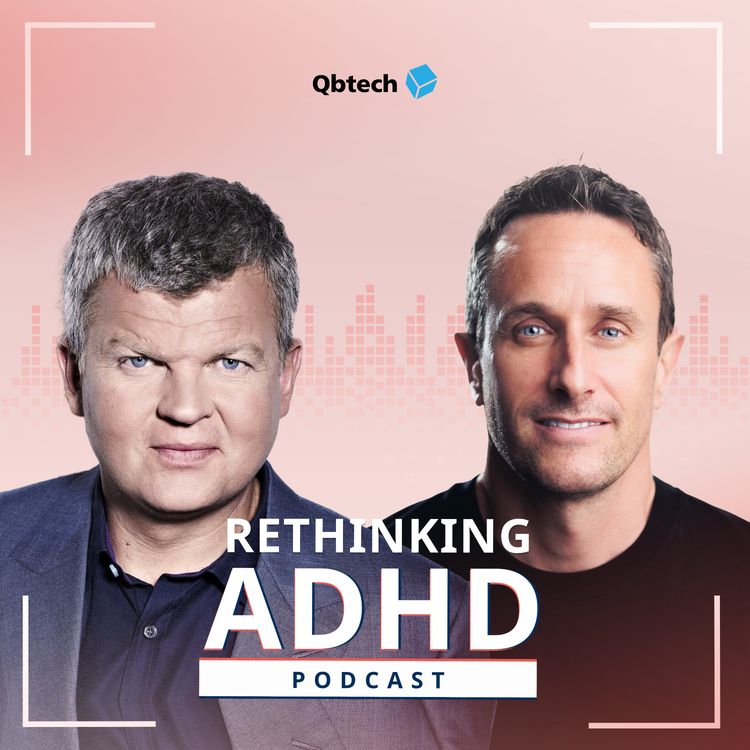
Rethinking ADHD Podcast
"You're playing a very close approximation of yourself" - Adrian Chiles
Season 2, Ep. 3
•
“Pay attention to what you’re paying attention to,” says British writer and television and radio presenter Adrian Chiles.
In this episode, he discusses his personal ADHD journey, including how he dealt with anxiety, rejection sensitivity, and dysphoria. Adrian also addresses the challenges within the NHS regarding ADHD care whilst highlighting the importance of early diagnosis and getting the right kind of support.
Qbtech
Simon Mundie
More episodes
View all episodes
11. Teaser: How to build a case for adopting new ADHD technology
02:44||Season 3, Ep. 11How do you turn a clinical vision into a funded, scalable service? Great ADHD care doesn't happen by accident. Our upcoming episode explores how teams are building the case for pathway redesign, from cross-functional collaboration to clinical templates, digital tools, and commissioning outcomes. We look at what makes a proposal land with decision-makers, and how to use real-world data to back it up. Ideal for: operational leads, transformation teams, ICS stakeholders, commercial and clinical collaborators
Mini ep 3: ADHD symptom changes postpartum and during perimenopause
10:26||Season 3In recent years, there has been growing awareness of how ADHD uniquely affects women across their lifespan, particularly due to hormonal fluctuations and related health conditions – but much more research is needed.Our latest podcast was hosted by our expert clinical advisors Jess Brunet (UK), Penny Lazell (UK), and Corina Weir (US). Exploring these complexities, our team members with clinical experience and education, shed light on how ADHD manifests differently in women and the urgent need for tailored approaches to diagnosis and management.Watch the episode on YouTube: https://bit.ly/3V7J7IZ
ADHD in women: Sexual health, hormones, and psychoeducation
12:15||Season 3How can ADHD care better account for the hormonal and reproductive health experiences of girls and women?In this episode, experts discuss the often-overlooked intersection of ADHD, hormones, sexual health, and mental health across key life stages. The conversation explores why clinicians may need to consider factors such as menstrual cycles, sexual health, pregnancy, and the postpartum period when assessing and supporting girls and women with ADHD.The discussion also highlights the importance of psychoeducation and individualized care, helping women understand how their symptoms and experiences may change over time and make informed decisions about their care.Watch the full video podcast on YouTube for the complete conversation on ADHD in women, hormonal changes, reproductive health, and individualized ADHD care.▶️ Watch the full episode: https://bit.ly/3ST2q8f
Women and ADHD: Impact of Hormonal Fluctuations
12:42||Season 3In this video, Jess Brunet, Corina Weir, and Penny Lazell discuss the impact of hormonal fluctuations on ADHD symptoms in women and adolescents. The panel explores how young women may be referred for anxiety or depression, but assessment can identify underlying neurodivergence. They also discuss how symptoms may change across the menstrual cycle, with falling estrogen coinciding with falling dopamine and triggering a dip in mood and change in symptoms. Some patients report that ADHD medication feels less effective pre-menstruation, highlighting the importance of tracking symptoms using diaries or apps to identify patterns and support more personalized care. Listen to the full episode: https://bit.ly/4iKATjD Watch the discussion instead: https://bit.ly/3Ux3Cyw
ADHD across life stages - Bonus episode
04:08||Season 3How can ADHD care evolve with patients across life stages while continuing to meet their individual clinical needs?In this episode, Melinda Williams-Willingham, MD, FAAP and Angela C. LaRosa, MD, MSCR explore the importance of continuity of care throughout the ADHD journey. They discuss how clinicians can support patients as their needs change across different life stages, while maintaining care that is both clinically appropriate and individualized for long-term outcomes.The conversation considers what it takes to build more consistent, connected ADHD care that adapts to the individual—not just the stage of life they are in.Watch the full video podcast on YouTube to hear the complete conversation on continuity, individualized care, and the future of long-term ADHD care.▶️ Watch expert discussion: https://bit.ly/4qDjGdQ
How Data Is Shaping the Future of ADHD Treatment Monitoring | Mini Episode
06:24||Season 3How can research and data help make ADHD care more individualized, consistent, and accessible?In this mini episode, the Qbtech team explores how research can drive innovation in ADHD care, from understanding individual treatment responses to supporting therapeutic monitoring in virtual and telehealth settings. The conversation highlights how objective data can help clinicians track change over time, make more informed treatment decisions, and provide greater confidence in whether a patient is on the right path.The team also discusses how remote treatment monitoring could reduce the burden of frequent in-person appointments while helping clinicians better understand individual patient responses and support more personalized ADHD care.Watch the full video podcast on YouTube for the complete conversation on research, innovation, objective data, and the future of virtual ADHD care: https://bit.ly/4qdakWeHost: Danielle Vaeth (Senior Market Development Manager, Qbtech)Guests: Ragini Sanyal (Head of Clinical Research) and Robert Nolen (Clinical Research Manager)Topics covered:–Why both clinical research and real-world evidence are essential for developing new ADHD technologies–How clinician feedback shapes innovation and improves patient care–The development of QbMobile and how smartphone technology could make ADHD testing more accessible–What Qbtech has learned from a global database of more than 1 million ADHD assessments–How remote ADHD treatment monitoring can improve patient access while supporting confident clinical decision-makingWho this is for:Clinicians, pediatricians, psychiatrists, mental health professionals.
ADHD testing on a smartphone | Mini episode
08:40||Season 3Is ADHD testing on a mobile or hand-held device the new thing in innovation and technology?In this mini episode, ADHD experts discuss the evolution of objective ADHD assessment and how technology is slowly but surely moving from hardware to software to mobile technology. What could this mean for the future of ADHD care?The trio discusses Qbtech’s work on QbMobile, including early findings around user acceptance and how mobile technology could make objective assessment more accessible.The conversation also looks at the value of data from more than one million patients, and how large-scale, global datasets can help researchers identify new trends, inform clinicians, shape innovation, and contribute to conversations around healthcare policyWatch the full episode: https://bit.ly/4qdakWeHost: Danielle Vaeth (Senior Market Development Manager, Qbtech)Guests: Ragini Sanyal (Head of Clinical Research) and Robert Nolen (Clinical Research Manager)Topics covered:–Why both clinical research and real-world evidence are essential for developing new ADHD technologies–How clinician feedback shapes innovation and improves patient care–The development of QbMobile and how smartphone technology could make ADHD testing more accessible–What Qbtech has learned from a global database of more than 1 million ADHD assessments–How remote ADHD treatment monitoring can improve patient access while supporting confident clinical decision-makingWho this is for:Clinicians, pediatricians, psychiatrists, mental health professionals.
How research is driving today's ADHD care | Mini episode
07:36||Season 3In this mini episode, Qbtech's medical and research team explores how research provides the evidence needed to develop meaningful healthcare innovation, while new technologies create opportunities for further clinical research. From validating digital health solutions to generating real-world evidence, discover why both are essential for improving patient care and advancing behavioral health.Want the full conversation? Watch the complete video podcast on YouTube for deeper insights into how research and innovation are shaping the future of ADHD assessment and digital health: https://bit.ly/4hcMgAoFeaturing: Danielle Vaeth, Senior Market Development Manager, QbtechRagini Sanyal, Head of Clinical Research, QbtechRobert Nolen, Clinical Research Manager, Qbtech
What's a clinician's responsibility towards gathering patient history? | Mini episode
07:57||Season 3Accurately tracking ADHD symptoms from a patient’s early life can be challenging, especially if developmental history isn’t properly recorded. In this mini episode, our ADHD experts, Jess Brunet and Penny Lazell discuss what a clinician's responsibility is when gathering a patient's developmental history. For more insights into the ADHD world, check out our complete podcast discography – https://bit.ly/4wlNein