Share
The Tonearm
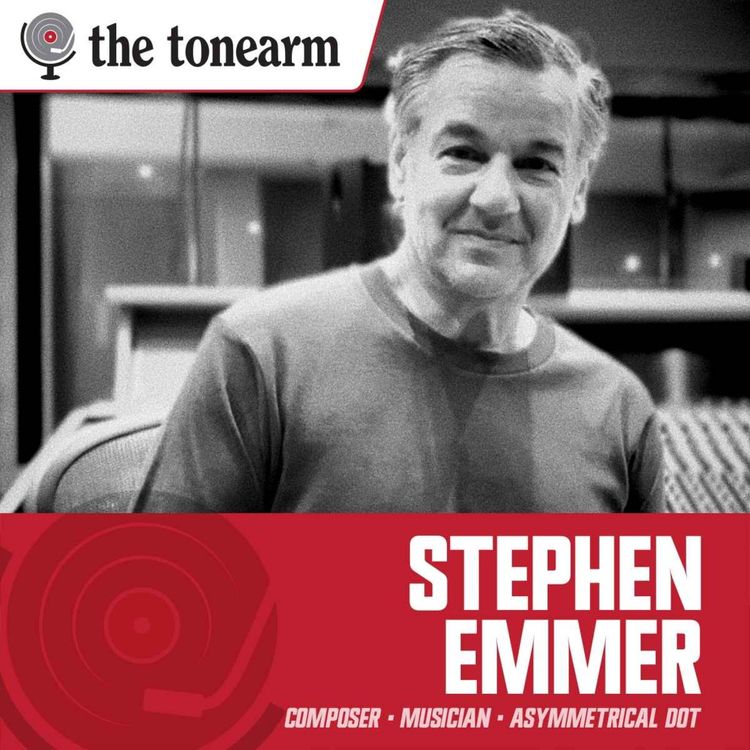
Stephen Emmer: Composing at the Edge of Silence
Today, we're putting The Tonearm's needle on Stephen Emmer, a Dutch composer and musician based in Amsterdam. Stephen came up in the late 70s post-punk underground, and his band Minny Pops was the first international act signed to Factory Records. He is a curious genre-explorer who has worked with Lou Reed, Chaka Khan, Tony Visconti, Trevor Horn, Flood, and many others.
His latest album, Asymmetrical Dot, is a chamber work rooted in his Dutch-Indonesian heritage, built around sustained tones, wordless vocals, vibraphone, and strings. The record came out of a year when his mother died, and his first grandson was born, and the contracting themes of grief and arrival appear throughout the work.
We cover the album, his hearing loss, and why he walked away from commercial work to make the most personal music of his career.
(The musical excerpts heard in the interview are from Stephen Emmer's Asymmetrical Dot)
—
Dig Deeper• Artist and Albums:
- Visit Stephen Emmer at stephenemmer.com and follow him on Bluesky, Instagram, and YouTube
- Purchase Stephen Emmer's album Asymmetrical Dot from Bandcamp or Qobuz and listen on your streaming platform of choice
- The two previous installments in the 'introspective trilogy': Maison Melody (2020) and Mt. Mundane (2024)
• Key Collaborators:
- Tony Visconti — Producer of Recitement; longtime producer of David Bowie
- Beth Hirsch — Vocalist and co-writer on Asymmetrical Dot, Track 5; best known for AIR's Moon Safari
- Fernando Aponte — Grammy-winning mixing engineer, Houston
- Everton Nelson — Concertmaster and violinist; has performed with the LSO, BBC Concert Orchestra, and on recordings for Radiohead, U2, and Paul McCartney
- Patricia Sullivan — Mastering engineer at Bernie Grundman Mastering, Los Angeles
• *Recitement* and Its Voices:
- Recitement — Emmer's 2007 spoken-word album, produced by Tony Visconti.
- Ken Nordine — Voice-over artist and "Word Jazz" pioneer; voiced "Absolutely Grey" on Recitement
- Colors — Ken Nordine's 1966 album, originally commissioned as radio spots for the Fuller Paint Company
- Lou Reed — Rock musician and poet; voiced "Passengers" on Recitement
- Allen Ginsberg — Beat poet; voiced "Disconnected" on Recitement
- Richard Burton — Welsh actor; voiced "The Leaden Echo" and "Boy with a Cart" on Recitement
• Musical Influences and References:
- Gamelan — Traditional Indonesian percussion ensemble; central to the sonic concept of Asymmetrical Dot
- Dave Brubeck — American jazz pianist; one of the first musicians Emmer heard as a child, via his mother's ballet teaching
- Heitor Villa-Lobos — Brazilian composer; among the diverse influences Emmer's mother brought to her ballet classes
- Claude Debussy and Gamelan — Referenced by Emmer as a historical predecessor in integrating gamelan into Western composition
• Contextual References:
- Holiday on Ice — International touring ice show for which Emmer served as music director
- Motörhead — British heavy metal band; Emmer's hearing damage traces to a backstage encounter with their sound system
- Charles Ives — American modernist composer who ran a successful insurance business alongside his musical career; referenced in the episode's discussion of portfolio careers
- Ambon, Indonesia — Island in the Maluku province of Indonesia, historically known as Amboina; birthplace of Emmer's mother and inspiration for the album's track "Amboina (for Roekie Aronds)"
—
- Dig into this episode's complete show notes at podcast.thetonearm.com
—
• Did you enjoy this episode? Please share it with a friend! You can also rate The Tonearm ⭐️⭐️⭐️⭐️⭐️ and leave a review on Apple Podcasts.
• Subscribe! Be the first to check out each new episode of The Tonearm in your podcast app of choice.
• Looking for more? Visit podcast.thetonearm.com for bonus content, web-only interviews + features, and the Talk Of The Tonearm email newsletter. You can also follow us on Bluesky, Mastodon, YouTube, and LinkedIn.
• Be sure to bookmark our online magazine, The Tonearm! → thetonearm.com
More episodes
View all episodes
322. David Katz: Chasing Dub Beyond the Soundsystem
52:27||Season 2026, Ep. 322This week we're putting The Tonearm's needle on noted reggae author David Katz.His new book, Dub Revolution: Jamaica's Sonic Innovators and the Birth of Remix Culture, traces Jamaican music from its earliest sound systems to the 21st century.We talk about the 1982 San Francisco night that blew David’s mind and opened his ears, the job that paid his way to London, and even the technology and tools the dub greats used.(The musical excerpts heard in the interview are Lee “Scratch” Perry - "Dub Revolutions," King Tubby - "King Tubby Meets the Rockers Uptown," and Scientist - "Scientific" )—Dig DeeperAuthor and Book:Visit David Katz at davidkatzreggae.com and follow Dub Me Always on Instagram and FacebookPurchase Dub Revolution: Jamaica's Sonic Innovators and the Birth of Remix Culture from White Rabbit, Hachette, or BookshopDJ Mag on the book's publicationKatz's production, annotation, and compilation credits on DiscogsThe Architects of Dub:The Strange World Of… King Tubby — The QuietusKing Tubby's first authorised biography — The WireThe life of Lee "Scratch" Perry through the lens of Dennis Morris — DJ MagScientist on Bandcamp, and at length on his methods in Tape OpKing Jammy LegacyU-Roy — Perfect Sound ForeverAugustus Pablo and Rockers InternationalEngineers and Players:Hedley Jones: The Renaissance Man Who Pioneered Jamaican Soundsystem Culture — Red Bull Music Academy DailyHedley Jones obituary — The WireThirteen classics from Philip Smart's HC&F Studio — LargeUpRemembering Joseph Hoo Kim — The Vinyl FactoryRoy Cousins and the RoyalsPeter ChemistStudios and Sound Systems:Ten essential Coxsone Dodd productions — Grammy.comSoul Jazz's Studio One reissue catalogueChannel One StudiosMaxfield Avenue: The Story of Channel One and the Sound That Defined Roots Reggae — Bass CultureStanley Motta, whose downtown Kingston appliance store was selling sound systems by 1939Dub in Britain:The unsung genius of dub innovator Dennis Bovell — The Vinyl Factory; and Dennis Bovell on BandcampDennis Bovell on The TonearmAdrian Sherwood and On-U SoundAdrian Sherwood on The TonearmAriwa Sounds, Mad Professor's south London studioDread Broadcasting CorporationLepke, DBC's founder, remembered — The WireMark LusardiRadio and Discovery:Doug Wendt's Midnight DreadMidnight Dread #13, KTIM-FM San Rafael, March 31, 1980 — the show Katz taped off his bedside clock radioRecords Mentioned:Wailing Souls, Fire House RockJohnny Clarke, "I Don't Want To Be A Rude Boy" — the B side is "Rude Boy Dub"Further Reading:Michael E. Veal, Dub: Soundscapes and Shattered Songs in Jamaican ReggaeIsis Semaj-Hall, the Jamaican academic Katz quotes in his introductionIn Search of the First Dub LP — Red Bull Music Academy Daily—Dig into this episode's complete show notes at podcast.thetonearm.com—• Did you enjoy this episode? Please share it with a friend! You can also rate The Tonearm ⭐️⭐️⭐️⭐️⭐️ and leave a review on Apple Podcasts. • Subscribe! Be the first to check out each new episode of The Tonearm in your podcast app of choice. • Looking for more? Visit podcast.thetonearm.com for bonus content, web-only interviews + features, and the Talk Of The Tonearm email newsletter. You can also follow us on Bluesky, Mastodon, YouTube, and LinkedIn. • Be sure to bookmark our online magazine, The Tonearm! → thetonearm.com
321. Fling ii: Modular Synths, Pedal Steel, and Michigan Motorik
46:49||Season 2026, Ep. 321This week we're putting The Tonearm's needle on Ann Arbor krautrock band Fling ii.I sat down with drummer and synthesist Brad Gowland, and guitarist Richard Murphy, to chat about their third album, 3, which is out now on We Are Busy Bodies. It’s six tracks cut down from hours of studio jamming.We talk about Richard's path from ambient guitar to doom metal, Brad finding four minutes inside a fifty-minute take, and how a Magic: The Gathering card - and a commune breakup - inspired the band’s name.(The musical excerpts heard in the interview are from Fling ii’s 3)—Dig DeeperFling ii:Visit Fling ii on Bandcamp, where the full catalog livesPurchase 3 from We Are Busy Bodies, Bandcamp, or Qobuz, and listen on your streaming platform of choice.2 (2024), the record that introduced Dave Van Dusen's pedal steel — BandcampThe self-titled debut (2022), seven tracks from the band's first weekend at Willis Sound — BandcampThe debut's 2024 vinyl reissue on Italy's Black Sweat Records, distributed by Forced ExposureThe Studio and the Label:Willis Sound — the converted church in Willis, Michigan where every Fling ii record has been madeWe Are Busy Bodies, the Toronto label behind 3 — and Exclaim!'s interview with founder Eric Warner on the label's first twenty yearsThe label's roster on BandcampElsewhere in the Band:Sif, Richard Murphy's instrumental doom project, which Brad Gowland produces and programs drums forMusical References:Neu!'s "Hallogallo" — the track Richard played Brad in high school, and the founding reference point for the bandEarth's The Bees Made Honey in the Lion's Skull (Southern Lord, 2008), the ambient half of Brad's original pitch — also on BandcampElder, the stoner-metal band whose turn to unqualified krautrock Richard citesBlood Incantation's Timewave Zero, the synth record Brad keeps returning toWater Damage, the Austin group whose In E the live show came to resembleAmon Düül II, whose split from their parent commune gave the band its nameOsees, whose cover art set the visual templateScenes and Support:R. Solomon, the goth synth-pop act who shared the Ann Arbor billRyan Spencer, the Detroit DJ and producer whose new project closed the showNew Orleans Synth Cult, the collective Richard describes playing laundromats — also on InstagramRead More:RetroFuturista's August 2026 interview with Brad Gowland, on motorik, pedal steel, and recording at Willis SoundFifteen Questions: Fling ii about krautrockElsewhere on The Tonearm:Suzanne Ciani: The Buchla's Orchestral Homecoming — the episode Brad name-checks at the close, and its companion article, Speaking the Word of the Buchla—Dig into this episode's complete show notes at podcast.thetonearm.com—• Did you enjoy this episode? Please share it with a friend! You can also rate The Tonearm ⭐️⭐️⭐️⭐️⭐️ and leave a review on Apple Podcasts. • Subscribe! Be the first to check out each new episode of The Tonearm in your podcast app of choice. • Looking for more? Visit podcast.thetonearm.com for bonus content, web-only interviews + features, and the Talk Of The Tonearm email newsletter. You can also follow us on Bluesky, Mastodon, YouTube, and LinkedIn. • Be sure to bookmark our online magazine, The Tonearm! → thetonearm.com
320. Martin Bisi: Forty-Five Years of Sonic Murder
46:34||Season 2026, Ep. 320This week we're putting The Tonearm's needle on producer and engineer Martin Bisi.Bisi has run BC Studio out of the Gowanus section of Brooklyn since 1981, recording Sonic Youth, Swans, Herbie Hancock's "Rockit," and countless others.We discussed his new album, Dancing On The Power Lines, his ongoing community activism, the changing landscape of New York's music scene, and so much more. It’s a good one.(The musical excerpts heard in the interview are from Martin Bisi's Dancing On The Power Lines)—Dig DeeperArtist and Album:Visit Martin Bisi at martinbisi.com and follow on YouTube and FacebookPurchase Dancing On The Power Lines from Bandcamp or Qobuz and listen on your streaming platform of choiceBC Studio — established 1981, Gowanus, BrooklynPrevious release: Your Ultimate Urban Fantasy EP (2024)BC35: The 35 Year Anniversary of BC StudioLive:The Martin Bisi Ensemble plays Sure We Can recycling center in Brooklyn, Sunday, September 13, 3–7 pmCollaborators:Nora Almeida — writer, performance artist, and activist who wrote about half the lyrics on the album, including "CubeSmart Sunset"Almeida's Last Street End in Gowanus (2021), the public artwork behind the street-end conversationThe Last Street End of Gowanus by the Autonomous People of Gowanus — Martin Bisi Collective, on Sleeping Giant GlossolaliaJoan Hacker (voice, synth)Diego Ferri (bass, baritone guitar) and Oliver Rivera Drew (drums), the Berlin chapter of Bisi's bandGowanus:Voice of Gowanus — the all-volunteer group Bisi belongs to, advocating for a cleanup fully protective of human healthArts Gowanus — the arts advocacy organization he says conceded they hadn't thought about musicGowanus Dredgers Canoe Club — Lawrence Peryer's old paddling clubPowerhouse Arts — the converted power plant at 322 Third AvenueVenues:Lowlands — 543 Third Avenue, live music Mondays and TuesdaysMama Tried, BrooklynMax Fish, formerly of Ludlow StreetMusical References:Genre Is Death — the Brooklyn duo Bisi recorded at BC StudioGlenn Branca's Symphony No. 13 (Hallucination City) for 100 Guitars — reviewed after its June 12, 2026 performance at David Geffen Hall, conducted by Reg Bloor, the first New York performance since the 2001 premiere at World Trade Center PlazaKevin Sun on The Tonearm PodcastHerbie Hancock, "Rockit," and Grand Mixer D.STMartin Bisi: NYC Producer & Sonic Youth Engineer - Tape OpDocumentary:Sound and Chaos: The Story of BC Studio — directed by Sara Leavitt and Ryan C. Douglass—Dig into this episode's complete show notes at podcast.thetonearm.com—• Did you enjoy this episode? Please share it with a friend! You can also rate The Tonearm ⭐️⭐️⭐️⭐️⭐️ and leave a review on Apple Podcasts. • Subscribe! Be the first to check out each new episode of The Tonearm in your podcast app of choice. • Looking for more? Visit podcast.thetonearm.com for bonus content, web-only interviews + features, and the Talk Of The Tonearm email newsletter. You can also follow us on Bluesky, Mastodon, YouTube, and LinkedIn. • Be sure to bookmark our online magazine, The Tonearm! → thetonearm.com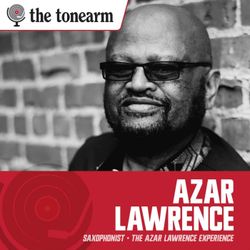
319. Azar Lawrence: Spiritual Jazz With the Funk Left In
31:39||Season 2026, Ep. 319This week we're putting The Tonearm's needle on tenor saxophonist Azar Lawrence.Lawrence is a veteran of Elvin Jones and McCoy Tyner's bands and a leader of his own group, The Azar Lawrence Experience, whose new album, Turn the Music Up, arrives September 25th.We talk about his unique relationship with Pharoah Sanders, dodging McCoy Tyner’s broken piano strings, and how the fifty years between the first and latest recordings of his own songs trace his evolution as a musician.(The musical excerpts heard in the interview are from Azar Lawrence’s Turn The Music Up)—Dig DeeperArtist and Album:Visit Azar Lawrence at azarlawrence.com and follow on Instagram, Facebook, and YouTubeTurn the Music Up (Trazar Records, September 25, 2026) — artist shopDiscography and video — Lawrence's own catalog page, as leader and sidemanShadow Dancing — the 1985 Riza album, reissued by Light in the AtticBridge into the New Age — the 1974 Prestige debut, with cover art by his brother Vincent CollierThe Cookers:The Cookers — the collective he joined alongside Billy Hart, Cecil McBee, George Cables, and Eddie HendersonAzar Lawrence at The CookersDavid Weiss — trumpeter and the band's organizer, who also sat in with Lawrence's group on the West CoastMentors and Collaborators:McCoy Tyner — five and a half years in the band, and the subject of the acoustic-piano argumentAtlantis — the 1974 Tyner album recorded live at Keystone Korner with Lawrence in the group; TALE's version of the title track opens side two of the new recordElvin Jones — NEA Jazz Master profile of the drummer who gave Lawrence his first major gigDark Magus — Miles Davis, recorded live at Carnegie Hall on March 30, 1974, the night Lawrence was called to the stage without warningWoody Shaw — the trumpeter from the after-hours group with George Cables, Larry Gales, and Candy FinchPharoah Sanders:Pharoah Sanders — NEA Jazz Master profileKarma — the 1969 Impulse! album containing "The Creator Has a Master Plan," which Lawrence covers on Turn the Music Up as a tribute"The Creator Has a Master Plan" — background on the Sanders–Leon Thomas compositionLos Angeles Roots:Pan Afrikan Peoples Arkestra — Horace Tapscott's ensemble, Lawrence's entry into the L.A. sceneHorace Tapscott — pianist, organizer, and the Arkestra's founderThe Lighthouse Café — the Hermosa Beach club where Lawrence first spent time around SandersConcerts by the Sea — Howard Rumsey's Redondo Beach room, 1971–1985, the other place they would go to hear himSpiritual Study:Alfred and Bernice Ligon — the Aquarian Book Shop and Aquarian Spiritual Center, where Lawrence studiedAlfred Ligon obituary — on the country's oldest Black-owned bookstore, opened in 1941 and destroyed in 1992Venues:Village Vanguard — where the line ran out the door for Tyner's band, and where McCoy sat in with Elvin on his birthdayNN North Sea Jazz Festival — where Cecil McBee joined Lawrence's quintetTeaching:UCLA Herb Alpert School of Music, Global Jazz Studies — where Lawrence has taught since 2024—Dig into this episode's complete show notes at podcast.thetonearm.com—• Did you enjoy this episode? Please share it with a friend! You can also rate The Tonearm ⭐️⭐️⭐️⭐️⭐️ and leave a review on Apple Podcasts. • Subscribe! Be the first to check out each new episode of The Tonearm in your podcast app of choice. • Looking for more? Visit podcast.thetonearm.com for bonus content, web-only interviews + features, and the Talk Of The Tonearm email newsletter. You can also follow us on Bluesky, Mastodon, YouTube, and LinkedIn. • Be sure to bookmark our online magazine, The Tonearm! → thetonearm.com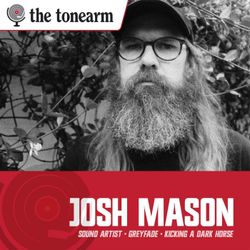
318. Josh Mason: Punk and Circuitry, Zippered Together
39:51||Season 2026, Ep. 318This week we're putting The Tonearm's needle on Florida sound artist Josh Mason.Mason’s new album, Kicking A Dark Horse, is out now on greyfade as a hardcover book paired with modular synthesizer music, the two built to zipper together rather than stand apart.We talk about the punk rock roots underneath all that circuitry, why only the album's first and last tracks have a fixed place, and what Cortázar's Hopscotch has to do with any of it.(The musical excerpts heard in the interview are from Josh Mason's Kicking A Dark Horse)—Dig DeeperArtist and Album:Visit Josh Mason at joshmason.info and follow on Instagram and BandcampPurchase Kicking A Dark Horse — Bandcamp (FOLIO hardcover + digital)European orders — SoundohmKicking A Dark Horse — full catalog page, credits, and pressLabel and Format:greyfadeThe FOLIO format — greyfade's hardcover book music edition; Kicking A Dark Horse is the third releaseJosh Mason's greyfade artist pagegreyfade listening platformCollaborators:Joseph Branciforte — greyfade founder, co-producer, mastering engineer, and FOLIO interior designer"In Conversation: Josh Mason & Joseph Branciforte" — the long-form interview at Branciforte's Patch Notes, covering the gear, the writing, and the punk ethos in Mason's own wordsInstruments and Method:Xaoc Devices Leibniz subsystem — the binary-logic modular system the record was built on, which Mason has called "the final boss… in terms of instrument design that made no sense to me"Literary References:Hopscotch by Julio Cortázar — the 1963 novel with an alternate scrambled reading order, translated by Gregory RabassaThe Unfortunates by B.S. Johnson — the 1969 "book in a box," 27 unbound sections with only the first and last fixedHow to Write One Song by Jeff Tweedy — the songwriting book Lawrence cites on writing by removalArt References:Mark Rothko at Tate Modern — the Rothko Room, hung according to the artist's own lighting stipulations: "The light, whether natural or artificial, should not be too strong"Selected Press for Kicking A Dark Horse:IGLOOPopMattersBrainwashedTextura15 QuestionsFoxy Digitalis—Dig into this episode's complete show notes at podcast.thetonearm.com—• Did you enjoy this episode? Please share it with a friend! You can also rate The Tonearm ⭐️⭐️⭐️⭐️⭐️ and leave a review on Apple Podcasts.• Subscribe! Be the first to check out each new episode of The Tonearm in your podcast app of choice.• Looking for more? Visit podcast.thetonearm.com for bonus content, web-only interviews + features, and the Talk Of The Tonearm email newsletter. You can also follow us on Bluesky, Mastodon, YouTube, and LinkedIn.• Be sure to bookmark our online magazine, The Tonearm! → thetonearm.com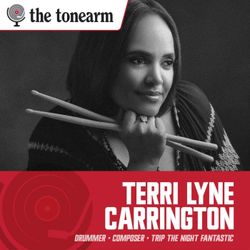
317. Terri Lyne Carrington: A Dance Record for Dark Times
40:41||Season 2026, Ep. 317This week we're putting The Tonearm's needle on drummer, composer, and educator Terri Lyne Carrington.Carrington has just released Trip the Night Fantastic, the second album from her group, Social Science. It’s built for the dance floor but unflinching on the topics of deportation, prison abolition, and climate collapse.We talk about trusting collaborators before they've earned it, playing to a rare, fully attentive crowd at Newport, and calling herself a "frustrated drummer" on a record built from words as much as rhythm.(The musical excerpts heard in the interview are from Trip the Night Fantastic, the new album from Terri Lyne Carrington and Social Science.)—Dig DeeperArtist and Album:Visit Terri Lyne Carrington at terrilynecarrington.com and follow on Instagram, YouTube, Facebook, and BandcampPurchase Trip the Night Fantastic from Candid Records, Bandcamp, or Qobuz, and listen on your streaming platform of choice.Candid RecordsSocial Science:Aaron Parks — piano; wrote "Climate Song"Matthew Stevens — guitar; proposed the album's title phrase and wrote the "Solidarity Song" riffMorgan Guerin — multi-instrumentalist and the album's co-producer"Riddim Song" Collaborators:Fatoumata DiawaraDebo RayBrenda Navarrete"Blues Song" and June Jordan:June Jordan — the poet's official site"These Poems" — the poem set to music on the albumaja monet — the surrealist blues poet who performs itRelated Recordings:We Insist 2025! with Christie Dashiell, the Max Roach reimagining that interrupted this album — BandcampWaiting Game, the 2019 Social Science debut given to its label without an advance — BandcampMax Roach's We Insist! Freedom Now Suite (1960) — JazzTimes on the reissueInstitutions and Festivals:Berklee Institute of Jazz and Gender Justice — founded and directed by CarringtonNewport Jazz Festival — where Social Science played on August 1, 2026Also Mentioned:13th — Ava DuVernay's documentaryBest Alternative Jazz Album — the Grammy category Carrington helped create, first awarded in 2024—Dig into this episode's complete show notes at podcast.thetonearm.com—• Did you enjoy this episode? Please share it with a friend! You can also rate The Tonearm ⭐️⭐️⭐️⭐️⭐️ and leave a review on Apple Podcasts. • Subscribe! Be the first to check out each new episode of The Tonearm in your podcast app of choice. • Looking for more? Visit podcast.thetonearm.com for bonus content, web-only interviews + features, and the Talk Of The Tonearm email newsletter. You can also follow us on Bluesky, Mastodon, YouTube, and LinkedIn. • Be sure to bookmark our online magazine, The Tonearm! → thetonearm.com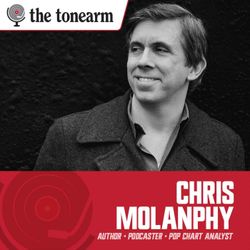
316. Chris Molanphy: One Chart to Rule Them All
48:24||Season 2026, Ep. 316This week we're putting The Tonearm's needle on pop-chart analyst Chris Molanphy.For almost a decade, Chris has hosted Hit Parade, Slate's monthly show on the history behind the Billboard charts. He also writes Slate's long-running Why Is This Song No. 1? column, and wrote a book on Lil Nas X's Old Town Road for Duke University Press.We talk about how a Netflix episode can send a forty-year-old song back onto the charts, why he refuses to believe in a guilty pleasure, and what changes in an artist's career when they keep reinventing instead of repeating a formula.—Dig DeeperOur Guest:Visit Chris Molanphy at chris.molanphy.com and follow him on BlueskyListen to Hit Parade on SlateRead the "Why Is This Song No. 1?" seriesPurchase Old Town Road, Chris's book on the Lil Nas X hit, from Duke University PressHit Parade Episodes Discussed:Feet on the Ground, Reaching for the Stars Edition — the 100th episode, on Casey Kasem and a life spent with the chartsDancing With Himself Edition — Billy Idol from the Bromley Contingent to MTVCountry Roads and Summer Nights Edition — John Denver and Olivia Newton-JohnStarman to Blackstar Edition — David Bowie's chart careerThe Queen of Disco Edition — Donna SummerNear-Miss Hits: '70s Edition — the songs that stalledLegacy Hits Are Flops-Turned-Classics — the "Tiny Dancer" episodeThe "Angry Young Men" Who Turned Punk into New Wave — Elvis Costello, Joe Jackson, and Graham ParkerHow Britpop Ruled '90s U.K. MusicThe Christmas Music Edition — the UK Christmas number ones show from 2018Chart History and Reference:Hit Men: Power Brokers and Fast Money Inside the Music Business by Fredric DannenFred Bronson's The Billboard Book of Number One Hits [Link unverified — recommend manual check]Paul Grein's "Chart Beat" column at BillboardCasey Kasem's American Top 40—Dig into this episode's complete show notes at podcast.thetonearm.com—• Did you enjoy this episode? Please share it with a friend! You can also rate The Tonearm ⭐️⭐️⭐️⭐️⭐️ and leave a review on Apple Podcasts. • Subscribe! Be the first to check out each new episode of The Tonearm in your podcast app of choice. • Looking for more? Visit podcast.thetonearm.com for bonus content, web-only interviews + features, and the Talk Of The Tonearm email newsletter. You can also follow us on Bluesky, Mastodon, YouTube, and LinkedIn. • Be sure to bookmark our online magazine, The Tonearm! → thetonearm.com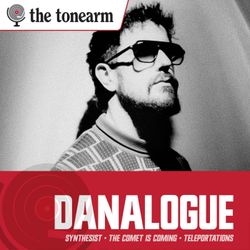
315. Danalogue: Telling the Future Through Old Machines
48:11||Season 2026, Ep. 315This week we're putting The Tonearm's needle on synthesist and producer Danalogue.Danalogue is a founding member of The Comet Is Coming and half of Soccer96, and he’s recently released his debut solo album, Teleportations. The record imagines grief and upheaval as a science-fictional voyage and was sparked by a chance encounter with the artist Moebius that grew into an imagined civilization.We talk about recording alone, with no one else’s voice in the room; why he calls his editing process a “distilled vodka”; and why he still believes imagination is the first step toward hope.(The musical excerpts heard in the interview are from Danalogue’s Teleportations)—Dig DeeperArtist and Album:Visit Danalogue on Bandcamp and follow on InstagramPurchase Danalogue's Teleportations from Castles in Space, Bandcamp, or Qobuz, and listen on your streaming platform of choiceWatch Danalogue playing live at Total Refreshment CentreBands and Projects:The Comet Is ComingSoccer96FlockLabel and Studio:Castles in Space (label)Total Refreshment CentreCollaborators:Alabaster DePlumeSnapped AnklesInstruments:Roland Juno-60 (Vintage Synth Explorer)Roland SH-09 (Vintage Synth Explorer)Cultural References:Moebius (Jean Giraud) — the comics artist behind the album's originRobert Anton Wilson, Cosmic Trigger (Hilaritas Press)C-Smash VRS with Ken Ishii — the VR game he scored (NME feature)—Dig into this episode's complete show notes at podcast.thetonearm.com—• Did you enjoy this episode? Please share it with a friend! You can also rate The Tonearm ⭐️⭐️⭐️⭐️⭐️ and leave a review on Apple Podcasts. • Subscribe! Be the first to check out each new episode of The Tonearm in your podcast app of choice. • Looking for more? Visit podcast.thetonearm.com for bonus content, web-only interviews + features, and the Talk Of The Tonearm email newsletter. You can also follow us on Bluesky, Mastodon, YouTube, and LinkedIn. • Be sure to bookmark our online magazine, The Tonearm! → thetonearm.com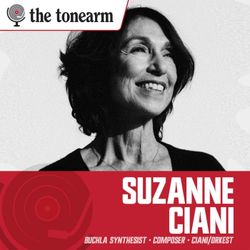
314. Suzanne Ciani: The Buchla's Orchestral Homecoming
39:49||Season 2026, Ep. 314This week, we're putting The Tonearm's needle on five-time Grammy-nominated composer Suzanne Ciani.Suzanne has spent decades innovating electronic music on the Buchla synthesizer, an instrument as intimate to her as any acoustic musician's.Suzanne has multiple projects out this year: CIANI/ORKEST, a live album with the fifty-piece Metropole Orkest, conducted by Simon Dobson; a collaborative live album with British electronic producer Actress; and the score for John Wilson's idiosyncratic new documentary, The History of Concrete.We talk about why an artist who's needed total control throughout her career said yes to an orchestra, a producer, and a filmmaker all in one year, what it's like hearing an instrument built for one pair of hands answered by fifty more, and her pet peeve about volume at live shows.(The musical excerpts heard in the interview are from Suzanne Ciani’s CIANI/ORKEST)—Dig DeeperArtist and Album:Visit Suzanne Ciani at sevwave.com and follow on Instagram and YouTube; her catalog is on Bandcamp.Purchase CIANI/ORKEST on quadraphonic vinyl from AKP Recordings and digitally from Bandcamp or Qobuz. You can also listen on your streaming platform of choice.Collaborators:Metropole Orkest — the 50-piece orchestra behind CIANI/ORKEST.Simon Dobson — composer and conductor of the album.Actress and Suzanne Ciani, Concrète Waves (Werkdiscs) — on Bandcamp, with coverage from The Quietus.Instruments and Makers:Buchla U.S.A. — the modular synthesizer at the center of Ciani's work, designed by Don Buchla.Film:The History of Concrete (dir. John Wilson, 2026), which Ciani scored — film page on Letterboxd.Live and Catalog:Age of Reflections — the immersive concert series behind Ciani's cathedral performances.Seven Waves — on Bandcamp.—Dig into this episode's complete show notes at podcast.thetonearm.com—• Did you enjoy this episode? Please share it with a friend! You can also rate The Tonearm ⭐️⭐️⭐️⭐️⭐️ and leave a review on Apple Podcasts. • Subscribe! Be the first to check out each new episode of The Tonearm in your podcast app of choice. • Looking for more? Visit podcast.thetonearm.com for bonus content, web-only interviews + features, and the Talk Of The Tonearm email newsletter. You can also follow us on Bluesky, Mastodon, YouTube, and LinkedIn. • Be sure to bookmark our online magazine, The Tonearm! → thetonearm.com