Share

The Tonearm
Julianna Barwick & Mary Lattimore: Like Tears in Rain
Today, we’re putting The Tonearm's needle on Julianna Barwick and Mary Lattimore.
Julianna is a composer, vocalist, and producer whose music is built almost entirely from layered, looped human voices. Mary is a harpist who has spent years pushing that instrument into a vast, exploratory realm.
In January 2025, the two flew to Paris just days after the LA wildfires tore through their community. There, they spent nine days recording with instruments pulled from a museum, including harps dating back to 1728 and vintage analog synthesizers. The result is Tragic Magic, out on InFiné, and it's one of the most talked-about records of the year so far.
Julianna and Mary just returned from Big Ears Festival and, in a few days, are heading back to Paris to perform these songs live with those same instruments. We caught them as they were preparing for the trip.
(The musical excerpts heard in the interview are from Julianna Barwick & Mary Lattimore's Tragic Magic)
—
Dig Deeper• Artist and Album:
- Visit Julianna Barwick at juliannabarwick.com and follow her on Instagram and Facebook
- Visit Mary Lattimore at marylattimore.net and follow her on Instagram and Facebook
- Purchase Tragic Magic from InFiné, Bandcamp, or Qobuz and listen on your streaming platform of choice
• Recording Location:
- Philharmonie de Paris — Musée de la Musique — the museum whose instrument collection made the album possible
- Musée de la Musique collections database — searchable archive of the museum's historic instruments
• Collaborators:
- Roger Eno — composer of "Temple of the Winds," written for voice and harp after a shared lunch with Barwick and Lattimore in Melbourne
- Trevor Spencer — engineer, additional producer, and mixer on Tragic Magic; known for his work with Fleet Foxes and Beach House
• Instruments:
- Jacob Hochbrücker — maker of the 1728 harp used for "Temple of the Winds"; one of the oldest instruments on the album
- Érard harps — the French instrument maker whose 1799 and 1873 harps Mary Lattimore used throughout the sessions
- Sequential Circuits Prophet-5 — the synthesizer Julianna Barwick chose; introduced in 1978 as the first fully programmable polyphonic synthesizer
- Roland Jupiter-8 — the second synthesizer Barwick used; the "Jupiter" referenced throughout the episode
- Korg VC-10 Vocoder — used by Barwick on "Stardust" and elsewhere on the album
• Visual Art — James Turrell:
- James Turrell — the light artist whose work both Barwick and Lattimore cite as a significant influence
- James Turrell: Into the Light at MASS MoCA — where Barwick and Lattimore opened Turrell's newest Skyspace, C.A.V.U.
- Chichu Art Museum, Naoshima — permanent Turrell installations on the Japanese island Mary mentions visiting
- James Turrell retrospective at the Guggenheim — the 2013 exhibition (Aten Reign) that first brought Mary to Turrell's work after reading a New Yorker review
• Previous InFiné / Musée de la Musique Collaborations:
- InBach by Arandel (2020) — the first album in InFiné's Musée de la Musique series, featuring Baroque instruments
- Saturn 63 by Seb Martel (2022) — the second album in the series; Tragic Magic is the third
—
- Dig into this episode's complete show notes at podcast.thetonearm.com
—
• Did you enjoy this episode? Please share it with a friend! You can also rate The Tonearm ⭐️⭐️⭐️⭐️⭐️ and leave a review on Apple Podcasts.
• Subscribe! Be the first to check out each new episode of The Tonearm in your podcast app of choice.
• Looking for more? Visit podcast.thetonearm.com for bonus content, web-only interviews + features, and the Talk Of The Tonearm email newsletter. You can also follow us on Bluesky, Mastodon, YouTube, and LinkedIn.
• Be sure to bookmark our online magazine, The Tonearm! → thetonearm.com
More episodes
View all episodes

332. Ian Chang: Backwards Swing From the Drum Chair
43:32||Season 2026, Ep. 332This week we’re putting The Tonearm’s needle on drummer and composer Ian Chang. Ian plays in Son Lux, whose music for 2022’s Everything Everywhere All at Once was up for an Oscar.This fall Son Lux released the album Out Into and the score for another film, Your Mother Your Mother Your Mother.We talk about what a triangle taught Ian in his classical days, a week of nerves and growth at the Village Vanguard, and how Son Lux serves a director without losing itself.(The musical excerpts heard in the interview are “Want You To Love,” “Even If It Hurts,” and “Apparition” from Out Into, and “This Is A Life” with Mitski and David Byrne from Everything Everywhere All at Once)—Dig DeeperArtist and Albums:Visit Ian Chang at ianchangmusic.com and follow on Instagram, YouTube, and FacebookVisit Son Lux at sonluxmusic.com and follow on Instagram and YouTubePurchase Out Into from Bandcamp or Qobuz and listen on your streaming platform of choice.Purchase Your Mother Your Mother Your Mother (Original Motion Picture Soundtrack) from Waxwork Records or Qobuz and listen on your streaming platform of choice.Film Scores:Son Lux, Everything Everywhere All at Once (Original Motion Picture Soundtrack)Son Lux, Thunderbolts* (Original Motion Picture Soundtrack)Ian Chang and Marco Carrión, Forge (Original Soundtrack)Collaborators:Rafiq Bhatia, EnvironmentsDave Douglas, TranscendThe Village Vanguard:The Village VanguardBill Evans Trio, Sunday at the Village VanguardBook Discussed:Billy Hart with Ethan Iverson, Oceans of Time: The Musical Autobiography of Billy HartFilm Composers Discussed:Jonny Greenwood, There Will Be BloodJerskin Fendrix, Poor ThingsCosmo Sheldrake, DiggerFrom The Tonearm:Dave Douglas — The Sacred and the UnfinishedFrom San Juan to Seventh Avenue — Miguel Zenón’s Vanguard Moment—Dig into this episode's complete show notes at podcast.thetonearm.com—Did you enjoy this episode? Please share it with a friend! You can also rate The Tonearm ⭐️⭐️⭐️⭐️⭐️ and leave a review on Apple Podcasts.Subscribe! Be the first to check out each new episode of The Tonearm in your podcast app of choice.Looking for more? Visit podcast.thetonearm.com for bonus content, web-only interviews + features, and the Talk Of The Tonearm email newsletter. You can also follow us on Bluesky, Mastodon, YouTube, and LinkedIn.Be sure to bookmark our online magazine, The Tonearm! → thetonearm.com
331. Bajune Tobeta: Ambient Piano Backed by Sleep Science
33:45||Season 2026, Ep. 331This week we’re putting The Tonearm’s needle on Tokyo composer Bajune Tobeta, who met Ryuichi Sakamoto through his audition radio show and has since written practical, environmental and his own artistic music.We talk about why distance between artists leaves room for imagination, music made for people who aren’t listening, and the Sergio Mendes records his father played at home. It’s also our first conversation here through an interpreter, Miki Hirai.(The musical excerpts heard in the interview are “After the Silence” with Christian Fennesz, “Anechoic,” “Gymnopedie (AOKI takamasa Remix),” and “Satie’s Dream” from Anechoic, and “Agua de Beber” and Febian Reza Pane’s “The Look of Love” from Sergio Mendes Tribute)—Dig DeeperArtist and Albums:Visit Bajune Tobeta at bajune.comPurchase Anechoic from Bandcamp or Qobuz and listen on your streaming platform of choice.Purchase Sergio Mendes Tribute from Bandcamp or QobuzCROIX Co., Ltd., his functional-music companyRyuichi Sakamoto:async12Collaborators:Fennesz and Bajune Tobeta, “After the Silence”AOKI takamasa (commmons)Sergio Mendes:Sergio Mendes & Brasil ’66, Herb Alpert Presents Sergio Mendes & Brasil ’66Sergio Mendes & Brasil ’66, Look AroundBooks and Records Discussed:Haruki Murakami, Hard-Boiled Wonderland and the End of the WorldMax Richter, SleepFrom The Tonearm:Midori Hirano’s Hushed Score for an Icelandic Witch TaleMusicians at War — How Bowie and Sakamoto Elevated ‘Merry Christmas, Mr. Lawrence’—Dig into this episode's complete show notes at podcast.thetonearm.com—Did you enjoy this episode? Please share it with a friend! You can also rate The Tonearm ⭐️⭐️⭐️⭐️⭐️ and leave a review on Apple Podcasts.Subscribe! Be the first to check out each new episode of The Tonearm in your podcast app of choice.Looking for more? Visit podcast.thetonearm.com for bonus content, web-only interviews + features, and the Talk Of The Tonearm email newsletter. You can also follow us on Bluesky, Mastodon, YouTube, and LinkedIn.Be sure to bookmark our online magazine, The Tonearm! → thetonearm.com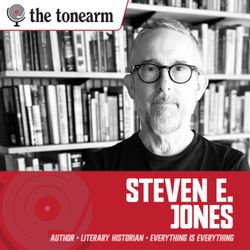
330. Steven E. Jones: Tom Wilson’s Radically Eclectic Pop of 1966
52:49||Season 2026, Ep. 330This week we’re putting The Tonearm’s needle on author Steven E. Jones. His new book, Everything Is Everything: Tom Wilson and Pop Music in 1966, is out now. It follows the Waco-born producer through sessions with Bob Dylan, Frank Zappa, the Velvet Underground, Sun Ra and many others.We talk about the Batman record Steven bought at age seven, why some of Dylan’s booing was Tom Wilson’s fault, and why Wilson stood by Nico while the band pushed her out.(The musical excerpts heard in the interview are “Batman Theme” from Batman and Robin by the Sensational Guitars of Dan and Dale, featuring Sun Ra; the Mothers of Invention’s “Help, I’m a Rock” and “Hungry Freaks, Daddy”; Bob Dylan’s “Like a Rolling Stone”; Simon & Garfunkel’s “The Sound of Silence”; and Nico’s “Chelsea Girls”)—Dig DeeperAuthor and Book:Visit Steven E. Jones at stevenejones.orgPurchase Everything Is Everything: Tom Wilson and Pop Music in 1966 from Stanford University PressTom Wilson:Producer Tom Wilson, Irwin Chusid’s site, with the Music Factory radio showsInvisible Icon: The Tom Wilson Story (Rogue Media Network)Everybody’s Head Is Open to Sound: Writings on Tom Wilson, edited by Anaïs NgbanzoTom Wilson (Waco History)“The Greatest Music Producer You’ve Never Heard of Is . . .” (Texas Monthly)The Records:The Sensational Guitars of Dan and Dale, Batman and Robin, with Sun Ra (Open Culture)The Mothers of Invention, Freak Out!Bob Dylan, Highway 61 RevisitedSimon & Garfunkel, Sounds of SilenceThe Velvet Underground, The Velvet Underground & NicoNico, Chelsea GirlHugh Masekela, The Lasting Impressions of Ooga Booga, which collects The Americanization of Ooga BoogaFrom The Tonearm:The Sun Ra Arkestra Play to the Open Sky—Dig into this episode's complete show notes at podcast.thetonearm.com—Did you enjoy this episode? Please share it with a friend! You can also rate The Tonearm ⭐️⭐️⭐️⭐️⭐️ and leave a review on Apple Podcasts.Subscribe! Be the first to check out each new episode of The Tonearm in your podcast app of choice.Looking for more? Visit podcast.thetonearm.com for bonus content, web-only interviews + features, and the Talk Of The Tonearm email newsletter. You can also follow us on Bluesky, Mastodon, YouTube, and LinkedIn.Be sure to bookmark our online magazine, The Tonearm! → thetonearm.com
329. Koen Holtkamp: Modular Plucks, Drums, and Horns After Dark
44:35||Season 2026, Ep. 329This week we’re putting The Tonearm’s needle on composer Koen Holtkamp. For years, Koen worked as half of the duo Mountains. His new solo record, Nightlife, took shape in late-night sessions at his home in New York’s Hudson Valley.We talk about stepping away from the methods that defined his work in Mountains, why he rebuilds his modular system for every project and still won’t call himself a synth player, and why finishing an album is harder than making the sounds.(The musical excerpts heard in the interview are from Koen Holtkamp’s “Slow Fox Run,” “Northern Flicker,” and “Dream On,” from Nightlife, and Codona’s “Colemanwonder”)—Dig DeeperArtist and Album:Follow Koen Holtkamp on InstagramPurchase Nightlife from Bandcamp or Qobuz and listen on your streaming platform of choice.Mountains:MountainsThe Players:Greg FoxMatt BauderBen VidaMusical References:Codona, Don Cherry, Collin Walcott, and Naná Vasconcelos (ECM)Joanna Brouk, Hearing Music (Numero Group)From The Tonearm:Josh Mason, Better Punk Through CircuitryJosh Mason: Punk and Circuitry, Zippered Together (The Tonearm Podcast)—Dig into this episode's complete show notes at podcast.thetonearm.com—Did you enjoy this episode? Please share it with a friend! You can also rate The Tonearm ⭐️⭐️⭐️⭐️⭐️ and leave a review on Apple Podcasts.Subscribe! Be the first to check out each new episode of The Tonearm in your podcast app of choice.Looking for more? Visit podcast.thetonearm.com for bonus content, web-only interviews + features, and the Talk Of The Tonearm email newsletter. You can also follow us on Bluesky, Mastodon, YouTube, and LinkedIn.Be sure to bookmark our online magazine, The Tonearm! → thetonearm.com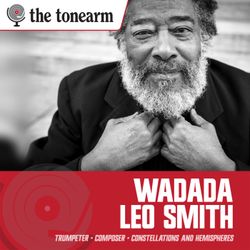
328. Wadada Leo Smith: A Trumpeter Composing in Light
43:44||Season 2026, Ep. 328This week we're putting The Tonearm's needle on trumpeter and composer Wadada Leo Smith. Since the 1960s, Wadada has scored much of his music in Ankhrasmation, a visual language he invented for improvisers.His new album, Constellations and Hemispheres, is out now, built from four different groups he recorded over five years, with lots of post production.We talk about why his players study light and color, using the studio as an instrument like dub producers, and choosing love in a world at war.(The musical excerpts heard in the interview are from Wadada Leo Smith's Constellations and Hemispheres)—Dig DeeperArtist and Album:Visit Wadada Leo Smith at wadadaleosmith.comPurchase Constellations and Hemispheres from Bandcamp or Qobuz and listen on your streaming platform of choice.Ankhrasmation:Ankhrasmation: The Language Scores, 1967–2015 (The Renaissance Society)Recordings:Fire Illuminations (wadadaleosmith.com)Luminous Axis: The Caravans of Winter and Summer, with The Hub and William Winant (Tzadik)Creative Music - 1 (Kabell)People and Places:Bill LaswellMelvin GibbsBobby NaughtonFirehouse 12, New HavenCoverage:Wadada Leo Smith – Constellations And Hemispheres (Paris-Move)From The Tonearm:David Katz Cuts a New Version of Dub's HistoryWe Are Floating in Space — Jane Ira Bloom's Jazz Odyssey—Dig into this episode's complete show notes at podcast.thetonearm.com—Did you enjoy this episode? Please share it with a friend! You can also rate The Tonearm ⭐️⭐️⭐️⭐️⭐️ and leave a review on Apple Podcasts.Subscribe! Be the first to check out each new episode of The Tonearm in your podcast app of choice.Looking for more? Visit podcast.thetonearm.com for bonus content, web-only interviews + features, and the Talk Of The Tonearm email newsletter. You can also follow us on Bluesky, Mastodon, YouTube, and LinkedIn.Be sure to bookmark our online magazine, The Tonearm! → thetonearm.com
327. Midori Hirano: Piano and Synth That Know When to Stop
34:56||Season 2026, Ep. 327This week we're putting The Tonearm's needle on composer and pianist Midori Hirano.Born in Kyoto and based in Berlin, Midori is out now with The Juniper Tree, a new score for Nietzchka Keene's 1990 film starring Björk in her first screen role.We talk about writing without the original soundtrack in her ears, turning field recordings of birds and a waterfall into instruments, and how Pauline Oliveros and the Japanese idea of "ma" led her to strip the music down.(The musical excerpts heard in the interview are from Midori Hirano's The Juniper Tree)—Dig DeeperArtist and Album:Visit Midori Hirano at midorihirano.com and follow on InstagramPurchase The Juniper Tree from Thrill Jockey or Bandcamp and listen on your streaming platform of choice.The Film:The Juniper Tree (The Film Foundation)Björk's Movie Debut, The Juniper Tree, Is Restored and Revisited (Hyperallergic)Midori Hirano x The Juniper Tree (Videodroom, Film Fest Gent)The live soundtrack (midorihirano.com)People and Places:Anna Bogutskaya (Time Out)Pauline Oliveros and the Center for Deep ListeningEMS Elektronmusikstudion, StockholmMimiCof, Distant Symphony, made on the SYNTHI 100 at Radio Belgrade (Karlrecords)Coverage:Midori Hirano Draws Inspiration from a Classic Icelandic Film (PopMatters)From The Tonearm:Inside Brüder Selke & Midori Hirano's Musical LaboratorySpeaking the Word of the Buchla — Suzanne Ciani's Orchestral WaveDeep Listening, Deep Soil — Lisa Ann Schonberg's Myrmecological Music—Dig into this episode's complete show notes at podcast.thetonearm.com—Did you enjoy this episode? Please share it with a friend! You can also rate The Tonearm ⭐️⭐️⭐️⭐️⭐️ and leave a review on Apple Podcasts.Subscribe! Be the first to check out each new episode of The Tonearm in your podcast app of choice.Looking for more? Visit podcast.thetonearm.com for bonus content, web-only interviews + features, and the Talk Of The Tonearm email newsletter. You can also follow us on Bluesky, Mastodon, YouTube, and LinkedIn.Be sure to bookmark our online magazine, The Tonearm! → thetonearm.com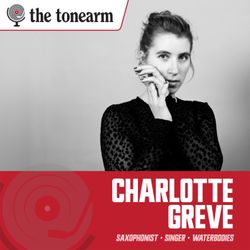
326. Charlotte Greve: Everything She Loves, Under Her Own Name
42:50||Season 2026, Ep. 326This week we're putting The Tonearm's needle on saxophonist, composer, and singer Charlotte Greve.Waterbodies, out now, is her tenth album but the first under her own name. She wrote it while expecting her daughter.We talk about her love of '80s power ballads, what Shahzad Ismaily brought as producer, and the work deadline driven by childbirth.(The musical excerpts heard in the interview are from Charlotte Greve's Waterbodies)—Dig DeeperArtist and Album:Visit Charlotte Greve at charlottegreve.de and follow on Instagram, YouTube, and FacebookPurchase Waterbodies from Bandcamp or Qobuz and listen on your streaming platform of choice.Live:Waterbodies and Kaoru Watanabe's The Arch release show, Public Records, Brooklyn, October 14Coverage:Charlotte Greve – Membranes (Various Small Flames)Charlotte Greve, Waterbodies (FEMMUSIC)People and Places:Shahzad IsmailySeth Manchester and Machines with Magnets (Take Magazine)Kaoru Watanabe, The Arch (New Amsterdam)John Hollenbeck (McGill University)Laura Veirs's Kaleidoscope Creativity Cards (Tape Op)Oblique StrategiesFrom The Tonearm:Caroline Davis: The Saxophone Reimagined in the FallowsGhost Notes from Wyoming — Caroline Davis's 'Fallows'Laura Veirs Alone in the Temple of Bloom—Dig into this episode's complete show notes at podcast.thetonearm.com—Did you enjoy this episode? Please share it with a friend! You can also rate The Tonearm ⭐️⭐️⭐️⭐️⭐️ and leave a review on Apple Podcasts.Subscribe! Be the first to check out each new episode of The Tonearm in your podcast app of choice.Looking for more? Visit podcast.thetonearm.com for bonus content, web-only interviews + features, and the Talk Of The Tonearm email newsletter. You can also follow us on Bluesky, Mastodon, YouTube, and LinkedIn.Be sure to bookmark our online magazine, The Tonearm! → thetonearm.com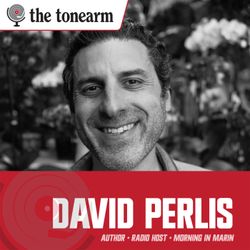
325. David Perlis: Everything You Love Is from Marin
46:34||Season 2026, Ep. 325This week we're putting The Tonearm's needle on author David Perlis. David grew up in Marin County and co-hosted Night People on WFMU.His first book, Morning in Marin, is out now. It follows characters including Alan Watts, the Grateful Dead, George Lucas, Philip K. Dick and many others through America's postwar creative boom.We talk about why he traded fiction for the true story, the letters of Gary Snyder and Alan Watts, and why young artists struggle to find a foothold in Marin today.(The musical excerpts heard in the interview are from Bola Sete's The Kitchen Tapes, Jerry Garcia and Howard Wales's Hooteroll?, and Carlos Santana's Santana Brothers, each featuring a different song called "Morning in Marin")—Dig DeeperAuthor and Book:Visit David Perlis at daveperlis.substack.com and listen to Night People on WFMUPurchase Morning in Marin: Zen, Drugs, and Ewoks on the California Coast from Heyday or Bookshop.orgCoverage:The Long Reach of the "Marinaissance" (KQED Forum)A new book uncovers Marin's essential role in the counterculture movement (7x7)Kirkus reviewPeople and Places:Elsa Gidlow and Druid HeightsAlan WattsThe ferryboat VallejoAnna Halprin (Tamalpa Institute)Gary Snyder Papers (UC Davis Library)Lew WelchElizabeth Terwilliger (Marin History Museum)Art Clokey and Gumby DharmaThe WELLThe Three "Morning in Marin" Recordings:Bola Sete, The Kitchen TapesJerry Garcia and Howard Wales, Hooteroll?Carlos Santana, Santana BrothersFrom The Tonearm:Jorma and Vanessa Kaukonen (Spotlight On)Jack Casady (Spotlight On)Grateful Dead, New York, NY, September 20, 1988Grateful Dead, New York, NY, September 13, 1991—Dig into this episode's complete show notes at podcast.thetonearm.com—Did you enjoy this episode? Please share it with a friend! You can also rate The Tonearm ⭐️⭐️⭐️⭐️⭐️ and leave a review on Apple Podcasts.Subscribe! Be the first to check out each new episode of The Tonearm in your podcast app of choice.Looking for more? Visit podcast.thetonearm.com for bonus content, web-only interviews + features, and the Talk Of The Tonearm email newsletter. You can also follow us on Bluesky, Mastodon, YouTube, and LinkedIn.Be sure to bookmark our online magazine, The Tonearm! → thetonearm.com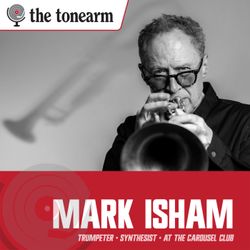
324. Mark Isham: Analog Machines and a Jazzman's Breath
49:16||Season 2026, Ep. 324This week we're putting The Tonearm's needle on trumpeter, composer, and synthesist Mark Isham. He's out now with At the Carousel Club, his first solo album in fifteen years, built around vintage analog synthesizers and a band that includes Nels Cline, Vinnie Colaiuta, and a string quartet.We talk about where the album's title comes from, his history with David Sylvian, and what it was like hearing the finished record on vinyl after sixteen hours of sessions.(The musical excerpts heard in the interview are from Mark Isham's At The Carousel Club)—Dig DeeperArtist and Album:Visit Mark Isham at isham.com and follow on Instagram, YouTube, and FacebookPurchase At the Carousel Club from the Mark Isham store, Bandcamp, or Qobuz and listen on your streaming platform of choice.The Band:Nels ClineVinnie ColaiutaKaveh RastegarAyo AwosikaOrchid QuartetWilcoMusical References:Weather Report, I Sing the Body ElectricFriedrich GuldaSonny SharrockBach, Mass in B minorFilm:Never Cry Wolf (1983), directed by Carroll BallardTrumpet Players and Builders:Doc SeverinsenDavid MonetteMaynard FergusonArturo SandovalWynton MarsalisBay Area:Cal TjaderMerl SaundersJon FaddisJohn CoppolaDavid Sylvian:David SylvianBrilliant Trees (1984)Holger CzukayKenny WheelerJon HassellJazz Collaborators:Horace SilverCharles LloydThe Next Generation:Chief Xian aTunde Adjuah (Christian Scott)Keyon HarroldTheo CrokerFrom The Tonearm:Nels Cline: Tales of a Daunted Guitarist (The Tonearm Podcast)OK Bloomers — Nels Cline Finds His Happy Place—Dig into this episode's complete show notes at podcast.thetonearm.com—• Did you enjoy this episode? Please share it with a friend! You can also rate The Tonearm ⭐️⭐️⭐️⭐️⭐️ and leave a review on Apple Podcasts.• Subscribe! Be the first to check out each new episode of The Tonearm in your podcast app of choice.• Looking for more? Visit podcast.thetonearm.com for bonus content, web-only interviews + features, and the Talk Of The Tonearm email newsletter. You can also follow us on Bluesky, Mastodon, YouTube, and LinkedIn.• Be sure to bookmark our online magazine, The Tonearm! → thetonearm.com