Latest episode
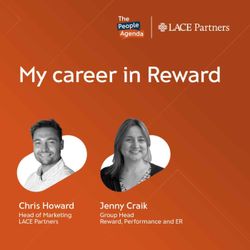
My career in Reward with Jenny Craik
32:42|“Reward and performance is all about understanding people.” says Jenny Craik. In this episode of The People Agenda podcast, host Chris Howard is joined by experienced HR leader Jenny Craik, who shares insights from her career in reward and performance at organisations like HSBC, Standard Chartered and Barclays. Jenny talks about what it really takes to succeed in the world of reward, highlighting that it’s not just about technical expertise, but also about understanding people. She offers practical reflections on building influence, managing change, and staying relevant in an evolving landscape. How do you break into and succeed in reward roles today? Jenny believes to succeed in reward HR leaders need to combine technical understanding with strong interpersonal and critical thinking skills. While tools and AI are changing the way we work, how can we keep the human touch? Jenny suggests that we: Focus on core skills: analytical thinking, attention to detail, and listening Learn from experienced professionals through observation and questions Build foundational knowledge in data, models, and reward structures Develop understanding of behavioural science and human motivation Use AI as a tool but validate outputs with critical thinking and an AI structured framework What are the biggest challenges in a reward career? The most difficult challenges involve high-stakes decisions, stakeholder tension, and managing people dynamics. According to Jenny, HR leaders can avoid these challenges by: Making decisions with real human impact Navigating conflicting priorities between executives, boards, and stakeholders Managing emotionally charged topics like pay, fairness, and value perception Leading diverse teams with different perspectives and working styles Maintaining resilience and objectivity under pressure What makes a career in reward meaningful and rewarding? The most rewarding part of this work comes from making a real impact on people and seeing tangible change across the organisation. Reward has a direct influence on employees’ experiences, which makes the work feel meaningful day to day. In some cases, the consequences can be deeply personal. “We make decisions that are going to change somebody’s life,” Jenny says, this highlights the emotional weight that often sits behind pay, benefits and fairness decisions. There’s also a lot of value in coaching and developing future leaders, as well as gaining broader perspectives through international experience. Jenny notes that designing policies that genuinely improve people’s lives, and then seeing that reflected in employee feedback and engagement data, is what makes it especially worthwhile. How do reward professionals balance business and people priorities? Success comes from aligning commercial outcomes with employee experience through strong partnerships, especially with finance. Reward sits at the intersection of cost and value and must be able to: Build mutual respect and curiosity with finance teams Understand business performance, investor expectations, and strategy Use data and evidence to support reward decisions and proposals Develop clear business cases for people initiatives Combine data with storytelling to influence decision-making What is the future of the reward and performance function? The future of reward lies in strategic partnership, enabled by AI to provide personalised employee experiences. While administrative tasks will reduce significantly, the need for human skills in navigating emotive issues and challenging business leaders will increase. Jenny notes that the profession must adapt to increasing transparency and a shift toward skills-based compensation models. If you want to hear the full conversation and dive deeper into these insights, listen to this episode of The People Agenda podcast. It’s packed with real-world perspective you won’t get from theory alone. If you want support on how to build an effective reward strategy check out our Reward and performance services page to learn more.
More episodes
View all episodes

How can smart incentive design drive performance?
29:07|Well-designed incentives can transform organisational performance however, poorly designed ones can quietly undermine strategy, culture, and results. In this episode of The People Agenda podcast host Chris Howard and LACE reward specialists, Julie Elder and Mike Aldred as they explore how organisations can design incentives that genuinely drive the behaviours they want. They discuss why incentives matter, the most common structures companies use, and how leaders can align reward programmes with business strategy to maximise impact. Why do organisations design incentive programmes? Organisations use incentives to help align employee behaviour with business strategy. When employees can clearly see how their performance connects to rewards, they are more likely to focus on the priorities that matter most to the organisation. Well-designed incentive plans support strategic objectives and motivate employees to achieve measurable outcomes, such as increasing revenue, improving productivity, or supporting strategic change. They also encourage accountability by tying rewards directly to performance. If organisations start to see a disconnect between performance goals and the rewards employees receive, they often review or redesign their incentive plans. In practice, the most effective programmes usually include a mix of short-term and long-term incentives to balance immediate results with long-term success. What types of incentives do organisations typically use? Short-term incentives are often used across broader employee populations, while long-term incentives are usually reserved for senior leaders or critical talent roles. Below are some incentives organisations typically use: Short-term incentives: annual bonuses linked to financial or operational targets Long-term incentives: multi-year rewards tied to sustained performance Cash incentive plans: common in smaller or private companies Equity-based plans: shares or share options used in larger or listed organisations Sales incentives: targeted schemes designed for revenue-generating roles What makes an incentive plan effective? Effective incentive plans work best when they are closely aligned with an organisation’s strategy and clearly understood by employees. The design should support the behaviours and outcomes that leadership wants to prioritise. However, over time, incentive plans can gradually move away from their original strategic purpose, especially as business priorities change. Regular reviews help ensure that these plans continue to support the organisation’s evolving goals. This raises an important question: how can organisations make sure their incentive programmes remain effective? Incentives should directly support business strategy and key performance metrics Targets must be measurable, achievable, and clearly communicated Reward outcomes should feel fair and transparent to participants Organisations should balance multiple incentives as part of a wider reward strategy Periodic reviews help prevent misalignment between incentives and business goals Incentive design sits at the heart of an effective reward strategy. When done well, it aligns people, performance, and business outcomes in a powerful way. If you want to hear the full discussion and deeper insights from reward experts, listen to this episode of The People Agenda podcast for practical examples and real-world perspectives on designing incentives that work.
How can CPOs build greater influence in the C-suite?
29:44|Great leadership does not start with a title. It starts with influence. In this episode of The People Agenda podcast, we explore one critical question: how can today’s Chief People Officer (CPO) move from having a seat at the table to genuinely shaping business transformation? Drawing on insights from our research “From implementer to influencer” host Chris Howard and fellow LACEr Debbie Mitchell speak to executive coach Hilary Gee, on how CPOs can build influence among the C-suite. As a part of our research LACE surveyed 450 C-level executives (CPOs, CEOs, CFOs, COOs and CTOs) in large organisations in the UK, GCC and North America Why isn’t having a seat at the table enough? Having a seat at the C-suite table is no longer the primary challenge, influence is. Our research shows that while 64% of leaders say HR is actively involved in shaping decisions, a quarter (25%) say HR is considered but not central to the decision-making process. In many organisations, CEOs and CPOs interact infrequently, limiting alignment on strategic priorities, while CFOs and COOs undervalue HR’s contribution to business-wide outcomes. HR is often viewed as functionally strong but commercially light and transformation leadership is still, in some cases, perceived as operational rather than people led. How can CPOs speak the language of the C-suite? Despite HR’s growing presence at the top table, influence can still stall. 41% of leaders say HR is seen as reactive or lacking measurable impact, limiting its ability to shape strategic outcomes at the highest level. CPOs need to connect people strategy directly to commercial outcomes. Influence grows when HR leaders speak the language of finance, operations, and growth not just culture and engagement. They can strengthen their impact by: Framing culture initiatives in terms of productivity, margin, and risk mitigation. Presenting workforce investments with quantified ROI ranges and cost-benefit clarity. Tailoring communication style to the audience Shifting from “employee experience” language to business value creation. When CPOs are able to align their message with business metrics, their credibility rises significantly. What makes C-suite collaboration difficult? Collaboration at the C-suite level often breaks down because leaders are structurally incentivised to focus on their own performance rather than shared outcomes. When finance, operations, and HR each have KPIs that pull in different directions, silos are created before the conversation even starts. Leadership updates tend to be delivered function by function, with success measured individually instead of against business-wide goals. Over time, this can drive defensive behaviour, as executives protect their metrics rather than lean into collective accountability. If incentives reward competition, collaboration will struggle. To shift this dynamic, our guest discuss: How organisations can introduce shared business metrics alongside functional goals. Tie a portion of executive reward to collective performance. Structure leadership meetings around strategic priorities instead of departmental update. Assign joint ownership of key transformation initiatives. When collaboration is built into the system, it becomes far more likely to show up in behaviour. Tune in to this episode of The People Agenda podcast to hear the full discussion and start redefining HR’s role in business transformation. Want to know more takeaways from our research then download our whitepaper “From implementer to influencer”.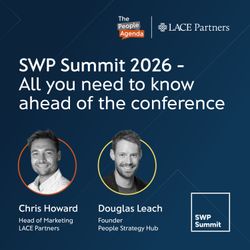
SWP Summit 2026 – all you need to know ahead of the conference
22:37|Strategic workforce planning (SWP) is no longer a future-focused concept; it’s a present-day business imperative. In this episode of The People Agenda podcast, host Chris Howard is joined by Douglas Leach, Founder of People Strategy Hub and the driving force behind the SWP Summit, to explore what people can expect from the event and why SWP has become critical to business performance today. What is the SWP Summit 2026? The SWP Summit 2026 is a one-day, implementation-focused conference designed to help organisations take immediate action on SWP. Taking place on 19 March 2026 at The Brewery, it brings together HR leaders, finance leaders, and cross-functional decision-makers who shape workforce strategy. This mix of attendees reinforces the message, SWP isn’t just an HR initiative, it’s a business-wide capability. The agenda is centred on practical insights and real-world application, with a focus on what organisations can implement now rather than long-term theory. What makes this summit different from other SWP events? The summit’s agenda places a strong emphasis on “implement tomorrow” takeaways, with practical insights that can be applied straight away. There are planned networking sessions which encourage meaningful peer exchange, and the content is tailored to support organisations at varying levels of SWP maturity. Why is cross-functional buy-in a central theme? SWP requires organisation-wide change, not isolated HR initiatives. On the agenda there is a session from Mark Jackson, Head of Future Workforce at Nationwide, sharing how to build cross-functional coalitions that turn workforce transformation from an HR initiative into a business priority. Mark’s section will cover: Moving SWP from an “HR issue” to a board-level priority Launching pilot programmes before scaling organisation-wide Building credibility with measurable outcomes Securing executive sponsorship early Managing organisation-wide change at pace The main takeaway? Without senior alignment and financial backing, SWP stalls. How will the summit address skills-based workforce transformation? The summit tackles how to operationalise a skills-first planning model at scale. In his session Taiwo Ojo, CEO from Alluvium will focus on how organisations can build strong operational foundations for skills-based transformation. This can be achieved by: Governance models to support skills architecture Workflow design to embed skills planning Avoiding common early-stage mistakes Scaling from pilot to enterprise adoption Managing the pace of transformation without losing stakeholder trust How does the summit address the impact of AI and technology? The summit treats AI as a "constant catalyst" that complicates SWP by shifting the definitions of necessary skills and roles. Opinions on AI range from total workforce replacement to it being overhyped. The summit provides a space for experience-sharing to find current best practices rather than relying on unproven theories. How will leaders prove ROI and speak the language of the CFO? Proving ROI is positioned as a core requirement for SWP credibility at board level. On the agenda is a session on ROI and workforce planning, focusing directly on engaging CFOs and quantifying business impact. CPO’s can prove the return of investment for SWP by: Building data-backed business cases Translating workforce risk into financial language Defining measurable ROI metrics Monitoring transformation performance Communicating workforce risk in CFO terms HR leaders need to quantify workforce risk and value in order to secure investment. SWP is shifting from conceptual ambition to operational necessity. Listen now to hear the full conversation about the upcoming summit and dive deeper into these strategic workforce topics. If you would like to attend the SWP summit, you can book your place here.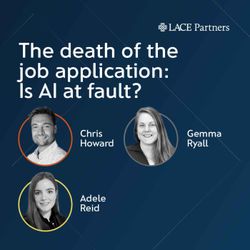
The death of the job application: Is AI at fault?
25:33|AI is flooding hiring pipelines with polished look-alike applications, and recruiters are struggling to tell real capability from well-written automation. Inspired by an article in The Economist titled “Job applicants are winning the AI arms race against recruiters”. In this episode of The People Agenda podcast host Chris Howard and fellow LACErs Gemma Ryall and Adele Reid break down how the job application is evolving, what signals are losing value, and how employers can redesign hiring to stay fair, fast, and human. Is the traditional job application dead? The traditional application process is not dying, but it is undergoing an evolution. Gemma and Adele acknowledge organisations still need structured filtering when handling thousands of applicants, but this is leading to a reliance on technological screening over manual sifting. This evolution has been building for 20 years, with AI now serving as the primary catalyst for changing how talent acquisition functions operate. How should companies balance AI and human interaction? Organisations should use AI for speed and consistency in early stages, then introduce human interaction at critical evaluation and relationship-building points. Candidate experience drops sharply if no real person appears before final decisions. Organisations can achieve this balance by: Using AI for initial screening, scheduling and structured questioning Adding humans during shortlist interviews, culture conversations and final decisions Providing clear disclosure about where AI is used in the process Ensuring at least one live interaction before offer stage What warning signs suggest an application is AI-generated? Recruiters can identify AI-generated content by spotting technical formatting errors and repetitive linguistic patterns; specific "AI-isms". Adele notes that red flags include the distinctively long dashes often found in GPT-generated text and over-capitalised titles in headers. Bullet points in fraudulent CVs often start with repetitive verbs like "achieved" or "prioritised" without providing the concrete, specific results a human would naturally include. Furthermore, AI-generated blogs and cover letters frequently open with generic phrases regarding "challenging economies" or "businesses being faced with" specific obstacles. What must organisations do to stay effective as AI use grows? Organisations must treat recruitment as an adaptive system that is reviewed and updated quarterly, not annually. Talent teams should work closely with AI and technology specialists to test tools for bias, fraud risk, and accuracy before scaling. Onboarding should also validate that hired candidates can perform as expected. To stay ahead of the “AI arms-race" our experts suggest to: Run regular audits of screening tools for bias and false positives Train recruiters to spot AI-pattern language and missing specificity Build hiring steps that include live demonstrations of skill Use onboarding to confirm capability within the first 30–60 days Keep recruitment design aligned with labour market scarcity levels To hear the full discussion on navigating the "AI arms race" in hiring and how your organisation can remain vigilant of recruitment fraud, listen to this episode of The People Agenda podcast. If you’d like to discuss how to get the balance right between AI and human in your hiring process, we’d be happy to help. Simply reach out via the form below.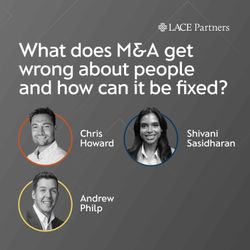
What does M&A get wrong about people and how can it be fixed?
31:00|Mergers and acquisitions (M&A) deals fail less because of spreadsheets and more because of people. Most M&A promise growth, scale, or capability. Many underdeliver because leaders underestimate the human side of change. In this episode of The People Agenda podcast host Chris Howard and LACEr Shivani Sasidharan speak to Andrew Philp, CFO at activpayroll, as they break down what actually matters before, during, and after an M&A. activpayroll helps companies manage global payroll and mobility in a secure and compliant way. They also provide expert support in areas like tax, legal, immigration, onboarding, and local regulations What should organisations focus on before an M&A? Clarity on why the deal exists is the single most important pre-M&A requirement. Before signing anything, organisations must be explicit about what they are buying, why they are buying it, and what success looks like in measurable terms. Shivani and Andrew discuss how you must: Clarify the deal rationale, including the growth you expect, the markets you want to reach, and the capabilities you’re aiming to add Validate the financial starting point with defined targets like revenue growth or cost savings Assess people risks early, including culture fit, leadership capability, and talent retention Identify integration costs and expected synergies with clear timelines, not assumptions What matters most during the M&A process? Fast, clear communication prevents anxiety and protects value during the deal. Once a deal is live, uncertainty spreads quickly. Silence creates fear, and fear reduces performance long before integration starts. You can mitigate this anxiety by: Checking that due diligence findings still back up the original deal rationale Prioritising communication speed to reduce rumours and employee anxiety Explaining what is changing, what is not, and when decisions will be made Keeping day-to-day operations steady to avoid service issues or dips in productivity What determines success after the deal closes? Integration succeeds when people come before systems and processes. Post-deal value is realised through execution, and execution is driven by people working together effectively. Our guest's advice was to focus on successful integration starts with establishing joint teams early on to build momentum and a sense of shared ownership. From there, prioritising cultural integration is key, particularly in cross-border acquisitions where differences can quickly slow progress if left unaddressed. Delivering quick wins within the first 90 days helps build trust and credibility, creating confidence that the integration is on track. Throughout the process, it’s also important to track progress closely to prevent value leakage between deal close and full stabilisation. Why are people the hardest part of M&A? People are the largest value driver and the least measured risk in M&A. Unlike systems or costs, engagement, trust, and leadership alignment are intangible but decisive. Avoid these pitfalls to ensure people stay central to the change: Poor communication increases attrition of critical talent within months Lack of leadership visibility reduces engagement and slows execution Cultural misalignment erodes productivity even when financial logic is sound Later HR and CPO involvement increases uncertainty and loses deal value If you want practical, experience-led insight into ensure a smooth adoption M&A on the people side, listen to this episode of The People Agenda podcast and hear directly from Andrew and Shivani who share their experiences.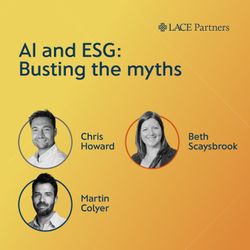
AI and ESG: Busting the myths
33:32|AI and ESG are no longer distant concepts or optional priorities, they are already transforming how organisations operate and compete. AI is driving more efficient and smarter decision-making and creating new opportunities for innovation. At the same time, ESG principles are shaping investor expectations, regulatory frameworks, and organisational culture. When combined, AI and ESG can deliver powerful outcomes: reducing environmental impact, improving governance, and enhancing social responsibility.In our recent podcast with Beth Scaysbrook from Addidat, a leading ESG data and advisory firm, and our very own Martin Colyer, Director of Digital and AI here at LACE. Together they explore why the intersection of AI and ESG matters, the myths that often hold organisations back, and the practical steps leaders need to take to navigate this evolving landscape. From workforce transformation to ethical governance and sustainability, we uncover the realities behind the headlines, and what it means for businesses preparing for the future.AI and ESG are not separate agendas, they are deeply connected, and both are essential for building resilient, future-ready organisations. The most successful leaders will be those who stay curious, communicate openly, and focus on both risks and opportunities.If you’d like to explore how LACE Partners can help your organisation navigate the intersection of AI and ESG, get in touch with our team.