Share
100 Campaigns that Changed the World
Climate Change: Weald Action Group
This episode explores how a local campaign in a small corner of rural England helped reshape climate law far beyond it. The Weald Action Group began as a grassroots response to oil drilling proposals at Horse Hill in Surrey. What followed was a determined, citizen-led challenge to the idea that new fossil fuel projects could be approved without accounting for the climate damage caused when the oil is eventually burned.
Against long odds, campaigners took on local authorities, developers and the planning system itself, pushing the question of responsibility for carbon emissions all the way to the UK Supreme Court.
At the centre of the campaign was Sarah Finch, a community organiser and one of the claimants in the landmark legal case that now bears her name. Her work with Weald Action Group helped establish a crucial legal principle: that the climate impacts of fossil fuel extraction cannot simply be ignored. Sarah joins us to reflect on how a local campaign grew into a legal precedent, what it took to sustain the fight, and what this case means for future climate campaigns in the UK and beyond.
Sign up or leave comments at https://www.100campaigns.com/
More episodes
View all episodes

8. Gen Z: Nepal and Beyond
46:26||Season 3, Ep. 8In this episode, we’re looking at Nepal’s Gen Z movement, which came to international prominence in September 2025 after the government blocked 26 social-media platforms. What began as a protest over digital freedom quickly became a broader revolt against corruption, nepotism, political impunity, unemployment, and established parties' failure to respond to the pressures facing younger Nepalis. Having grown up navigating politics through digital spaces, young people largely organised the protests via messaging app and social media platforms, using Virtual Private Networks (VPNs) to stay connected and organize, but the movement was driven by much more than social media. Anger had been building over economic insecurity, inequality and the conspicuous wealth of politically connected families, captured in “Nepo Kids” memes and posts. When security forces responded violently to the demonstrations, the unrest escalated, the government lost control, and Prime Minister K. P. Sharma Oli resigned. It took less than 48 hours from the start of the street protests to the prime minister's resignation.In the first half, I’m joined by Janak Pokhrel, an activist from Nepal, to explore what happened beyond the headlines: how the movement organised, what role digital platforms played, why the protests became so powerful, and what happened when a largely decentralised youth movement suddenly found itself facing questions of political power. We’ll also discuss what the movement achieved, what remains unresolved, and what activists elsewhere might learn from Nepal’s experience. In the second half of the episode, I am joined by Teresa Jopson, a political anthropologist and researcher at the Arnold Bergstraesser Institute, who studies gender, human rights, and social movements in conflict, peacebuilding, migration, and populist projects in Southeast Asia. We talk about the wider trends in and drivers of the Gen Z movements in various countries, and try and pull out some common lessons.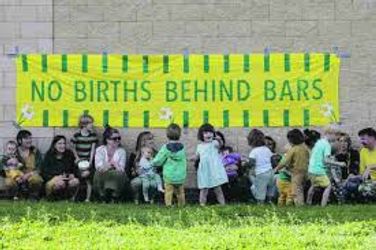
7. No Births Behind Bars
36:51||Season 3, Ep. 7In this episode, I’m speaking with Janey Starling about the campaign to stop women from having to give birth in prison. This award-winning campaign began in response to shocking cases and a growing recognition that prison is a dangerous place for pregnancy and birth. There were at least two devastating cases in recent years: the death of Aisha Cleary after she was born at HMP Bronzefield, and a second baby who was stillborn at HMP Styal, in Wilmslow.The campaign helped push through important changes in sentencing guidance, and the recent changes include that the Sentencing Council has now made pregnancy, childbirth, and post-natal care a specific factor in sentencing. That is important because it means judges are meant to think much more carefully about the impact of custody on women and babies. From April 2025, the guidance went further, saying courts should avoid prison for pregnant women unless it cannot be avoided. In other words, pregnancy is no longer treated as a side issue, and it should now be a serious reason to look for alternatives to custody. The conversation extends beyond the policy changes that have happened, and Janey talks us through how the campaign developed, tactics and strategy, and what still needs to be done. Janey is Co-Director at Level Up, which campaigns to end the imprisonment of pregnant women and new mothers in England through public pressure, legal action and solidarity. They work to ensure courts stop sending pregnant women to prison and choose safe, community-based alternatives instead.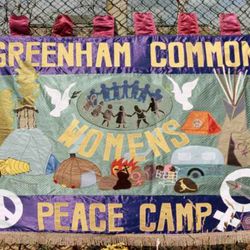
6. Greenham Common Peace Camp
34:07||Season 3, Ep. 6In this episode, we go back to the 1980s, to Greenham Common in Berkshire, where thousands of women built one of the longest‑running peace camps in history. They marched from Cardiff, set up camp outside a US nuclear base, and over nearly 20 years turned a protest site into a global symbol of feminist, anti‑nuclear resistance. From chaining themselves to the gates to “Embrace the Base” human chains of tens of thousands of women, Greenham rewrote what non‑violent direct action could look like. It was noisy, creative, and defiantly women‑led – the biggest women’s protest movement in Britain since the suffragettes.To explore what Greenham meant then, and why it still matters for campaigns today, we welcome writer, performer and activist Rebecca Mordan. Rebecca is the artistic director of feminist theatre company Scary Little Girls and co‑founder of the Greenham Women Everywhere project, which has collected over 200 testimonies from camp veterans. She is the co-author of Out of the Darkness, Greenham 1981-2000. Out now in paperback. In this conversation, we talk about life at the camp, the tactics that made Greenham so powerful, and the 19‑year protest. We also look at what today’s climate and peace, and other campaigners can learn from Greenham’s mix of humour, disruption and community care.Here are some resourcesGreenham Women Everywhere, interviewing Greenham Women, archiving and sharing their stories and holding events across the UK. The Greenham Effect for Radio 4’s Archive on 4, and a subsequent podcast series on the camp commissioned by Oxford Modern Art. A screening of Carry Greenham Home will transport you back to the early days of Greenham with Beeban Kidron and Amanda Richardson’s fly-on-the-wall masterpiece, shot whilst they lived at Greenham in 1982-83.Women Against the Bomb, Sonia Gonzalez’s prize-winning look at the impact of the Greenham Women, reflected through interviews and footage from women who took action and never looked back.Gentle, Angry Women, Barbara Santi’s coming of age documentary follows a new generation of young female activists as they embark on a journey of discovery, following in the footsteps of over 30,000 women who forty years earlier united in peaceful, liberating protest, the remarkable Greenham Common Women's Peace Movement.Mothers of the Revolution, Briar March’s tale of how a small number of Greenham Women made connections with their counterparts in the peace movement behind the Iron Curtain, travelling to the Soviet Union to advance peace and, eventually, contributing towards the end of the Cold War.
4. Patriotic Millionaires
40:06||Season 3, Ep. 4Our guest is on this episode Rebecca Gowland, the executive director of Patriotic Millionaires UK, which is a network of British millionaires, from multiple industries and backgrounds, from across the UK, to use what they call the ‘voice of wealth’ to build a more just, stable, and inclusive economy, and their aim is the end of extreme wealth. They have a profound concern about the destabilising level of economic and political inequality. And they want to see more economic and political equality. In the U.S., the group was founded in 2010 by Erica Payne under the name "Patriotic Millionaires for Fiscal Strength". It was initially formed to advocate for the expiration of the Bush tax cuts during the Obama administration. This is episode is sponsored by 38 Degrees. Go to: www.38degrees.org.uk/100campaigns Sound is by Derek Gray. Music is by Alex Gordon.
3. 3 Hijabis
39:30||Season 3, Ep. 3The guest on this episode is Shaista Aziz, one of The Three Hijabis—a powerful anti-racism campaign that began with a viral tweet in 2021. What started as three British Muslim women watching England play in the Euros soon became a national movement, after racist abuse targeted Black players Marcus Rashford, Jadon Sancho, and Bukayo Saka. Their petition to ban racists from football for life gained over a million signatures in just 48 hours, forced government action, and sparked a global conversation about inclusion in the sport. With 12 million petition views and a lasting impact on football culture, their story is a testament to how activism can challenge hate and reclaim spaces for everyone. Amnesty crisis response campaigner, working on gaza. Sound is by Derek Gray. Joe Townsend was the producer.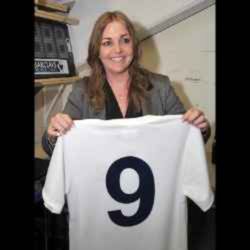
2. Making Football Safer
46:56||Season 3, Ep. 2The guest on this episode is Dawn Astle. Dawn is the daughter of Jeff Astle, who played football for West Bromwich Albion in the 60’s and 70’s. At the age of 55, Jeff was diagnosed with dementia, and he died four years later. The pathologist who officiated Jeff’s death said his brain looked like the brain of a boxer. Dawn has been campaigning since then for a change in the rules about heading in football. She has also helped win significant victories, notably with a ban coming into place in youth football this year and next year. But there is a lot more to do.Sound is by Derek Gray.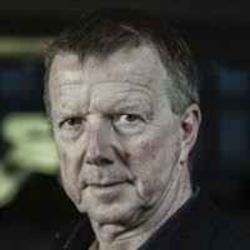
1. Duncan Green
28:30||Season 3, Ep. 1In this opening episode of Season 3 of 100 Campaigns that Changed the World, I speak with Duncan Green – one of the most respected thinkers and practitioners in global development and social change. Duncan is Senior Strategic Adviser at Oxfam GB, Professor in Practice at the London School of Economics, and author of the widely read blog From Poverty to Power. His influential book How Change Happens has shaped how campaigners and policy-makers think about power, systems, and transformation. Drawing on decades of experience in international advocacy, Duncan reflects on what it really takes to create lasting change – and what campaigners today can learn from the past.Sounds is by Derek Gray.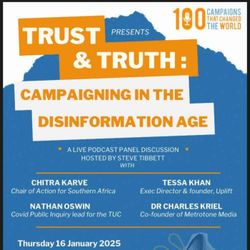
20. Live: Trust and Truth, Campaigning in the Disinformation Age
01:22:22||Season 2, Ep. 20An expert panel of seasoned campaigners who have dealt with disinformation and falsehoods, our first live panel event sheds light on how campaigners can navigate the issues and counter conspiracy theories, lies and half-truths. The panel consisted ofDr Charles Kriel, who is co-Founder of Metrotone Media, co-Director of the documentary People You May Know, which follows his breakthrough Cambridge Analytica investigation while serving as Special Advisor to the UK parliament Select Committee on Disinformation and Fake News.A list of other target panellists is available on request. Tessa Kahn, who is the Director of Uplift UK, which supports efforts to create a rapid and fair transition away from oil and gas production in the UK. Mythbusting and debunking the industry’s increasing tendency towards misinformation has become a stock-in-trade for Tessa and her team. Chitra Karve, who is Chair of Action for Southern Africa was an Anti-Apartheid Movement staff member from 1986 to 1989. She helped organise the 1988 Nelson Mandela: Freedom at 70 campaign.Nathan Oswin, who leads the Trade Union Congress's involvement in the Covid Public Inquiry and was previously Campaigns Director of the Covid-19 Bereaved Families for Justice campaign. Through these roles, he has dealt with large-scale and sometimes harmful types of disinformation and mistruths The event was sponsored by 38 Degrees and University of Westminster Media and Communications School and their MA in Media, Campaigning and Social Change https://www.westminster.ac.uk/media-and-communication-courses/2026-27/september/full-time/media-campaigning-and-social-change-ma. It was also supported by the Sheila McKechnie Foundation and the Advocacy Hub. Music is by Alex Gordon. Sound is by Derek Gray and Solomon Collins.